(The sound artists FA-TECH improvising in Shoreditch, London. Shoreditch’s combination of urban character, cheap rents and proximity to London’s business, financial centres and culture led to the emergence of a thriving technology startup community – although that community’s success is now driving rents up, challenging some of the characteristics that enabled it.)
(I first learned of the architect Kelvin Campbell‘s concept of “massive/small” just over two years ago – the idea that certain characteristics of policy and the physical environment in cities could encourage “massive amounts of small-scale innovation” to occur. Kelvin recently launched a collaborative campaign to capture ideas, tools and tactics for massive/small “Smart Urbanism“. This is my first contribution to that campaign.)
Over the past 5 years, enormous interest has developed in the potential for digital technologies to contribute to the construction and development of cities, and to the operation of the services and infrastructures that support them. These ideas are often referred to as “Smart Cities” or “Future Cities”.
Indeed, as the price of digital technologies such as smartphones, sensors, analytics, open source software and cloud platforms reduces rapidly, market dynamics will drive their aggressive adoption to make construction, infrastructure and city services more efficient, and hence make their providers more competitive.
But those market dynamics do not guarantee that we will get everything we want for the future of our cities: efficiency and resilience are not the same as health, happiness and opportunity for every citizen.
Is it realistic to ask ourselves whether we can achieve those objectives? Yes, it has to be.
Many of us believe in that possibility, and spend a lot of our efforts finding ways to achieve it. And over the same timeframe that interest in “smart” and “future” cities has emerged, a belief has developed around the world that the governance institutions of cities – local authorities and elected mayors, rather than the governments of nations – are the most likely political entities to implement the policies that lead to a sustainable, resilient future with more equitably distributed economic growth.
Consequently many Mayors and City Councils are considering or implementing legislation and policy frameworks that change the economic and financial context in which construction, infrastructure and city services are deployed and operated. The British Standards Institute recently published guidance on this topic as part of its overall Smart Cities Standards programme.
But whilst in principle these trends and ideas are incredibly exciting in their potential to create better cities, communities, places and lives in the future, in practise many debates about applying them falter on a destructive and misleading argument between “top-down” and “bottom-up” approaches – the same chasm that Smart Urbanism seeks to bridge in the physical world.
Policies and programmes driven by central government organisations or implemented by technology and infrastructure corporations that drive digital technology into large-scale infrastructures and public services are often criticised as crude, “top-down” initiatives that prioritise resilience and efficiency at the expense of the concerns and values of ordinary people, businesses and communities. However, the organic, “bottom-up” innovation that critics of these initatives champion as the better, alternative approach is ineffective at creating equality.
(“Lives on the Line” by James Cheshire at UCL’s Centre for Advanced Spatial Analysis, showing the variation in life expectancy and correlation to child poverty in London. From Cheshire, J. 2012. Lives on the Line: Mapping Life Expectancy Along the London Tube Network. Environment and Planning A. 44 (7). Doi: 10.1068/a45341)
“Bottom-up innovation” is what every person, community and business does every day: using our innate creativity to find ways to use the resources and opportunities available to us to make a better life.
But the degree to which we fail to distribute those resources and opportunities equally is illustrated by the stark variation in life expectancy between the richest and poorest areas of cities in the UK: often this variation is as much as 20 years within a single city.
The tools to achieve this are relatively cheap, and the right policy environment could make it fairly straightforward to augment the business case for efficient, resilient “smart city” infrastructures to ensure that they are deployed. They are the digital equivalents of the physical concepts of Smart Urbanism – the use of open grid structures for spatial layouts, and the provision of basic infrastructure components such as street layouts and party walls in areas expected to attract high growth in informal housing. Some will be delivered as a natural consequence of market forces driving technology adoption; but others will only become economically viable when local or national government policies shape the market by requiring them:
Broadband, wi-if and 3G / 4G connectivity should be broadly available so that everyone can participate in the digital economy.
The data from city services should be made available as Open Data and published through “Application Programming Interfaces” (APIs) so that everybody knows how they work; and can adapt them to their own individual needs.
The data and APIs should be made available in the form of Open Standards so that everybody can understand them; and so that the systems that we rely on can work together.
The data and APIs should be available to developers working on Cloud Computing platforms with Open Source software so that anyone with a great idea for a new service to offer to people or businesses can get started for free.
The technology systems that support the services and infrastructures we rely on should be based on Open Architectures, so that we have freedom to chose which technologies we use, and to change our minds.
Governments, institutions, businesses and communities should participate in an open dialogue about the places we live and work in, informed by open data, enabled by social media and smartphones, and enlightened by empathy.
Local regulatory regimes should encourage the development of “sharing-economy” online business models that use local community networks and bartering mechanisms to prefer local transactions – retaining value in the local economy, and increasing the percentage of transactions that take place through walking and cycling rather than requiring motorised transport.
(Casserole Club, a social enterprise developed by FutureGov uses social media to connect people who have difficulty cooking for themselves with others who are happy to cook an extra portion for a neighbour; a great example of a locally-focused “sharing economy” business model which creates financially sustainable social value.)
These principles would encourage good “digital placemaking“: they would help to align the investments that will be made in improving cities using technology with the needs and motivations of the public sector, the private sector, communities and businesses. They would create “Smart Digital Urbanism”: the conditions and environment in which vibrant, fair digital cities grow from the successful innovations of their citizens, communities and businesses in the information economy.
In my new role at Amey, a vast organisation in the UK that delivers public services and operates and supports public infrastructure, I’m leading a set of innovative projects with our customers and technology partners to explore these ideas and to understand how we can collaboratively create economic, social and environmental value for ourselves; for our customers; and for the people, communities and businesses who live in the areas our services support.
It’s a terrifically exciting role; and I’ll soon be hiring a small team of passionate, creative people to help me identify, shape and deliver those projects. I’ll post an update here with details of the skills, experience and characteristics I’m looking for. I hope some of you will find them attractive and get in touch.
Why data is uncertain, cities are not programmable, and the world is not “algorithmic”.
Many people are not convinced that the Smart Cities movement will result in the use of technology to make places, communities and businesses in cities better. Outside their consumer enjoyment of smartphones, social media and online entertainment – to the degree that they have access to them – they don’t believe that technology or the companies that sell it will improve their lives.
Most recently, the idea that traditional processes of government should be replaced by “algorithmic regulation” – the comparison of the outcomes of public systems to desired objectives through the measurement of data, and the automatic adjustment of those systems by algorithms in order to achieve them – has been proposed by Tim O’Reilly and other prominent technologists.
These approaches work in many mechanical and engineering systems – the autopilots that fly planes or the anti-lock braking systems that we rely on to stop our cars. But should we extend them into human realms – how we educate our children or how we rehabilitate convicted criminals?
It’s clearly important to ask whether it would be desirable for our society to adopt such approaches. That is a complex debate, but my personal view is that in most cases the incredible technologies available to us today – and which I write about frequently on this blog – should not be used to take automatic decisions about such issues. They are usually more valuable when they are used to improve the information and insight available to human decision-makers – whether they are politicians, public workers or individual citizens – who are then in a better position to exercise good judgement.
More fundamentally, though, I want to challenge whether “algorithmic regulation” or any other highly deterministic approach to human issues is even possible. Quite simply, it is not.
It is true that our ability to collect, analyse and interpret data about the world has advanced to an astonishing degree in recent years. However, that ability is far from perfect, and strongly established scientific and philosophical principles tell us that it is impossible to definitively measure human outcomes from underlying data in physical or computing systems; and that it is impossible to create algorithmic rules that exactly predict them.
Sometimes automated systems succeed despite these limitations – anti-lock braking technology has become nearly ubiquitous because it is more effective than most human drivers at slowing down cars in a controlled way. But in other cases they create such great uncertainties that we must build in safeguards to account for the very real possibility that insights drawn from data are wrong. I do this every time I leave my home with a small umbrella packed in my bag despite the fact that weather forecasts created using enormous amounts of computing power predict a sunny day.
(No matter how sophisticated computer models of cities become, there are fundamental reasons why they will always be simplifications of reality. It is only by understanding those constraints that we can understand which insights from computer models are valuable, and which may be misleading. Image of Sim City by haljackey)
We can only understand where an “algorithmic” approach can be trusted; where it needs safeguards; and where it is wholly inadequate by understanding these limitations. Some of them are practical, and limited only by the sensitivity of today’s sensors and the power of today’s computers. But others are fundamental laws of physics and limitations of logical systems.
A blog published by the highly influential magazine Wired recently made similar overstatements: “The Universe is Programmable” argues that we should extend the concept of an “Application Programming Interface (API)” – a facility usually offered by technology systems to allow external computer programmes to control or interact with them – to every aspect of the world, including our own biology.
To compare complex, unpredictable, emergent biological and social systems to the very logical, deterministic world of computer software is at best a dramatic oversimplification. The systems that comprise the human body range from the armies of symbiotic microbes that help us digest food in our stomachs to the consequences of using corn syrup to sweeten food to the cultural pressure associated with “size 0” celebrities. Many of those systems can’t be well modelled in their own right, let alone deterministically related to each other; let alone formally represented in an accurate, detailed way by technology systems (or even in mathematics).
We should regret and avoid the hubris that leads to the distrust of technology by overstating its capability and failing to recognise its challenges and limitations. That distrust is a barrier that prevents us from achieving the very real benefits that data and technology can bring, and that have been convincingly demonstrated in the past.
For example, an enormous contribution to our knowledge of how to treat and prevent disease was made by John Snow who used data to analyse outbreaks of cholera in London in the 19th century. Snow used a map to correlate cases of cholera to the location of communal water pipes, leading to the insight that water-borne germs were responsible for spreading the disease. We wash our hands to prevent diseases spreading through germs in part because of what we would now call the “geospatial data analysis” performed by John Snow.
Many of the insights that we seek from analytic and smart city systems are human in nature, not physical or mathematical – for example identifying when and where to apply social care interventions in order to reduce the occurrence of emotional domestic abuse. Such questions are complex and uncertain: what is “emotional domestic abuse?” Is it abuse inflicted by a live-in boyfriend, or by an estranged husband who lives separately but makes threatening telephone calls? Does it consist of physical violence or bullying? And what is “bullying”?
We attempt to create structured, quantitative data about complex human and social issues by using approximations and categorisations; by tolerating ranges and uncertainties in numeric measurements; by making subjective judgements; and by looking for patterns and clusters across different categories of data. Whilst these techniques can be very powerful, just how difficult it is to be sure what these conventions and interpretations should be is illustrated by the controversies that regularly arise around “who knew what, when?” whenever there is a high profile failure in social care or any other public service.
These challenges are not limited to “high level” social, economic and biological systems. In fact, they extend throughout the worlds of physics and chemistry into the basic nature of matter and the universe. They fundamentally limit the degree to which we can measure the world, and our ability to draw insight from that information.
By being aware of these limitations we are able to design systems and practises to use data and technology effectively. We know more about the weather through modelling it using scientific and mathematical algorithms in computers than we would without those techniques; but we don’t expect those forecasts to be entirely accurate. Similarly, supermarkets can use data about past purchases to make sufficiently accurate predictions about future spending patterns to boost their profits, without needing to predict exactly what each individual customer will buy.
We underestimate the limitations and flaws of these approaches at our peril. Whilst Tim O’Reilly cites several automated financial systems as good examples of “algorithmic regulation”, the financial crash of 2008 showed the terrible consequences of the thoroughly inadequate risk management systems used by the world’s financial institutions compared to the complexity of the system that they sought to profit from. The few institutions that realised that market conditions had changed and that their models for risk management were no longer valid relied instead on the expertise of their staff, and avoided the worst affects. Others continued to rely on models that had started to produce increasingly misleading guidance, leading to the recession that we are only now emerging from six years later, and that has damaged countless lives around the world.
Every day in their work, scientists, engineers and statisticians draw conclusions from data and analytics, but they temper those conclusions with an awareness of their limitations and any uncertainties inherent in them. By taking and communicating such a balanced and informed approach to applying similar techniques in cities, we will create more trust in these technologies than by overstating their capabilities.
What follows is a description of some of the scientific, philosophical and practical issues that lead inevitability to uncertainty in data, and to limitations in our ability to draw conclusions from it:
But I’ll finish with an explanation of why we can still draw great value from data and analytics if we are aware of those issues and take them properly into account.
1. Heisenberg’s Uncertainty Principle and the fundamental impossibility of knowing everything about anything
Heisenberg’s Uncertainty Principle is a cornerstone of Quantum Mechanics, which, along with General Relativity, is one of the two most fundamental theories scientists use to understand our world. It defines a limit to the precision with which certain pairs of properties of the basic particles which make up the world – such as protons, neutrons and electrons – can be known at the same time. For instance, the more accurately we measure the position of such particles, the more uncertain their speed and direction of movement become.
In order to measure something, we have to interact with it. In everyday life, we do this by using our eyes to measure lightwaves that are created by lightbulbs or the sun and that then reflect off objects in the world around us.
But when we shine light on an object, what we are actually doing is showering it with billions of photons, and observing the way that they scatter. When the object is quite large – a car, a person, or a football – the photons are so small in comparison that they bounce off without affecting it. But when the object is very small – such as an atom – the photons colliding with it are large enough to knock it out of its original position. In other words, measuring the current position of an object involves a collision which causes it to move in a random way.
This analogy isn’t exact; but it conveys the general idea. (For a full explanation, see the figure and link above). Most of the time, we don’t notice the effects of Heisenberg’s Uncertainty Principle because it applies at extremely small scales. But it is perhaps the most fundamental law that asserts that “perfect knowledge” is simply impossible; and it illustrates a wider point that any form of measurement or observation in general affects what is measured or observed. Sometimes the effects are negligible, but often they are not – if we observe workers in a time and motion study, for example, we need to be careful to understand the effect our presence and observations have on their behaviour.
2. Accuracy, precision, noise, uncertainty and error: why measurements are never fully reliable
Outside the world of Quantum Mechanics, there are more practical issues that limit the accuracy of all measurements and data.
(A measurement of the electrical properties of a superconducting device from my PhD thesis. Theoretically, the behaviour should appear as a smooth, wavy line; but the experimental measurement is affected by noise and interference that cause the signal to become “fuzzy”. In this case, the effects of noise and interference – the degree to which the signal appears “fuzzy” – are relatively small compared to the strength of the signal, and the device is usable)
We live in a “warm” world – roughly 300 degrees Celsius above what scientists call “absolute zero“, the coldest temperature possible. What we experience as warmth is in fact movement: the atoms from which we and our world are made “jiggle about” – they move randomly. When we touch a hot object and feel pain it is because this movement is too violent to bear – it’s like being pricked by billions of tiny pins.
This random movement creates “noise” in every physical system, like the static we hear in analogue radio stations or on poor quality telephone connections.
We also live in a busy world, and this activity leads to other sources of noise. All electronic equipment creates electrical and magnetic fields that spread beyond the equipment itself, and in turn affect other equipment – we can hear this as a buzzing noise when we leave smartphones near radios.
Generally speaking, all measurements are affected by random noise created by heat, vibrations or electrical interference; are limited by the precision and accuracy of the measuring devices we use; and are affected by inconsistencies and errors that arise because it is always impossible to completely separate the measurement we want to make from all other environmental factors.
Scientists, engineers and statisticians are familiar with these challenges, and use techniques developed over the course of more than a century to determine and describe the degree to which they can trust and rely on the measurements they make. They do not claim “perfect knowledge” of anything; on the contrary, they are diligent in describing the unavoidable uncertainty that is inherent in their work.
3. The limitations of measuring the natural world using digital systems
One of the techniques we’ve adopted over the last half century to overcome the effects of noise and to make information easier to process is to convert “analogue” information about the real world (information that varies smoothly) into digital information – i.e. information that is expressed as sequences of zeros and ones in computer systems.
(When analogue signals are amplified, so is the noise that they contain. Digital signals are interpreted using thresholds: above an upper threshold, the signal means “1”, whilst below a lower threshold, the signal means “0”. A long string of “0”s and “1”s can be used to encode the same information as contained in analogue waves. By making the difference between the thresholds large compared to the level of signal noise, digital signals can be recreated to remove noise. Further explanation and image by Science Aid)
This process involves a trade-off between the accuracy with which analogue information is measured and described, and the length of the string of digits required to do so – and hence the amount of computer storage and processing power needed.
This trade-off can be clearly seen in the difference in quality between an internet video viewed on a smartphone over a 3G connection and one viewed on a high definition television using a cable network. Neither video will be affected by the static noise that affects weak analogue television signals, but the limited bandwidth of a 3G connection dramatically limits the clarity and resolution of the image transmitted.
The Nyquist–Shannon sampling theorem defines this trade-off and the limit to the quality that can be achieved in storing and processing digital information created from analogue sources. It determines the quality of digital data that we are able to create about any real-world system – from weather patterns to the location of moving objects to the fidelity of sound and video recordings. As computers and communications networks continue to grow more powerful, the quality of digital information will improve, but it will never be a perfect representation of the real world.
Three limits to our ability to analyse data and draw insights from it
1. Gödel’s Incompleteness Theorem and the inconsistency of algorithms
Kurt Gödel’s Incompleteness Theorem sets a limit on what can be achieved by any “closed logical system”. Examples of “closed logical systems” include computer programming languages, any system for creating algorithms – and mathematics itself.
We use “closed logical systems” whenever we create insights and conclusions by combining and extrapolating from basic data and facts. This is how all reporting, calculating, business intelligence, “analytics” and “big data” technologies work.
Gödel’s Incompleteness Theorem proves that any closed logical system can be used to create conclusions that it is not possible to show are true or false using the same system. In other words, whilst computer systems can produce extremely useful information, we cannot rely on them to prove that that information is completely accurate and valid. We have to do that ourselves.
Gödel’s theorem doesn’t stop computer algorithms that have been verified by humans using the scientific method from working; but it does mean that we can’t rely on computers to both generate algorithms and guarantee their validity.
2. The behaviour of many real-world systems can’t be reduced analytically to simple rules
Many systems in the real-world are complex: they cannot be described by simple rules that predict their behaviour based on measurements of their initial conditions.
A simple example is the “three body problem“. Imagine a sun, a planet and a moon all orbiting each other. The movement of these three objects is governed by the force of gravity, which can be described by relatively simple mathematical equations. However, even with just three objects involved, it is not possible to use these equations to directly predict their long-term behaviour – whether they will continue to orbit each other indefinitely, or will eventually collide with each other, or spin off into the distance.
(A computer simulation by Hawk Express of a Belousov–Zhabotinsky reaction, in which reactions between liquid chemicals create oscillating patterns of colour. The simulation is carried out using “cellular automata” a technique based on a grid of squares which can take different colours. In each “turn” of the simulation, like a turn in a board game, the colour of each square is changed using simple rules based on the colours of adjacent squares. Such simulations have been used to reproduce a variety of real-world phenomena)
As Stephen Wolfram argued in his controversial book “A New Kind of Science” in 2002, we need to take a different approach to understanding such complex systems. Rather than using mathematics and logic to analyse them, we need to simulate them, often using computers to create models of the elements from which complex systems are composed, and the interactions between them. By running simulations based on a large number of starting points and comparing the results to real-world observations, insights into the behaviour of the real-world system can be derived. This is how weather forecasts are created, for example.
But as we all know, weather forecasts are not always accurate. Simulations are approximations to real-world systems, and their accuracy is restricted by the degree to which digital data can be used to represent a non-digital world. For this reason, conclusions and predictions drawn from simulations are usually “average” or “probable” outcomes for the system as a whole, not precise predictions of the behaviour of the system or any individual element of it. This is why weather forecasts are often wrong; and why they predict likely levels of rain and windspeed rather than the shape and movement of individual clouds.
(A simple and famous example of a computer programme that never stops running because it calls itself. The output continually varies by printing out characters based on random number generation. Image by Prosthetic Knowledge)
3. Some problems can’t be solved by computing machines
If I consider a simple question such as “how many letters are in the word ‘calculation’?”, I can easily convince myself that a computer programme could be written to answer the question; and that it would find the answer within a relatively short amount of time. But some problems are much harder to solve, or can’t even be solved at all.
For example, a “Wang Tile” (see image below) is a square tile formed from four triangles of different colours. Imagine that you have bought a set of tiles of various colour combinations in order to tile a wall in a kitchen or bathroom. Given the set of tiles that you have bought, is it possible to tile your wall so that triangles of the same colour line up to each other, forming a pattern of “Wang Tile” squares?
In 1966 Robert Berger proved that no algorithm exists that can answer that question. There is no way to solve the problem – or to determine how long it will take to solve the problem – without actually solving it. You just have to try to tile the room and find out the hard way.
One of the most famous examples of this type of problem is the “halting problem” in computer science. Some computer programmes finish executing their commands relatively quickly. Others can run indefinitely if they contain a “loop” instruction that never ends. For others which contain complex sequences of loops and calls from one section of code to another, it may be very hard to tell whether the programme finishes quickly, or takes a long time to complete, or never finishes its execution at all.
(A set of Wang Tiles, and a pattern of coloured squares created by tiling them. Given any random set of tiles of different colour combinations, there is no set of rules that can be relied on to determine whether a valid pattern of coloured squares can be created from them. Sometimes, you have to find out by trial and error. Images from Wikipedia)
Five reasons why the human world is messy, unpredictable, and can’t be perfectly described using data and logic
1. Our actions create disorder
The 2nd Law of Thermodynamics is a good candidate for the most fundamental law of science. It states that as time progresses, the universe becomes more disorganised. It guarantees that ultimately – in billions of years – the Universe will die as all of the energy and activity within it dissipates.
For example, if I spend a day building a shed, then to create that order and value from raw materials, I consume structured food and turn it into sewage. Or if I use an electric forklift to stack a pile of boxes, I use electricity that has been created by burning structured coal into smog and ash.
So it is literally impossible to create a “perfect world”. Whenever we act to make a part of the world more ordered, we create disorder elsewhere. And ultimately – thankfully, long after you and I are dead – disorder is all that will be left.
2. The failure of Logical Atomism: why the human world can’t be perfectly described using data and logic
In the 20th Century two of the most famous and accomplished philosophers in history, Bertrand Russell and Ludwig Wittgenstein, invented “Logical Atomism“, a theory that the entire world could be described by using “atomic facts” – independent and irreducible pieces of knowledge – combined with logic.
But despite 40 years of work, these two supremely intelligent people could not get their theory to work: “Logical Atomism” failed. It is not possible to describe our world in that way.
One cause of the failure was the insurmountable difficulty of identifying truly independent, irreducible atomic facts. “The box is red” and “the circle is blue”, for example, aren’t independent or irreducible facts for many reasons. “Red” and “blue” are two conventions of human language used to describe the perceptions created when electro-magnetic waves of different frequencies arrive at our retinas. In other words, they depend on and relate to each other through a number of sophisticated systems.
Despite centuries of scientific and philosophical effort, we do not have a complete understanding of how to describe our world at its most basic level. As physicists have explored the world at smaller and smaller scales, Quantum Mechanics has emerged as the most fundamental theory for describing it – it is the closest we have come to finding the “irreducible facts” that Russell and Wittgenstein were looking for. But whilst the mathematical equations of Quantum Mechanics predict the outcomes of experiments very well, after nearly a century, physicists still don’t really agree about what those equations mean. And as we have already seen, Heisenberg’s Uncertainty Principle prevents us from ever having perfect knowledge of the world at this level.
Perhaps the most important failure of logical atomism, though, was that it proved impossible to use logical rules to turn “facts” at one level of abstraction – for example, “blood cells carry oxygen”, “nerves conduct electricity”, “muscle fibres contract” – into facts at another level of abstraction – such as “physical assault is a crime”. The human world and the things that we care about can’t be described using logical combinations of “atomic facts”. For example, how would you define the set of all possible uses of a screwdriver, from prising the lids off paint tins to causing a short-circuit by jamming it into a switchboard?
Our world is messy, subjective and opportunistic. It defies universal categorisation and logical analysis.
(A Pescheria in Bari, Puglia, where a fish-market price information service makes it easier for local fisherman to identify the best buyers and prices for their daily catch. Photo by Vito Palmi)
3. The importance and inaccessibility of “local knowledge”
Because the tool we use for calculating and agreeing value when we exchange goods and services is money, economics is the discipline that is often used to understand the large-scale behaviour of society. We often quantify the “growth” of society using economic measures, for example.
But this approach is notorious for overlooking social and environmental characteristics such as health, happiness and sustainability. Alternatives exist, such as the Social Progress Index, or the measurement framework adopted by the United Nations 2014 Human Development Report on world poverty; but they are still high level and abstract.
Such approaches struggle to explain localised variations, and in particular cannot predict the behaviours or outcomes of individual people with any accuracy. This “local knowledge problem” is caused by the fact that a great deal of the information that determines individual actions is personal and local, and not measurable at a distance – the experienced eye of the fruit buyer assessing not just the quality of the fruit but the quality of the farm and farmers that produce it, as a measure of the likely consistency of supply; the emotional attachments that cause us to favour one brand over another; or the degree of community ties between local businesses that influence their propensity to trade with each other.
“Sharing economy” business models that use social media and reputation systems to enable suppliers and consumers of goods and services to find each other and transact online are opening up this local knowledge to some degree. Local food networks, freecycling networks, and land-sharing schemes all use this technology to the benefit of local communities whilst potentially making information about detailed transactions more widely available. And to some degree, the human knowledge that influences how transactions take place can be encoded in “expert systems” which allow computer systems to codify the quantitative and heuristic rules by which people take decisions.
But these technologies are only used in a subset of the interactions that take place between people and businesses across the world, and it is unlikely that they’ll become ubiquitous in the foreseeable future (or that we would want them to become so). Will we ever reach the point where prospective house-buyers delegate decisions about where to live to computer programmes operating in online marketplaces rather than by visiting places and imagining themselves living there? Will we somehow automate the process of testing the freshness of fish by observing the clarity of their eyes and the freshness of their smell before buying them to cook and eat?
In many cases, while technology may play a role introducing potential buyers and sellers of goods and services to each other, it will not replace – or predict – the human behaviours involved in the transaction itself.
(Medway Youth Trust use predictive and textual analytics to draw insight into their work helping vulnerable children. They use technology to inform expert case workers, not to take decisions on their behalf.)
4. “Wicked problems” cannot be described using data and logic
Despite all of the challenges associated with problems in mathematics and the physical sciences, it is nevertheless relatively straightforward to frame and then attempt to solve problems in those domains; and to determine whether the resulting solutions are valid.
As the failure of Logical Atomism showed, though, problems in the human domain are much more difficult to describe in any systematic, complete and precise way – a challenge known as the “frame problem” in artificial intelligence. This is particularly true of “wicked problems” – challenges such as social mobility or vulnerable families that are multi-faceted, and consist of a variety of interdependent issues.
Take job creation, for example. Is that best accomplished through creating employment in taxpayer-funded public sector organisations? Or by allowing private-sector wealth to grow, creating employment through “trickle-down” effects? Or by maximising overall consumer spending power as suggested by “middle-out” economics? All of these ideas are described not using the language of mathematics or other formal logical systems, but using natural human language which is subjective and inconsistent in use.
The failure of Logical Atomism to fully represent such concepts in formal logical systems through which truth and falsehood can be determined with certainty emphasises what we all understand intuitively: there is no single “right” answer to many human problems, and no single “right” action in many human situations.
(An electricity bill containing information provided by OPower comparing one household’s energy usage to their neighbours. Image from Grist)
5. Behavioural economics and the caprice of human behaviour
“Behavioural economics” attempts to predict the way that humans behave when taking choices that have a measurable impact on them – for example, whether to put the washing machine on at 5pm when electricity is expensive, or at 11pm when it is cheap.
But predicting human behaviour is notoriously unreliable.
These are impressive achievements; but they are not always repeatable. A recycling scheme in the UK that adopted a similar approach found instead that it lowered recycling rates across the community: households who learned that they were putting more effort into recycling than their neighbours asked themselves “if my neighbours aren’t contributing to this initiative, then why should I?”
Low carbon engineering technologies like electric vehicles have clearly defined environmental benefits and clearly defined costs. But most Smart Cities solutions are less straightforward. They are complex socio-technical systems whose outcomes are emergent. Our ability to predict their performance and impact will certainly improve as more are deployed and analysed, and as University researchers, politicians, journalists and the public assess them. But we will never predict individual actions using these techniques, only the average statistical behaviour of groups of people. This can be seen from OPower’s own comparison of their predicted energy savings against those actually achieved – the predictions are good, but the actual behaviour of OPower’s customers shows a high degree of apparently random variation. Those variations are the result of the subjective, unpredictable and sometimes irrational behaviour of real people.
We can take insight from Behavioural Economics and other techniques for analysing human behaviour in order to create appropriate strategies, policies and environments that encourage the right outcomes in cities; but none of them can be relied on to give definitive solutions to any individual person or situation. They can inform decision-making, but are always associated with some degree of uncertainty. In some cases, the uncertainty will be so small as to be negligible, and the predictions can be treated as deterministic rules for achieving the desired outcome. But in many cases, the uncertainty will be so great that predictions can only be treated as general indications of what might happen; whilst individual actions and outcomes will vary greatly.
(Of course it is impossible to predict individual criminal actions as portrayed in the film “Minority Report”. But is is very possible to analyse past patterns of criminal activity, compare them to related data such as weather and social events, and predict the likelihood of crimes of certain types occurring in certain areas. Cities such as Memphis and Chicago have used these insights to achieve significant reductions in crime)
Learning to value insight without certainty
Mathematics and digital technology are incredibly powerful; but they will never perfectly and completely describe and predict our world in human terms. In many cases, our focus for using them should not be on automation: it should be on the enablement of human judgement through better availability and communication of information. And in particular, we should concentrate on communicating accurately the meaning of information in the context of its limitations and uncertainties.
There are exceptions where we automate systems because of a combination of a low-level of uncertainty in data and a large advantage in acting autonomously on it. For example, anti-lock braking systems save lives by using automated technology to take thousands of decisions more quickly than most humans would realise that even a single decision needed to be made; and do so based on data with an extremely low degree of uncertainty.
But the most exciting opportunity for us all is to learn to become sophisticated users of information that is uncertain. The results of textual analysis of sentiment towards products and brands expressed in social media are far from certain; but they are still of great value. Similar technology can extract insights from medical research papers, case notes in social care systems, maintenance logs of machinery and many other sources. Those insights will rarely be certain; but properly assessed by people with good judgement they can still be immensely valuable.
This is a much better way to understand the value of technology than ideas like “perfect knowledge” and “algorithmic regulation”. And it is much more likely that people will trust the benefits that we claim new technologies can bring if we are open about their limitations. People won’t use technologies that they don’t trust; and they won’t invest their money in them or vote for politicians who say they’ll spend their taxes on it.
Thankyou to Richard Brown and Adrian McEwen for discussions on Twitter that helped me to prepare this article. A more in-depth discussion of some of the scientific and philosophical issues I’ve described, and an exploration of the nature of human intelligence and its non-deterministic characteristics, can be found in the excellent paper “Answering Descartes: Beyond Turing” by Stuart Kauffman published by MIT press.
(Fritz Lang’s 1927 dystopian film Metropolis pictured a city that exploited futuristic technologies, but only on behalf of a minority of its citizens. Image by Breve Storia del Cinema)
Efficiency; resilience; growth; vitality. These are all characteristics that cities desire, and that are regularly cited as the objectives of Smarter City programmes and other forward-looking initiatives.
But, though it is less frequently stated, a more fundamental objective underlies all of these: fairness.
I think the Smart Cities movement will only be viewed as a success by the wider world if it contributes to redressing that imbalance.
So how do we design Smart City systems that employ technology to make cities more successful, resilient and efficient; in a way that distributes resources and creates opportunities more fairly than today?
One answer to that question is that the infrastructures and institutions of such cities should be open to citizens and businesses: accessible, understandable, adaptable and useful.
Why do we need open cities?
In the wonderful “Walkable City“, Jeff Speck describe’s the epidemiologist Richard Jackson’s stark realisation of the life-and-death significance of good urban design. Jackson was driving along a notorious 2 mile stretch of Atlanta’s 7-lane Buford highway with no pavements or junctions:
There, by the side of the road, in the ninety-five degree afternoon, he saw a woman in her seventies, struggling under the burden of two shopping bags. He tried to relate her plight to his own work as an epidemiologist. “If that poor woman had collapsed from heat stroke, we docs would have written the cause of death as heat stroke and not lack of trees and public transportation, poor urban form, and heat-island effects. If she had been killed by a truck going by the cause of death would have been “motor vehicle trauma”, and not lack of sidewalks and transit, poor urban planning and failed political leadership.”
(Pedestrian’s attempting to cross Atlanta’s notorious Buford Highway; a 7-lane road with no pavements and 2 miles between junctions and crossings. Photo by PBS)
Buford Highway is an infrastructure fit only for vehicles, not for people. It allows no safe access along or across it for the communities it passes through – it is closed to them, unless they risk their lives.
Unfortunately, there are already examples of city infrastructures using technologies that are poorly designed, that fail to serve the needs of communities, or that fail in operation.
One of the technology industry’s most notorious failures, the Greyhound Lines bus company’s 1993 “Trips” reservations system, made a city service – bus transport – unusable. The system was intended to make it quicker and easier for ticket agents to book customers onto Greyhound’s buses. But it was so poorly designed and operated so slowly that passengers missed their buses whilst they stood in line waiting for their tickets; were separated from their luggage; and in some cases were stranded overnight in bus terminals.
In the 21st Century, badly applied digital technology will create bad cities, just as badly designed roads and buildings did in the last century.
(The SMS for Life project uses the cheap and widely used SMS infrastructure to create a dynamic, collaborative supply chain for medicines between pharmacies in Africa. Photo by Novartis AG)
Smart Cities for the digitally disconnected
It’s possible to benefit from Smart city infrastructures without being connected to the internet or having skills in digital technology – Stockholm’s road-use charging scheme reduces congestion and pollution for everyone in the city, for example.
But the benefits of many Smart systems are dependent on being connected to the internet and having the skills to use it. From the wealth of educational material now available online (from the most sophisticated Harvard University courses to the most basic tutorials on just about any subject available on YouTube), to the increasing role of technology in high-paid careers, it’s absolutely obvious that the ability to access and use the internet and digital technologies in the future will be a crucial component of a successful life.
Smart cities won’t be fair cities if we take connectivity and skills for granted. Worldwide, fully one-third of the population has never been online; and even in as rich and advanced a country as the United Kingdom, 18% of adults – a fifth of the voting population – have never used the internet. At the risk of generalising a complex issue, many of those people will be those that Smart City services should create benefits for if they are to contribute to making cities fairer.
There’s been a lot of discussion of “net neutrality” recently – the principle that on the Internet, all traffic is equal, and that there is no way to pay for certain data to be treated preferentially. The principle is intended to ensure that the benefits of the internet are equally available to everyone.
But net neutrality is irrelevant to those who can’t access the internet at all; and the free market is already bypassing it in some ways. Network providers who control the local infrastructures that connect homes and businesses to the internet are free to charge higher prices for faster connections. Wealthy corporations and governments can bypass parts of the internet entirely with their own international cable networks through which they can route traffic between users on one continent and content on another.
The UK’s Government Digital Service employ an excellent set of agile, user-centric design principles that are intended to promote the development of Smarter, digitally-enabled services that can be accessed by anyone anywhere who needs them, regardless of their level of skill with digital technology or ability to access the Internet.
The principles include: “Start with needs”; “Do the hard work to make it simple”; “Build for inclusion”; “Understand context”; and “Build digital services, not websites”.
(An electricity bill containing information provided by OPower comparing one household’s energy usage to their neighbours. Image from Grist)
A good example of following these principles and designing excellent, accessible digital services using common sense is the London Borough of Newham. By concentrating on the delivery of services through mobile telephones – which are much more widely owned than PCs and laptops – and on contexts in which a friend or family member assists the ultimate service user, Newham have achieved a remarkable shift to online services in one of London’s least affluent boroughs, home to many communities and citizens without access to broadband connectivity or traditional computers.
Similar, low-tech innovations in designing systems that people find useful can be found in some smart meter deployments.
(The inspirational Kilimo Salama scheme that uses “appropriate technology” to make crop insurance affordable to subsistence farmers. Photo by Burness Communications)
In Kenya, Kilimo Salama has made crop insurance affordable for subsistence farmers by using remote weather monitoring to trigger payouts via Safaricom’s M-Pesa mobile payments service, rather than undertaking expensive site visits to assess claims. And the SMS for Life project in Tanzania uses the cheap and widely used SMS infrastructure to create a dynamic, collaborative supply chain for medicine between rural pharmacists.
Schumacher’s views on technology were informed by his belief that our approach to economics should be transformed “as if people mattered”. He asked:
What happens if we create economics not on the basis of maximising the production of goods and the ability to acquire and consume them – which ends up valuing automation and profit – but on the Buddhist definition of the purpose of work: “to give a man a chance to utilise and develop his faculties; to enable him to overcome his ego-centredness by joining with other people in a common task; and to bring forth the goods and services needed for a becoming existence.”
Schumacher pointed out that the most advanced technologies, to which we often look to create value and growth, are in fact only effective in the hands of those with the resources and skills required to use them- i.e. those who are already wealthy; and that by emphasising efficiency, output and profit they tend to further concentrate economic value in the hands of the wealthy – often specifically by reducing the employment of people with less advanced skills and roles.
In contrast, Schumacher felt that the most genuine “development ” of our society would occur when the most possible people were employed in a way that gave them the practical ability to earn a living ; and that also offered a level of human reward – much as Maslow’s “Hierarchy of Needs” first identifies our most basic requirements for food, water, shelter and security; but next relates the importance of family, friends and “self-actualisation” (which can crudely be described as the process of achieving things that we care about).
This led him to ask:
What is that we really require from the scientists and technologists? I should answer:
We need methods and equipment which are:
Cheap enough so that they are accessible to virtually everyone;
I can’t think of a more powerful set of tools that reflect these characteristics than the digital technologies that have emerged over the past decade, such as social media, smartphones, Cloud computing and Open Data. They provide a digital infrastructure of appropriate technologies that are accessible to everyone, but that connect with the large scale city infrastructures that support millions of urban lives; and they give citizens, communities and businesses the ability to adapt city infrastructures to their own needs.
I can think of at least 12 such technologies that are particularly important; and that fall into the categories of “Infrastructures that matter”; “Technologies for everyone”; and “The keys to the city”.
Infrastructures that matter
1.Broadband connectivity
I’ve covered the importance of broadband connectivity, and the challenges involved in providing it ubiquitously, already, so I won’t go into detail again here. But whether it’s fixed-line, mobile or wi-fi, its benefits are becoming so significant that it can’t be omitted.
2. Cloud computing
Before Cloud computing, anyone who wanted to develop a computing system for others to use had to invest up-front in an infrastructure capable of operating the service to a reasonable level of reliability. Cloud computing provides a much easier, cheaper alternative: rent a little bit of someone else’s infrastructure. And if your service becomes popular, don’t worry about carrying out complex and costly upgrades, just rent a little more.
Cloud computing has helped to democratise digital services by making it it dramatically easier and cheaper for anyone to create and offer them.
In the developed world, we’re conscious of the increasing power of Smartphones; and Councils such as Newham are exploiting the fact that many people who lack the desire or resources to purchase a computer and a broadband connection possess and use relatively sophisticated Smartphones through which they access digital services and content.
But in some countries in the developing world, the real story is simply the availability of the first basic infrastructure – voice calls and SMS – that’s available to almost everyone, everywhere. According to one report, access to a basic mobile phone is more common than access to a toilet with proper drainage. In his TEDGlobal 2013 talk, Toby Shapshak described how entire business infrastructures and supply chains are being built upon SMS and similiarly “appropriate” technologies – to the extent that 4o% of Kenya’s GDP now passes through the M-Pesa mobile payments service offered by Safaricom. Banks, technology entrepreneurs, governments and others in the developed world are looking to this wave of innovation as a source of new ideas.
4. Social media
In his 2011 book “Civilization“, Niall Fergusson comments that news of the Indian Mutiny in 1857 took 46 days to reach London, travelling in effect at 3.8 miles an hour. By Jan 2009 when US Airways flight 1549 crash landed in the Hudson river, Jim Hanrahan’s message on Twitter communicated the news to the entire world four minutes later; it reached Perth, Australia at more than 170,000 miles an hour.
At a recent Mayoral debate on Smarter Cities, Ridwan Kamil, Mayor of Bandung, Indonesia, described how he has nurtured an atmosphere of civic engagement, trust and transparency by encouraging his staff to connect with the city’s 2.3 million Twitter-using citizens through social media. By encouraging citizens to report issues online and by publishing details of city spending, Mayor Kami has helped to combat corruption and improve public services. Montpellier in France is engaging with citizens through social media in a similar way, asking them to explore data about their city and suggest ways to improve it. And the ambitious control room set up in Rio de Janeiro by Mayor Eduardo Paes to help manage the city during the current World Cup uses social media not just as one of the information feeds that provides insight into what is happening in the city, but to keep citizens as well informed as possible.
The “Community Lovers Guide“, of which 60 editions have now been published across the world, contains stories of people and projects that have improved their communities. The guide is not concerned directly with technology; but many of the initiatives that it describes have used social media as a tool for engaging with stakeholders and supporters.
And we increasingly use social media to conduct business. From e-Bay to Uber, social media is being used to create “sharing economy” business models that replace traditional sales channels and supply chains with networks of peer-to-peer transactions in industries from financial services to agriculture to distribution to retail. Nearly 2 billion of us now regularly use the technologies that allow us to participate in those trading networks.
Three years ago, I watched my then 2-year-old son teach himself how to use a touchscreen tablet to watch cartoons from around the world. He is a member of the first generation to grow up with the world’s information literally at their fingertips before they can read and write.
The simplicity of the touchscreen has already led to the adoption of tablet computers by huge numbers of people who would never have so willingly chosen to use a laptop computer and keyboard. As touchscreens and the devices that use them become cheaper and cheaper, many more people who currently don’t choose to access online content and services will do so without realising it, simply by interacting with the world around them.
Open Source software is one of the very few technologies that is free in principle to anyone with the time to understand how to use it. It is not free in the medium or long-term – most organisations that use it pay for some form of support or maintenance to be carried out on their Open Source systems. But it is free to get started, and the Open Source community is a great place to get help and advice whilst doing so.
My colleagues around the world work very hard to ensure that IBM’s technologies support open source technology, from interoperating with the MySQL database and CKAN open data portal; to donating IBM-developed technologies such as Eclipse, MQTT and Node-RED to the Open Source community; to IBM’s new “BlueMix” Cloud computing platform for developers which is built from Open Source technology and offers developers 50 pre-built services for inclusion in their Apps, many of which are open source.
Not all technology is Open Source, and there are good reasons why many technology companies large and small invest in developing products and services for cities that use proprietary software – often, simply to protect their investment. For as long as those products and services offer valuable capabilities that are not available as open source software, cities will use them.
But it is vital that city systems incorporating those technologies are nevertheless open for use by open source software, simply to make them as widely accessible as possible for people who need to adapt them to their own needs.
7. Intelligent hardware
The emergence of the internet as a platform for enabling sales, marketing and logistics over the last decade has enabled small and micro-businesses to reach markets across the world that were previously accessible only to much larger organisations with international sales and distribution networks.
More recently, the emergence and maturation of technologies such as 3D printing, open-source manufacturing and small-scale energy generation are enabling small businesses and community initiatives to succeed in new sectors by reducing the scale at which it is economically viable to carry out what were previously industrial activities – a trend recently labelled by the Economist magazine as the “Third Industrial Revolution“.
Arduino, an Open Source electronics prototyping platform, and the Raspberry Pi, a cheap and simple computer intended to simplify the process of teaching programming skills, provide very easy introductions to these technologies; and organisations such as Hub Launchpad and TechShop make it possible for entrepreneurs and small businesses to explore them in more depth.
The keys to the city
8. Open APIs
An “API” is an “Application Programming Interface“: it is a tool that allows one computer system – such as an Open Source “app” written by an entrepreneur or social innovator – to use the information and capabilities of another computer system – such as a traffic information system for a city’s transport network.
Open APIs are a tool that can make digital city infrastructures open to local innovation, and allow citizens, businesses and communities to adapt them to their own needs. For instance, Birmingham’s Droplet, a SmartPhone payment service that encourages local economic growth by making it easy to pay for goods and services from local merchants, offer a developer API to allow their fast, cheap payments system to be included in other city services.
A Smarter City infrastructure whose IT systems offer APIs to citizens, communities and businesses can be accessed and adapted by them. It is the very opposite of Atlanta’s Buford Highway.
(The UK’s Open Data Institute’s 2013 Summit. The ODI promotes open data in the UK and shares best practise internationally. Photo by the ODI)
9. Open Data
The Open Data movement champions the principle that any non-sensitive data from public services and infrastructures should be freely and openly available. Most such data is not currently available in this form – either because the organisations operating those services have yet to adopt the principle, or because the computer systems they use simply were not designed to make data available.
The “Dublinked” information sharing partnership, in which Dublin City Council, three surrounding local authorities and service providers to the city share information and make it available to their communities as “open data”, is a good example of the benefits that openness can bring. Dublinked now makes 3,000 datasets available to local authority analysts; to researchers from IBM Research and the National University of Ireland; and to businesses, entrepreneurs and citizens. The partnership is identifying new ways for the city’s public services and transport, energy and water systems to work; and enabling the formation of new, information-based businesses with the potential to export the solutions they develop in Dublin to cities internationally. It is putting the power of technology and of city information not only at the disposal of the city authority and its agencies, but also into the hands of communities and innovators.
10. Open Standards
Open Data and Open APIs will only be widely used and effective in cities across the world if they conform to Open Standards that mean that everyone, everywhere can use them in the same way.
In order to do something as simple as changing a lightbulb, we rely on open standards for the levels of voltage and power from our electricity supply; the physical dimensions of the socket and bulb and the characteristics of their fastenings; specifications of the bulb’s light and heat output; and the tolerance of the bulb and the fitting for the levels of moisture found in bathrooms and kitchens. Cities are much more complicated than lightbulbs; and many more standards will be required on order for us to connect to and re-configure their systems easily and reliably.
Open standards are also an important tool in avoiding city systems becoming “locked-in” to any particular supplier. By specifying common characteristics that all systems are required to demonstrate, it becomes more straightforward to exchange one supplier’s implementation for another.
11. Local and virtual currencies and trading systems
Local trading systems use paper or electronic currencies that are issued and accepted within a particular place or region. They influence people and businesses to spend the money that they earn locally, thereby promoting regional economic synergies.
Examples include the Bristol Pound; the Droplet smartphone payment scheme in Birmingham; and schemes based on the bartering of goods, money, time and services, such as time banking. Some schemes combine both elements – in Switzerland, a complementary currency, the Wir , has contributed to economic stability over the last century by allowing some debt repayments to be bartered locally when they cannot be repaid in universal currency.
As these schemes develop – and in particular as they adopt technologies such as smartphones and Open APIs – they are increasingly being used as an infrastructure for Smarter City projects in domains such as transport, food supply and energy.
Smarter Cities will succeed at scale when we discover the business models that convert financial payments and investments into social, economic and environmental improvements in the places where we live and work. I can’t think of a more directly applicable tool for designing those business models than flexible, locally focussed currencies and payment infrastructures.
12. Identity stores
In order to use digital services, we have to provide personal information online. What happens to that personal information once we have finished using the service?
Our use of technologies such as social media, Smartphones and APIs creates a mass of data about us that is often retained by the operators of the services we use. Sometimes this is as a result of deliberate actions: when we share geo-tagged photos through social media, for example. In other cases, it is incidental. The location and movement of GPS sensors in our smartphones is anonymised by our network providers and aggregated with that of others nearby who are moving similarly. It is then sold to traffic information services, so that they can sell it back to us through the satellite navigation systems in our cars to help us to avoid traffic congestion.
Organisations of all types and sizes are competing for the new markets and opportunities of the information economy that are created, in part, by this increased availability of personal information. That is simply the natural consequence of the emergence of a new resource in a competitive economy. But it is also true that as the originators of much of that information, and as the ultimate stakeholders in that economy, we should seek to establish an equitable consensus between us for how our information is used.
A different approach is being taken by organisations such as MyDex. MyDex are a Community Interest Company (CIC) who have created a platform that allows users to securely share personal information with digital service providers when they need to; but to revoke access when they have finished using the service.
Incorporation as a Community Interest Company allows MyDex:
“… to be sustainable and requires it be run for community benefit. Crucially, the CIC assets and the majority of any profits must be used for the community purposes for which Mydex is established. Its assets cannot be acquired by another party to which such restrictions do not apply.”
As a result of both the security of their technology solution and the clarity with which personal and community interests are reflected in their business model, MyDex’s platform is now being used by a variety of public sector and community organisations to offer a personal data store to the people they support.
MyDex’s approach to creating trust in the use of personal data is not the only one, but it is a good example of a business model that explicitly addresses and prioritises the interests of the individual.
Architects and city planners such as Kelvin Campbell, founder of the Smart Urbanism movement and Jan Gehl, who inspired the “human-scale cities” movement have been identifying the fine-grained physical characteristics of large-scale urban environments that encourage vibrant communities and successful economies through the daily activities of people, families, communities and businesses.
Smarter cities will not be fairer cities unless we identify and employ technologies for building them that create similar openness and accessibility for digital services and information. That’s precisely what I think Open Data, mobile phones, virtual currencies and the other technologies I’ve described in this article can achieve.
I can’t think of a more exciting idea than using them to address the economic, social and environmental challenge of our time and to build better cities and communities for tomorrow.
(The two towers of the Bosco Verticale in Milan will be home to more than 10,000 plants that create shade and improve air quality. But to what degree do such characteristics make buildings more attractive to potential tenants than traditional structures, creating the potential to create financial returns to reward more widespread investment in this approach? Photo by Marco Trovo)
(Or “how to buy a Smarter City that won’t go bump in the night”)
Many people involved in the debate are convinced that new approaches are needed to transport, food supply, economic development, water and energy management, social and healthcare, public safety and all of the other services and infrastructures that support cities.
But anyone who has tried to secure investment in an initiative to apply “smart” technology in a city knows that it is not always easy to turn that theoretical market value into actual investment in projects, technology, infrastructure and expertise.
It’s not difficult to see why this is the case. Most investments are made in order to generate a financial return, but profit is not the objective of “Smart Cities” initiatives: they are intended to create economic, environmental or social outcomes. So some mechanism – an investment vehicle, a government regulation or a business model – is needed to create an incentive to invest in achieving those outcomes.
Institutions, Business, Infrastructure and Investment
Citizens expect national and local governments to use their tax revenues to deliver these objectives, of course. But they are also very concerned that the taxes they pay are spent wisely on programmes with transparent, predictable, deliverable outcomes, as the current controversy over the UK’s proposed “HS2” high speed train network and previous controversies over the effectiveness of public sector IT programmes show.
Nevertheless, the past year has seen a growing trend for cities in Europe and North America to invest in Smart Cities technologies from their own operational budgets, on the basis of their ability to deliver cost savings or improvements in outcomes.
However, we have not yet tapped the largest potential investment streams: property and large-scale infrastructure. The British Property Federation, for example, estimates that £14 billion is invested in the development of new property in the UK each year. For the main part, these investment streams are not currently investing in “Smart City” solutions.
To understand why that is the case – and how we might change it – we need to understand the difference in three types of risk involved in investing in smart infrastructures compared with traditional infrastructures: construction risk; the impact of operational failures; and confidence in outcomes.
(A cyclist’s protest in 2012 about the disruption caused in Edinburgh by the overrunning construction of the city’s new tram system. Photo by Andy A)
For conventional infrastructure, construction risk is relatively well understood. At the Tomorrow’s Cities event, Jason Robinson, Bechtel’s General Manager for Urban Development, said that the construction sector was well able to manage that risk on behalf of investors. There are exceptions – such as the delays, cost increases and reduction in scale of Edinburgh’s new tram system – but they are rare.
So are we similarly well placed to manage the additional “construction risk” created when we add new technology to infrastructure projects?
Unfortunately, research carried out in 2013 by the Standish Group on behalf of Computerworld suggests not. Standish Group used data describing 3,555 IT projects between 2003 and 2012 that had labour costs of at least $10 million, and found that only 6.4% were wholly successful. 52% were delivered, but cost more than expected, took longer than expected, or failed to deliver everything that was expected of them. The rest – 41.4% – either failed completely or had to be stopped and re-started from scratch. Anecdotally, we are familiar with the press coverage of high profile examples of IT projects that do not succeed.
We should not be surprised that it is so challenging to deliver IT projects. They are almost always driven by requirements that represent an aspiration to change the way that an organisation or system works: such requirements are inevitably uncertain and often change as projects proceed. In today’s interconnected world, many IT projects involve the integration of several existing IT systems operated by different organisations: most of those systems will not have been designed to support integration. And because technology changes so quickly, many projects use technologies that are new to the teams delivering them. All of these things will usually be true for the technology solutions required for Smart City projects.
By analogy, then, an IT project often feels like an exercise in building an ambitiously new style of building, using new materials whose weight, strength and stiffness isn’t wholly certain, and standing on a mixture of sand, gravel and wetland. It is not surprising that only 6.4% deliver everything they intend to, on time and on budget – though it is also disappointing that as many as 41.4% fail so completely.
However, the real insight is that the characteristics of uncertainty, risk, timescales and governance for IT projects are very different from construction and infrastructure projects. All of these issues can be managed; but they are managed in very different ways. Consequently, it will take time and experience for the cultures of IT and construction to reconcile their approaches to risk and project management, and consequently to present a confident joint approach to investors.
The implementation of Smart Cities IT solutions on Cloud Computing platforms by their providers mitigates this risk to an extent by “pre-fabricating” these components of smart infrastructure. But there is still risk associated with the integration of these solutions with physical infrastructure and engineering systems. As we gain further experience of carrying out that integration, IT vendors, investors, construction companies and their customers will collectively increase their confidence in managing this risk, unlocking investment at greater scale.
(The unfortunate consequence of a driver who put more trust in their satellite navigation and GPS technology than its designers expected. Photo by Salmon Assessors)
Operational Risk
We are all familiar with IT systems failing.
Our laptops, notebooks and tablets crash, and we lose work as a consequence. Our television set-top boxes reboot themselves midway through recording programmes. Websites become unresponsive or lose data from our shopping carts.
But when failures occur in IT systems that monitor and control physical systems such as cars, trains and traffic lights, the consequences could be severe: damage to property, injury; and death. Organisations that invest in and operate infrastructure are conscious of these risks, and balance them against the potential benefits of new technologies when deciding whether to use them.
These issues are already affecting the technologies involved in Smart Cities solutions. An Argentinian researcher recently demonstrated that traffic sensors used around the world could be hacked into and caused to create misleading information. At the time of installation it was assumed that there would never be a motivation to hack into them and so they were configured with insufficient security. We will have to ensure that future deployments are much more secure.
Conversely, we routinely trust automated technology in many aspects of our lives – the automatic pilots that land the planes we fly in, and the anit-lock braking systems that slow and stop our cars far more effectively than we are able to ourselves.
If we are to build the same level of trust and confidence in Smart City solutions, we need to be open and honest about their risks as well as their benefits; and clear how we are addressing them.
Smart infrastructures such as Stockholm’s road-use charging scheme and London’s congestion charge were constructed in the knowledge that they would be financially sustainable, and with the belief that they would create economic and environmental benefits. Subsequent studies have shown that they did achieve those benefits, but data to predict them confidently in advance did not exist because they were amongst the first of their kind in the world.
The benefits of “Smart” schemes such as road-use charging and smart metering cannot be calculated deterministically in advance because they depend on citizens changing their behaviour – deciding to ride a bus rather than to drive a car; or deciding to use dishwashers and washing machines overnight rather than during the day.
There are many examples of Smart Cities projects that have successfully used technology to encourage behaviour change. In a smart water meter project in Dubuque, for example, households were given information that told them whether their domestic appliances were being used efficiently, and alerted to any leaks in their supply of water. To a certain extent, households acted on this information to improve the efficiency of their water usage. But a control group who were also given a “green points” score telling them how their water conservation compared to that of their near neighbours were found to be twice as likely to take action to improve their efficiency.
However, these techniques are notoriously difficult to apply successfully. A recycling scheme that adopted a similar approach found instead that it lowered recycling rates across the community: households who learned that they were putting more effort into recycling than their neighbours asked themselves “if my neighbours aren’t contributing to this initiative, then why should I?”
So are we able to predict those outcomes confidently enough to enable investment in Smart Cities solutions?
I put that question to the debating panel at the Tomorrow’s Cities meeting. In particular, I asked whether investors would be willing to purchase bonds in smart metering infrastructures with a rate of return dependent on the success of those infrastructures in encouraging consumers to reduce their use of water and energy.
The response was a clear “no”. The application of those technologies and their effectiveness in reducing the use of water and electricity by families and businesses is too uncertain for such investment vehicles to be used.
Smart Cities solutions are not straightforward engineering solutions such as electric vehicles whose cost, efficiency and environmental impacts can be calculated in a deterministic way. They are complex socio-technical systems whose outcomes are emergent and uncertain.
Our ability to predict their performance and impact will certainly improve as more are deployed and analysed, and as University researchers, politicians, journalists and the public assess them. As that happens, investors will be more willing to fund them; or, with government support, to create new financial vehicles that reward investment in initiatives that use smart technology to create social, environmental and economic improvements – just as the World Bank’s Green Bonds, launched in 2008, support environmental schemes today.
But the Smart City programmes which courageously drive the field forward will not always be those that demand a complete and detailed cost/benefit analysis in advance. Writing in “The Plundered Planet”, the economist Paul Collier asserts that any proposed infrastructure of reasonable novelty and significant scale is effectively so unique – especially when considered in its geographic, political, social and economic context – that an accurate cost/benefit case simply cannot be constructed.
Instead, initiatives such as London’s congestion charge and bicycle hire scheme, Sunderland’s City Cloud and Bogota’s bikeways and parks were created by courageous leaders with a passionate belief that they could make their cities better. As more of those leaders come to trust technology and the people who deliver it, their passion will be another force behind the adoption of technology in city systems and infrastructure.
What’s the risk of not investing in a Smarter City?
For at least the last 50 years, we have been observing that life is speeding up and becoming more complicated. In his 1964 work “Notes on the Synthesis of Form“, the town planner Christopher Alexander wrote:
“At the same time that the problems increase in quantity, complexity and difficulty, they also change faster than ever before. New materials are developed all the time, social patterns alter quickly, the culture itself is changing faster than it has ever changed before … To match the growing complexity of problems, there is a growing body of information and specialist experience … [but] not only is the quantity of information itself beyond the reach of single designers, but the various specialists who retail it are narrow and unfamiliar with the form-makers’ peculiar problems.”
The physicist Geoffrey West has shown that this process is alive and well in cities today. As the world’s cities grow, life in them speeds up, and they create ideas and wealth more rapidly, leading to further growth. West has observed that, in a world with constrained resources, this process will lead to a catastrophic failure when demand for fresh water, food and energy outstrips supply – unless we change that process, and change the way that we consume resources in order to create rewarding lives for ourselves.
There are two sides to that challenge: changing what we value; and changing how we create what we value from the resources around us.
(“Makers” at the Old Print Works in Balsall Heath, Birmingham, sharing the tools, skills, contacts and ideas that create successful small businesses in local communities)
The Transition movement, started by Rob Hopkins in Totnes in 2006, is tackling both parts of that challenge. “Transition Towns” are communities who have decided to act collectively to transition to a way of life which is less resource-intensive, and to value the characteristics of such lifestyles in their own right – where possible trading regionally, recycling and re-using materials and producing and consuming food locally.
The movement does not advocate isolation from the global industrial economy, but it does advocate that local, alternative products and services in some cases can be more sustainable than mass-produced commodities; that the process of producing them can be its own reward; and that acting at community level is for many people the most effective way to contribute to sustainability. From local currencies, to food-trading networks to community energy schemes, many “Smart” initiatives have emerged from the transition movement.
We will need the ideas and philosophy of Transition to create sustainable cities and communities – and without them we will fail. But those ideas alone will not create a sustainable world. With current technologies, for example, one hectare of highly fertile, intensively farmed land can feed 10 people. Birmingham, my home city, has an area of 60,000 hectares of relatively infertile land, most of which is not available for farming at all; and a population of around 1 million. Those numbers don’t add up to food self-sufficiency. And Birmingham is a very low-density city – between one-half and one-tenth as dense as the growing megacities of Asia and South America.
Cities depend on vast infrastructures and supply-chains, and they create complex networks of transactions supported by transportation and communications. Community initiatives will adapt these infrastructures to create local value in more sustainable, resilient ways, and by doing so will reduce demand. But they will not affect the underlying efficiency of the systems themselves. And I do not personally believe that in a world of 7 billion people in which resources and opportunity are distributed extremely unevenly that community initiatives alone will reduce demand significantly enough to achieve sustainability.
We cannot simply scale these systems up as the world’s population grows to 9 billion by 2050, we need to change the way they work. That means changing the technology they use, or changing the way they use technology. We need to make them smarter.
(William Robinson Leigh’s 1908 painting “Visionary City” envisaged future cities constructed from mile-long buildings of hundreds of storeys connected by gas-lit skyways for trams, pedestrians and horse-drawn carriages. A century later we’re starting to realise not only that developments in transport and power technology have eclipsed Leigh’s vision, but that we don’t want to live in cities constructed from buildings on this scale.)
But “bottom up” is not enough; in order to succeed at scale, grass-roots innovation and localism need support from a new environment of policy, finance, infrastructure and technology.
I took part in a panel discussion last week with Leo Johnson, co-author of “Turnaround Challenge: Business and the City of the Future” (and, coincidentally, the brother of London’s Mayor, Boris Johnson). Leo argued in an impassioned speech that we should avoid overly deterministic “top-down” approaches to developing sustainable cities, and should instead encourage “bottom-up” innovation. His points echoed some of the criticisms levelled at parts of the Smart Cities movement by writers such as Adam Greenfield and Richard Sennett.
But these are arguments against a proposition that I simply don’t think anyone is advocating today.
In all of my contacts across the world, in technology, government and urban design, I don’t know anyone who thinks it would be “smart” for cities to be run wholly by technological systems; who believes that digital data can provide “perfect knowledge” about city systems; or who thinks that cities built and run entirely by deterministic plans driven from the top down would be healthy, vibrant places to live (or indeed are possible at all).
Smart cities are not about putting machines in control, and they are not about imposing an idealistic, corporate way of life. They are simply about harnessing the ever-advancing capabilities of technology in our efforts to create a more sustainable, equitable, resilient world in the cities in which more and more of us are living.
The ultimate purpose of cities is to enable the people who live and work in them to lead safe and rewarding lives with their families. The raw material from which the life of cities is built is therefore small-scale – it is the activity of individual people in their personal and family life or going about their work. Consequently, there is an enormous focus in smart cities and smart urbanism on “bottom-up” thinking : how can we enable private businesses, community innovators and citizen-led initiatives to be successful, and to create sustainable wealth and social value? If the opportunities to do that are widely available, then cities as a whole will be more successful, and, when economic or climate events affect their circumstances, they will be more adaptable and resilient.
But let’s be frank: that’s an awfully big “if”.
There’s nothing new about “bottom-up” creativity – that’s simply what people do as they get on with life, using whatever resources are available to them to craft a living, support their families and build successful businesses. But the truth is that we are not very good at all at creating environments in which everybody has an equal chance of succeeding in those efforts.
For bottom-up creativity to be broadly successful, citizens, communities and businesses must be able to adapt the city infrastructures that provide food, water, energy, transport and resources to serve their specific needs and opportunities. Those infrastructures are vast – they support 3 billion urban lives worldwide today, and will need to scale to support 3 billion more by 2050. Communities and neighbourhoods with persistently low levels of economic activity and social mobility – those most in need of innovative answers to their challenges – are often those who have the least access to those infrastructures, and whose issues can include poor schools, disconnection from transport networks, exclusion from mainstream financial systems, fuel poverty and so on. Those problems will not solve themselves: we will only adapt city infrastructures and institutions to serve these communities better through significant effort from the businesses and governments that control and govern them.
(When planning policy and other regulations allow, urban farms can adapt the physical infrastructure of cities to create new sources of food. A similar combination of policy innovation and grass-roots creativity could enable similarly creative uses of digital infrastructure and information in cities. Photo by ToadLickr)
From the governance of cities, to the policies that affect investment, to the oversight, administration and operation of city infrastructures – these processes work top-down; and in order for us to rely on “bottom-up” creativity improving cities for all of their citizens, we must adapt and improve them to better support that creativity.
Technology plays three roles in this context. Firstly, smartphones, tablets, 3D printers and social media are examples of new consumer and citizen tools that we could barely imagine as recently as a decade ago. They make immense power available to bottom-up, small-scale activity and local innovations, and have resulted in the emergence of significant economic trends such as the “sharing economy” of business models based on peer-to-peer transactions.
Thirdly, technology can help to open up the operations and infrastructures of big institutions and companies to local innovation – from the provision of “open data” and API interfaces that allow these systems to be adapted to new uses; to the use of technology to measure and trace the social and environmental impact of goods and services in order to inform consumer choice so that it can become a lever to improve the impact of the vast supply chains that supply cities. Unilever and Tesco are just two examples of businesses pursuing this business strategy.
Smart cities is not a prescriptive, top-down, corporate movement. The perception that it was arose because a handful of early and highly visible examples such as Masdar and Songdo were new, large-scale developments financed by strong economic growth in emerging markets; or because some of the rapid urbanisation taking place today is in countries with strongly hierarchical governance. These examples also gave emphasis to the importance of efficiently and intelligently operating large-scale city infrastructures – without which we’ll never sustainably and resiliently support the 6 billion city inhabitants predicted by the United Nations’ World Urbanisation Prospects report by 2050.
(Delegates at Gov Camp 2013 at IBM’s Southbank office, London. Gov Camp is an annual conference which brings together anyone interested in creating new uses of digital technology in public services. Photo by W N Bishop)
But we must give equal recognition to the vast amount of bottom-up creativity that took place throughout this period; that continues today; and which has exploited technology in strikingly innovative ways.
The “open data” movement has become a force for transparency in government and for addressing social and environmental issues. “Civic hacking” communities have sprung up around the world, using this data to create novel new public services. Many of my colleagues have contributed to that movement, either representing IBM, or simply as personal contributions to the cities in which they live – as have the employees of many other businesses. And community initiatives everywhere now routinely exploit technologies such as social media and crowdfunding; or co-create schemes to apply commercial technologies for their own purposes. For example, in the village of Chale on the Isle of Wight, a community with significant levels of fuel poverty worked together to use smart energy meters to reduce their energy bills by up to 50%.
There are two serious challenges in how we apply these ideas more broadly that demand debate:
The Economist magazine reminded us of the importance of those questions in a recent article describing the enormous investments made in public institutions in the past in order to distribute the benefits of the Industrial Revolution to society at large rather than concentrate them on behalf of business owners and the professional classes.
We have only partially been successful in those efforts. As one measure, it’s common for life expectancy to vary by around 20 years between the poorest and richest parts of the same city in the UK. Scandinavian cities do not show that disparity – their culture and system of taxation, benefits and collective insurance create a more equal opportunity to live. In the UK, the US and other societies that emphasise greater retention of private wealth and the distribution of opportunity through flexible market economies, how can we better approach Scandinavia’s level of equality?
These questions are much more important than perpetuating an adversarial debate between “top down” and “bottom up” thinking. No-one wants top-down, technology driven cities. They’d be dumb, not smart. And no-one believes that digital data can provide “perfect knowledge” – we all understand that perfect knowledge is neither possible nor desirable.
Digital data and technology do much more realistic and exciting things. They allow us to uncover the hidden opportunity to transact locally with people and businesses in our community. They reveal patterns in the messy complexity of social, economic, physical and environmental systems that help us to look ahead to likely outcomes, take proactive measures and do more with less. And they make it possible for us to connect to people around the world who we’ve never met but with whom we share an interest or can create a new opportunity.
A smart city creates an environment in which technology, infrastructure, policies and culture make people safe, and provide the resources and opportunities they need – including better access to technology and information – to create safer and more rewarding lives.
That’s not top-down or bottom-up. It’s common sense. Let’s stop arguing and start applying it.
(Birmingham’s Social Media Cafe, where individuals from every part of the city share their experience using social media to promote their businesses and community initiatives. Photograph by Meshed Media)
The Smart Cities movement is sometimes criticised for appearing to focus mainly on the application of technology to large-scale city infrastructures such as smart energy grids and intelligent transportation.
But to focus too much on this aspect of Smart Cities and to overlook the social needs of cities and communities risks forgetting what the full purpose of cities is: to enable a huge number of individual citizens to live not just safe, but rewarding lives with their families.
Maslow’s Hierarchy of Needs identifies our most basic requirements to be food, water, shelter and security. The purpose of many city infrastructures is to answer those needs, either directly (buildings, utility infrastructures and food supply chains) or indirectly (the transport systems that support us and the businesses that we work for).
Important as those needs are, though – particularly to the billions of people in the world for whom they are not reliably met – life would be dull and unrewarding if they were all that we aspired to.
Maslow’s hierarchy next relates the importance of family, friends and “self-actualisation” (which can crudely be described as the process of achieving things that we care about). These are the more elusive qualities that it’s harder to design cities to provide. But unless cities provide them, they will not be successful. At best they will be dull, unrewarding places to live and work, and will see their populations fall as those can migrate elsewhere. At worst, they will create poverty, poor health and ultimately short, unrewarding lives.
A Smart City should not only be efficient, resilient and sustainable; it should improve all of these qualities of life for its citizens.
Another Birmingham initiative, the Northfield Ecocentre, crowdfunded £10,000 to support their “Urban Harvest” project. The funds helped the Ecocentre pick unwanted fruit from trees in domestic gardens in Birmingham and distribute it between volunteers, children’s centres, food bank customers and organisations promoting healthy eating; and to make some of it into jams, pickles and chutneys to raise money so that in future years the initiative can become self-sustaining.
In the village of Chale on the Isle of Wight, a community not served by the national gas power network and with significant levels of fuel poverty, my colleague Andy Stanford-Clark has helped an initiative not only to deploy smart meters to measure the energy use of each household; but to co-design with residents how they will use that technology, so that the whole community feels a sense of ownership and inclusion in the initiative. The project has resulted in a significant drop in rent arrears as residents use the technology to reduce their utility bills, in some cases by up to 50 percent. Less obviously, the sense of shared purpose has extended to the creation of a communal allotment area in the village and a successful compaign to halve bus fares in the area.
None of these initiatives are purely to do with technology. But they all use technologies that simply were not available and accessible as recently as a few years ago to achieve outcomes that are important to cities and communities. By understanding how the potential of technology was apparent to the stakeholders in such initiatives, why it was affordable and accessible to them, and how they acquired the skills to exploit it, we can learn how to design Smart Cities in a way that encourages widespread grass-roots, localised innovation.
(Top: Birmingham’s Masshouse Circus roundabout, part of the inner-city ringroad that famously impeded the city’s growth until it was demolished. Photo by Birmingham City Council. Bottom: Pedestrian roundabout in Lujiazui, China, constructed over a busy road junction, is a large-scale city infrastructure that balances the need to support traffic flows through the city with the importance that Jane Jacobs first described of allowing people to walk freely about the areas where they live and work. Photo by ChrisUK)
A tale of two roundabouts
History tells us that we should not assume that it will be straightforward to design Smart Cities to achieve that objective, however.
The photograph on the right shows two city transport infrastructures that are visually similar, but that couldn’t be more different in their influence on the success of the cities that they are part of.
The picture at the top shows Masshouse Circus in Birmingham in 2001 shortly before it was demolished. It was constructed in the 1960s as part of the city’s inner ring-road, intended to improve connectivity to the national economy through the road network. However, the impact of the physical barrier that it created to pedestrian traffic can be seen by the stark difference in land value inside and outside the “concrete collar” of the ring-road. Inside the collar, land is valuable enough for tall office blocks to be constructed on it; whilst outside it is of such low value that it is used as a ground-level carpark.
In contrast, the pedestrian roundabout in Lujiazui, China pictured at the bottom, constructed over a busy road junction, balances the need to support traffic flows through the city with the need for people to walk freely about the areas in which they live and work. As can be seen from the people walking all around it, it preserves the human vitality of an area that many busy roads flow through.
We should take insight from these experiences when considering the design of Smart City infrastructures. Unless those infrastructures are designed to be accessible to and usable by citizens, communities and local businesses, they will be as damaging as poorly constructed buildings and poorly designed transport networks. If that sounds extreme, then consider the dangers of cyber-stalking, or the implications of the gun-parts confiscated from a suspected 3D printing gun factory in Manchester last year that had been created on general purpose machinery from digital designs shared through the internet. Digital technology has life and death implications in the real world.
For a start, we cannot take for granted that city residents have the basic ability to access the internet and digital technology. Some 18% of adults in the UK have never been online; and children today without access to the internet at home and in school are at an enormous disadvantage. As digital technology becomes even more pervasive and important, the impact of this digital divide – within and between people, cities and nations – will become more severe. This is why so many people care passionately about the principle of “Net Neutrality” – that the shared infrastructure of the internet provides the same service to all of its users; and does not offer preferential access to those individuals or corporations able to pay for it.
(Photograph of Aesop’s fable “The Lion and the Mouse” by Liz West)
Little and big
Cities are enormous places in which what matters most is that millions of individually small matters have good outcomes. They work well when their large scale systems support the fine detail of life for every one of their very many citizens: when “big things” and “little things” work well together.
A modest European or US city might have 200,000 to 500,000 inhabitants; a large one might have between one and ten million. The United Nations World Urbanisation Prospects 2011 revision recorded 23 cities with more than 10 million population in 2011 (only six of them in the developed world); and predicted that there would be nearly 40 by 2025 (only eight of them in the developed world – as we define it today). Overall, between now and 2050 the world’s urban population will double from 3 billion to 6 billion.
A good example of the challenges that this enormous level of urbanisation is already creating is the supply of food. One hectare of highly fertile, intensively farmed land can feed 10 people. Birmingham, my home city, has an area of 60,000 hectares of relatively infertile land, most of which is not available for farming at all; and a population of around 1 million. Those numbers don’t add up to food self-sufficiency; and Birmingham is a very low-density city – between one-half and one-tenth as dense as the growing megacities of Asia and South America. Feeding the 7 to 10 billion people who will inhabit the planet between now and 2050, and the 3 to 6 billion of them that will live in dense cities, is certainly a challenge on an industrial scale.
In contrast, Casserole Club, the Northfield Eco-Centre, the Chale Project and many other initiatives around the world have demonstrated the social, health and environmental benefits of producing and distributing food locally. Understanding how to combine the need to supply food at city-scale with the benefits of producing it locally and socially could make a huge difference to the quality of urban lives.
In his enjoyable and insightful book “Smart Cities: Big Data, Civic Hackers, and the Quest for a New Utopia“, Anthony Townsend describes a grass-roots effort by civic activists to provide New York with free wi-fi connectivity. I have to admire the vision and motivation of those involved, but – rightly or wrongly; and as Anthony describes – wi-fi has ultimately evolved to be dominated by commercial organisations.
But more importantly, neither small-scale nor large-scale solutions alone will meet all of our needs. Many areas in cities – usually those that are the least wealthy – haven’t yet been provided with wi-fi or broadband connectivity by either.
(A well designed urban interface between people and infrastructure. Cars in Frederiksberg, Copenhagen wishing to join a main road must give way to cyclists and pedestrians passing along it)
And I am optimistic that we can find it more often. Whilst Anthony is rightly critical of approaches to designing and building city systems that are led by technology, or that overlook the down-to-earth and sometimes downright “messy” needs of people and communities for favour of unrealistic technocratic and corporate utopias; the reality of the people I know that are employed by large corporations on Smart City projects is that they are acutely aware of the limitations as well as the value of technology, and are passionately committed to the human value of their work. That passion is often reflected in their volunteered commitment to “civic hacking“, open data initiatives, the teaching of technology in schools and other activities that help the communities in which they live to benefit from technology.
But rather than relying on individual passion and integrity, how do we encourage and ensure that large-scale investments in city infrastructures and technology enable small-scale innovation, rather than stifle it?
Smart urbanism and massive/small innovation
I’ve taken enormous inspiration in recent years from the architect Kelvin Campbell whose “Massive / Small” concept and theory of “Smart Urbanism” are based on the belief that successful cities emerge from physical environments that encourage “massive” amounts of “small”-scale innovation – the “lively, diversified city, capable of continual, close- grained improvement and change” that Jane Jacobs described in “The Death and Life of Great American Cities“.
We’ll have to apply similar principles in order for large-scale city technology infrastructures to support localised innovation and value-creation. But what are the practical steps that we can take to put those principles into practise?
Step 1: Make institutions accessible
There’s a very basic behaviour that most of us are quite bad at – listening. In particular, if the institutions of Smart Cities are to successfully create the environment in which massive amounts of small-scale innovation can emerge, then they must listen to and understand what local activists, communities, social innovators and entrepreneurs want and need.
Many large organisations – whether they are local authorities or private sector companies – are poor at listening to smaller organisations. Their decision-makers are very busy; and communications, engagement and purchasing occur through formally defined processes with legal, financial and confidentiality clauses that can be difficult for small or informal organisations to comply with. The more that we address these barriers, the more that our cities will stimulate and support small-scale innovation. One way to do so is through innovations in procurement; another is through the creation of effective engagements programmes, such as the Birmingham Community Healthcare Trust’s “Healthy Villages” project which is listening to communities expressing their need for support for health and wellbeing. This is why IBM started our “Smarter Cities Challenge” which has engaged hundreds of IBM’s Executives and technology experts in addressing the opportunities and challenges of city communites; and in so doing immersed them in very varied urban cultures, economies, and issues.
But listening is also a personal and cultural attitude. For example, in contrast to the current enthusiasm for cities to make as much data as possible available as “open data”, the Knight Foundation counsel a process of engagement and understanding between institutions and communities, in order to identify the specific information and resources that can be most usefully made available by city institutions to individual citizens, businesses and social organisations.
(Delegates at Gov Camp 2013 at IBM’s Southbank office, London. Gov Camp is an annual conference which brings together anyone interested in the use of digital technology in public services. Photo by W N Bishop)
More widely, it is often talented, individual leaders who overcome the barriers to engagement and collaboration between city institutions and localised innovation. In “Resilience: why things bounce back“, Andrew Zolli describes many examples of initiatives that have successfully created meaningful change. A common feature is the presence of an individual who shows what Zolli calls”translational leadership“: the ability to engage with both small-scale, informal innovation in communities and large-scale, formal institutions with resources.
Step 2: Make infrastructure and technology accessible
Some businesses and social initiatives are seeking to address this shortfall. CommunityUK, for example, are developing sustainable business models for providing affordable, accessible connectivity, and assistance using it, and are behind the Castle Vale project in Birmingham. And some local authorities, such as Sunderland and Birmingham, have attempted to provide complete coverage for their citizens – although just how hard it is to achieve that whilst avoiding anti-competition issues is illustrated by Birmingham’s subsequent legal challenges.
We should also tap into the enormous sums spent on the physical regeneration of cities and development of property in them. As I first described in June last year, while cities everywhere are seeking funds for Smarter City initiatives, and often relying on central government or research grants to do so, billions of Pounds, Euros, and Dollars are being spent on relatively conventional property development and infrastructure projects that don’t contribute to cities’ technology infrastructures or “Smart” objectives.
Local authorities could use planning regulations to steer some of that investment into providing Smart infrastructure, basic connectivity, and access to information from city infrastructures to citizens, communities and businesses. Last year, I developed a set of “Smart City Design Principles” on behalf a city Council considering such an approach, including:
Principle 4: New or renovated buildings should be built to contain sufficient space for current and anticipated future needs for technology infrastructure such as broadband cables; and of materials and structures that do not impede wireless networks. Spaces for the support of fixed cabling and other infrastructures should be easily accessible in order to facilitate future changes in use.
Principle 6: Any development should ensure wired and wireless connectivity is available throughout it, to the highest standards of current bandwidth, and with the capacity to expand to any foreseeable growth in that standard.
Small-scale, local innovations will always take place, and many of them will be successful; but they are more likely to have significant, lasting, widespread impact when they are supported by city institutions with resources.
That support might vary from introducing local technology entrepreneurs to mentors and investors through the networks of contacts of city leaders and their business partners; through to practical assistance for social enterprises, helping them to put in place very basic but costly administration processes to support their operations.
City institutions can also help local innovations to thrive simply by becoming their customers. If Councils, Universities and major local employers buy services from innovative local providers – whether they be local food initiatives such as the Northfield Ecocentre or high-tech innovations such as Birmingham’s Droplet smartphone payment service – then they provide direct support to the success of those businesses.
It becomes more obvious why stakeholders in a city might become involved in collaborative innovation when they have the opportunity to co-create a clear set of shared priorities. Those priorities can be compared to the objectives of innovative proposals seeking support, whether from social initiatives or businesses; used as the basis of procurement criteria for goods, services and infrastructure; set as the objectives for civic hacking and other grass-roots creative events; or even used as the criteria for funding programmes for new city services, such as the “Future Streets Incubator” that will shortly be launched in London as a result of the Mayor of London’s Roads Task Force.
In this context, businesses are not just suppliers of products and services, but also local institutions with significant supply chains, carbon and economic footprints, purchasing power and a huge number of local employees. There are many ways such organisations can play a role in supporting the development of an open, Smarter, more sustainable city.
The following “Smart City Design Principles” promote collaborative innovation in cities by encouraging support from development and regeneration initiatives:
Principle 12: Consultations on plans for new developments should fully exploit the capabilities of social media, virtual worlds and other technologies to ensure that communities affected by them are given the widest, most immersive opportunity possible to contribute to their design.
Principle 13: Management companies, local authorities and developers should have a genuinely engaging presence in social media so that they are approachable informally.
Principle 14: Local authorities should support awareness and enablement programmes for social media and related technologies, particularly “grass roots” initiatives within local communities.
Step 4: Promote open systems
A common principle between the open data movement; civic hacking; localism; the open government movement; and those who support “bottom-up” innovations in Smart Cities is that public systems and infrastructure – in cities and elsewhere – should be “open”. That might mean open and transparent in their operation; accessible to all; or providing open data and API interfaces to their technology systems so that citizens, communities and businesses can adapt them to their own needs. Even better, it might mean all of those things.
The “Dublinked” information sharing partnership, in which Dublin City Council, three surrounding County Councils and service providers to the city share information and make it available to their communities as “open data”, is a good example of the benefits that openness can bring. Dublinked now makes 3,000 datasets available to local authority analysts; to researchers from IBM Research and the National University of Ireland; and to businesses, entrepreneurs and citizens. The partnership is identifying new ways for the city’s public services and transport, energy and water systems to work; and enabling the formation of new, information-based businesses with the potential to export the solutions they develop in Dublin to cities internationally. It is putting the power of technology and of city information not only at the disposal of the city authority and its agencies, but also into the hands of communities and innovators.
In a digital future, the more that city infrastructures and services provide open data interfaces and APIs, the more that citizens, communities and businesses will be able to adapt the city to their own needs. This is the modern equivalent of the grid system that Jane Jacobs promoted as the most adaptable urban form. A grid structure is the basis of Edinburgh’s “New Town”, often regarded as a masterpiece of urban planning that has proved adaptable and successful through the economic and social changes of the past 250 years, and is also the starting point for Kelvin Campbell’s work.
But open data interfaces and APIs will only be widely exploitable if they conform to common standards. In order to make it possible to do something as simple as changing a lightbulb, we rely on open standards for the levels of voltage and power from our electricity supply; the physical dimensions of the socket and bulb and the characteristics of their fastenings; specifications of the bulb’s light and heat output; and the tolerance of the bulb and the fitting for the levels of moisture found in bathrooms and kitchens. Cities are much more complicated than lightbulbs; and many more standards will be required on order for us to connect to and re-configure their systems easily and reliably.
Open standards are also an important tool in avoiding city systems becoming “locked-in” to any particular supplier. By specifying common characteristics that all systems are required to demonstrate, it becomes more straightforward to exchange one supplier’s implementation for another.
Principle 7: Any new development should demonstrate that all reasonable steps have been taken to ensure that information from its technology systems can be made openly available without additional expenditure. Whether or not information is actually available will be dependent on commercial and legal agreement, but it should not be additionally subject to unreasonable expenditure. And where there is no compelling commercial or legal reason to keep data closed, it should actually be made open.
Principle 8: The information systems of any new development should conform to the best available current standards for interoperability between IT systems in general; and for interoperability in the built environment, physical infrastructures and Smarter Cities specifically.
Finally, design skills will be crucial both to creating interfaces to city infrastructures that are truly useful and that encourage innovation; and in creating innovations that exploit them that in turn are useful to citizens.
But the creativity that imagines new ways to use these capabilities in business and in community initiatives will also be crucial. The new academic discipline of “Service Science” describes how designers can use technology to create new value in local contexts; and treats services such as open data and APIs as “affordances” – capabilities of infrastructure that can be adapted to the needs of an individual. In the creative industries, “design thinkers” apply their imagination and skills to similar subjects.
The Dublinked information sharing partnership is already putting some of these ideas into practise. It provides assistance to innovators in using, analysing and visualising data; and now makes available realtime data showing the location and movements of buses in the city. The partnership is based on specific governance processes that protect data privacy and manage the risk associated with sharing data.
Principle 9: New developments should demonstrate that they have considered the commercial viability of providing the digital civic infrastructure services recommended by credible research sources.
Step 6: Establish governance of the information economy
But can we speak in confidence of an information economy when the basis of establishing the ownership and value of its fundamental resource – digital information – is not properly established?
The privacy, security and ownership of information, especially personal information, are perhaps the greatest challenges of the digital age. But that is also a reflection of their importance to all aspects of our lives. Jane Jacobs’ description of urban systems in terms of human and community behaviour was based on those concepts, and is still regarded as the basis of our understanding of cities. New technologies for creating and using information are developing so rapidly that it is not only laws specifically concerning them that are failing to keep up with progress; laws concerning the other aspects of city systems that technology is transforming are failing to adapt quickly enough too.
A start might be to adapt city planning regulations to reflect and enforce the importance of the personal information that will be increasingly accessed, created and manipulated by city systems:
Principle 21: Any information system in a city development should provide a clear policy for the use of personal information. Any use of that information should be with the consent of the individual.
One of the major drivers for the current level of interest in Smarter Cities and technology is the need for us to adapt to a more sustainable way of living in the face of rising global populations and finite resources. At large scale, the resources of the world are common; and at local scale, the resources of cities are common too.
For four decades, it has been widely assumed that those with access to common resources will exploit them for short term gain at the expense of long term sustainability – this is the “tragedy of the commons” first described by the economist Garrett Hardin. But in 2009, Elinor Ostrum won the Nobel Prize for economics by demonstrating that the “tragedy” could be avoided, and that a community could manage and use shared resources in a way that was sustainable in the long-term.
Ostrum’s conceptual framework for managing common resources successfully is a set of criteria for designing “institutions” that consist of people, processes, resources and behaviours. These need not necessarily be formal political or commercial institutions, they can also be social structures. It is interesting to note that some of those criteria – for example, the need for mechanisms of conflict resolution that are local, public, and accessible to all the members of a community – are reflected in the development over the last decade of effective business models for carrying out peer-to-peer exchanges using social media, supported by technologies such as reputation systems.
Of course, there are many people and communities who have championed and practised the common ownership of resources regardless of the supposed “tragedy” – not least those involved in the Transition movement founded by Rob Hopkins, and which has developed a rich understanding of how to successfully change communities for the better using good ideas; or the translational leaders described by Andrew Zolli. But Elinor Ostrum’s ideas are particularly interesting because they could help us to link the design, engineering and governance of Smarter Cities to the achievement of sustainable economic and social objectives based on the behaviour of citizens, communities and businesses.
Combined with an understanding of the stories of people who have improved their lives and communities using technology, I hope that the work of Kelvin Campbell, Rob Hopkins, Andrew Zolli, Elinor Ostrum and many others can inspire technologists, urban designers, architects and city leaders to develop future cities that fully exploit modern technology to be efficient, resilient and sustainable; but that are also the best places to live and work that we can imagine, or that we would hope for for our children.
Cities created by people like that really would be Smart.
Why insurers, pension funds and politics will be more important to Smart Cities in 2014 than “Living Labs” or technology.
(The 2nd Futurama exhibition at the 1964 New York World’s Fair. In 50 years’ time, how will we perceive today’s visions of Smart Cities? Photo by James Vaughan)
I hope that 2014 will be the year in which we see widespread and large-scale investments in future city technology infrastructures that enable sustainable, equitably distributed economic and social growth. The truth is that we are still in the very early stages of that process.
In 2012 I spoke with a Director at a financial consultancy who’d performed a survey of European Smart City initiatives. She confirmed something that I suspected at the time: that the great majority of Smart City initiatives up to that point in the mature markets of Europe and North America had been financed by research funding, rather than on a commercial basis.
Four trends characterised the subsequent development of Smart Cities throughout 2013. Firstly, emerging markets continued to invest in supporting the rapid urbanisation they are experiencing; and businesses, Universities and national governments in developed nations recognised the commercial opportunity for them to supply that market with “Smart” solutions.
Secondly, it remains the case that the path to growth for undeveloped nations is still extremely slow and complex; so whilst there is private sector and national government interest in investing in those nations – IBM’s new Research centre in Nairobi being an example – many “smart” initiatives are carried out at small scale by local innovators, the third sector or development agencies.
In Europe and North America, a third trend was the continuing announcement of investments by the European Union and national governments in the applied research and innovation agenda in cities – such as the EU’s Horizon 2020 programme, for example.
This trend to create business cases for investment from normal operating budgets or infrastructure investment programmes is important not only because it shows that these cities are developing the business models to support investment in “Smart” solutions locally, where the finances associated with rapid economic growth and urbanisation are not present; but also because (at the risk of simplifying a challenging and complex issue) some of those business models might serve as a template for self-sustainable adoption in less developed nations.
Whilst the idea of a “Smart City” has been capturing the imagination for several years now, the reality is that many cities are still deciding what that idea might mean for them. For example, London’s “Smart London Board” published it’s Smart London plan in December, following Birmingham’s Smart City Commission report earlier in the year. And most cities who are considering such plans now or who have recently published them are still determining how to put the finance in place to carry them out.
Will “Living Labs” be the death of Smart Cities?
A concept that I see in many such plans that is intended to assist in securing finance, but that I think risks being a distraction from addressing it properly, is the “Living Lab”.
The issue is not that Living Lab’s aren’t a good idea – on the contrary, they are undoubtably a very good set of prescriptions for carrying out such research and design successfully. The problem is that there are now so many cities intending to follow this approach that it no longer makes them stand out as particularly effective environments in which to perform research.
Research programmes will continue to fund the first deployments of new Smart City ideas and technology; but competition for those funds will be fierce. Cities, universities and companies that bid for them will invest many months – often more than a year – in developing their proposals; and in competitions, most entrants do not win.
The real need in cities is for the development and regeneration of infrastructure. There are certainly research topics concerning infrastructure that will attract funding from national and international government bodies; but those funds will not support the rollout of citywide infrastructure to every city in every country.
(Birmingham’s new city-centre tram is an infrastructure investment that will contribute to the same objectives as the city’s Smart City vision.)
The big questions for European and American cities in 2014 are then:
Will they continue to invest resources competing for applied research and innovation funding, limiting the speed at which the widespread deployment of new infrastructure will take place?
Or will they focus on developing independently viable business cases for investment in the infrastructure to support their
Smarter City visions?
There’s a real need for clarity about these issues. Whilst the enormous level of innovation funding being made into smart buildings, smart transport and smart cities by the EU Horizon 2020 programme and national equivalents such as the UK’s Technology Strategy Board will stimulate the field and fund important demonstration projects that deliver real value, these bodies will not pay for all of our cities to become Smarter.
The same is true for the research investments made by commercial organisations including technology companies such as IBM. Commercial research investments fund the first attempts to apply technology to solve problems or achieve objectives in new ways; those that succeed are subsequently deployed elsewhere on a commercial basis.
The risk is that in seeking investment from research programmes, we become distracted from addressing the real challenge: how to make the case for private sector investment in new technology infrastructures based on the economic and social improvements they will enable; or on the direct financial returns that they will generate. In the UK, for example, a specialist body in Government, Infrastructure UK, coordinates private sector funding for public infrastructure. And if we can persuade property developers of the value of “Smart” technologies, then cities could benefit from the enormous investments made in property every year that currently don’t result in the deployment of technology – the British Property Federation, for example, estimate that £14 billion is invested in the development of new space in the UK each year.
(This pedestrian roundabout in Lujiazui, China, constructed over a busy road junction, is a large-scale city infrastructure that balances the need to support traffic flows through the city with the importance that Jane Jacobs first described of allowing people to walk freely about the areas where they live and work. Photo by ChrisUK)
This is an opportunity we should treat with urgency. Whilst public sector finances are under immense pressure, the vast wealth held in private investment funds is seeking new opportunities following the poor returns that many traditional forms of investment have yielded over the last few years. There is a lot of work to do between the stakeholders in cities, government and finance before these investment sources can be exploited by Smart Cities – not least in agreeing reasonable expectations for how the risks and returns will be measured and shared. But I personally believe that until we do so, we will not be able to properly finance the development of our next generation of cities.
“Private investment shapes cities, but social ideas (and laws) shape private investment. First comes the image of what we want, then the machinery is adapted to turn out that image. The financial machinery has been adjusted to create anti-city images because, and only because, we as a society thought this would be good for us. If and when we think that lively, diversified city, capable of continual, close-grained improvement and change, is desirable, then we will adjust the financial machinery to get that.”
Overcoming these challenges won’t be easy, and doing so will require each of the various stakeholder organisations facing them to take bold steps this year.
Local Government
Whilst their finances throughout the developed world have been under severe pressure for a long time now, local government bodies are still responsible for procuring a significant volume of goods and services. Smart Cities will only become a reality when local authority visions for the future are reflected in procurement practises and scoring criteria for contracts issued today. It’s only very recently that procurements for contracts to build, update and manage physical infrastructures such as roads and pavements have been based on outcomes such as minimising congestion or increasing the overall quality of performance throughout the lifetime of the asset within the contract value, rather than on securing the maximum volume of concrete (or number of traffic wardens).
Outcomes-based procurements are challenging to be sure, both for the purchaser and the provider; especially so when they are for such new solutions. But service and infrastructure providers will only be motivated to propose and deliver innovative, smart solutions when they’re rewarded for doing so.
Local authorities can also exploit indirect mechanisms such as planning and development frameworks. I worked last year with one authority which asked how its planning framework should evolve in order to promote the development of a “Smart City”, and published a set of 23 “Design principles for a Smarter City” as a result. They require that investments in property also deliver technology infrastructures such as wi-fi, broadband, open-data, and multi-channel self-service access.
(An analysis based on GPS data from mobile phones of end-to-end journeys undertaken by users of Abidjan’s bus services. By comparing existing bus routes to end-to-end journey requirements, the analysis identified four new bus routes and led to changes in many others. As a result, 22 routes now show increased ridership, and city-wide journey times have decreased by 10%. The techniques and technologies behind the project build on those developed for projects in Dubuque, Istanbul and Dublin.)
To make the business case clearer, my colleague the economist Mary Keeling has been working for IBM’s Institute for Business Value to more clearly analyse and express the benefits of Smart approaches – in water management and transportation, for example. And I’ll be contributing along with representatives from many of the other companies that provide technology and infrastructure for Smart Cities to the TSB’s Future Cities Catapult’s finance initiative.
But we also need to respect the principles of Living Labs and the experience of urban designers – not least the writing of Jane Jacobs – which reflect that our starting point for thinking about Smart Cities should be the everyday lives and experiences of individual citizens in their family lives; at work; and moving through cities. In one sense, this is business as usual in the technology industry – “user-centered design“, “use cases” and “user stories” have been at the heart of software development since the 1980s. So one of our challenges is simply to communicate that approach more clearly within our descriptions of Smart Cities. This is a topic I’ve written about in many articles on this blog that you can find described in “7 Steps to a Smarter City“; and that I tried to address in IBM’s new Smarter Cities video.
The other challenge is for technology companies to become more familiar and expert in the disciplines associated with good quality urban design – town planning, architecture, social science and the psychology of human behaviour, for example. This is one of the reasons why IBM started the “Smarter Cities Challenge” programme through which we have donated our technology expertise to 100 cities worldwide to help them address the opportunities and challenges they face; and in so doing become more familiar with their very varied cultures, economies, issues and capabilities. It’s also why I joined the Academy of Urbanism, along with representatives of several other technology companies.
We also need to embrace the “Smart Urbanism” thinking exemplified by Kelvin Campbell. Kelvin’s “Massive / Small” approach is intended to design large-scale urban infrastructures that encourage and support “massive” amounts of “small-scale” innovation. I think that’s an extremely powerful idea that we should embrace in Smarter Cities; and that translates directly to the practise of providing open-standard, public interfaces to city technology infrastructures – open data feeds and APIs (“Application Programming Interfaces”), for example – that not only reduce the risk that city systems become “locked-in” to any proprietary provider; but that also open up the power of large scale technology systems and “big data” sources so that local businesses, innovators and communities are able to adapt public infrastructures to their own needs. I think of these interfaces as creating an “innovation boundary” between a city’s infrastructure and its stakeholders.
In most countries in the developed world – i.e. those which are not being driven by rapid urbanisation today because they urbanised during the Industrial Revolution – the majority of Smart City initiatives that have momentum are driven by Mayors convening city stakeholders and institutions to co-create, finance and deliver those initiatives. Correspondingly, in countries without strong mayoral systems – such as the UK – progress can be slower. Worryingly, Centre for Cities’ recent Outlook 2014 report pointed out that only 17% of funding for UK cities comes from locally administered taxation, as opposed to the OECD average of 55%.
To risk stating the obvious, every city is different, and different in very many important ways, from its geographical situation to its linkage to national and international transport infrastructure; from its economic and business capabilities to the skills and wealth of its population; from its social challenges and degree of social mobility to its culture and heritage. Successful Smart City initiatives are specific, not generic; and the greater degree of autonomy that cities are allowed in setting strategy and securing financing, the greater their capability to pursue those initiatives. Programmes such as “City Deals” and the recent reforms resulting from Lord Heseltine’s “No Stone Unturned” report are examples of progress towards greater autonomy for the UK’s cities, but they are not enough.
Central government will always have a significant role in funding the infrastructures that cities rely on, of course; whether that’s national infrastructures that connect cities (such as the planned “HS2” high-speed train network in the UK, or Australia’s national deployment of broadband internet connectivity), or specific infrastructures within cities, such as Birmingham’s new city-centre tram. And so just as local governments should consider how they can use procurement practises and planning frameworks to encourage investments in property and infrastructure that deliver “Smart” solutions, so central government should consider how the funding programmes that it administers can contribute to cities’ “Smart” objectives.
(Luciana Berger, Shadow Minister for Energy and Climate Change pictured talking to Northfield, Birmingham resident Abraham Weekes and James McKay, Birmingham City Council’s Cabinet Member for a Green, Safe and Smart city. Abraham lives in the house pictured, which has been fitted with exterior house covering, solar panels and energy efficient windows through the Birmingham Energy Savers scheme. Photo by Birmingham City Council)
It has taken us too long to get to this point, but I’m encouraged that several initiatives are now convening discussions between the traditionally understood stakeholders in Smart Cities – local authorities, technology companies, universities and built-environment companies – and the financial sector. For example, in addition to the Future Cities Catapult’s financing programme, on March 13th, I’ll be speaking at an event organised by the Lord Mayor of the City of London to encourage the City’s financial institutions and UK city authorities to undertake a similar collaboration to develop new financing models for future city infrastructures.
Are Smarter Cities a “middle out” economic intervention?
In his 2011 Presidential Campaign speech Barack Obama promised an economic strategy based on “middle-out” economics – the philosophy that equitable, sustainable growth is driven by the spending power of middle class consumers, as an alternative to “trickle-down” economics – the philosophy that growth is best created when very rich “wealth-creators” are free to become as successful as possible.
As this analysis in “The Atlantic” shows, job creation does depend on the investments of the wealthiest; but also on the spending power of the masses; and on a lot of very hard work making sure that a reasonable portion of the profits created by both of those activities are used to invest in making skills, education and opportunity available to all. The Economist magazine made the same point in a recent article by reminding us of the enormous investments made into public institutions in the past in order to distribute the benefits of the Industrial Revolution to society at large rather than concentrate them on behalf of business owners and the professional classes; though with only partial success.
Those ideas are reflected in what it takes to craft an investment in a technology-enabled Smart City initiative that successfully creates social and economic improvements in a city.
Whilst a huge number of effective “Smart” ideas will be created “bottom-up” by innovators and social entrepreneurs intimately familiar with specific local communities and context, those ideas will not succeed as well or rapidly as we need them to without significant investment in new infrastructures – such as wi-fi, broadband and realtime open data – that are deployed everywhere, not just in the most economically active areas of cities that reward commercial investment most quickly. Accessibility to these infrastructures creates the “innovation boundary” between city institutions and infrastructures, and local innovators and communities.
This is not an abstract concept; it is an idea that some cities are making very real today. For example, the “Dublinked” information-sharing partnership between Dublin County Council, three surrounding County Councils and the National University of Ireland now makes available 3,000 city datasets as “open data” – including a realtime feed showing the location of buses in the city. That’s a resource that local innovators can use to create their own new applications and services. Similarly, in Birmingham the “West Midlands Open Data Forum” has emerged as a community in which city local businesses and innovators can negotiate access to data held by city institutions and service providers.
(David Willets, MP, Minister for Universities and Science, launches the UK Government’s Smart Cities Forum)
At launch of the UK Government’s “Smart Cities Forum” last year, I remarked that we were not inviting key stakeholders to the Smarter Cities debate – specifically, banks, investors, insurers and entrepreneurs. Some of the initiatives I’ve described in this article are starting to address that omission; and to recognise that the most significant challenges are to do with finance, politics, social issues and economics, not engineering and technology.
And those are challenges that all of us should focus on. No-one is going to pay for our cities to become Smarter, more successful, more sustainable and fairer: we will have to figure out how to pay for those things ourselves.
The 19th and 20th centuries saw the flowering and maturation of the Industrial Revolution and the creation of the modern world. Standards of living worldwide increased dramatically as a consequence – though so did inequality.
The 21st century is already proving to be different. We are reaching the limits of supply of the natural resources and cheap energy that supported the last two centuries of development; and are starting to widely exploit the most powerful man-made resource in history: digital information.
Our current situation isn’t simply an evolution of the trends of the previous two centuries; nine “tipping points” in economics, society, technology and the environment indicate that our future will be fundamentally different to the past, not just different by degree.
Three of those tipping points represent changes that are happening as the ultimate consequences of the Industrial Revolution and the economic globalisation and population growth it created; three of them are the reasons I think it’s accurate to characterise the changes we see today as an Information Revolution; and the remaining three represent challenges for us to face in the future.
The difficulty faced in addressing those challenges internationally through global governance institutions is illustrated by the current status of world trade deal and climate change negotiations; but our ability to respond to them is not limited to national and international governments. It is in the hands of businesses, communities and each of us as individuals as new business models emerge.
The structure of the economy is changing
In 2012, the Collaborative Research Initiatives Trust were commissioned by the Audi Urban Futures Awards to develop a vision for the future of work and life in Mumbai. In the introduction to their report, “Being Nicely Messy“, they cite a set of statistics describing Mumbai’s development that nicely illustrate the changing nature of the city:
“While the population in Mumbai grew by 25% between 1991 and 2010, the number of people travelling by trains during the same years increased by 66% and the number of vehicles grew by 181%. At the same time, the number of enterprises in the city increased by 56%.
All of this indicates a restructuring of the economy, where the nature of work and movement has changed.”
Following CRIT’s inspiration, over the last year I’ve been struck by several similar but more widely applicable sets of data that, taken together, indicate that a similar restructuring is taking place across the world.
(Professor Robert Gordon’s analysis of historic growth in productivity, as discussed by the famous investor Jeremy Grantham, showing that the unusual growth experienced through the Industrial Revolution may have come to an end. Source: Gordon, Robert J., “Is U.S. Economic Growth Over? Faltering Innovation Confronts the Six Headwinds,” NBER Working Paper 18315, August 2012)
The twilight of the Industrial Revolution
Tipping point 1: the slowing of economic growth
According to the respected investor Jeremy Grantham, Economic growth has slowed systemically and permanently. He states that: “Resource costs have been rising, conservatively, at 7% a year since 2000 … in a world growing at under 4% and [in the] developed world at under 1.5%”
Grantham’s analysis is that the rapid economic growth of the last century was a historical anomaly driven by the productivity improvements made possible through the Industrial Revolution; and before that revolution reached such a scale as to create global competition for resources and energy. Property and technology bubbles extended that growth into the early 21st Century, but it has now reduced to much more modest levels where Grantham expects it to remain. The economist Tyler Cowan came to similar conclusions in his 2011 book, “The Great Stagnation“.
This analysis was supported by the property developers I met at a recent conference in Birmingham. They told me that indicators in their market today are the most positive they have been since the start of the 1980s property boom; but none of them expect that boom to be repeated. The market is far more cautious concerning medium and long-term prospects for growth.
We have passed permanently into an era of more modest economic growth than we have become accustomed to; or at very least into an era whereby we need to restructure the relationship between economic growth and the consumption of resources and energy in ways that we have not yet determined before higher growth does return. We have passed a tipping point; the world has changed.
Tipping point 2: urbanisation and the industrialisation of food supply
As has been widely quoted in recent years, more than half the world’s population has lived in cities since 2010 according to the United Nations Department of Economic and Social Affairs. That percentage is expected to increase to 70% by 2050.
The implications of those facts concern not just where we live, but the nature of the economy. Cities became possible when we industrialised the production and distribution of food, rather than providing it for ourselves on a subsistence basis; or producing it in collaboration with our neighbours. For this reason, many developing nations still undergoing urbanisation and industrialisation – such as Tanzania, Turkmenistan and Tajikstan – still formally define cities by criteria including “the pre-dominance of non-agricultural workers and their families” (as referenced in the United Nations’ “World Urbanization Prospects” 2007 Revision).
So for the first time more than half the world’s population now lives in cities; and is provided with food by industrial supply chains rather than by families or neighbours. We have passed a tipping point; the world has changed.
(Estimated damage in $US billion caused by natural disasters between 1900 and 2012 as reported by EM-DAT)
Tipping point 3: the frequency and impact of extreme weather conditions
As our climate changes, we are experiencing more unusual and extreme weather. In addition to the devastating impact recently of Typhoon Haiyan in the Philippines, cities everywhere are regularly experiencing the effects to a more modest degree.
One city in the UK told me recently that inside the last 12 months they have dealt with such an increase in incidents of flooding severe enough to require coordinated cross-city action that it has become an urgent priority for local Councillors. We are working with other cities in Europe to understand the effect of rising average levels of flooding – historic building construction codes mean that a rise in average levels of a meter or more could put significant numbers of buildings at risk of falling down. The current prediction from the United Nations International Panel on Climate Change is that levels will rise somewhere between 26cm and 82cm by the end of this century – close enough for concern.
(The prediction of exponential growth in digital information from EMC’s Digital Universe report)
The dawn of the Information Revolution
Tipping point 4: exponential growth in the world’s most powerful man-made resource, digital information
Information has always been crucial to our world. Our use of language to share it is arguably a defining characteristic of what it means to be human; it is the basis of monetary systems for mediating the exchange of goods and services; and it is a core component of quantum mechanics, one of the most fundamental physical theories that describes how our universe behaves.
But the emergence of broadband and mobile connectivity over the last decade have utterly transformed the quantity of recorded information in the world and our ability to exploit it.
EMC’s Digital Universe report shows that in between 2010 and 2012 more information was recorded than in all of previous human history. They predict that the quantity of information recorded will double every 2 years, meaning that at any point in the next two decades it will be true to make the same assertion that “more information was recorded in the last two years than in all of previous history”. In 2011 McKinsey described the “information economy” that has emerged to exploit this information as a fundamental shift in the basis of the economy as a whole.
Not only that, but information has literally been turned into money. The virtual currency Bitcoin is based not on the value of a raw material such as gold whose availability is physically limited; but on the outcomes of extremely complex cryptographic calculations whose performance is limited by the speed at which computers can process information. The value of Bitcoins is currently rising incredibly quickly – from $20 to $1000 since January; although it is also subject to significant fluctuations.
Ultimately, Bitcoin itself may succeed or fail – and it is certainly used in some unethical and dangerous transactions as well as by ordinary people and businesses. But its model has demonstrated in principle that a decentralised, non-national, information-based currency can operate successfully, as my colleague Richard Brown recently explained.
Digital information is the most valuable man-made resource ever invented; it began a period of exponential growth just three years ago and has literally been turned into money. We have passed a tipping point; the world has changed.
Our thoughts can control information in computer systems; and information in those systems can quite literally shape the world around us. The boundaries between our minds, information and the physical world are disappearing. We have passed a tipping point; the world has changed.
(A personalised prosthetic limb constructed using 3D printing technology. Photo by kerolic)
Tipping point 6: the miniaturisation of industry
The emergence of the internet as a platform for enabling sales, marketing and logistics over the last decade has enabled small and micro-businesses to reach markets across the world that were previously accessible only to much larger organisations with international sales and distribution networks.
More recently, the emergence and maturation of technologies such as 3D printing, open-source manufacturing and small-scale energy generation are enabling small businesses and community initiatives to succeed in new sectors by reducing the scale at which it is economically viable to carry out what were previously industrial activities – a trend recently labelled by the Economist magazine as the “Third Industrial Revolution“. The continuing development of social media and pervasive technology enable them to rapidly form and adapt supply and exchange networks with other small-scale producers and consumers.
In the first decade of the 21st Century, mobile and internet technologies caused a convergence between the technology, communications and media sectors of the economy. In this decade, we will see far more widespread disruptions and convergences in the technology, manufacturing, creative arts, healthcare and utilities industries; and enormous growth in the number of small and social enterprises creating innovative business models that cut across them. We have passed a tipping point; the world has changed.
Tipping point 7: how we respond to climate change and resource constraints
There is now agreement amongst scientists, expressed most conclusively by the United Nations International Panel on Climate Change this year, that the world is undergoing a period of overall warming resulting from the impact of human activity. But there is not yet a consensus on how we should respond.
Professor Chris Rogers of the University of Birmingham and his colleagues in the Urban Futures initiative have assessed over 450 proposed future scenarios and identified four archetypes (described in his presentation to Base Cities Birmingham) against which they assess the cost and effectiveness of environmental and climate interventions. The “Fortress World” scenario is divided between an authoritarian elite who control the world’s resources from their protected enclaves and a wider population living in poverty. In “Market Forces”, free markets encourage materialist consumerism to wholly override social and environmental values; whilst in “Policy Reform” a combination of legislation and citizen behaviour change achieve a balanced outcome. And in the “New Sustainability Paradigm” the pursuit of wealth gives way to a widespread aspiration to achieve social equality and environmental sustainability. (Chris is optimistic enough that his team dismissed another scenario, “Breakdown”, as unrealistic).
At some point, we will all – individuals, businesses, communities, governments – be forced to change our behaviour to account for climate change and the limits of resource availability: as the prices of raw materials, food and energy rise; and as we are more and more directly affected by the consequences of a changing environment.
The questions are: to what extent have these challenges become urgent to us already; and how and when will we respond?
(“Makers” at the Old Print Works in Balsall Heath, Birmingham, sharing the tools, skills and ideas that create successful small businesses)
Echoing Jeremy Grantham, Cowen further observes that these changes take place within a much longer term 28% decline in middle-income wages in the US between 1969 and 2009 which has no identifiable single cause. Cowen worries that this is a sign that the economy is beginning to diverge into the authoritarian elite and the impoverished masses of Chris Rogers’ “Fortress World” scenario.
Other evidence points to a more complex picture. Jake Dunagan, Research Director of the Institute for the Future, believes that the widespread availability of digital technology and information is extending democracy and empowerment – just as the printing press and education did in the last millennium as they dramatically increased the extent to which people were informed and able to make themselves heard. Dunagan notes that through our reliance on technology and social media to find and share information, our thoughts and beliefs are already formed by, and having an effect on, society in a way that is fundamentally new.
The miniaturisation of industry (tipping point 6 above) and the disappearance of the boundary between our minds and bodies, information and the physical world (tipping point 5 above)are changing the ways in which resources and value are exchanged and processed out of all recognition. Just imagine how different the world would be if a 3D-printing service such as Shapeways transformed the manufacturing industry as dramatically as iTunes transformed the music industry 10 years ago. Google’s futurologist Thomas Frey recently described 55 “jobs of the future” that he thought might appear as a result.
In both developed and emerging countries, informal, social and micro-businesses are significant elements of the economy, and are growing more quickly than traditional sectors. Claro partners estimate that the informal economy (in which they include alternative currencies, peer-to-peer businesses, temporary exchange networks and micro-businesses – see diagram, right) is worth $10 trillion worldwide, and that it employs up to 80% of the workforce in emerging markets.
In developed countries, the Industrial Revolution drove a transformation of such activity into a more formal economy – a transformation which may now be in part reversing. In developing nations today, digital technology may make part of that transformation unnecessary.
To be successful in this changing economy, we will need to change the way we learn, and the way we teach our children. Cowen wrote that “We will move from a society based on the pretense that everyone is given an okay standard of living to a society in which people are expected to fend for themselves much more than they do now”; and expressed a hope that online education offers the potential for cheaper and more widespread access to new skills to enable people to do so. This thinking echoes a finding of the Centre for Cities report “Cities Outlook 1901” that the major factor driving the relative success or failure of UK cities throughout the 20th Century was their ability to provide their populations with the right skills at the right time as technology and industry developed.
The marketeer and former Yahoo Executive Seth Godin’s polemic “Stop Stealing Dreams” attacked the education system for continuing to prepare learners for stable, traditional careers rather than the collaborative entrepreneurialism that he and other futurists expect to be required. Many educators would assert that their industry is already adapting and will continue to do so – great change is certainly expected as the ability to share information online disrupts an industry that developed historically to share it in classrooms and through books.
Many of the businesses, jobs and careers of 2020, 2050 and 2100 will be unrecognisable or even unimaginable to us today; as are the skills that will be needed to be successful in them. Conversely, many post-industrial cities today are still grappling with challenges created by the loss of jobs in manufacturing, coalmining and shipbuilding industries in the last century.
The question for our future is: will we adapt more comfortably to the sweeping changes that will surely come to the industries that employ us today?
(“Lives on the Line” by James Cheshire at UCL’s Centre for Advanced Spatial Analysis, showing the variation in life expectancy and correlation to child poverty in London. From Cheshire, J. 2012. Lives on the Line: Mapping Life Expectancy Along the London Tube Network. Environment and Planning A. 44 (7). Doi: 10.1068/a45341)
Tipping point 9: inequality
The benefits of living in cities are distributed extremely unevenly.
There are many causes of that inequality, of course: health, diet, wealth, environmental quality, peace and public safety, for example. All of them are complex, and the issues that arise from them to create inequality – social deprivation and immobility, economic disengagement, social isolation, crime and lawlessness – are notoriously difficult to address.
But a fundamental element of addressing them is choosing to try to do so. That’s a trite observation, but it is nonetheless the case that in many of our activities we do not make that choice – or, more accurately, as individuals, communities and businesses we take choices primarily in our own interests rather than based on their wider impact.
Writing about cities in the 1960s, the urbanist Jane Jacobs observed that:
“Private investment shapes cities, but social ideas (and laws) shape private investment. First comes the image of what we want, then the machinery is adapted to turn out that image. The financial machinery has been adjusted to create anti-city images because, and only because, we as a society thought this would be good for us. If and when we think that lively, diversified city, capable of continual, close- grained improvement and change, is desirable, then we will adjust the financial machinery to get that.”
Whenever we vote, buy something or make a choice in business, we contribute to our overall choice to develop a fairer, more sustainable world in which everyone has a chance to participate. The question is not just whether we will take those choices; but the degree to which their impact on the wider world will be apparent to us so that we can do so in an informed way.
That is a challenge that technology can help with.
(A smartphone alert sent to a commuter in a San Francisco pilot project by IBM Research and Caltrans that provides personalised daily predictions of commuting journey times. The predictions gave commuters the opportunity to take a better-informed choice about their travel to work.)
Data and Choice
Like the printing press, the vote and education, access to data allows us to make more of a difference than we were able to without it.
Unilever are committing to making their supply chain for palm oil traceable precisely because that data is what will enable them to next improve its sustainability; and in Almere, city data and analytics are being used to plan future development of the city in a way that doesn’t cause harmful impacts to existing citizens and residents. Neither initiative would have been possible or affordable without recent improvements in technology.
Data and technology, appropriately applied, give us an unprecedented ability to achieve our long-term objectives by taking better-informed, more forward-looking decisions every day, in the course of our normal work and lives. They tell us more than we could ever previously have known about the impact of those decisions.
That’s why the tipping points I’ve described in this article matter to me. They translate my general awareness that I should “do the right thing” into a specific knowledge that at this point in time, my choices in many aspects of daily work and life contribute to powerful forces that will shape the next century that we share on this planet; and that they could help to tip the balance in all of our favour.
(William Robinson Leigh’s 1908 painting “Visionary City” envisaged future cities constructed from mile-long buildings of hundreds of stories connected by gas-lit skyways for trams, pedestrians and horse-drawn carriages. A century later we’re starting to realise not only that developments in transport and power technology have eclipsed Leigh’s vision, but that we don’t want to live in cities constructed from buildings on this scale.)
One of the defining tensions throughout the development of cities has been between our desire for quality of life and our need to move ourselves and the things we depend on around.
Arguably, over the last 50 years we have designed cities around large-scale buildings and transport structures that have supported – and encouraged – growth in transport and the size of urban economies and populations at the expense of some aspects of quality of life.
The challenge at the heart of this debate, though, is that the more successful we are in enabling human-scale value creation; the more demand we create for transport and movement. And unless we dramatically improve the impact of the systems that support that demand, the cities of the future could be worse, not better, places for us to live and work in.
Human scale technology creates complexity in transport
As digital technology pervades every aspect of our lives, whether in large-scale infrastructures such as road-use charging systems or through the widespread adoption of small-scale consumer technology such as smartphones and social media, we cannot afford to carry out the design of future cities without considering it; nor can we risk deploying it without concern for its affect on the quality of urban life.
Digital technologies do not just make it easier for us to communicate and share information wherever we are: those interactions create new opportunities to meet in person and to exchange goods and services; and so they create new requirements for transport. And as technologies such as 3D printing, open-source manufacturing and small-scale energy generation make it possible to carry out traditionally industrial activities at much smaller scales, some existing bulk movement patterns will be replaced by thousands of smaller, peer-to-peer interactions created by transactions in online marketplaces. We can already see the effects of this trend in the vast growth of traffic delivering goods that are purchased or exchanged online.
Digital technology will create not just great growth in our desire to travel and move things, but great complexity in the way we will do so. Today’s transport technologies are not only too inefficient to scale to our future needs; they’re not sophisticated and flexible enough to cope with the complexity and variety of demand.
The task for the Smarter Cities movement should be to extend this thinking to envision the future of cities that are also shaped by emerging trends in digital technology and their effect on the wider economy and social systems. We won’t do that successfully by considering these subjects separately or in the abstract; we need to envision how they will collectively enable us to live and work from the smallest domestic scale to the largest city system.
(Packages from Amazon delivered to Google’s San Francisco office. Photo by moppet65535)
What we’ll do in the home of the future
Rather than purchasing and owning goods such as kitchen utensils, hobby and craft items, toys and simple house and garden equipment, we will create them on-demand using small-scale and open-source manufacturing technology and smart-materials. It will even be possible – though not all of us will choose to do so – to manufacture some food in this way.
Conversely, there will still be demand for handmade artisan products including clothing, gifts, jewellery, home decorations, furniture, and food. Many of us will earn a living producing these goods in the home while selling and marketing them locally or through online channels.
So we will leave our home of the future less often to visit shops; but will need not just better transport services to deliver the goods we purchase online to our doorsteps, but also a new utility to deliver the raw materials from which we will manufacture them ourselves; and new transport services to collect the products of our home industries and to deliver supplies to them.
We will produce an increasing amount of energy at home; whether from existing technologies such as solar panels or combined heat and power (CHP) systems; or through new techniques such as bio-energy. The relationships between households, businesses, utilities and transportation will change as we become producers of energy and consumers of waste material.
And whilst remote working means we will continue to be less likely to travel to and from the same office each day, the increasing pace of economic activity means that we will be more likely to need to travel to many new destinations as it becomes necessary to meet face to face with the great variety of customers, suppliers, co-workers and business partners with whom online technologies connect us.
What we’ll do in the neighbourhoods of the future
As we increasingly work remotely from within our homes or by travelling far away from them, less of us work in jobs and for businesses that are physically located within the communities in which we live; and some of the economic ties that have bound those communities in the past have weakened. But most of us still feel strong ties to the places we live in; whether they are historical, created by the character of our homes or their surrounding environment, or by the culture and people around us. These ties create a shared incentive to invest in our community.
Perhaps the greatest potential of social media that we’re only begin to exploit is its power to create more vibrant, sustainable and resilient local communities through the “sharing economy”.
The motivations and ethics of organisations participating in the sharing economy vary widely – some are aggressively commercial, whilst others are “social enterprises” with a commitment to reinvest profits in social growth. The social enterprise sector, comprised of mutuals, co-operatives, employee-owned businesses and enterprises who submit to “triple bottom line” accounting of financial, social and environmental capital, is about 15% of the value of most economies, and has been growing and creating jobs faster than traditional business since the 2008 crash. There is enormous potential for cities to achieve their “Smarter” objectives for sustainable, equitably distributed economic growth through contributions from social enterprises using technology to implement sharing economy business models within their region.
Sharing economy models which enable transactions between participants within a walkable or cyclable area can be a particularly efficient mechanism for collaboration, as the related transport can be carried out using human power. Joan Clos, Exective Director of UN-Habitat, has asserted that cities will only become sustainable when they are built at a sufficient population density that a majority of interactions within them can be carried out in this way (as reported informally by Tim Stonor from Dr. Clos’s remarks at the “Urban Planning for City Leaders” conference at the Crystal, London in 2012).
Revenue-earning businesses are a necessary component of vibrant communities, at a local neighbourhood scale as well as city-wide. At the Academy of Urbanism Congress in Bradford this year, Michael Ward, Chair of the Centre for Local Economic Strategies, asserted that “the key task facing civic leaders in the 21st Century is this: how, in a period of profound and continuing economic changes, will our citizens earn a living and prosper?”
(“Makers” at the Old Print Works in Balsall Heath, Birmingham, sharing the tools, skills and ideas that create successful small businesses)
So whilst we work remotely from direct colleagues, we may chose to work in a collaborative workspace with near neighbours, with whom we can exchange ideas, make new contacts and start new enterprises and ventures. As the “maker” economy emerges from the development of sophisticated, small-scale manufacturing, and the resurgence in interest in artisan products, community projects such as the Old Print Works in Balsall Heath, Birmingham are emerging in low-cost ex-industrial space as people come together to share the tools and expertise required to make things and run businesses.
We will also manage and share our use of resources such as energy and water at neighbourhood scale. The scale and economics of movement of the raw materials for bio-energy generation, for example, currently dictate that neighbourhood-scale generation facilities – as opposed to city-wide, regional or domestic scale – are the most efficient. Aston University’s European Bio-Energy Research Institute is demonstrating these principles in the Aston district of Birmingham. And schemes from the sustainability pilot in Dubuque, Iowa to the Energy Sharing Co-operative in the West Midlands of the UK and the Chale community project on the Isle of Wight have shown that community-scale schemes can create shared incentives to use resources more efficiently.
One traditional centre of urban communities, the retail high street or main street, has fared badly in recent times. The shift to e-commerce, supermarkets and out-of-town shopping parks has led to many of them loosing footfall and trade, and seeing “payday lenders“, betting shops and charity shops take the place of traditional retailers.
High streets needs to be freed from the planning, policy and tax restrictions that are preventing their recovery. The retail-dominated highstreet of the 20th century emerged from a particular and temporary period in the evolution of the private car as the predominant form of transport supporting household-scale economic transactions. Developments in digital and transport technology as well as economy and society have made it non-viable in its current form; but legislation that prevents change in the use of highstreet property, and that keeps business taxes artificially high, is preventing highstreets from adapting in order to benefit from technology and the opportunities of the sharing economy.
Business Improvement Districts, already emerging in the UK and US to replace some local authority services, offer one way forward. They need to be given more freedom to allow the districts they manage to develop as best meets the economic and social needs of their area according to the future, not the past. And they need to become bolder: to invest in the same advanced technology to maximize footfall and spend from their customers as shopping malls do on behalf of their tenants, as recommended by a recent report to UK Government on the future of the high street.
The future high street will not be a street of clothes shops, bookshops and banks: some of those will still exist, but the high street will also be a place for collaborative workers; for makers; for sharing and exchanging; for local food produce and artisan goods; for socialising; and for starting new businesses. We will use social media to share our time and our resources in the sharing economy; and will meet on the high street when those transactions require the exchange of physical goods and services. We will walk and cycle to local shops and transport centres to collect and deliver packages for ourselves, or for our neighbours.
The future of work, life and transport at city-scale
Whilst there’s no universally agreed definition, an urban areas is generally agreed to be a continuously built-up area with a total population of between 2,000 and 40 million people; living at a density of around 1,000 per square kilometre; and employed primarily in non-agricultural activities (the appendices to the 2007 revision of the UN World Urbanisation Prospects summarise such criteria from around the world; 38.7 million is estimated to be the population of the world’s largest city, Tokyo, in 2025 by the UN World Urbanisation Prospects 2011).
That is living at an industrial scale. The sharing economy may be a tremendously powerful force, but – at least for the foreseeable future – it will not scale to completely replace the supply chains that support the needs of such enormous and dense populations.
Take food, for example. One hectare of highly fertile, intensively farmed land can feed 10 people. Birmingham, my home city, has an area of 60,000 hectares of relatively infertile land, most of which is not available for farming at all; and a population of around 1 million. Those numbers don’t add up to food self-sufficiency; and Birmingham is a very low-density city – between one-half and one-tenth as dense as the growing megacities of Asia and South America.
Until techniques such as vertical farming and laboratory-grown food become both technically and economically viable, and culturally acceptable – if they ever do – cities will not feed themselves. And these techniques hardly represent locally-grown food exchanged between peers – they are highly technical and likely to operate initially at industrial scale. Sharing economy businesses such as Casserole Club, Kitchen Surfing, and Big Barn will change the way we distribute, process and prepare food within cities, but many of the raw materials will continue to be grown and delivered to cities through the existing industrial-scale distribution networks that import them from agricultural regions.
We are drawn to cities for the opportunities they offer: for work, for entertainment, and to socialise. As rapidly as technology has improved our ability to carry out all of those activities online, the world’s population is still increasingly moving to cities. In many ways, technology augments the way we carry out those activities in the real world and in cities, rather than replacing them with online equivalents.
Technology has already made cultural events in the real world more frequent, accessible and varied. Before digital technology, the live music industry depended on mass-marketing and mass-appeal to create huge stadium-selling tours for a relatively small number of professional musicians; and local circuits were dominated by the less successful but similar-sounding acts for which sufficiently large audiences could be reached using the media of the time. I attempted as an amateur musician in the pre-internet 1990s to find a paying audience for the niche music I enjoyed making: I was not successful. Today, social media can be used to identify and aggregate demand to make possible a variety of events and artforms that would never previously have reached an audience. Culture in the real-world is everywhere, all the time, as a result, and life is the richer for it. We discover much of it online, but often experience it in the real world.
(Birmingham’s annual “Zombie Walk” which uses social media to engage volunteers raising money for charity. Photo by Clare Lovell).
We will continue to come to city centres to experience those things that they uniquely combine: the joy and excitement of being amongst large numbers of people; the opportunity to share ideas; access to leading-edge technologies that are only economically feasible at city-scale; great architecture, culture and events; the opportunity to shop, eat, drink and be entertained with friends. All of these things are possible anywhere; but it is only in cities that they exist together, all the time.
The challenge for city-scale living will be to support the growing need to transport goods and people into, out of and around urban areas in a way that is efficient and productive, and that minimises impact on the liveability of the urban environment. In part this will involve reducing the impact of existing modes of transport by switching to electric or hydrogen power for vehicles; by predicting and optimising the behaviour of traffic systems to prevent congestion; by optimising public transport as IBM have helped Abidjan, Dublin, Dubuque and Istanbul to do; and by improving the spatial organisation of transport through initiatives such as Arup’s Regent Street delivery hub.
Vehicle journeys on major roads will be undertaken in the near future by automated convoys travelling safely at a combined speed and density beyond the capability of human drivers. Eventually the majority of journeys on all roads will be carried out by such autonomous vehicles. Whilst it is important that these technologies are developed and introduced in a way that emphasises safety, the majority of us already trust our lives to automated control systems in our cars – every time we use an anti-lock braking system, for example. We will still drive cars for fun, pleasure and sport in the future – but we will probably pay dearly for the privilege; and our personal transport may more closely resemble the rapid transit pods that can already be seen at Heathrow Terminal 5.
The majority of these transport systems won’t offer us as individuals the same autonomy and directness in our travel as we believe the private car offers us today – even though that autonomy is often severely restricted by traffic congestion and delays. Why will we chose to relinquish that control?
(Optimod‘s vision for integrated, predictive mobile, multi-modal transport information)
Some of us will simply prefer to, finding different value in other ways to get around.
Walking and cycling are gaining in popularity over driving in many cities. I’ve personally found it a revelation in recent years to walk around cities rather than drive around them as I might previously have done. Cities are interesting and exciting places, and walking is often an enjoyable as well as efficient way of moving about them. (And for urbanists, of course, walking offers unparalleled opportunities to understand cities). Many of us are also increasingly conscious of the health benefits of walking and cycling, particularly as recent studies in the UK and US have shown that adults today will be the first generation in recorded history to die younger than their parents because of our poor diets and sedentary lifestyles.
Alternatively, we may choose to travel by public transport in the interests of productivity – reading or working while we travel, especially as network coverage for telephony and the internet improves. As the world’s population and economies grow, competition and the need to improve productivity will lead more and more of us to this take this choice.
It is increasingly easy to walk, cycle, or use public or shared transport to travel into and around cities thanks to the availability of bicycle hire schemes, car clubs and walking route information services such as walkit.com. The emergence of services that provide instant access to travel information across all forms of transport – such as the Moovel service in Germany or the Optimod service in Lyon, France – will enhance this usability, making it easier to combine different forms of transport into a single journey, and to react to delays and changes in plans whilst en route.
Regardless of the amazing advances we’re making in online technology, life is physical. Across the world we are drawn to cities for opportunity; for life-support; to meet, work and live. The ways in which we interact and transport ourselves and the goods we exchange have changed out of all recognition throughout history, and will continue to do so. The ever increasing level of urbanisation of the world’s population demonstrates that there’s no sign yet that those changes will make cities redundant: far from it, they are thriving.
I recently read the masterplan for a European city district regarded as a good example of Smart City thinking. It contained many examples of the clever and careful design of physical space for living and for today’s forms of transport, but did not refer at all to the changes in patterns of work, life and movement being driven by digital technology. It was certainly a dramatic improvement over some plans of the past; but it was not everything that a plan for the future needs to be.
Across domains such as digital technology, urban design, public policy, low carbon engineering, economic development and transport we have great ideas for addressing the challenges that urbanisation, population growth, resource constraints and climate change will bring; but a lot of work to do in bringing them together to create good designs for the liveable cities of the future.
(Photo of Moseley Farmers’ Market in Birmingham by Bongo Vongo)
(In “Do we need a Pattern Language for Smarter Cities” I suggested that “design patterns“, a tool for capturing re-usable experience invented by the town-planner Christopher Alexander, might offer a useful way to organise our knowledge of successful approaches to “Smarter Cities”. I’m now writing a set of design patterns to describe ideas that I’ve seen work more than once. The collection is described and indexed in “Design Patterns for Smarter Cities” which can be found from the link in the navigation bar of this blog).
Design Pattern: Online Peer-to-Peer and Regional Marketplaces
Summary of the pattern:
A society is defined by the transactions that take place within it, whether their characteristics are social or economic, and whether they consist of material goods or communication. Many of those transactions take place in some form of marketplace.
As traditional business has globalised and integrated over the last few decades, many of the systems that support us – food production and distribution, energy generation, manufacturing and resource extraction, for example – have optimised their operations globally and consolidated ownership to exploit economies of scale and maximise profits. Those operations have come to dominate the marketplaces for the goods and services they consume and process; they defend themselves from competition through the expense and complexity of the business processes and infrastructures that support their operations; through their brand awareness and sales channels to customers; and through their expert knowledge of the availability and price of the resources and components they need.
However, in recent years dramatic improvements in information and communication technology – especially social media, mobile devices, e-commerce and analytics – have made it dramatically easier for people and organisations with the potential to transact with each other to make contact and interact. Information about supply and demand has become more freely available; and it is increasingly easy to reach consumers through online channels – this blog, for instance, costs me nothing to write other than my own time, and now has readers in over 140 countries.
In response, online peer-to-peer marketplaces have emerged to compete with traditional models of business in many industries – Apple’s iTunes famously changed the music industry in this way; YouTube has transformed the market for video content and Prosper and Zopa have created markets for peer-to-peer lending. And as technologies such as 3D printing and small-scale energy generation improve, these ideas will spread to other industries as it becomes possible to carry out activities that previously required expensive, large-scale infrastructure at a smaller scale, and so much more widely.
(A Pescheria in Bari, Puglia photographed by Vito Palmi)
Whilst many of those marketplaces are operated by commercial organisations which exist to generate profit, the relevance of online marketplaces for Smarter Cities arises from their ability to deliver non-financial outcomes: i.e. to contribute to the social, economic or environmental objectives of a city, region or community.
The e-Bay marketplace in second hand goods, for example, has extended the life of over $100 billion of goods since it began operating by offering a dramatically easier way for buyers and sellers to identify each other and conduct business than had ever existed before. This spreads the environmental cost of manufacture and disposal of goods over the creation of greater total value from them, contributing to the sustainability agenda in every country in which e-Bay operates.
Local food marketplaces such as Big Barn and Sustaination in the UK, m-farm in Kenya and the fish-market pricing information service operated by the University of Bari in Puglia, Italy, make it easier for consumers to buy locally produced food, and for producers to sell it; reducing the carbon footprint of the food that is consumed within a region, and assisting the success of local businesses.
The opportunity for cities and regions is to encourage the formation and success of online marketplaces in a way that contributes to local priorities and objectives. Such regional focus might be achieved by creating marketplaces with restricted access – for example, only allowing individuals and organisations from within a particular area to participate – or by practicality: free recycling networks tend to operate regionally simply because the expense of long journeys outweighs the benefit of acquiring a secondhand resource for free. The cost of transportation means that in general many markets which support the exchange of physical goods and services in small-scale, peer-to-peer transactions will be relatively localised.
City systems, communities and infrastructures affected:
People: employees, business people, customers, citizens
Ecosystem: private sector, public sector, 3rd sector, community
Soft infrastructures: innovation forums; networks and community forums
Hard infrastructures: information and communication technology, transport and utilities network
Commercial operating model:
The basic commercial premise of an online marketplace is to invest in the provision of online marketplace infrastructure in order to create returns from revenue streams within it. Various revenue streams can be created: for example, e-Bay apply fees to transactions conducted through their marketplace, as does the crowdfunding scheme Spacehive; whereas Linked-In charges a premium subscription fee to businesses such as recruitment agencies in return for the right to make unsolicited approaches to members.
More complex revenue models are created by allowing value-add service providers to operate in the marketplace – such as the payment service PayPal, which operated in e-Bay long before it was acquired; or the start-up Addiply, who add hyperlocal advertising to online transactions. The marketplace operator can also provide fee-based “white-label” or anonymised access to marketplace services to allow third parties to operate their own niche marketplaces – Amazon WebStore, for example, allows traders to build their own, branded online retail presence using Amazon’s services.
(Photo by Mark Vauxhall of public Peugeot Ions on Rue des Ponchettes, Nice, France)
Online marketplaces are operated by a variety of entities: entrepreneurial technology companies such as Shutl, for example, who offer services for delivering goods bought online through a marketplace provding access to independent delivery agents and couriers; or traditional commercial businesses seeking to “servitise” their business models, create “disruptive business platforms” or create new revenue streams from data.
(Apple’s iTunes was a disruptive business platform in the music industry when it launched – it used a new technology-enabled marketplace to completely change flows of money within the industry; and streaming media services such as Spotify have servitised the music business by allowing us to pay for the right to listen to any music we like for a certain period of time, rather than paying for copies of specific musical works as “products” which we own outright. Car manufacturers such as Peugeot are collaborating with car clubs to offer similar “pay-as-you-go” models for car use, particularly as an alternative to ownership for electric cars. Some public sector organisations are also exploring these innovations, especially those that possess large volumes of data.)
Marketplaces can create social, economic and environmental outcomes where they are operated by commercial, profit-seeking organisations which seek to build brand value and customer loyalty through positive environmental and societal impact. Many private enterprises are increasingly conscious of the need to contribute to the communities in which they operate. Often this results from the desire of business leaders to promote responsible and sustainable approaches, combined with the consumer brand-value that is created by a sincere approach. UniLever are perhaps the most high profile commercial organisation pursuing this strategy at present; and Tesco have described similar initiatives recently, such as the newly-launched Tesco Buying Club which helps suppliers secure discounts through collective purchasing. There is a clearly an opportunity for local communities and local government organisations to engage with such initiatives from private enterprise to explore the potential for online marketplaces to create mutual benefit.
In other cases, marketplaces are operated by not-for-profit organisations or social enterprises for whom creating social or economic outcomes in a financially and environmentally sustainable way is the first priority. The social enterprise approach is important if cities everywhere are to benefit from information marketplaces: most commercially operated marketplaces with a geographic focus operate in large, capital cities: these provide the largest customer base and minimise the risk associated with the investment in creating the market. If towns, cities and regions elsewhere wish to benefit from online marketplaces, they may need to encourage alternative models such as social enterprise to deliver them.
Soft infrastructures, hard infrastructures and assets required:
(The SMS for Life project uses the cheap and widely used SMS infrastructure to create a dynamic, collaborative supply chain for medicines between pharmacies in Africa. Photo by Novartis AG)
The technology infrastructures required to implement online marketplaces include those associated with e-commerce technology and social media: catalogues of goods and services; pricing mechansims; support for marketing campaigns; networks of individuals and organisations and the ability to make connections between them; payments services and multi-channel support.
Many e-commerce platforms offer support for online payments integrated with traditional banking systems; or mobile payments schemes such as the M-Pesa scheme in Kenya can be used. Alternatively, the widespread growth in local currencies and alternative trading systems might offer innovative solutions that are particularly relevant for marketplaces with a regional focus.
In order to be successful, marketplaces need to create an environment of trust in which transactions can be undertaken safely and reliably. As the internet has developed over the past two decades, technologies such as certificate-based identity assurance, consumer reviews and reputation schemes have emerged to create trust in online transactions and relationships. However, many online marketplaces provide robust real-world governance models in addition to tools to create online trust: the peer-to-peer lender Zopa created “Zopa Safeguard“, for example, an independent, not-for-profit entity with funds to re-imburse investors whose debtors are unable to repay them.
Marketplaces which involve the transaction of goods and services with some physical component – whether in the form of manufactured goods, resources such as water and energy or services such as in-home care – will also require transport services; and the cost and convenience of those services will need to be appropriate to the value of exchanges in the marketplace. Shutl’s transportation marketplace is in itself an innovation in delivering more convenient, lower cost delivery services to online retail marketplaces. By contrast, community energy schemes, which attempt to create local energy markets that reduce energy usage and maximise consumption of power generated by local, renewable resources, either need some form of smart grid infrastructure, or a commercial vehicle, such as a shared energy performance contract.
Driving forces:
The desire of regional authorities and business communities to form supply chains, market ecosystems and trading networks that maximise the creation and retention of economic value within a region; and that improve economic growth and social mobility.
The need to improve efficiency in the use of assets and resources; and to minimise externalities such as the excessive transport of goods and services.
The increasing availability and reducing cost of enabling technologies providing opportunities for new entrants in existing marketplaces and supply chains.
Benefits:
Maximisation of regional integration in supply networks.
Retention of value in the local economy.
Increased efficiency of resource usage by sharing and reusing goods and services.
Enablement of new models of collaborative asset ownership, management and use.
The creation of new business models to provide value-add products and services.
Marketplaces must be carefully designed to attract a critical mass of participants with an interest in collaborating. It is unlikely, for example, that a group of large food retailers would collaborate in a single marketplace in which to sell their products to citizens of a particular region. The objective of such organisations is to maximise shareholder value by maximising their share of customers’ weekly household budgets. They would have no interest in sharing information about their products alongside their competitors and thus making it easier for customers to pick and choose suppliers for individual products.
Small, specialist food retailers have a stronger incentive to join such marketplaces: by adding to the diversity of produce available in a marketplace of specialist suppliers, they increase the likelihood of shoppers visiting the marketplace rather than a supermarket; and by sharing the cost of marketplace infrastructure – such as payments and delivery services – each benefits from access to a more sophisticated infrastructure than they could afford individually.
Those marketplaces that require transportation or other physical infrastructures will only be viable if they create transactions of high enough value to account for the cost of that infrastructure. Such a challenge can even apply to purely information-based marketplaces: producing high quality, reliable information requires a certain level of technology infrastructure, and marketplaces that are intended to create value through exchanging information must pay for the cost of that infrastructure. This is one of the challenges facing the open data movement.
If the marketplace does not provide sufficient security infrastructure and governance processes to create trust between participants – or if those participants do not believe that the infrastructure and governance are adequate – then transactions will not be carried out.
Some level of competition is inevitable between participants in a marketplace. If that competition is balanced by the benefits of better access to trading partners and supporting services, then the marketplace will succeed; but if competitive pressures outweigh the benefits, it will fail.
Some marketplaces are built on similar principles, and certainly achieve “Smart” outcomes, but do not use any technology. The Dhaka Waste Concern waste recycling scheme in Bangladesh, for example, turns waste into a market resource, creating jobs in the process.
Examples and stories:
This video describes how the University of Bari, Italy created an information marketplace for fish prices in Puglia.
Irene Ng’s book “Value and Worth”, which describes the academic theory and technology developments behind “service science” and the ability of technology to enable new markets and innovative products and services in them.
I’m the Director of Smart Places for Jacobs, the global engineering company. Previously, I was the UK, Middle East and Africa leader of the Digital Cities and Property business for Arup, Director of Technology for Amey, one of the UK’s largest engineering and infrastructure services companies and part of the international Ferrovial Group, and before that IBM UK’s Executive Architect for Smarter Cities.
You can connect to me on Twitter as @dr_rick; or contact me through Linked-In where I’ll respond to connection requests from people I know, or that are accompanied by a message that starts a meaningful discussion.
The opinions on this site are my own.
Creative Commons
Content on this blog can be shared under the terms of the Creative Commons Attribution-ShareAlike License: you are free to share and re-use it providing you attribute this blog as the source of the material, and license any resulting work on similar terms. Please refer to the full license terms, or contact me with any requests to re-use material on a different basis.
![(The sound artists FA-TECH [http://fa-tech.tumblr.com/] improvising in Shoreditch, London. Shoreditch's combination of urban character, cheap rents and proximity to London's business, financial centres and culture led to the emergence of a thriving technology startup community - although that community's success is now driving rents up, challenging some of the characteristics that enabled it.)](https://theurbantechnologist.com/wp-content/uploads/2015/01/6172318975_bcc84af6b2_o.jpg)
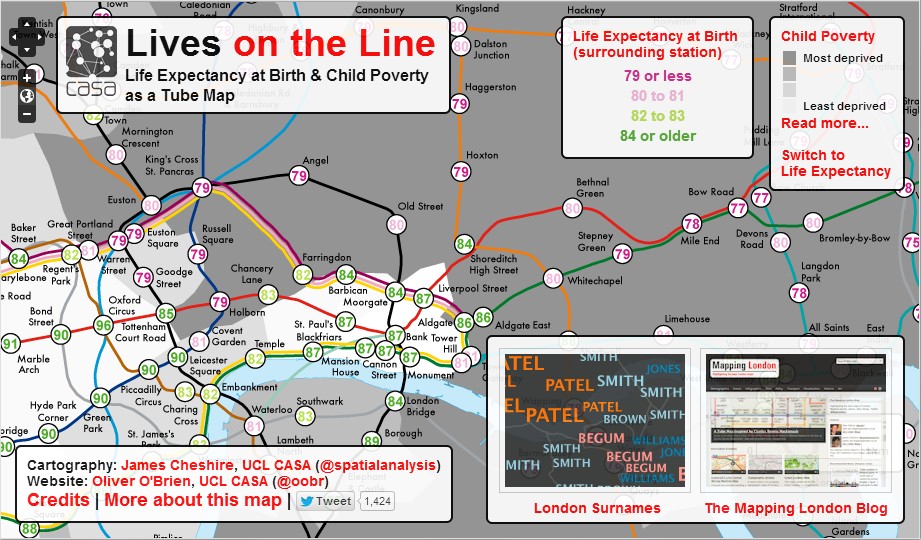








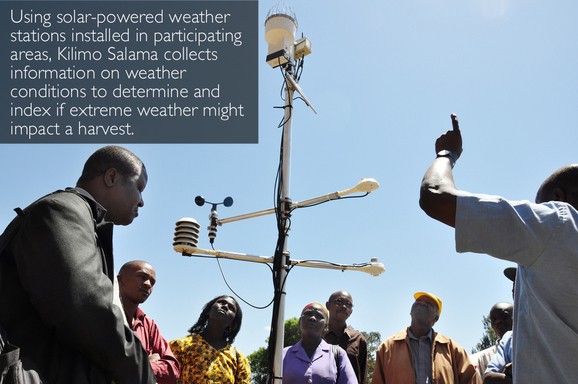








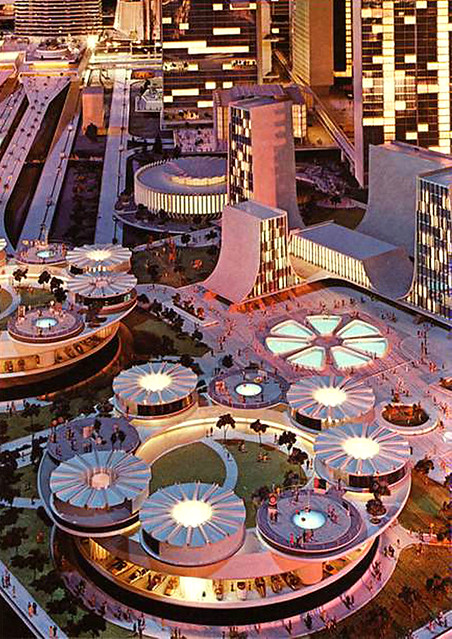

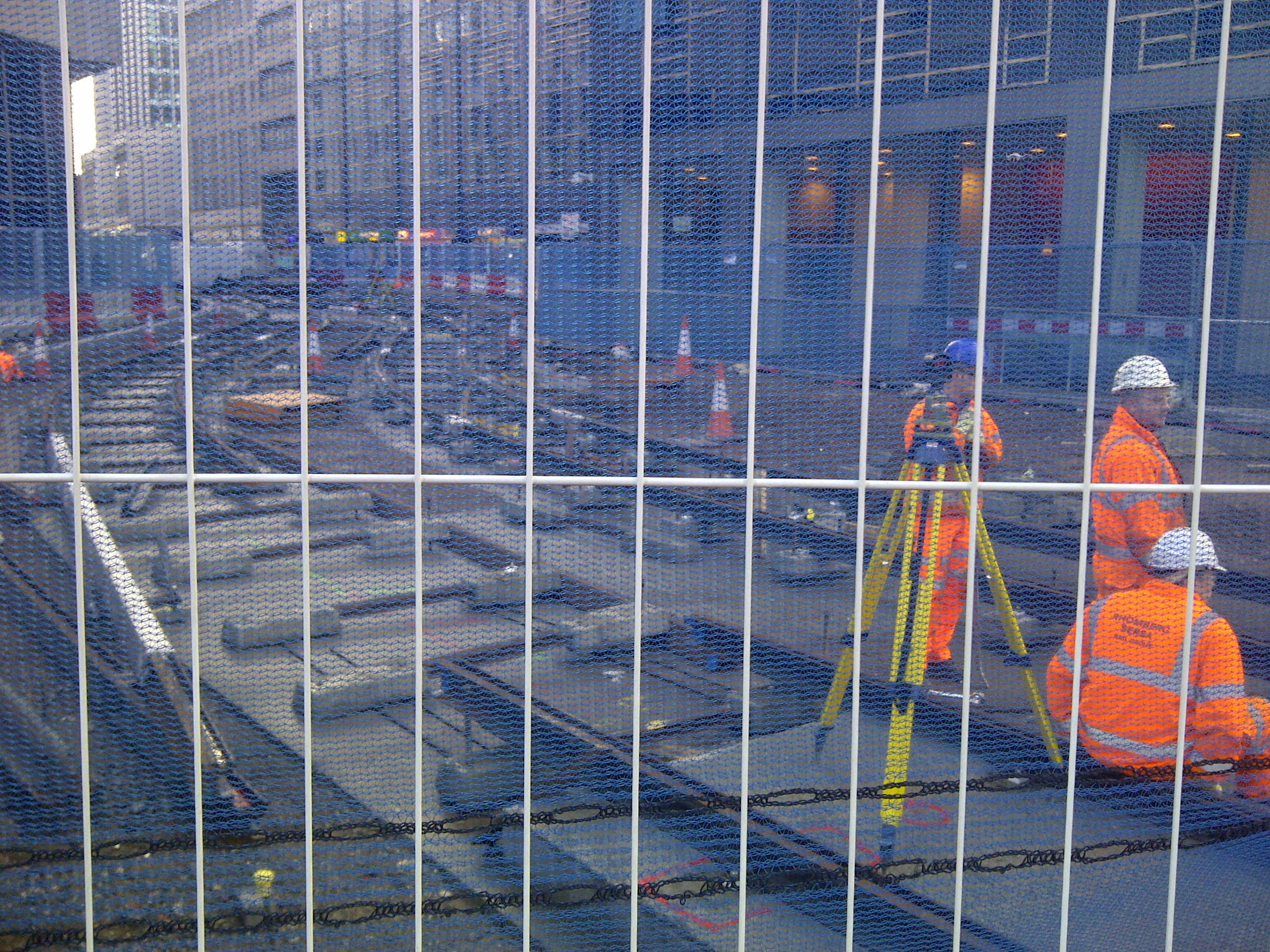



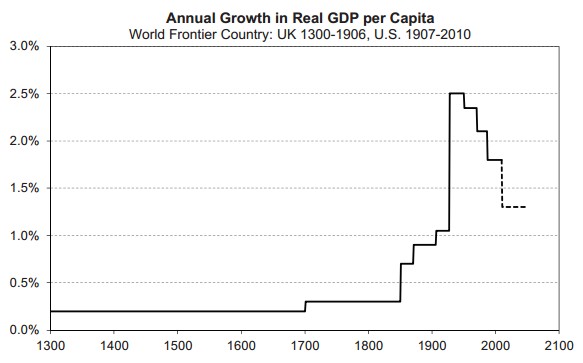
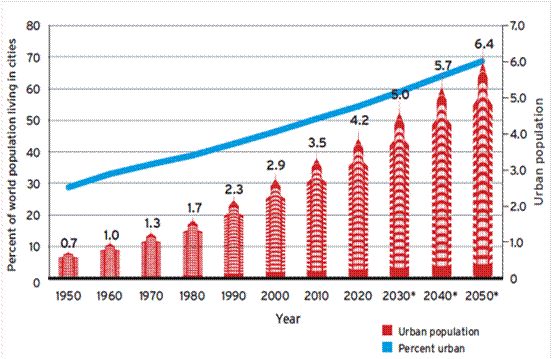


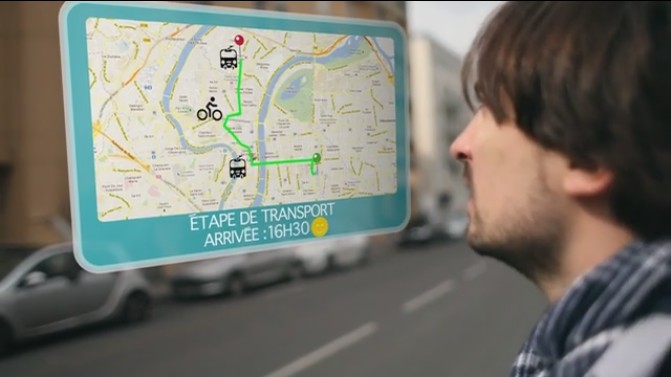




 The Urban Technologist


