Zen and the art of messy urbanism

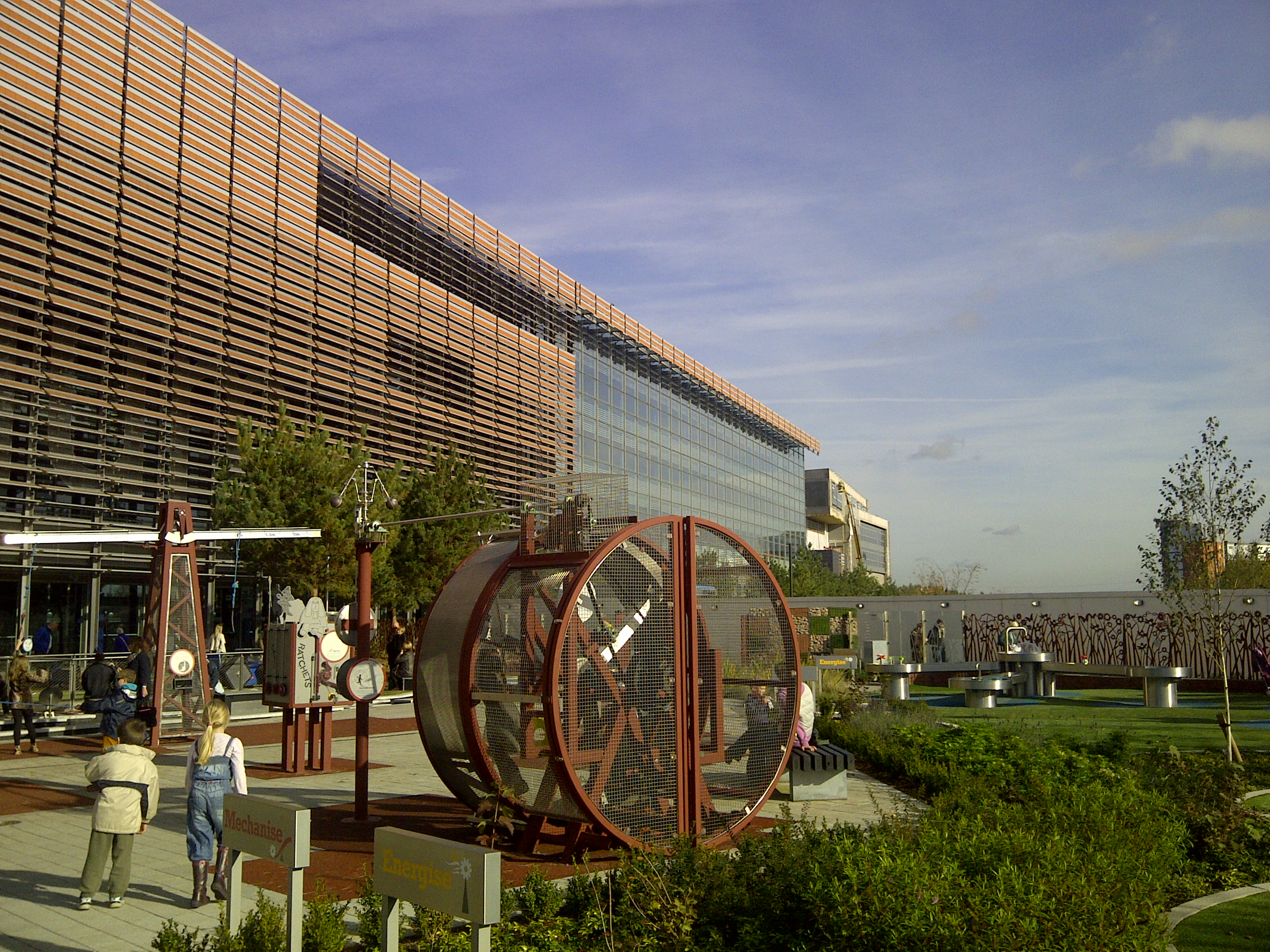
(Children playing in the “Science Garden” outside Birmingham’s Science Museum at Millenium Point; part of the new Eastside City Park, a vast urban space surrounded by education, culture and manufacturing.)

Over the past few months and weeks, some interesting announcements have been made concerning emerging frameworks and protocols for Smarter Cities.

Perhaps the highest profile was the formation of the “City Protocol” collaboration in Barcelona, which will be formally launched at the Smart City Expo later this month. The protocol has been established to identify and capture emerging practises and standards to promote interoperability across city systems and enable progress towards city-level goals to be stimulated, coordinated and measured.

More recently, UN-HABITAT, the United Nations agency for human settlements which promotes socially and environmentally sustainable towns and cities, and a source frequently referred to for statistics concerning the progress of urbanisation, published its “State of the World’s Cities 2012/2013” report, which includes extensive consultation with cities around the world. It proposes a number of new mechanisms which are intended to assist decision makers in cities.

These resources of knowledge and experience will be key to helping cities face the grand challenge of demographics, economics and sustainability that is becoming acute. In a paper published in the respected, peer-reviewed scientific journal Nature, Professors Geoffrey West and Luis Bettencourt described it as “the greatest challenge that the planet has faced since humans became social“; and we have already seen evidence of its urgency. The “Barnett graph of doom“, for example, famously predicted that within 20 years, unless significant changes in public services are made, cities will be unable to afford to provide any services except social care; the UK’s energy regulator Ofgem’s recently warned that the country could experience power shortages in the winter of 2015-2016; and there is concern that this year’s drought in the US will once again cause food shortages across the world.

However, we should not expect that cities will reach a sustainable future state through the process of city leaders and institutions adopting a deterministic framework or method. Such an approach may work when applied to the transformation of organisations and their formal relationships with partners; but cities are more fundamentally complex “systems of systems” incorporating vast numbers of autonomous agents and interrelationships.

The Collective Research Initiatives Trust (CRIT) recently produced a fascinating piece of research, “Being Nicely Messy“, about the evolution of Mumbai’s economy in this context. As a background for the transformative changes taking place, they state that:

“While the population in Mumbai grew by 25% between 1991 and 2010, the number of people traveling by trains during the same years increased by 66% and number of vehicles grew by 181%. At the same time, the number of enterprises in the city increased by 56%. All of this indicates a restructuring of the economy, where the nature of work and movement has changed.”

Rather than focus on the policies and approaches of the city’s institutions, CRIT’s research focussed on the activities of everyday entrepreneurs in Mumbai – average people, finding a way to make their livelihood within the city:

“… new patterns of work emerged as the new entrepreneurs struggled to survive and settle. they occupied varied locations and blurred the distinction between formality and informality; legality and illegality as all of them produced legitimate commodities and services.”

“… the entrepreneurs of Mumbai have innovatively occupied city spaces maximizing their efficiency …”

“… the blurry / messy condition … contributes to the high transactional capacity of the urban form.”

“… mumbai’s urbanism is like a froth with overlapping ecosystems of geographies, legislations, claims, powers, kinships, friendships & information.”

Crucially, CRIT relate this “messy” innovative activity to the ability of individuals within the city to access opportunities to create their own wealth and livelihood within the city and its changing economy:

“… mobility or to mobilize is the ability to navigate the complex urban ecosystem of geographies, legislations, claims, powers, relationships and information to construct one’s path for the future amidst these movements.”

(Photo by lecercle of a girl in Mumbai doing her homework on whatever flat surface she could find. Her use of a stationary tool usually employed for physical mobility to enhance her own social mobility is an example of the very basic capacity we all have to use the resources available to us in innovative ways)

This sort of organic innovation takes place continuously in cities, and increasingly exploits technology resources as well as the capacity of the physical urban environment and its transport systems. For example I wrote recently about the community innovation that’s taking place in Birmingham currently; including “social media surgeries” and “hacking” weekends. There is currently a considerable hope that this adoption of technology by community innovators will enable them to achieve an impact on cities as a whole.

But creating sustainable, scalable new enterprises and city services from these innovations is not straightforward. After analysing the challenges that have caused many such initiatives to achieve only temporary results, O’Reilly Radar wrote recently that cities seeking to sustainably exploit open data and hacktivism need to invest in “sustainability, community, and civic value”; and San Francisco announced a series of measures, including both legislation for open data and the appointment of a “Chief Data Officer” for the city, intended to achieve that. I have previously argued that in addition, cities should analyse the common technology services required to support these innovations in a secure and scalable way, and make them available to communities, innovators and entrpreneurs.

For this to happen, new relationships are required between city institutions, their service delivery and technology partners, communities, entrepreneurs, businesses, social enterprises and all of the other very varied stakeholders in the city ecosystem. I’ve previously described the conversations and creation of trust required to build these relationships as a “soft infrastructure” for cities; and new models of collaborative decision-making and activity such as “constellations” and “articulations” are emerging to describe them.

It’s very important to not be too structured in our thinking about soft infrastructure. There is a temptation to revert to thinking in silos, and assume that city communities can be segmented into areas of separate concern such as neighbourhoods, sectors such as “digital entrepreneurs”, or service user communities such as “commuters”. To do this is to forget where and how innovation and the creation of new value often occurs.

Michael Porter, creator of the famous “five forces” model of business, and his colleagues have written that new value is often created when capabilities – and technologies – are converged across sectors. In 2006,  IBM’s worldwide survey of CEOs in public and private sector carried out with The Economist’s Intelligence Unit identified several different areas of innovation: products and services, markets, operations and business models. In particular, innovations that use new business models to offer products and services that transcend and even disrupt existing market structures have the potential to create the most value.

The CRIT research recognised this need to blur boundaries; and went further to state that imposing formal boundaries inhibits the transactions that create value in the economy and society of cities. Tim Stonor has written and presented extensively on the idea that a city should be a “transaction engine”; and many urbanists have asserted that it is the high density of interactions that cities make possible that have led to the city becoming the predominant form of human habitation.

(Photo by Halans of volunteers collecting food for OzHarvest, who redistribute excess food from restaurants and hotels in Australian cities to charities supporting the vulnerable.)

Human thinking creates boundaries in the world; our minds recognise patterns and we impose those patterns on our perceptions and understanding. But this can inhibit our ability to recognise new possibilities and opportunities. Whilst many useful patterns do seem to be emerging from urban innovation – a re-emergence of bartering and local exchanges, social enterprises and community interest companies, sustainable districts, for example – it’s far too early for us to determine a market segmentation for the application of those models across city systems. Rather than seeking to stimulate innovation within specific sectors, CRIT argue instead for the provision of catalogues of “tools” that can be used by innovators in whatever context is appropriate for them.

The European Bio-Energy Research Institute in Birmingham, for example, is seeking to establish a regional supply chain of SMEs to support its work to develop small-scale, sustainable technology for recovering energy from waste food and sewage; in Mexico City, a new bartering market allows residents to exchange recyclable waste material for food; and in the UK the “Eco-Island” Community Interest Company is establishing a local smart-grid on the Isle of Wight to harness sustainable energy sources to enable the entire island to become self-sufficient in energy. These very different models are converging city systems such as food, waste and energy and disrupting the traditional models for supporting them.

In “The Way of Zen“, Alan Watts comments of Zen art that “the very technique involves the art of artlessness, or what Sabro Hasegawa has called the ‘controlled accident’, so that paintings are formed as naturally as the rocks and grasses which they depict”. Just as the relentless practise of technique can enable artists to have “beautiful accidents” when inspiration strikes; so cities should look to provide more effective tools to innovators for them to exploit in whatever context they can create new value. We should not expect the results always to be neat and tidy; and nor should our approach to encouraging them be.

Ten ways to pay for a Smarter City (part two)

(Photo of the Brixton Pound by Charlie Waterhouse)

As I wrote recently, cities across the world are pursuing Smarter City strategies for common reasons including demographics, economics and the environment; but they start in very different social, financial and organisational positions. So there is a need to consider a variety of mechanisms when looking for the financial means to support those strategies.

Last week I discussed five ways in which cities can finance Smarter initiatives; they included tried-and-tested sources such as research grants, and more exploratory ideas such as sponsorship. In this post I’ll consider five more.

6. Approach ethical investment funds, values-led banks and national lotteries

Whilst the current state of the global economy has focused attention on the monetary aspects of our financial systems, in the context of Smarter Cities it is important to note that amongst the great variety of investment instruments are some which have social and environmental objectives.

I was honoured last week to attend the official opening of Sunderland’s new business support facility for social enterprises, Container City, operated by Sustainable Enterprise Strategies (SES). The centre, fabricated from 37 re-conditioned and adapted shipping containers, provides a new basis from which SES can support the hundreds of social enterprises and traditional businesses that they help to start and operate each year; and who provide services and employment in some of the city’s most disadvantaged areas.

Several of these organisations use emerging technologies in innovative ways to promote social outcomes in the city – such as Play Fitness whose “Race Fitness” product uses gamification to encourage children from deprived communities to engage in fitness and wellbeing; or See Detail who provide employment opportunities in software testing for people on the Autistic spectrum. I’ve argued before that this sort of innovation in communities can be a powerful force for making cities Smarter.

SES are supported by a variety of means, including financial institutions with mutual status, and funding programmes aimed specifically at encouraging social enterprise. The UK’s National Lottery provides one such programme, the “Big Lottery Fund“, which aims to support community groups and projects that improve health, education and the environment.

These sort of schemes operate in many countries, in addition to the ethical investment funds available in international markets. Community Interest Companies are another example of the new forms of organisation that are emerging to take advantage of them. Credit Unions and other forms of mutually owned or locally focussed financial institutions exist across the world; and the Global Alliance for Banking on Values recently issued a report stating that what it calls “sustainable banks” are outperforming their mainstream counterparts.

Such organisations will often demand a financial return in addition to social and environmental outcomes; but well-formed investment proposals for Smarter initiatives should be capable of meeting those objectives.

7. Make procurement Smarter

(Photo of a smart parking meter in San Francisco by Jun Seita)

Cities already spend hundreds of millions to billions of Pounds, Euros and Dollars each year operating city systems; and buying products, materials and services to support them. The scoring criteria in those procurements can be a powerful tool to create smarter cities.

Systems such as utilities, transport and maintenance of the environment are often contracted out to the private sector. If procurement criteria for those contracts are specified using traditional measures for the provision and cost of capability, then suppliers will likely offer traditional solutions and services. However, if procurements specify requirements for outcomes and innovation in line with a Smarter City strategy, then suppliers may offer more creative approaches.

Cities could specifically procure Smarter systems such as smart meters for water and power; or they could specify outcome-based procurement criteria such as lowering congestion or carbon impact in traffic systems; or they could formulate more open criteria to incent innovation and creativity. Jackie Homan of Birmingham Science City recently wrote a great article describing how some of those ideas are being explored in Birmingham and Europe.

8. Use legitimate state aid

A significant component of many Smarter City strategies is to stimulate economic and social growth in the less economically active areas of cities. Such initiatives often run into a “chicken-and-egg” or “bootstrapping” problem: new businesses need infrastructures such as broadband connectivity to start and succeed; but until an area has significant business demand, network providers won’t invest in deploying them.

Birmingham and Sunderland have both addressed this problem recently, winning exemptions from or avoiding conflict with European Union “State Aid” legislation to secure city-wide broadband deployments.

It’s important to make sure that such infrastructures are accessible. In the same way that a new city highway can divide the communities it passes through rather than linking them, it is important that new technology infrastructures are designed in consultation with local businesses and communities in order to provide capabilities they really need, through commercial models that they can afford to use.

Tax increment financing, which allows government bodies to use projected future increases in tax and business rates returns to justify investment in redevelopment, infrastructure, and other community-improvement projects, is another mechanism that can be used in this way. In the UK, the national government is undertaking an important extension of this thinking by agreeing a set of individual “City Deals” with cities such as Leeds and Birmingham, giving them new autonomous powers over local taxation and investment.

(Developers at City Camp Brighton explore ways in which collaboration and web technologies can contribute to the city’s future. Photo by Richard Stubbs)

9. Encourage Open Data and Hacktivism

Communities can bring great passion and resources to bear in finding new ways for their cities to work. In the domain of technology, this is exemplified in the phenomenon of “Hacktivism” in which volunteers lend their time and expertise to create new urban applications.

As I’ve discussed before, when this willingness to contribute is combined with the movement to Open Data and the transformation underway to regional shared services in public sector, powerful forces can be unleashed.

Code for America have championed this agenda in the United States, and this year Code4Europe was launched to promote a similar level of engagement in Europe.

There are limits to what can be achieved for free. But in my view great potential exists, particularly if City authorities can work in partnership with these movements to provide secure, scalable, open technology infrastructures that they can exploit.

However unfamiliar the produce, markets still need physical, infromation and governance infrastructure

10. Create new markets

For a long time I’ve considered that we should conceive of the platforms that support Smarter Cities not just as technology infrastructures, but as marketplaces – i.e. systems of transactions that take place on those new infrastructures. Marketplaces create money-flows; and marketplace operators can extract revenues from those flows which in return create the case for investing in the marketplace infrastructure in the first place. Further; by opening up the marketplace infrastructure to innovative local service providers, unforeseen new Smarter systems can be created.

There are many examples of new markets that use technologies such as social media and analytics to identify parties between which new transactions can be performed; and that then provide the infrastructure and governance to carry out those transactions. Craig’s List and E-Bay are well-known general marketplaces; whilst Freecycle specialises in the free distribution of unwanted items for re-use in communities. Zopa and Prosper apply these ideas to peer-to-peer lending and investment.

Similar markets with specific relevance to city systems are emerging. Streetline offer a Smarter Parking solution which could be viewed as a marketplace in parking spaces; and Carbon Voyage‘s system for sharing taxis can be seen as a marketplace for journeys. I’ve explored other examples of local, marketplace-based business models in food and energy in previous articles on this blog; and discussed some of the local currency and trading systems emerging to support them.

What these examples have in common is that they are independent businesses or social enterprises who are winning backing from investors because they have the potential to generate revenue. As I argued in the case of Open Data and Hacktivism above, if cities can find ways to support such innovative businesses, they’ll find another community that is able to help them achieve a Smarter City transformation.

The buck doesn’t stop here

The ideas for funding Smarter Cities that I’ve discussed over the last two weeks are certainly not exhaustive; and as a technologist rather than an economist or financier I certainly don’t consider them definitive.

But hopefully I’ve provided enough examples in support of them to demonstrate that they are realistic approaches with the potential to be re-used. I certainly expect to see them all play a role in financing the transition to the cities of the future.

Extreme urbanism: live here at your peril

20120605-011210.jpg

(Photo by O Palsson)

In “The Triumph of the City“‘ Edward Glaeser argues that efficient cities should be built up around elevators, rather than built out around cars. As a resident of Birmingham, the city where Matthew Boulton and James Watt came together to commercialise the steam engine that powered the first of those elevators (see here and here), I’m predisposed to agree.

Glaeser, along with Richard Florida, Tim Stonor and others argue that cities are vital to our society and economy as they are the places where people congregate to generate and share ideas, and enact Matt Ridley’s memorable idea that value is created when “ideas have sex“. Glaeser even argues that cities emphasise our basic humanity because the defining characteristic of that humanity is our ability and desire to learn from each other.

It’s also clear that our cities need to improve in efficiency. As more and more people live on the planet and as more and more of us live in cities, political, charitable and scientific organisations have pointed out that each of us simply must consume less resources. For examples refer to the United Nations “7 Billion Actions” programme; the lobbying organisation Population Matters; and the recent report published by the UK’s Royal Academy, “People and the Planet“.

But how far do we want to go in using the modern technologies that have succeeded lifts and cars to enable us to live in ever greater numbers at ever greater density?

Some imaginative but frankly scary forms of extreme urbanism are emerging as technologists invent concepts for ever larger and more densely populated cities, and for systems to supply the resources that enable the people who live in them to live and work. I’m saying that as a technologist myself; and as someone who’s passionate about the possibilities technology offers to improve wealth and wellbeing in urban environments – I gave some examples in a previous blog post.

But I don’t personally find it attractive, for example, to consider that the only way we can feed city populations is by growing artificial meat in laboratories, as Dutch and Canadian scientists have suggested. Or that we should farm vertically in skyscrapers, at the same time as building homes and offices for people underground in “earthscrapers“.

To me those ideas are extreme urbanism; and they don’t represent the sort of city I’d like to live in. (I do live in a city, by the way; and whilst I live in a relatively spacious suburb, I nevertheless find it easy to use efficient public transport to get around far more than I use my own car).

There are alternatives to extreme urbanism. One of them is adopting a sensible approach to population growth, as promoted by Population Matters amongst others. Our challenges would be less severe if there were less of us; and many of the most disadvantaged communities and individuals across the world would be better off if they were more able to choose the size of their families and provide equal opportunities to all of their children of either sex.

And there are healthier ideas for applying technology to make cities more efficient. Rather than growing meat in laboratories, why not provide the know-how to encourage people to grow vegetables and keep small animals in city gardens, as Landshare and Growing Birmingham do? And why not use social media intelligently to connect food consumers with local food producers as Big Barn do, making it as easy to buy sustainable, locally produced food as it is to buy globally sourced food from supermarkets?

There are tremendous efficiencies that can be realised in city systems by such “hyperlocal” thinking; and the same ideas could make city life more attractive and nuanced, rather than clinical and engineered.

For a couple of years now I’ve been producing my own air-dried and smoked meats such as salami, bresaola, and chorizo at home in Birmingham. Of course they do not taste the same as the Mediterranean originals; but they taste vastly superior to anything I’ve bought in a supermarket. Rather than think of them as poor alternatives to Spanish and Italian produce, why not consider them regional variations to be explored and valued?

The aforementioned Royal Academy report asserts that as a species inhabiting a planet we find ourselves at a crucial juncture for determining what the size of our population should be, and how we should collaborate to use resources to sustain ourselves. I would argue that our response should be a balanced assessment of the opportunity for technology to enable efficient city ecosystems, in combination with moderation of population growth.

If we get that right, we can all enjoy a more interesting, healthy and efficient life. I would much prefer that outcome to the possibility of descending by default into the extreme dystopias described in novels such as “We” by Yevgeny Zamyatin or films such as Logan’s Run. They describe worlds that are fascinating to experience as works of art; but I’d hate to live in them.