Little/big; producer/consumer; and the story of the Smarter City

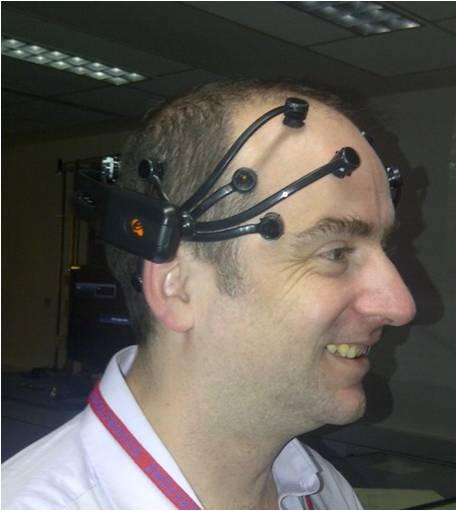
(Photo of me wearing the Emotiv headset)

(Photo of me wearing the Emotiv headset)

I have a four year old son. By the time I die he’ll be about my age if I’m lucky.

If I could see him now as he will be then; I would struggle to recognise his interactions with the world as human behaviour in the terms I am used to understanding it.

When he was two years old, I showed him a cartoon on the touchscreen tablet I’d just bought. When it finished, he pressed the thumbnail of the cartoon he wanted to watch next.

The implications of that instinctive and correct action are profound, and mark the start of the disappearance of the boundary between information and the physical world.

Just as the way that we communicate with each other has changed increasingly rapidly from the telephone to e-mail to social media; so the way that we interact with information systems will transform out of all recognition as technology evolves beyond the keyboard, mouse and touchscreen.

The Emotiv headset I’m wearing in the photo above can interpret patterns in the magnetic waves created by my thoughts as simple commands that can be understood by computers. My thoughts can influence the world of information; and they can even be captured as images, as shown in this recent work using Magnetic Resonance Imaging (MRI).

And information can influence the physical world. From control technology implanted in the muscles of insects; to prosthetic limbs and living tissues that are created from digital designs by general-purpose 3D printers. As the way we interact with information systems and use them to affect the world around us becomes so natural that we’re barely conscious of it, the Information Revolution will change our world in ways that we are only beginning to imagine.

These technologies offer striking possibilities; and we face striking challenges. The two will come together where the activity of the world is most concentrated: in cities.

In the last revolution, the Industrial Revolution, we built the centres of cities upwards around lifts powered by the steam engine invented by James Watt and commercialised by Matthew Boulton in Birmingham. In the last century we expanded them outwards around the car as we became used to driving to work, shops, parks and schools.

(Photo of 3D printer by Media Lab Prado)

We believe we can afford a lifestyle based on driving cars because its long-term social and environmental costs are not included in its financial price. But as the world’s population grows towards 9 billion by 2050, mostly in cities that are becoming more affluent in what it’s increasingly inaccurate to call “emerging economies”; that illusion will be shattered.

We’re already paying more for our food and energy as a proportion of income. That’s not because we’re experiencing a “double-dip recession”; it’s because the structure of the economy is changing. There is more competition for grain to feed the world’s fuel and food needs; and droughts caused by climate change are increasing uncertainty in it’s supply.

We have choices to make. Do we consume less? Can we use technology to address the inefficiencies of supply chains which waste almost half the food they produce whilst transporting it thousands of miles around the world, without disrupting them and endangering the billions of lives they support? Or do we disintermediate the natural stages of food supply by growing artificial meat in laboratories?

These choices go to the heart of our relationship with the natural world; what it means to be human; and to live in an ethical society. I think of a Smarter City as one which is taking those choices successfully; and using technology to address its challenges in a way that is both sustainable, and sympathetic to us as human beings and as communities.

Three trends are appearing across technology, urbanism, and the research of resilient systems to show us how to do that. The first is for little things and big things to work constructively together.

The attraction of opposites part 1: little and big

(Photo of Masshouse Circus, Birmingham, before its redevelopment, by Birmingham City Council)

(Photo of Masshouse Circus, Birmingham, before its redevelopment, by Birmingham City Council)

Some physical interventions in cities have been “blunt”. Birmingham’s post-war economy needed traffic to be able to circulate around the city centre; but the resulting ringroad strangled it, until it was knocked down a decade ago. It didn’t meet the needs of individuals and communities within the city to live and interact.

By contrast, Exhibition road in London – a free-for-all where anyone can walk, drive, sit, park or catch a bus, anywhere they like – knits the city together. Elevated pedestrian roundabouts and city parks similarly provide infrastructures that support fluid movement by people cycling and walking; modes of transport in which it is easy to stop and interact with the city.

These big infrastructures are compatible with the life of the little people who inhabit the city around them; and who are the reason for its existence.

The same concepts apply to technology infrastructures.

Technology offers great promise in cities. We can collect data from people and infrastructures – the movement of cars, or the concentration of carbon dioxide. We can aggregate that data to provide information about city systems – how fast traffic is moving, or the level of carbon emissions of buildings. And we can draw insight from that information into the performance of cities – the impacts of congestion on GDP, and of environmental quality on life expectancy.

Cities are deploying mobile and broadband infrastructures to enable the flow of this data; and “open data” platforms to make it available to developers and entrepreneurs for them to explore new business opportunities and develop novel urban services.

But how does deploying broadband infrastructure in a poor neighbourhood create growth if the people who live there can’t afford subscriptions to it? Or if businesses there don’t have access to computer programming skills?

Connectivity and open data are the “big infrastructures” of the information age; how do we ensure that they are properly adapted to the “little” needs of individual citizens, businesses and communities?

We will do that by concerning ourselves with people and places, rather than information and infrastructures.

(Delay times at traffic junctions visualised by the Dublinked city information partnership.)

(Delay times at traffic junctions visualised by the Dublinked city information partnership)

Where civic information infrastructures are successful in creating economic and social growth, they are not deployed; they are co-created in a process of listening and learning between city institutions; businesses; communities; and individuals.

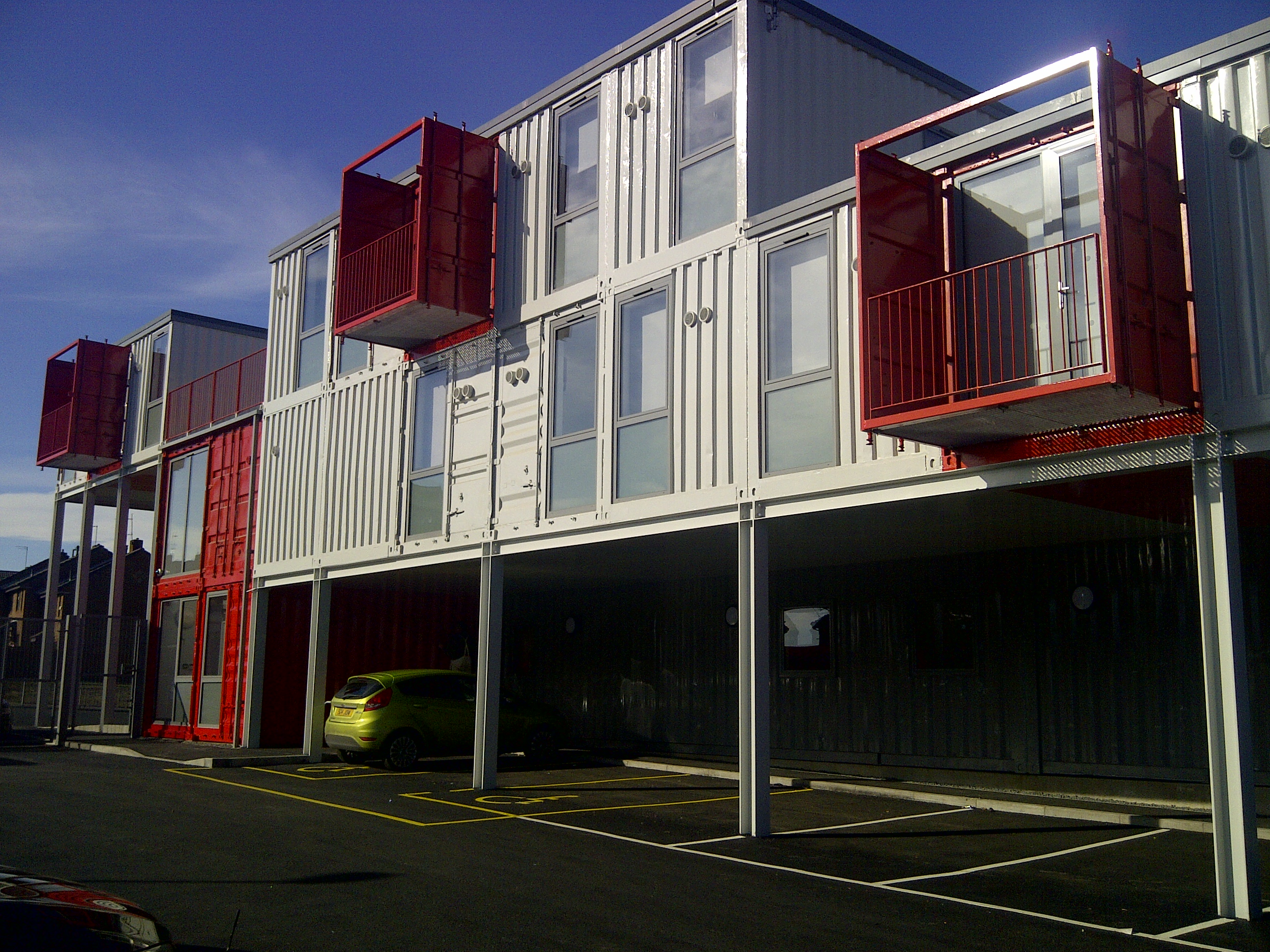
This process requires us to visit new places, such as the “Container City” incubation facility for social enterprise in Sunderland; to learn new languages; and understand different systems of value, such as the “triple bottom line” of social, environmental and financial capital.

If we design infrastructures by listening to and then enabling ideas, then we put the resources of big institutions and companies into the hands of people and businesses in a way that makes it less difficult to create many, more effective “little” innovations in hyper-local contexts – the “Massive Small” change first described by Kelvin Campbell.

By following this process, Dublin’s “Dublinked” partnership between the City and surrounding County Councils; the National University of Ireland, businesses and entrepreneurs is now sharing 3,000 city datasets; using increasingly sophisticated tools to draw value from them; identifying new ways for the city’s transport, energy and water systems to work; and starting new, viable, information-based businesses.

As a sustained process, these conversations and the trust they create form a “soft infrastructure” for a city, connecting it’s little and big inhabitants.

This soft infrastructure is what turns civic information into services that can become part of the fabric of life of cities and communities; and that can enable sustainable growth by weaving information into that fabric that describes the impact of choices that are about to be made.

(A smartphone alert sent to a commuter in a San Francisco pilot project by IBM Research and Caltrans that provides personalised daily predictions of commuting journey times – and suggestions for alternative routes.)

For example, a project in San Francisco used algorithms that are capable of predicting traffic speeds and volume in the city one hour into the future with 85% accuracy. These algorithms were developed in a project in Singapore, where the resulting predictions were made available to traffic managers, so that they could set lane priorities and traffic light sequences to attempt to prevent any predicted congestion.

But in California, the predictions were made available instead to individual commuters who where told in advance the likely duration of their journey each day, including the impact of any congestion that would develop whilst the journey was underway. This gave them a new opportunity to take an informed choice: to travel at a different time; by a different route or mode; or not to travel at all.

The California project shows that it’s far more powerful to use the information resulting from city data and predictive algorithms not to influence a handful of traffic managers who respond to congestion; but to influence the hundreds or thousands of individual travellers who create it; and who have the power to choose not to create it.

And in designing information systems such as this, we can appeal not just to selfish interests, but to our sense of community and place.

A project in Dubuque, Iowa uses Smart water meters to tell householders whether they are using domestic appliances efficiently; and can detect weak underlying signals that indicate leaks. People who are given this information can choose to act on it; and to a certain extent, they do.

But something remarkable happened in a control group who were also given a “green points” score comparing their water efficiency to that of their neighbours. They were literally twice as likely to improve their water efficiency as people who were only told about their own water use.

Maslow’s hierarchy of needs tells us that once the immediate physical needs of our families are secured, our motivations are next driven by our relationships with the people around us. Technology gives us the ability to design new information-based services that appeal directly to those values, rather than to more distant general environmental concerns.

The attraction of opposites part 2: producer and consumer

(Photo of 3D-printed objects by Shapeways)

This information is at our fingertips; we are its producers and consumers. For the last decade, we have used and created it when we share photos in social media or buy and sell in online marketplaces.

But the disappearance of the boundaries between information systems, the physical world and our own biology means that it is not just information that we will be producing and consuming in the next decade, but physical goods and services too.

As a result, new peer-to-peer markets can already be seen in food production; parking spaces; car journeys; the manufacture of custom objects; and the production of energy from sources such as bio-matter and domestic solar panels.

Of course, we have all been producers and consumers since humans first began to farm and create societies with diversified economies. What’s new is the ability of technology to dramatically improve the flexibility, timeliness and efficiency of interactions between producers and consumers; creating interactions that are more sustainable than those enabled by conventional supply chains.

Even more tantalising is the possibility of using new rates of exchange in those transactions.

In Switzerland, a complementary currency, the Wir, has contributed to economic stability over the last century by allowing some debt repayments to be bartered locally when they cannot be repaid in universal currency. And last year, Bristol became the 5th UK town or city to operate its own currency.

These currencies are increasingly using advanced technologies, such as the “Droplet” smartphone payment scheme now operating in Birmingham and London. This combination of information technology and local currencies could be used to calculate rates of exchange that compare the complete social, environmental and economic cost of goods and services to their immediate, contextual value to the participants in the transaction.

That really could create a market infrastructure to support Smarter, sustainable, and more equitable city systems; and it sounds like a great idea to me.

But if it’s such a good idea, why aren’t markets based on it ubiquitous already?

Collaborative governance; and better stories for Smarter Cities

(Stories of Mumbai: an exploration of Mumbai’s history of urban development, and its prospects for the future, using storytelling and puppetshows, by the BMW Guggenheim Lab)

If we are going to use the technologies and ideas I’ve described to transform cities, then technologists like me need to learn from the best of urbanism.

Jan Gehl taught us to design liveable cities not by considering the buildings in them; but how people use the spaces between buildings.

In Smarter Cities our analogous challenge is to concentrate not only on information infrastructures and the financial efficiencies that they provide; not least because “Smart” ideas cut across city systems, and so gains in efficiency don’t always reward those who invest in infrastructure.

Our objective instead is to create the harder to quantify personal, social and environmental value that results when those infrastructures enable people to afford to eat better food or to heat their homes properly in winter; to access affordable transport to places of employment; and to live longer, independent lives as productive contributors to their communities.

These are the stories we need to tell about Smarter Cities.

These stories are of vital importance because the third trend we observe is that cities only really get smarter when their leaders and communities coordinate the use of public and private assets to achieve a collective vision of the future, and to secure external investment in it.

Doing so needs the commitment not just of the owners and managers of those assets, but of the shareholders, voters, employees and other stakeholders that they are accountable to.

To win the commitment of such a broad array of people we need to appeal to common instincts: our understanding of narrative, and our ability to empathise. Ultimately we will need the formal languages of finance and technology, but they are not where we should start.

DDespommier

(Dickson Despommier, inventor of the vertical farm, speaking at TEDxWarwick 2013)

It’s imperative that we tell these stories to inspire the evolution of our cities. The changes in coming decades will be so fast and so profound that cities that do not embrace them successfully will suffer severe decline.

Luckily, our ability to respond successfully to those changes depends on a technology that is freely available: language, used face to face in conversations. I can’t think of a more essential challenge than to use it to tell stories about how our world can be come smarter, fairer, and more sustainable.

And there’s no limit to what any one of us can achieve by doing this. Because it is collaborative governance rather than institutional authority that enables Smarter Cities, then there are no rules defining where the leadership to establish that governance will come from.

Whether you are a politician, academic, technologist, business person, community activist or simply a passionate individual; and whether your aim is to create a new partnership across a city, or simply to start an independent social enterprise within it; that leadership could come from you.

(This article is based on the script I wrote in preparation for my TEDxWarwick presentation on 13th March 2013).
Better stories for Smarter Cities: three trends in urbanism that will reshape our world

(Stories of Mumbai: an exploration of Mumbai’s history of urban development, and its prospects for the future, using storytelling and puppetshows, by the BMW Guggenheim Lab)

Towards the end of last year, it became clearer how cities could take practical steps to position themselves to transform to meet the increasing economic, environmental and social challenges facing them; and to seek investment to support those transformations, as I described in “Smart Ideas for Everyday Cities“.

Equally important as those practical approaches to organisation, though, are the conceptual tools that will shape those transformations. Across fields as diverse as psychology, town planning, mathematics, construction, service-design and technology, some striking common themes have emerged that are shaping those tools.

Those themes imply that we will need to take radically different approaches to city systems driven by the astonishing, exciting and sometimes disturbing changes that we’re likely to see taking place increasingly rapidly in our world over the next decade.

To adopt the terminology of Irene Ng, a Researcher in new economic models and service science at the University of Warwick, these changes will create both “needs-led” and “capability-led” drivers to do things differently.

“Needs-led” changes will be driven by the massive growth taking place in the global middle class as economies across the world modernise. The impacts will be varied and widespread, including increasing business competition in a single, integrated economy; increasing competition for resources such as food, water and energy; and increasing fragility in the systems that supply those resources to a population that is ever more concentrated in cities. We are already seeing these effects in our everyday lives: many of us are paying more for our food as a proportion of our income than a few years ago.

At a recent lecture on behalf of the International Federation for Housing and Planning and the Association of European Schools of Planning, Sir Peter Hall, Professor of Planning and Regeneration at the Bartlett School of Planning, spoke of the importance of making the growth of cities sustainable through the careful design of the transport systems that support them. In the industrial revolution, as Edward Glaeser described in Triumph of the City, cities grew up around lifts powered by steam engines; Sir Peter described how more recently they have grown outwards into suburbs populated with middle-class car-owners who habitually drive to work, schools, shops, gyms and parks.

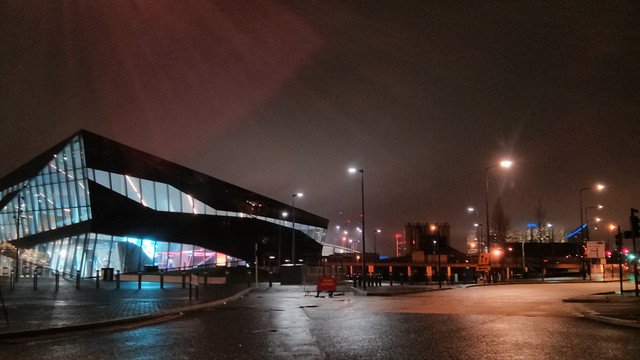
This lifestyle simply cannot be sustained – in the developed world or in emerging economies – across such an explosively growing number of people who have the immediate wealth to afford it, but who are not paying the full price of the resources it consumes. According to the exhibition in Siemens’ “Crystal” building, where Sir Peter’s lecture was held, today’s middle class is consuming resources at one-and-a-half times the rate the world creates them; unless something changes, the rate of growth of that lifestyle will hurl us towards a global catastrophe.

So, as the Collective Research Initiatives Trust (CRIT) observed in their study of the ongoing evolution of Mumbai, “Being Nicely Messy“, the structure of movement and the economy will have to change.

(Siemens’ Crystal building in London, a show case for sustainable technology in cities, photographed by Martin Deutsch)

Meanwhile, the evolution of technology is creating incredible new opportunities for “capability-led” change.

In the last two decades, we have seen the world revolutionised by information and communication technologies such as the internet and SmartPhones; but this is only the very start of a transformation that is still gathering pace. Whilst so far these technologies have created an explosion in the availability of information, recent advances in touch-screen technology and speech recognition are just starting to demonstrate that the boundary between the information world and physical, biological and neural systems is starting to disappear.

For example, a paralysed woman recently controlled a robotic arm by thought; and prosthetic limbs, a working gun and living biological structures such as muscle fibre and skin are just some of the things that can be 3D printed on demand from raw materials and digital designs.

What changes to our urban systems will these developments – and the ones that follow them – lead to?

Following the decline of industries such as manufacturing, resource-mining and ship-building,  many post-industrial cities in the developed world are rebuilding their economies around sectors with growth potential, such as environmental technology and creative media. They are also working with the education system to provide their citizens with access to the skills those sectors require.

Supplying the skills that today’s economy needs can be a challenge. Google’s Chairman Eric Schmidt lambasted the British Education system last year for producing insufficient computer programming skills; and a cross-industry report, “Engineering the Future“, laid out the need for increased focus on environmental, manufacturing, technology and engineering skills to support future economic growth in the UK. As the rate of change in science and technology increases, the skills required in a consequently changing economy will also change more rapidly; providing those skills will be an even bigger challenge.

Or will it? How much of a leap forward is required from the technologies I’ve just described, to imagining that by 2030, people will respond to the need for changing skills in the market by downloading expertise Matrix-style to exploit new employment opportunities?

Most predictions of the future turn out to be wrong, and I’m sure that this one will be, in part or in whole. But as an indication of the magnitude of changes we can expect across technology, business, society and our own physical and mental behaviour I expect it will be representative.

Our challenge is to understand how these needs-led and capability-led transformations can collectively create a world that is sustainable; and that is sympathetic to us as human beings and communities. That challenge will be most acute where both needs and capabilities are most concentrated – in cities. And across economics, architecture, technology and human behaviour, three trends in urban thinking have emerged – or, at least, become more prominent – in recent years that provide guiding principles for how we might meet that challenge.

The attraction of opposites, part 1: producer and consumer

20120605-005134.jpg

(Photograph of 3D printers by Rob Boudon)

In the Web 2.0 era (roughly 2003-2009), the middle classes of the developed world became connected by “always-on” broadband connections, turning these hundreds of millions of information-consumers into information-producers. That is why in 2007 (and every year since) more new information was created than in all of the previous 5 millenia. Industries such as publishing, music and telecommunications have been utterly transformed as a result.

The disappearance of the boundary between  information, physical and biological systems, and the explosive growth in the population with access to the technologies responsible for that disappearance, will transform every economic and social structure we can imagine through the same producer / consumer revolution.

We can already produce as well as consume transport resources by participating in car-sharing schemes; and energy by exploiting domestic solar power and bio-energy. The falling cost and increasing sophistication of 3D printers are just starting to make it feasible to manufacture some products in the home, particularly in specialist areas such as railway modelling; and platforms such as the Amazon Turk and Slivers of Time can quickly connect producers and consumers in the service industries.

Business-to-business and business-to-consumer marketplaces such as Big Barn and Sustaination provide the same service in local food systems. And the transport industry is evolving to serve these new markets: for instance, Shutl provide a marketplace for home delivery services through a community of independent couriers; and a handful of cities are deploying or planning recycling systems in which individual items of waste are distributed to processing centres through pneumatically powered underground transport networks.

Of course, from the earliest development of farming in human culture, we have all been both producers and consumers in a diversified economy. What’s new is the opportunity for technology to dramatically improve the flexibility, timeliness and efficiency of the value-chains that connect those two roles. Car-sharing not only reduces the amount of fuel used by our journeys; it could reduce the resources consumed by manufacturing vehicles that spend the majority of their lives stationary on drives or in car parks. Markets that more efficiently connect food production, processing and consumption could reduce the thousands of miles that food currently travels between farm and fork, often crossing its own path several times; they could create employment opportunities in small-scale food processing; not to mention reducing the vast quantity of food that is produced but not eaten, and goes to waste.

Irene Ng explores these themes wonderfully in her new book, “Value and Worth: Creating New Markets in the Digital Economy“; they offer us exciting opportunities for economic and social growth, and an evolution towards a more sustainable urban future – if we can harness them in that way.

The attraction of opposites, part 2: little and big

Some infrastructures can be “blunt” instruments: from roads and railway lines which connect their destinations but which cut apart the communities they pass through; to open data platforms which provide vast quantities of data “as-is” but little in the way of information and services customised to the needs of local individuals and communities.

Architects such as Jan Gehl have argued that the design process for cities should concentrate on the life between buildings, rather than on the structure of buildings; and that cities should be constructed at a “human-scale” – medium-sized buildings, not tower-blocks and sky-scrapers; and streets that are walkable and cycle-able, not dominated by cars. In transport, elevated cycleways and pedestrian roundabouts have appeared in Europe and Asia. These structures prevent road traffic infrastructures form impeding the fluid movement of cycling and walking – transport modes which allow people to stop and interact in a city more easily and often than driving.

At a meeting held in London last year to establish the UK’s chapter to the City Protocol Society, Keith Coleman of Capgemini offered a different view by comparing the growth in size of cities to the structure of the world’s largest biological organisms. In particular, Keith contrasted the need to provide infrastructure – such as the Pando forest in Utah, a single, long-lived and vastly extensive root system supporting millions of individual trees that live, grow and die independently – with the need to provide capabilities – such as those encoded in the genes of the Neptune sea grass, which is not a single organism, but rather a genetically identical colony which collectively covers 5% of the Mediterranean sea floor.

The Collective Research Initiatives Trust‘s study of Mumbai, “Being Nicely Messy“, Colin Rowe and Fred Koetter’s “Collage City“, Manu Fernandez’s “Human Scale Cities” project and CHORA’s Taiwan Strait Atlas project have all suggested an approach to urban systems that is more like the Neptune sea grass than the Pando forest: the provision of a “toolkit” for individuals and organisations to apply in their local context

My own work, initially in Sunderland, was similarly informed by the Knight Foundation’s report on the Information Needs of Communities, to which I was introduced by Conn Crawford of Sunderland City Council. It counsels for a process of engagement and understanding between city institutions and communities, in order that the resources of large organisations can be focused on providing the information and services that can be most effectively used by individual citizens, businesses and social organisations.

(The Bristol Pound, a local currency intended to encourage and reinforce local trading synergies.)

Kelvin Campbell of Urban Initiatives has perhaps taken this thinking furthest in the urban context in his concept of “Massive Small” and the “urban operating system”. Similar thinking appears throughout research on resilience in systems such as cities, coral reefs, terrorist networks and financial systems, as described by Andrew Zolli and Ann Marie Healy in “Resilience: Why Things Bounce Back“. And it is reflected in the work that many researchers and professionals across fields as diverse as city planning, economics and technology are doing to understand how institutional city systems can engage effectively with “informal” activity in the economy.

In IBM we have adapted our approach too. To take one example, a few years ago we launched our “Global Entrepreneur” programme, through which we engage directly with small, startup businesses using technology to develop what we call “Smarter Planet” and “Smarter Cities” solutions. These businesses are innovating in specific markets that they understand much better than we do; using operating models that IBM does not have. In turn, IBM’s resources can help them build more resilient solutions more quickly and cost-effectively, and reach a wider set of potential customers across the world.

A civic infrastructure that combines economics and technology and that, whilst it has a long history,  is starting to evolve rapidly, is the local currency. Last year Bristol became the fifth place in the UK to launch its own currency; whilst in Switzerland an alternative currency, the Wir, is thought to have contributed to the stability of the Swiss economy for the last century by providing an alternative, more flexible basis for debt, by allowing repayments to made in kind through bartering, as well as in currency.

Such systems can promote local economic synergy, and enable the benefits of capital fluidity to be adapted to the needs of local contexts. And from innovations in mobile banking in Africa to Birmingham’s DropletPay SmartPhone payment system, they are rapidly exploiting new technologies. They are a clear example of a service that city and economic institutions can support; and that can be harnessed and used by individuals and organisations anywhere in a city ecosystem for the purposes that are most important and valuable to them.

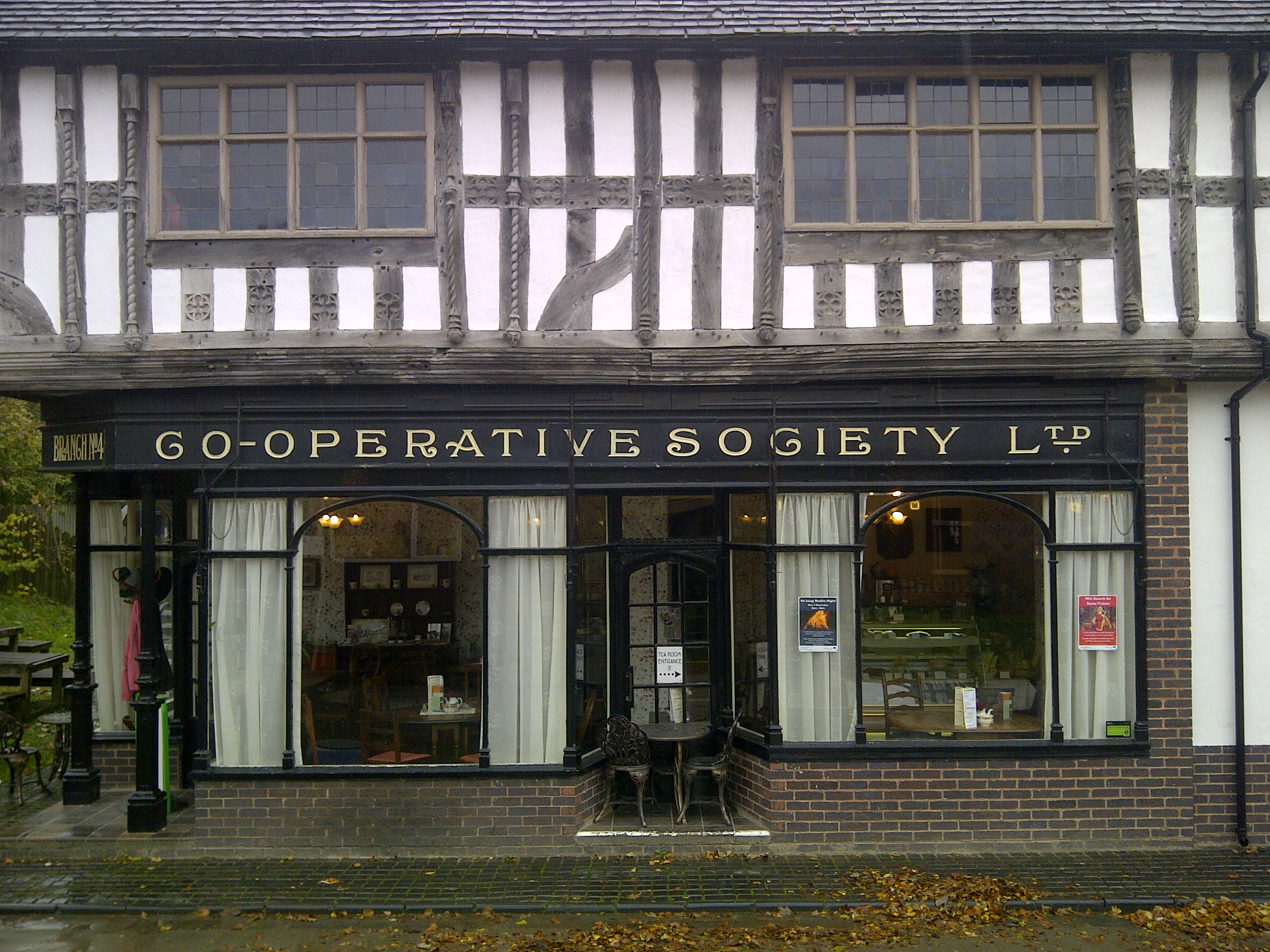
IMG-20121104-00606

(The Co-operative Society building at Avoncroft Museum of Historic Buildings)

Co-operative Governance

It’s increasingly obvious that on their own, traditional businesses and public and civic institutions won’t deliver the transformations that our cities, and our planet, need. The restructuring of our economy, cities and society to address the environmental and demographic challenges we face requires that social, environmental and long term economic goals drive our decisions, rather than short term financial returns alone.

Alternatives have been called for and proposed. In her speech ahead of the Rio +20 Summit, Christine Lagarde, Managing Director of the International Monetary Fund, said that one of the challenges for achieving a sustainable, equitably distributed return to growth following the recent economic challenges was that “externalities” such as social and environmental impacts are not currently included in the prices of goods and services.

I participated last year in a panel discussion at the World Bank’s “Rethinking Cities” conference which asked whether including those costs would incent consumers to chose to purchase sustainably provided goods and services. We examined several ways to create positive and negative incentives through pricing; but also examples of simply “removing the barriers” to making such choices. Our conclusion was that a combination of approaches was needed, including new ideas from game theory and technology, such as “open data”; and that evidence exists from a variety of examples to prove that consumer behaviour can and does adapt in response to well designed systems.

In “Co-op Capitalism“, Noreena Hertz proposed an alternative approach to enterprise based on social principles, where the objectives of collective endeavours are to return broad value to all of their stakeholders rather than to pay dividends to financial investors. This approach has a vital role in enabling communities across the entirety of city ecosystems to harness and benefit from technology in a sustainable way, and is exemplified by innovations such as MyDex in personal information management, Carbon Voyage in transport, and Eco-Island in energy.

New forms of cooperation have also emerged from resilience research, such as “constellations” and “articulations”. All of these approaches have important roles to play in specific city systems, community initiatives and new businesses, where they successfully create synergies between the financial, social and economic capabilities and needs of the participants involved.

But none of them directly address the need for cities to create a sustainable, cohesive drive towards a sustainable, equitable, successful future.

(Photo by Greg Marshall of the rocks known as “The Needles” just off the coast of the Isle of Wight; illustrating the potential for the island to exploit wave and tidal energy sources through the Eco-Island initiative)

In “Smart Ideas for Everyday Cities“, I described an approach that seems to be emerging from the cities that have made the most progress so far. It involves bringing together stakeholders across city systems – representatives of communities; city institutions; owners and operators of city systems and assets such as buildings, transportation and utilities; Universities and schools; and so on – into a group that can not only agree a vision and priorities for the city’s future; but that is empowered to take collective decisions accordingly.

The initiatives agreed by such a group will require individual “special purpose vehicles” (SPVs) to be created according to the specific set of stakeholder interests involved in each case – such as public/private partnerships to build infrastructure or Community Interest Companies and Energy Service Companies to operate local energy schemes. (There are some negative connotations associated with SPVs, which have been used in some cases by private organisations seeking to hide their debt or ownership; but in the Smarter Cities context they are frequently associated with more positive purposes).

Most importantly, though: where a series of such schemes and commercial ventures are initiated by a stable collaboration within a city, investors will see a reliable decision-making process and a mature understanding of shared risk and its management; making each individual initiative more likely to attract investment.

In his analysis of societal responses to critical environmental threats, Jared Diamond noted in his 2005 book “Collapse” that successful responses often emerge when choices are taken by leaders with long-term vested interests, working closely with their communities. In a modern economy, the interests of stakeholders are driven by many timescales – electoral cycles, business cycles, the presence of commuters, travellers and the transient and long-term residents of the city, for example. Bringing those stakeholders together can create a forum that transcends individual timescales, creating stability and the opportunity for a long-term outlook.

A challenge for 2013: better stories for Smarter Cities

Some cities are seizing the agenda for change that I have described in this article; and the very many of us across countries, professions and disciplines who are exploring that agenda are passionate about helping them to do so successfully.

In their report “Cities Outlook 1901“, Centre for Cities explored the previous century of urban development in the UK, examining why at various times some cities thrived and some did not. They concluded that actions taken by cities in areas such as planning, policy, skills development and economic strategy could have significant effects on their economic and social prosperity relative to others.

The need for cities to respond to the challenges and opportunities of the future using the old, new and evolving tools at their disposal is urgent. In the 20th Century, some cities suffered a gradual decline as they failed to respond successfully to the changes of their age. In the 21st Century those changes will be so striking, and take place so quickly, that failing to meet them could result in a decline that is catastrophic.

But there is a real impediment to our ability to apply these ideas in cities today: a lack of common understanding.

(Matthew Boulton, James Watt and William Murdoch, Birmingham’s three fathers of the Industrial Revolution, photographed by Neil Howard)

As the industrial and information revolutions have led our world to develop at a faster and faster pace, human knowledge has not just grown dramatically; it has fragmented to an extraordinary extent.

Consequently, across disciplines such as architecture, economics, social science, psychology, technology and all the many other fields important to the behaviour of cities, a vast and confusing array of language and terminology is used – a Tower of Babel, no less. The leaders of many city institutions and businesses are understandably not familiar with what they can easily perceive as jargon; and new ideas that appear to be presented in jargon are unlikely to be trusted.

To address the challenge, those of us who believe in these new approaches to city systems need to tell better stories about them; stories about individuals and their lives in the places where they live and work; how they will be more healthy, better equiped to support themselves, and able to move around freely in a pleasant urban environment.

Professor Miles Tight at the University of Birmingham and his colleagues in the “Visions 2030” project have applied this idea to the description of future scenarios for transportation in cities. They have created a series of visually appealing animated depictions of everyday scenes in city streets and places that could be the result of the various forces affecting the development of transport over the next 20 years. Malcolm Allan, a colleague in the Academy of Urbanism, helps cities to tell “stories about place” as a tool for envisaging their future development in a way that people can understand and identify with. And my colleagues in IBM Research have been exploring more generally how storytelling can enable the exchange of knowledge in situations where collaborative creativity is required across multiple domains of specialisation.

If we can bring our knowledge of emerging technologies and new approaches to urbanism into conversations about specific places in the form of stories, we will build trust and understanding in those places, as well as envisioning their possible futures. And that will give us a real chance of achieving the visions we create. This is what I’ll be concentrating on doing in 2013; and it looks like being an exciting year.

(It’s been much longer than usual since I last wrote an article for this blog; following an extended break over Christmas and the New Year, I’ve had a very busy start to 2013. I hope to resume my usual frequency of writing for the rest of the year.

And finally, an apology: in my remarks on the panel discussion following Sir Peter Hall’s lecture at the Crystal, I gave a very brief summary of some of the ideas described in this article. In particular, I used the term “Massive / Small” without attributing it to Kelvin Campbell and Urban Initiatives. My apologies to Kelvin, whose work and influence on my thinking I hope I have now acknowledged properly).

Smart ideas for everyday cities

(Artist’s impression of the new Birmingham City University campus, currently under construction alongside Millennium Point and the new Eastside City Park. Image by Birmingham City University.)

The outcomes that matter to cities and to the people who live and work in them, such as wellbeing, job creation, economic growth, and social mobility, are complex, compound results of the behaviour of a combination of city systems such as education, public safety, transport and the economy.

Because those systems are operated by separate organisations – if they are even “operated” as systems at all – many “Smarter City” discussions are concerned with “breaking down silos” in order to integrate them.

As Fast Company’s 2010 survey of the “Top 20 Smartest Cities on the Planet“, illustrates, many of the earliest and highest profile examples of cities pursuing “Smart” agendas were governed by hierarchical, integrated systems of authority which helped them to address this challenge – often because they were new or expanding cities in rapidly growing economies.

Elsewhere, governance is more complex. Particularly in the UK, services such as utilities and transport are operated by private sector providers contracted to deliver performance and financial measures that cannot easily be changed. It is hard enough to agree common objectives across a city; it can be even harder to agree how to make investments to achieve them by transforming city systems that are subcontracted in this way.

But that is what cities must somehow do. And in recent weeks I have valued some open and frank discussions between city leaders, financiers and developers, policy makers, academics, architects, planners – and even some technologists – that have revealed some simple ideas that are common to those cities that have demonstrated how it can be done.

Start new partnerships

Most initiatives that contribute to city-wide outcomes require either co-ordinated action across city systems; or an investment in one system to achieve an outcome that is not a simple financial return within that system. For example, the ultimate objective of many changes to transportation systems is to improve economic growth and productivity, or to reduce environmental impact.

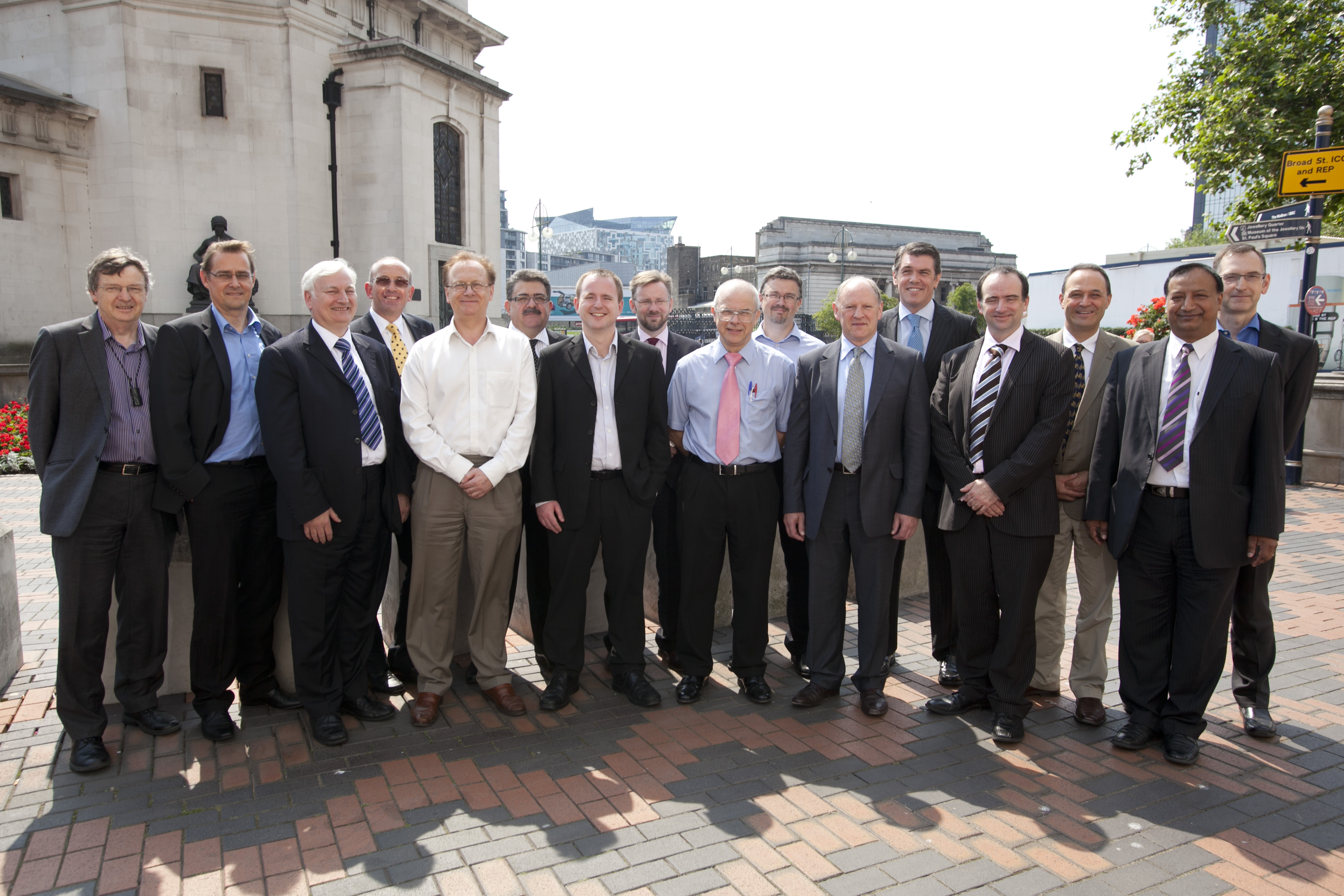
(The members of Birmingham’s Smart City Commission)

A programme of initiatives with these characteristics therefore involves the resources and interests of great many organisations within a city; and may lead to the creation of entirely new organisations. Special purpose vehicles such as  the “Eco-Island” Community Interest Company on the Isle of Wight and the Birmingham District Energy Company are two such examples.

New partnerships between these organisations are needed to agree city-wide objectives, and to co-ordinate their activities and investments to achieve them. Depending on local challenges,  opportunities, and relationships those partnerships might include:

  • Local Authorities and other public sector agencies co-operating to operate shared services;
  • Central government bodies involved in negotiations of policy, responsibility and financing such as “City Deals“;
  • Leaders from cities’ business, entrepreneurial and SME communities;
  • Local Universities who may have domain expertise in city systems; and who provide skills into the local economy;
  • Neighbourhood, faith and community associations;
  • Representatives of the third sector – charities, voluntary associations, social enterprises and co-operatives;
  • Industry sector and cultural organisations;
  • Service and technology providers who form partnerships with cities; for example, Amey have a 25-year PFI partnership with Birmingham; IBM operate joint research programmes with cities such as Dublin and Moscow; and Cisco have partnerships with cities such as Songdo in South Korea;
  • Financiers, for example local venture capitalists such as MidVen in the West Midlands, or banks and financial services companies with a strong local presence;
  • … and there are many other possibilities.

To attract the various forms of investment that are required to support a programme of “Smart” initiatives, these partnerships need to be decision-making entities, such as Manchester’s “New Economy” Commission, not discussion groups. They need to take investment decisions together in the interest of their shared objectives; and they need a mature understanding and agreement of how risk is shared and managed across those investments.

Such partnerships do not start by adopting the approach of any single member; they start with a genuine discussion to build understanding and consensus.

For example, public and private sector organisations both tend to assume that the other is better placed to accept risk. Private sector organisations make profits and invest them in new products and markets, so surely they can take on risk? Public sector organisations are funded to predictable levels through taxation, so surely they can take on risk?

In reality, the private sector has lost jobs, faced falling profits, and seen many businesses fail in recent years. Meanwhile, public sector is burdened with unprecedented budget cuts and in many cases significant deficits that are threatening their ability to deliver frontline services. Both are therefore risk averse.

A working partnership will only form if such issues are discussed openly so that an equitable consensus is achieved.

(A video describing the partnership between IBM and Dubuque, Iowa, which aims to develop a model for sustainable communities of less than 200,000 people)

Size matters; but not absolutely

Manchester’s New Economy Commission have taken a particular approach that is commensurate to the size of the Greater Manchester area and economy, coordinated by the Association of Greater Manchester Authorities (AGMA). But their approach is not the only one.

Elsewhere, Southampton City Council are creating a “Virtual Local Authority”, together with other authorities around the country, as a vehicle to approach the bond market for a £100 million investment. They believe such a vehicle can create an investment opportunity of similar size to Birmingham’s “Energy Savers” scheme.

“Size” in these terms can mean geographic area; population; economic value or market potential. It is interpreted differently by international investment funds; or by local interests such as property and business owners. And it is balanced against complexity: one reason that some more modestly sized cities such as Sunderland and Peterborough have made so much early progress is their relative political and economic simplicity.

Vision, Transparency and Consistency

Whatever specific form a local partnership takes, it needs to demonstrate certain behaviours and characteristics in order that its initiatives and proposals are attractive to investors. They are straightforward in themselves;  but take time to establish amongst a new group of stakeholders:

  • A clear, agreed and consistent set of goals;
  • A mutual understanding of risk; how it is shared; and how it is managed;
  • An ability to express investment opportunities, including the risks associated with them, to potential investors;
  • A track record of taking transparent, consistent decisions to coordinate projects and investments against their objectives.

This is the model that in many cases will deliver Smarter City projects and programmes in everyday cities: a model of several organisations coordinating multiple investments, rather than individual organisations managing their own budgets.

(Philippe Petit’s remarkable tightrope walk between the towers of the World Trade Centre in 1974 at a height of 417 metres. Image from Carolina Pastrana)

Match risks to the right investors

There are many sources of funding for Smart City initiatives; each has different requirements and capabilities, and is attracted by specific risks and rewards. And with traditional markets such as property stagnant in developed economies, new opportunities for investment are being sought.

However, with a high degree of uncertainty in the prospects for future economic growth, it is harder than ever to assess the likely returns from investment opportunities. And when those opportunities are presented as new forms of partnership, special purpose vehicles or social enterprises, or by public sector authorities adopting revenue-generating models to compensate for dramatic cuts in their traditional funding, that assessment becomes even harder.

There is no simple answer to this challenge; but once again progress to resolving it will begin with conversations that build understanding. Ultimately, investors will be attracted to proposals with well defined and managed risks from organisations exhibiting good governance; and that can demonstrate a track record of making clear decisions to achieve their goals.

Of course, some Smart City projects are highly innovative, and may be too risky for investors accustomed to supporting infrastructure projects such as transportation and property development.  This is particularly the case for schemes that require a change in consumer behaviour – for example, switching from private car ownership to the use of “car clubs” or car-sharing schemes.

These sorts of project may be more suited to technology or service providers who might invest in pilot schemes in order to develop or prove new offerings which, if successful, can generate follow-on sales elsewhere. The “First of a Kind” programme in IBM’s Research division is one example or a formal programme that is operated for this purpose.

Similarly, Venture Capital will make investments in new businesses with higher risk profiles – demanding, of course, a commensurately higher level of return. And government backed innovation funds such as the European Union FP7 programme or the UK’s Technology Strategy Board are also available.

All of these organisations, of course, are looking to invest in projects which are initially small scale; but that will eventual develop into a widespread market opportunity. They will therefore be drawn to projects that take place in a stable, supported context from which that opportunity can be developed – in other words, the same level of partnership working, governance, transparency and consistency.

(A successful urban intervention: the “Container City” incubation hub for social enterprises operated by Sustainable Enterprise Strategies (SES) in Sunderland. SES support hundreds of new businesses and social enterprises in Sunderland every year, with a combined turnover of around £25m, and employing thousands of people from the city’s most challenged communities. 82% of the people they help to start a business or a social enterprise were previously unemployed, and after 2 years nearly three quarters are still in business.)

Exploit success to build momentum

Most cities need to stimulate economic growth, and to revitalise economically and socially deprived neighbourhoods.

It may be more effective to achieve those goals through a series of related steps, than through a single initiative, however:

1. Invest to reinforce growth that is already taking place – it may be more straightforward in the first place to use mechanisms such as tax increment financing or private investment to accelerate growth that is already taking place; such as last week’s announcement by David Cameron of additional government and corporate investment in London’s “Tech City” cluster.

2. Retain the financial benefits resulting from growth – Manchester’s New Economy Commission is able to retain the benefits of the growth the stimulate in the form of increased tax returns, in order to reinvest in subsequent initiatives. Their early successes built confidence amongst investors in the viability of their ongoing programme.

3. Recycle funds to stimulate new growth – having built an initial level of confidence, returns from early projects can be reinvested in areas with more significant challenges; where new infrastructures such as broadband connectivity or support services are required to attract new business activity.

Everywhere is different

Whilst the ideas I’ve described in this article do seem to be emerging as common characteristics of successful Smarter City programmes; we are still at a relatively early stage.

In particular, not enough examples exist for us to reliably separate generally viable elements of these approaches from those aspects that are strongly tied to specific local contexts.

Every city of course is different; and in this context has different access to transport systems, and to national and international supply chains and markets; has different demographics and social character; and different economic capacity. Even within a country, the governance of cities and regions varies – in the UK, for example, the relationships between Central, County, District, City and Borough Councils are subtly different everywhere. So each city still needs to find its own path.

But the first step is simple. There is nothing stopping cities from having the conversations that will get them started. And those that have done so are proving that it works.

I’d like to thank the delegates and attendees at many workshops and meetings I’ve attended in recent weeks; the discussions I’ve been lucky enough to participate in as a result have contributed significantly to the views expressed in this article. They include:

Pens, paper and conversations. And the other technologies that will make cities Smarter.

(Akihabara Street in Tokyo, a centre of high technology, photographed by Trey Ratcliff)

(Akihabara Street in Tokyo, a centre of high technology, photographed by Trey Ratcliff)

A great many factors will determine the future of our cities – for example, human behaviour, demographics, economics, and evolving thinking in urban planning and architecture.

The specific terms “Smart Cities” and “Smarter Cities”, though, are commonly applied to the concept that cities can exploit technology to find new ways to face their challenges. Boyd Cohen of Fast Company offered a useful definition in his article “The Top 10 Smart Cities On The Planet“:

“Smart cities use information and communication technologies (ICT) to be more intelligent and efficient in the use of resources, resulting in cost and energy savings, improved service delivery and quality of life, and reduced environmental footprint–all supporting innovation and the low-carbon economy.”

Some technology developments – such as Service-Oriented Architecture and distributed computing are technically cohesive and can be defined by a particular architecture. Others, however, are more loosely defined. For instance, “Web 2.0” – a term associated with the emergence of social media, smartphones and businesses such as e-Bay, Facebook and Twitter – was coined by Tim O’Reilly in 2003 as a banner to capture the idea that internet and related technologies had once again become valuable sources of innovation following the “dot.com crash”.

So what are the technologies that will make cities Smart?

To answer that question, we need to examine the convergence of two domains of staggering complexity, and of which the outcomes are hard to predict.

The first is the domain of cities: vast, overlapping systems of systems. Their behaviour is the aggregated behaviour of their hundreds of thousands or millions of citizens. Whilst early work is starting to understand the relationship between those systems in a quantitative and deterministic way, such as the City Protocol initiative, we are just at the start of that journey.

(An early example of the emerging technologies that are blurring the boundary between the physical world and information: Professor Kevin Warwick, who in 2002 embedded a silicon chip with 100 spiked electrodes directly into his nervous system. Photo by M1K3Y)

The second domain is technology. We are experiencing phenomenal growth in the availability of information and the invention of new forms of communication. In 2007, more new information was created in one year than in the preceding 5000 years. And whilst the telephone, invented in the mid-19th Century, took around 100 years to become widespread, internet-based communication tools such as Twitter can spread to hundreds of millions of users within a few years.

If we define a “new form of communication” as a means of enabling new patterns of exchange of information between individuals, rather than as a new underlying infrastructure, then we are inventing them – such as foursquareStumbleUpon, and Pinterest – at a faster rate than at any previous time in history.

The discovery and exchange of ideas enabled by these technologies is increasing the rate of invention across many other fields of endeavour, including science and engineering. Indeed, this was deliberate: the evolution of the internet is closely entwined with the need of scientists and engineers to collaborate with each other. I recently surveyed some of the surprising new technologies, and their applications in cities, that are emerging as a result – including materials that grow themselves, 3D printing and mind-reading headsets.

So whilst common patterns are emerging from some Smarter City solutions – for example, the “Digital Cities Exchange” research programme at Imperial College, London; the “FI-WARE” project researching the core platform for the “future internet”; the “European Platform for Intelligent Cities (EPIC)“; and IBM’s own “Intelligent Operations Centre” all share a similar architecture – there is no single platform, architecture or technology that defines “Smart Cities”. Rather, the term defines a period in time in which we have collectively realized that it is critically important to explore the application of new technologies to change the way city systems work to make them more efficient, more equitable and more resilient in the face of the economic, environmental and social challenges facing us.

My own profession is information technology; and I spend much of my time focussed on the latest developments in that field. But in the context of cities, it is a relatively narrow domain. More broadly, developments in many disciplines of science, engineering and technology offer new possibilities for cities of the future.

I find the following framework useful in understanding the various engineering, information and communication technologies that can support Smart City projects. As with the other articles I post to this blog, this is not intended to be comprehensive or definitive – it’s far too early in the field for that; but I hope it is nevertheless a useful contribution.

And I will also find a place in it for one of the oldest and most important technologies that our species has invented: language; and it’s exploitation in “Smart” systems such as pens, paper and conversations.

1. Re-engineering the physical components of city systems

(Kohei Hayamizu’s first attempt to capture energy from pedestrian footfall in Shibuya, Tokyo)

The machinery that supports city systems generally converts raw materials and energy into some useful output. The efficiency of that machinery is limited by theory and engineering. The theoretical limit is created by the fact that machinery operates by transforming energy from one form – such as electricity – into another form – such as movement or heat. Physical laws, such as the Laws of Thermodynamics, limit the efficiency of those processes.

For example, the efficiency of a refrigerator is limited by the fact that it will always use some energy to create a temperature gradient in order that heat can be removed from the contents of the fridge; it then requires additional energy to actually perform that heat removal. Engineering challenges then further reduce efficiency – in the example of the fridge, because its moving components create heat and noise.

One way to improve the efficiency of city systems is to improve the efficiency of the machinery that supports them; either by adopting new approaches (for example, switching from petrol-fuelled to hydrogen-fuelled vehicles), or by increasing the engineering efficiency of existing approaches (for example, using turbo-chargers to increase the efficiency of petrol and diesel engines).

Examples of this approach include:

  • Using new forms of energy exchange, for example, capturing energy from vibrations caused by footfall;
  • Using more efficient energy generation or exchange technologies – such as re-using the heat from computers to heat offices, or using renewable bio-, wind-, or solar energy sources;
  • Using new transport technologies for people, resources or goods that changes the economics of the size and frequency of transport; or of the endpoints and routes – such as underground recycling networks;
  • Replacing transport with other technologies – such as online collaboration;
  • Reducing wastage and inefficiencies in operation,such as the creation of heat and noise – for example, by switching to lighting technologies such as LED that create less heat.

2. Using information  to optimise the operation of city systems

In principle, we can instrument and collect data from any aspect of the systems that support cities; use that data to draw insight into their performance; and use that insight to improve their performance and efficiency in realtime. The ability to do this in practical and affordable ways is relatively new; and offers us the possibility to support larger populations at a higher standard of living whilst using resources more efficiently.

There are challenges, of course. The availability of communication networks to transmit data from where it can be measured to where it can be analysed cannot be assumed. 3G and Wi-Fi coverage is much less complete at ground level, where many city infrastructure components are located, than at head height where humans use mobile phones. And these technologies require expensive, power-hungry transmitters and receivers. New initiatives and startups such as Weightless and SigFox are exploring the creation of communication technologies that promise widespread connectivity at low cost and with low power usage, but they are not yet proven or established.

Despite those challenges, a variety of successful examples exist. Shutl and Carbon Voyage, for example, both use recently emerged technologies to match capacity and demand across networks of transport suppliers; thereby increasing the overall efficiency of the transport systems in the cities where they operate. The Eco-Island Community Interest Company on the Isle of Wight are applying similar concepts to the supply and demand of renwable energy.

Some of the common technologies that enable these solutions at appropriate levels of cost and complexity, are:

3. Co-ordinating the behaviour of multiple systems to contribute to city-wide outcomes

Many city systems are “silos” that have developed around engineering infrastructures or business and operational models that have evolved since city infrastructures were first laid down. In developed markets, those infrastructures may be more than a century old – London’s underground railway was constructed in the mid 19th Century, for example.

But the “outcomes” sought by cities, neighbourhoods and communities – such as social mobility, economic growth, wellbeing and happiness, safety and sustainability – are usually a consequence of a complex mix of effects of the behaviour of many of those systems – energy, economy, transport, healthcare, retail, education, policing and so on.

As information about the operation and performance of those systems becomes increasingly available; and as our ability to make sense of and exploit that information increases; we can start to analyse, model and predict how the behaviour of city systems affects each other, and how those interactions contribute to the overall outcomes of cities, and of the people and communities in them.

IBM’s recent “Smarter Cities Challenge” in my home city of Birmingham studied detailed maps of the systems in the city and their inputs and outputs, and helped Birmingham City Council understand how to developed those maps into a tool to predict the outcomes of proposed policy changes. In the city of Portland, Oregon, a similar interactive tool has already been produced. And Amsterdam and Dublin have both formed regional partnerships to share and exploit city information and co-ordinate portfolios of projects across city systems and agencies driven by common, city-wide objectives.

(A video describing the “systems dynamics” project carried out by IBM in Portland, Oregon to model the interactions between city systems)

We are in the very early stages of developing our ability to quantitatively understand the interrelationships between city systems in this way; but it is already possible to identify some of the technologies that will assist us in that process – in addition to those I mentioned in the previous section:

  • Cloud computing platforms, which enable data from multiple city systems to be co-located on a single infrastructure; and that can provide the “capacity on demand” to apply analytics and visualisation to that data when required.
  • Information and transaction integration technologies which join up data from multiple sources at a technical level; including master data management, and Service Orientated Architecture.
  • Information models for city systems that model the quantitative and semantic relationships between those systems.
  • Service brokerage capabilities to co-ordinate the behaviour of the IT systems that monitor and control city systems; and the service and data catalogues that make those systems and their information available to those brokers.
  • Federated security and identity management to enable citizens and city workers to seamlessly interact with services and information across city systems.
  • Dashboards and other user interface technologies which can present information and services from multiple sources to humans in an understandable and meaningful way.

4. Creating new marketplaces to encourage sustainable choices, and attract investment

As I’ve argued on many occasions on this blog, it is often important or useful to conceive of Smarter City solutions as marketplaces. Such thinking encourages us to consider how the information associated with city services can be used to influence individual choices and their collective impact; and the money-flows in marketplaces can be used to create business cases to support investment in new infrastructure.

The examples in transport innovation that I mentioned earlier in this article, Shutl and Carbon Voyage, can both be thought of as business that exploit information to operate new marketplaces for transport capacity. Eco-island have applied the same concept in energy; Streetline in car-parking; and Big Barn and Sustaination in business-to-consumer and business-to-business models for food distribution.

In addition to those I’ve previously described, systems that operate as transactional marketplaces often involve the following technologies:

Conversations, paper, technology

The articles I write on this blog cover many aspects of technology, future cities, and urbanism. In several recent articles, including this one, I have focussed in particular on issues concerning the application of technology to city systems.

I believe these issues are important. It is inarguable that technology has been changing our world since human beings first used tools; and overall the rate of change has been accelerating ever since. That acceleration has been particularly rapid in the past few decades. The fact that this blog, which costs me nothing to write other than my own time, has been read by people from 117 countries this year – including you – is just one very mundane example of something that would have been completely unthinkable when I started my University education.

But I absolutely do not want to give the impression that technology is the most important element of the future of cities; or that every “Smarter City” project requires all – or even any – of the technologies that I’ve described in this article.

Cities are about people; life is about people. Nothing matters unless it matters to people. In themselves, these are obvious statements; but consequently, our future cities will be successful only if they are built by consensus to meet the needs of all of the people who inhabit them. “Smarter” solutions will only achieve their objectives if they are designed and implemented so as to seamlessly integrate into the fabric of our lives. And sometimes the simplest ideas, using the simplest technology – or no technology at all – will be the most powerful.

Smarter Cities start with conversations between people; conversations build trust and understanding, and lead to the creation of new ideas. Many of those ideas are first shaped on pen and paper – often still the least invasive technology for co-creating and recording information that we have. Some of those ideas will be realised through the application of more recent technologies – and in fact will only be possible at all because of them. That is the real value that new technology brings to the future of cities.

But it’s important to get the order right, or we will not achieve the outcomes that we need. Conversations, paper, technology – that might just be the real roadmap for Smarter Cities.

(I would like to thank Steven Boxall for his comments on a previous article on this blog, “No-one is going to pay cities to become Smarter“, in the Academy of Urbanism‘s discussion group on Linked-In. Those comments helped me to shape the balance that I hope that I have achieved in this article between the roles that technology, people and conversations will play in creating the future of our cities).

No-one is going to pay cities to become Smarter

(The Bristol Pound, a local currency intended to encourage and reinforce local trading synergies.)

It’s been a busy week for cities in the UK; and we should draw important insights from its events.

On Monday, the Technology Strategy Board (TSB); Department of Business, Innovation and Skills; and the British Standards Institution were the sponsors of a meeting in London to establish a UK “Future Cities Network”. One of their objectives was to build a consensus from the UK to contribute to the City Protocol initiative launched at the Smart City Expo in Barcelona this month.

Wednesday and Thursday saw the society of IT managers in local government (SOCITM) hold its annual conference in Birmingham. This community includes the technology leaders of the UK’s city authorities; many of them are driving the transformation to shared public services in their regions; and exploring the opportunities this transformation provides to improve service quality and outcomes, as well as reducing costs.

Finally, it’s been a week of mixed news for Future Cities: the Technology Strategy Board shortlisted 4 UK cities as the finalists in their competition to host a £25 million “Future Cities Demonstrator” project.

This is clearly fantastic news for the cities concerned – London, Glasgow, Peterborough and Bristol – and they should be congratulated for their achievement. But it also means that 22 other cities who submitted proposals to the TSB have learned over the past two days that they will not benefit from this investment.

Whilst the TSB’s competition – and their progress in setting up the related “Future Cities Catapult Centre” – have been great catalysts to encourage cities in the UK to shape their thinking about the future, the decisions this week throw the real challenge they face into sharp focus:

No-one is going to pay cities to become Smarter.

The TSB investment of £25 million is astonishingly generous; but it will nevertheless be only a small contribution to the city that receives it; and the role of innovation stimulus organisations such as the TSB and the European Union’s FP7 programme is only to fund the first, exploratory initiatives; not to support their widespread adoption by cities everywhere.

The UK government’s “City Deals” are a great innovation that will give cities more autonomy over taxation and spending. But in reality they will not provide significant sums of new money; especially when compared to the scale of the financial challenge city authorities face. As the Local Government Association commented in their report “Funding outlook for councils from 2010/11 to 2019/20“:

“… councils will not be able to deliver the existing service offer by the end of this decade. Fundamental change is needed to one or both of … the way local services are funded and organised [or the] statutory and citizen expectations of what councils will provide.”

(A station on London’s Underground railway under construction in 1861, from the Science and Society Picture Library)

Some of these changes will be achieved through public sector transformation. The London Borough of Newham, for example, were recognised at the SOCITM Awards Dinner this week for their achievements in reducing costs and improving service quality through implementation of a successful transformation to online channels for many services.

This is a remarkable achievement for an authority serving one of London’s least affluent boroughs, demanding careful and innovative thinking about the provision of digital services to communities and citizens who may not have access to broadband connectivity or traditional computers. Newham have concentrated on the delivery of services through mobile telephones – which are much more widely owned than PCs and laptops – and  in contexts where a friend or family member assists the ultimate service user.

But local authority transformations of this sort won’t create intelligent transport solutions; or trigger a transformation to renewable energy sources; or improve the resilience of food supply to city populations.

In the UK, many of those services are supported by physical infrastructures that were first constructed in the Victorian era, more than a century ago. Through pride and vision – and the determination to out-do each other – the industrialists, engineers and philanthropists who created those infrastructures dramatically over-engineered them. We are now using them to support many times the population that existed when they were designed and built.

As competition for resources such as food, energy and water intensifies, driven by both a growing global population and by rapid improvements in living standards in emerging economies, these infrastructures will increasingly struggle to support us at the cost, and with the level of resilience, that we have become accustomed to. And whilst they are now often owned and operated by private sector organisations, or by public-private partnerships, the private sector is in no better position to address the challenges faced by cities than the public sector.

In the recent recession and the current slow recovery from it, many companies have failed, lost business, and reduced their workforce. And as the Guardian reported this week, whilst many business leaders take sustainability seriously and attempt to build it into their business models, the financial markets do not recognise those objectives in share prices; and do not offer investment vehicles that support them.

So if government and the financial markets can’t or won’t pay cities to become smarter, how are we going to re-engineer city infrastructures to be more intelligent and sustainable?

In my view, the key is to look at four ways in which money is already spent; and to harness that spending power to achieve the outcomes that cities need.

1. Encourage Venture Capital Investment

(Photo of the “Container City” incubation hub for social enterprises operated by Sustainable Enterprise Strategies in Sunderland)

The current economic climate has not stopped investors and venture capitalists from investing in exciting new businesses. Some of the businesses they are investing in are using technology to offer innovative services in cities. For example, Shutl and Carbon Voyage both use recently emerged technologies to match capacity and demand across networks of transport suppliers.

The systems that these businesses operate have the potential to catalyse local economic trading opportunities – and in so doing, safeguard or create jobs; to lower the carbon footprint of travel and distribution within cities; and to offer new and valuable services to city residents, workers and visitors.

Several cities, including Dublin and Sunderland, are engaged in an ongoing conversation with their local community of technology, business and social entrepreneurs to encourage and support them in developing new, sustainable business models of this sort that promote the social, environmental and economic objectives of the city.

These investments are not on the scale of the tens or hundreds of millions of pounds that would be required to completely overhaul city infrastructures; but they are complemented by the revenues the businesses earn. In this way, consumer, retail and business spending can be harnessed to contribute to the evolution of Smarter Cities.

2. Build Markets, not Infrastructure

Transport is an example of a city system that is not usually considered a marketplace; that’s one of the reasons why the entrepreneurial businesses that I mentioned in the previous section, which effectively create new markets for transport capacity, are so innovative.

But some city systems  already operate as marketplaces; such as energy in the UK, where consumers are free to switch between providers relatively easily. The fact that city infrastructures are already market-like to a degree is combining with trends in engineering to create exciting new developments.

As both international and national policies to encourage sustainable energy generation and use take effect; and as some fossil fuels become scarcer or more expensive, new power generation capacity is increasingly based on renewable energy sources such as wind, hydro-electric, tidal, geo-thermal and biological sources.

A challenge associated with some of those energy sources is that their generating capacity is small compared to their cost and physical impact. Wind farms, for example, take up vastly more space than gas- and coal-powered energy generation facilities, and produce only a fraction of their output.

(Photo by Greg Marshall of the rocks known as “The Needles” just off the coast of the Isle of Wight; illustrating the potential for the island to exploit wave and tidal energy sources)

However, for other power sources, a reduction in scale could be an advantage. The European Bioenergy Research Institute (EBRI) at Aston University in Birmingham, for example, exploit technologies that can recover energy from sewage and food waste. Those technologies can already be implemented on a small-enough scale that the city of Birmingham is setting up a local power distribution company to exploit a bio-energy power generation plant that EBRI will operate at Aston University. And the New Optimists, a community of scientists and industry leaders in Birmingham are considering on Birmingham’s behalf the possibility that such generation technology could eventually operate in city neighbourhoods and communities, or even within individual residences.

For all of these reasons, there is considerable interest at present in the formation of new, localised marketplaces in power generation and consumption. Ecoisland, a community initiative on the Isle of Wight, is perhaps at the forefront of this movement. Their objective is to make the Isle of Wight self-sufficient in energy; because their approach to meeting that objective is to form a new market, they are winning considerable investment from the financial markets due to the profit-making potential of that market.

3. Procure Infrastructure Smartly

City Authorities and property developers spend substantial sums of money on city infrastructures and related services. But the requirements and scoring systems of those procurements are often very traditional, and create no incentive for the providers of infrastructure services to offer innovative solutions.

Some flagship projects – such as Stockholm’s congestion-charging scheme and the smart metering programme in Dubuque, for example – have shown the tremendous potential of “Smarter” solutions. But their effectiveness is to some degree specific to their local context; relatively high levels of taxation are acceptable in Scandinavian society, for example, in return for high quality public service outcomes. Such levels of taxation are not so acceptable elsewhere.

There is tremendous scope for more creative and innovative approaches to procurement of city services to encourage service providers to offer “Smarter” solutions; Birmingham Science City’s Jackie Homan describred some of those possibilities very eloquently recently. The more urgently city authorities adopt those approaches, the sooner they are likely to benefit from the innovation that their infrastructure partners have the potential to provide.

(The Olympic flame at Vancouver’s Winter Olympics photographed by Evan Leeson)

4. Work With Ethical Investors

Finally, notwithstanding the challenges described in the Guardian article that I linked to above, some financial institutions do offer support for “Smart” and sustainable initiatives.

Vancouver’s “Change Everything” online community, for example, was an early pioneer in exploiting the power of social media to support social and environmental initiatives; it was created by Vancouver’s Credit Union, Vancity, a financial institution with social objectives.

Similarly, Sustainable Enterprise Strategies, who provide crucial support and incubation services to businesses and social enterprises in the most challenged communities in Sunderland, are supported by the UK’s Co-Operative Bank; and IBM and Citi-Group have collaborated to create a financing solution for city’s to invest in Streetline’s “Smart Parking” solution, which has reduced both traffic congestion and environmental pollution in cities such as San Francisco.

These are just some of the ways in which financial institutions have already been engaged to support Smarter Cities initiatives. They can surely be persuaded to do so more extensively by proposals that may have social or environmental objectives, but that are also well-formed from a financial perspective.

“The future is already here – it’s just not evenly distributed”

All of the initiatives that I’ve described in this article are are already under way. As the science fiction author William Gibson memorably said – in what is now the last century – “the future is already here; it’s just not evenly distributed”.

We should not wait for new, large-scale sources of Smarter City funding to appear before we start to transform our cities – we cannot afford to; and it’s simply not going to happen. What we must do is look at the progress that is already being made by cities, entrepreneurs and communities across the world, and follow their example.