Three mistakes we’re still making about Smart Cities

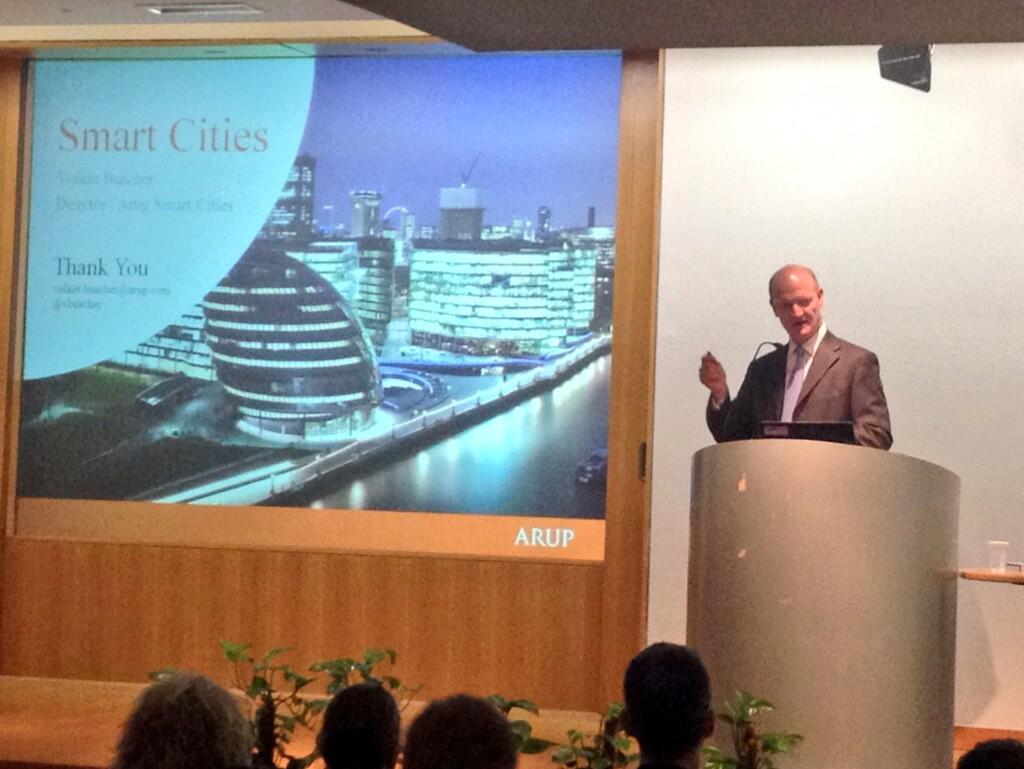
(David Willets, MP, Minister for Universities and Science, launches the UK Government’s Smart Cities Forum)

(I was asked this week to contribute my view of the present state of the Smart Cities movement to the UK Government’s launch of it’s Smart Cities forum, which will report to the Government’s Information Economy Council. This article is based on my remarks at the event).

One measure of how successfully we have built today’s cities using the technologies that shaped them over the last century – concrete, steel and the internal combustion engine – is the variation of life expectancy within them. In the UK, people born in the poorest areas of our large cities can expect to live lives that are two decades shorter than those born in the wealthiest areas.

We need to do much better than that as we apply the next generation of technology that will shape our lives – digital technology.

The market for Smart Cities, which many define as the application of digital technology to city systems, is growing. Entrepreneurial businesses such as Droplet and Shutl are delivering new city services, enabled by technology. City Councils, service providers and transport authorities are investing in Smart infrastructures, such as Bradford’s City Park, whose fountains and lights react to the movements of people through it. Our cities are becoming instrumented, interconnected and intelligent, creating new opportunities to improve the performance and efficiency of city systems.

But we are still making three mistakes that limit the scale at which truly innovative Smart City projects are being deployed.

1. We don’t use the right mix of skills to define Smart City initiatives

Over the last year, I’ve seen a much better understanding develop between some of the creative professions in the Smart Cities domain: technologists, design thinkers, social innovators, entrepreneurs and urban designers. Bristol’s “Hello Lamppost” is a good example of a project that uses technology to encourage playful interaction with an urban environment, thereby bringing the life to city streets that the urbanist Jane Jacobs‘ taught us is so fundamental to healthy city communities.

Internationally, cities have a great opportunity to learn from each others’ successes: smart, collective, sustainable urbanism in Scandinavia, as exemplified by Copenhagen’s Nordhavnen district; intelligent city planning and management in Asia and increasingly in the United States, where cities such as Chicago have also championed the open data movement; and the phenomenal level of small-scale, non-institutional innovation in communities in UK cities.

But this debate does not extend to some important institutions that are also beginning to explore how they can contribute towards the social and environmental wellbeing of cities and communities. Banks and investors, for example, who have the funds to support large-scale initiatives, or the skills to access them; or supermarkets and other retailers who operate across cities, nations and continents; but whose operational and economic footprint in cities is significant, and whose supply chains support or contribute to billions of lives.

It’s important to engage with these institutions in defining Smart City initiatives which not only cut across traditional silos of responsibility and budgets in cities, but also cut across the traditional asset classes and revenue streams that investors understand. A Smart City initiative that is crafted without their involvement will be difficult for them to understand, and they will be unlikely to support it. Instead, we need to craft Smart initiatives with them.

(The masterplan for Copenhagen’s regeneration of Nordhavnen, which was co-created with local residents and communities. Photo by Thomas Angermann)

2. We ask researchers to answer the wrong challenges

University research is a great source of new technologies for creating Smart solutions. But our challenge is rarely the availability of new technology – we have plenty of that already.

The real challenge is that we are not nearly exploiting the full potential of the technology already available to us; and that’s because in many cases we do not have a quantified evidence base for the financial, social, economic and environmental benefits of applying technology in city systems. Without that evidence, it’s hard to create a business case to justify investment.

This is the really valuable contribution that research could make to the Smart Cities market today: quantify the benefits of applying technology in city systems and communities; identify the factors that determine the degree to which those benefits can be realised in specific cities and communities; align the benefits to the financial and operating models of the public and private institutions that operate city services and assets; and provide the detailed data from which clear businesses cases with quantified risks and returns can be constructed.

3. We don’t listen to the quiet voices that matter

It’s my experience that the most powerful innovations that make a difference to real lives and communities occur when “little things” and “big things” work well together.

Challenges such as transport congestion, social mobility, responsible energy usage or small business growth are often extremely specific to local contexts. Successful change in those contexts is usually created when the people, community groups and businesses involved create, or co-create, initiatives to improve them.

But often, the resources available locally to those communities are very limited. How can the larger resources of institutional organisations be made available to them?

In “Resilience: why things bounce back“, Andrew Zolli describes many examples of initiatives that have successfully created meaningful change; and characterises the unusual qualities of the “translational leaders” that drive them – people who can engage with both small-scale, informal innovation in communities and large-scale, formal institutions with resources.

It’s my hope that we can enable more widespread changes not by relying only on such rare individuals, but by changing the way that we think about the design of city infrastructures. Rather than designing the services that they deliver, we should design what Service Scientists call the “affordances” they offer. An affordance is a capability of an infrastructure that can be adapted to the needs of an individual.

An example might be a smart grid power infrastructure that provides an open API allowing access to data from the grid. Developers, working together with community groups, could create schemes specific to each community which use that information to encourage more responsible energy usage. My colleagues in IBM Research explored this approach in partnership with the Sustainable Dubuque partnership resulting in a scheme that improved water and energy conservation in the city.

We can also apply this approach to the way that food is supplied to cities. The growing and distribution of food will always be primarily a large-scale, industrial operation: with 7 billion people living on a planet with limited resources, and with more than half of them living in dense cities, there is no realistic alternative. An important challenge for the food production and distribution industry, and for the technology industry, is to find ways to make those systems more efficient and sustainable.

But we can also act locally to change the way that food is processed, prepared and consumed; and in doing so create social capital and economic opportunity in some of the places that need it most. A good example is “Casserole Club“, which uses social media as the basis of a peer-to-peer model which connects people who are unable to cook for themselves with people who are willing to cook for, and visit, others.

These two movements to improve our food systems in innovative ways currently act separately; what new value could we create by bringing them together?

We’re very poor at communicating effectively between such large-scale and small-scale activities. Their cultures are different; they use different languages, and those involved spend their working lives in systems focussed on very different objectives.

There’s a very simple solution. We need to listen more than we talk.

We all have strong opinions and great ideas. And we’re all very capable of quickly identifying the aspects of someone else’s idea that mean it won’t work. For all of those reasons, we tend to talk more than we listen. That’s a mistake; it prevents us from being open to new ideas, and focussing our attention on how we can help them to succeed.

New conversations

By coincidence, I was asked earlier this year to arrange the agenda for the annual meeting of IBM’s UK chapter of our global Academy of Technology. The Academy represents around 500 of IBM’s technology leaders worldwide; and the UK chapter brings 70 or so of our highest achieving technologists together every year to share insights and experience about the technology trends that are most important to our industry, and to our customers.

(Daden's visualisation of the new Library of Birmingham, created before construction started and used to familiarise staff with the new building they would be working in. Taken from Daden's brochure describing the work more fully).

(Daden’s visualisation of the new Library of Birmingham, created before construction started and used to familiarise staff with the new building they would be working in. Taken from Daden’s brochure describing the work more fully).

This year, I’m bringing them to Innovation Birmingham for two days next week to explore how technology is changing Britain’s second city. We’ll be hearing about Birmingham City Council’s Smart City Strategy and Digital Birmingham‘s plans for digital infrastructure; and from research initiatives such as the University of Birmingham’s Liveable Cities programme; Aston University’s European Bio-Energy Research Institute; and Birmingham City University’s European Platform for Intelligent Cities.

But we’ll also be hearing from local SMEs and entrepreneurs creating innovations in city systems using technology, such as Droplet‘s smartphone payment system; 3D visualisation and analytics experts Daden, who created a simulation of Birmingham’s new Library; and Maverick Television whose innovations in using technology to create social value include the programmes Embarrassing Bodies and How to Look Good Naked. And we’ll hear from a number of social innovators, such as Localise West Midlands, a not-for-profit think-tank which promotes localisation for social, environmental and economic benefit, and Hub Launchpad, a business-accelerator for social enterprise who are building their presence in the city. You can follow our discussions next week on twitter through the hashtag #IBM_TCG.

This is just one of the ways I’m trying to make new connections and start new conversations between stakeholders in cities and professionals with the expertise to help them achieve their goals. I’m also arranging to meet some of the banks, retailers and supply-chain operators who seem to be most focussed on social and environmental sustainability, in order to explore how those objectives might align with the interests of the cities in which they operate. The British Standards Institute is undertaking a similar project to explore the financing of Smart Cities as part of their Smart Cities programme. I’m also looking at the examples set by cities such as Almere whose collaborative approach to urban design, augmented by their use of analytics and technology, is inspirational.

This will not be a quick or easy process; but it will involve exciting conversations between people with passion and expertise. Providing we remember to listen as much as we talk, it’s the right place to start.

A design pattern for a Smarter City: Local Currencies and Alternative Trading Systems

(Photo of the Brixton Pound by Charlie Waterhouse)

(In “Do we need a Pattern Language for Smarter Cities” I suggested that “design patterns“, a tool for capturing re-usable experience invented by the town-planner Christopher Alexander, might offer a useful way to organise our knowledge of successful approaches to “Smarter Cities”. I’m now writing a set of design patterns to describe ideas that I’ve seen work more than once. The collection is described and indexed in “Design Patterns for Smarter Cities” which can be found from the link in the navigation bar of this blog).  

Design Pattern: Local Currencies and Alternative Trading Systems

Summary of the pattern:

There are many definitions of a “smart city”, but they all incorporate the concept of innovations, enabled by technology, that change the relationships between the creation of financial and social value and the consumption of resources.

Money is our universal system for quantifying the exchange of value; but most of the systems which measure value using money do not incorporate social or environmental factors – externalities as they are known by economists. Consequently a variety of alternative systems of trading and exchange have emerged amongst online communities and in local ecosystems that are exploring new ways to create sustainable regional economic and social improvement.

Some of these schemes use paper or electronic currencies that are issued and accepted within a particular place or region; and that have the effect of influencing people and businesses to spend the money that they earn locally, promoting regional economic synergies. Last year, Bristol became the 5th UK town or city to operate its own currency using this model, and “Droplet” operate a local smartphone payment scheme in Birmingham and London.

Other schemes are based on the bartering of goods, money, time and services, such as time banking. And some schemes combine both elements – In Switzerland, a complementary currency, the Wir , has contributed to economic stability over the last century by allowing some debt repayments to be bartered locally when they cannot be repaid in universal currency.

As these schemes develop – and in particular as they adopt technologies such as smartphones and offer open APIs to allow developers to incorporate their capabilities in new services – they are increasingly being used as an infrastructure for Smarter City projects in domains such as transport, food supply and energy.

(The SMS for Life project uses the cheap and widely used SMS infrastructure to create a dynamic, collaborative supply chain for medicines between pharmacies in Africa. Photo by Novartis AG)

Such schemes exploit the potential for the combination of information technology and local currencies to calculate rates of exchange that compare the social, environmental and economic cost of goods and services to their immediate, contextual value to the participants in the transaction. The academic field of service science has evolved to study the ways in which such possibilities lead to business and service invocation.

This trend is particularly strong in some African nations where a lack of physical and transport infrastructure has led to a surge in business innovation supported by mobile payments schemes. For example, the Kilimo Salama scheme in Kenya provides affordable insurance to subsistence farmers by using remote weather monitoring to trigger payouts via mobile phones, rather than undertaking expensive site visits to assess claims.

City systems, communities and infrastructures affected:

(This description is based on the elements of Smarter City ecosystems presented in ”The new Architecture of Smart Cities“).

  • Goals: Wealth, health, opportunity, choice, sustainability
  • People: Any
  • Ecosystem: All
  • Soft infrastructures: Leadership and governance, networks and community organisations
  • City systems: Transport systems, health, culture, economy, retail, leisure; and potentially others
  • Hard infrastructures: Information and communication technology

Commercial operating models, alternatives and variations:

Four main types of commercial model exist, each constituting a variation of this pattern:

  • Local currencies operated as social enterprises within specific towns or cities, pursing local economic objectives, often issuing paper currencies. Examples include the Bristol, Brixton, Lewes, Stroud, and Totnes pounds. These schemes link to national and universal currency by offering defined processes and rates of exchange. Often the financial backing is provided by a credit union or other mutual financial organisation.
  • Smartphone payment schemes operated by private enterprises, usually entrepreneurial technology companies. These companies may not have local economic objectives as a primary focus, but will usually deploy their services and build businesses with a network of merchants in a specific city in order to create the critical mass necessary to persuade consumers to adopt the service. These schemes link to traditional payment systems either through direct integration to banking services, or though the billing systems offered by mobile network operators.
  • Recycling and bartering networks such as Freecycle which operate very informally and are locally focused as they involve people physically meeting to exchange goods or services. Such networks are often governed at least as much by codes of behaviour as they are by being legally constituted as formal bodies.
  • Local loyalty schemes operated by city councils or by businesses on behalf of local communities, and that encourage local businesses to collectively reward customers for using their products and services. Examples include the “Backing Birmingham” b-card; the not-for-profit “tag” scheme that operates in Durham, Manchester and Stockport; and Local Loyalty Powys.

In addition, it is likely that formal banking institutions and payments intermediaries will enter this market in some form. Many financial institutions started as or are now social enterprises, or express community objectives in their charters; credit unions, for example, or Hancock Bank, whose charter as a community bank led them to take powerful actions to assist the citizens of New Orleans to recover from hurricane Katrina in 2005 .

These institutions are increasingly exploring the role they can take in supporting Smarter Cities, both directly  or through supporting innovation facilities like the Future Cities programme at the Level39 incubator in London’s financial district.

Soft infrastructures, hard infrastructures and assets required:

Local currencies and trading schemes are formed where an entrepreneurial organisation – whether a private business or a social enterprise – works together with a community organisation – either an institution such as a city council, or a community such as a local business network. Trust and collaboration between the entrepreneur, institution and community are vital to success. In particular, city institutions can support the scheme by allowing employees to chose to be paid through it in whole or in part – Lambeth Council offers employees the choice to be paid in part in Brixton pounds; and Bristol’s mayor takes his entire salary in Bristol Pounds.

A Payments or billing service, or mechanisms to print local currency and govern its exchange for national currency are also required in order to integrate the local scheme with the traditional economy. The governance of these arrangements is crucial to convincing individuals and businesses to trust this new independent form of currency.

Schemes achieve the highest level of adoption where they are supported by strong local economic and business communities, such as Business Improvement Districts or campaigns such as Coffee Birmingham.

(The QR code that enabled Will Grant of Droplet to buy me a coffee at Birmingham Science Park Aston using Droplet’s local smartphone payment solution; and the receipt that documents the transaction)

Driving forces:

The factors that lead to the emergence of local currencies and alternative trading systems include:

  • The desire from local government, within local communities and amongst local businesses and entrepreneurs to support local economic and social growth.
  • Disillusion with traditional financial systems following the 2008 crash, recent banking scandals, and the reluctance of some banks to lend to small business; along with an awareness that alternative models are increasingly viable for some purposes.
  • The increasing availability of low-cost payment systems to support transactions in online marketplaces that exchange local resources, such as local food initiatives, community energy schemes, shared transport systems and timebanks.

Benefits:

Benefits of local currencies and alternative trading systems include:

  • The potential to link the formal economy with informal transactions, some of which are crucial to creating value in communities with the fewest resources.
  • The ability to include local externalities in the rate of exchange associated with transactions.
  • Reinforcement of local economic synergies.
  • The creation of brand value for towns and cities with flourishing local currencies.

Alternatives and variations:

Alternatives and variations of this pattern are described under “Commercial operating models, alternatives and variations” above.

Implications and risks:

Local currencies are not universally admired. Some merchants complain that it is inconvenient to accept payment in a currency with restrictions on spending, or that requires conversion to national currency; and some commentators have questioned whether they achieve anything that couldn’t be achieved through simpler means. Newspaper and BBC journalists have explored these issues in reports describing the Lewes Pound.

Local currency schemes must also offer some mechanism to protect the value of currency held by users of the scheme. This might be achieved if the currency is operated by a mutual financial organisation such as a credit union; or by depositing matching funds in national currency in a traditional bank account. Where printed notes are issued, steps must be taken to prevent them being easily reproduced fraudulently.

Finally, in order to succeed, local currencies need to achieve a critical mass of users and of accepting merchants. Lambeth Council accept payments of business rates in Brixton pounds, and allow employees to take part of their salaries in the currency. Both actions support growth in use of the currency. The presence of strong community groups amongst local businesses can also boost such schemes.

(George Ferguson, Bristol’s Mayor, whose salary is paid in Bristol Pounds . His red trousers are famous . Photo by PaulNUK)

Examples and stories:

The story of Hancock Bank’s actions to assist the citizens of New Orleans to recover from hurricane Katrina in 2005 is told in this video, and shares many of the values that local currencies are based on.

Hancock Bank’s actions were the result of senior management basing their decisions on the company’s purpose, expressed in its charter, to support the communities of the city. This is in contrast to the behaviour of Bob Diamond, who resigned as CEO of Barclays Bank following the Libor rate-manipulation scandal, who under questioning by parliamentary committee could not remember what the Bank’s founding principles, written by community-minded Quakers, stated.

Rose Goslinga tells the story of forming the Kilimo Salama micro-insurance scheme here.

Sources of information:

In addition to the sources already linked to in this pattern, Brett Scott’s “Heretic’s guide to global finance” explores a number of ways to adapt the traditional financial system to achieve social and environmental objectives.

Can Smarter City technology measure and improve our quality of life?

(Photo of Golden Gate Bridge, San Francisco, at night by David Yu)

Can information and technology measure and improve the quality of life in cities?

That seems a pretty fundamental question for the Smarter Cities movement to address. There is little point in us expending time and money on the application of technology to city systems unless we can answer it positively. It’s a question that I had the opportunity to explore with technologists and urbanists from around the world last week at the Urban Systems Collaborative meeting in London, on whose blog this article will also appear.

Before thinking about how we might approach such a challenging and complex issue, I’d like to use two examples to support my belief that we will eventually conclude that “yes, information and technology can improve the quality of life in cities.”

The first example, which came to my attention through Colin Harrison, who heads up the Urban Systems Collaborative, concerns public defibrillator devices – equipment that can be used to give an electric shock to the victim of a heart attack to restart their heart. Defibrillators are positioned in many public buildings and spaces. But who knows where they are and how to use them in the event that someone nearby suffers a heart attack?

To answer those questions, many cities now publish open data lists of the locations of publically-accessible Defibrillators. Consequently, SmartPhone apps now exist that can tell you where the nearest one to you is located. As cities begin to integrate these technologies with databases of qualified first-aiders and formal emergency response systems, it becomes more feasible that when someone suffers a heart attack in a public place, a nearby first-aider might be notified of the incidence and of the location of a nearby defibrillator, and be able to respond valuable minutes before the arrival of emergency services. So in this case, information and technology can increase the chancees of heart attack victims recovering.

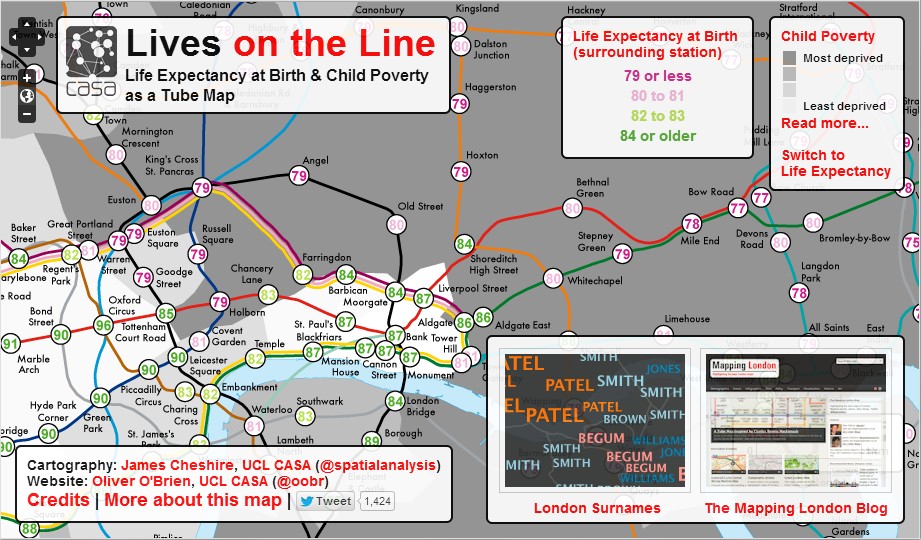
(Why Smarter Cities matter: "Lives on the Line" by James Cheshire at UCL's Centre for Advanced Spatial Analysis, showing the variation in life expectancy and correlation to child poverty in London. From Cheshire, J. 2012. Lives on the Line: Mapping Life Expectancy Along the London Tube Network. Environment and Planning A. 44 (7). Doi: 10.1068/a45341)

(Why Smarter Cities matter: “Lives on the Line” by James Cheshire at UCL’s Centre for Advanced Spatial Analysis, showing the variation in life expectancy across London. From Cheshire, J. 2012. Lives on the Line: Mapping Life Expectancy Along the London Tube Network. Environment and Planning A. 44 (7). Doi: 10.1068/a45341)

In a more strategic scenario, the Centre for Advanced Spatial Analysis (CASA) at University College London have mapped life expectancy at birth across London. Life expectancy across the city varies from 75 to 96 years, and CASA’s researchers were able to correlate it with a variety of other issues such as child poverty.

Life expectancy varies by 10 or 20 years in many cities in the developed world; analysing its relationship to other economic, demographic, social and spatial information can provide insight into where money should be spent on providing services that address the issues leading to it, and that determine quality of life. The UK Technology Strategy Board cited Glasgow’s focus on this challenge as one of their reasons for investing £24 million in Glasgow’s Future Cities Demonstrator project – life expectancy at birth for male babies in Glasgow varies by 26 years between the poorest and wealthiest areas of the city.

These examples clearly show that in principle urban data and technology can contribute to improving quality of life in cities; but they don’t explain how to do so systematically across the very many aspects of quality of life and city systems, and between the great variety of urban environments and cultures throughout the world. How could we begin to do that?

Deconstructing “quality of life”

We must first think more clearly about what we mean by “quality of life”. There are many needs, values and outcomes that contribute to quality of life and its perception. Maslow’s “Hierarchy of Needs” is a well-researched framework for considering them. We can use this as a tool for considering whether urban data can inform us about, and help us to change, the ability of a city to create quality of life for its inhabitants.

(Maslow’s Hierarchy of Needs, image by Factoryjoe via Wikimedia Commons)

But whilst Maslow’s hierarchy tells us about the various aspects that comprise the overall quality of life, it only tells us about our relationship with them in a very general sense. Our perception of quality of life, and what creates it for us, is highly variable and depends on (at least) some of the following factors:

  • Individual lifestyle preferences
  • Age
  • Culture and ethnicity
  • Social standing
  • Family status
  • Sexuality
  • Gender
  • … and so on.

Any analysis of the relationship between quality of life, urban data and technology must take this variability into account; either by allowing for it in the analytic approach; or by enabling individuals and communities to customise the use of data to their specific needs and context.

Stress and Adaptability

Two qualities of urban systems and life within them that can help us to understand how urban data of different forms might relate to Maslow’s hierarchy of needs and individual perspectives on it are stress and adaptability.

Jurij Paraszczak, IBM’s Director of Research for Smarter Cities, suggested that one way to improve quality of life is to reduce stress. A city with efficient, well integrated services – such as transport; availability of business permits etc. – will likely cause less stress, and offer a higher quality of life, than a city whose services are disjointed and inefficient.

One cause of stress is the need to change. The Physicist Geoffrey West is one of many scientists who has explored the roles of technology and population growth in speeding up city systems; as our world changes more and more quickly, our cities will need to become more agile and adaptable – technologists, town planners and economists all seem to agree on this point.

The architect Kelvin Campbell has explored how urban environments can support adaptability by enabling actors within them to innovate with the resources available to them (streets, buildings, spaces, technology) in response to changes in local and global context – changes in the economy of cultural trends, for example.

Service scientists” analyse the adaptability of systems (such as cities) by considering the “affordances” they offer to actors within them. An “affordance” is a capability within a system that is not exercised until an actor chooses to exercise it in order to create value that is specific to them, and specific to the time, place and context within which they act.

An “affordance” might be the ability to start a temporary business or “pop-up” shop within a disused building by exploiting a temporary exemption from planning controls. Or it might be the ability to access open city data and use it as the basis of new information-based business services. (I explored some ideas from science, technology, economics and urbanism for creating adaptability in cities in an article in March this year).

(Photo by lecercle of a girl in Mumbai doing her homework on whatever flat surface she could find. Her use of a stationary tool usually employed for physical mobility to enhance her own social mobility is an example of the very basic capacity we all have to use the resources available to us in innovative ways)

Stress and adaptability are linked. The more personal effort that city residents must exert in order to adapt to changing circumstances (i.e. the less that a city offers them useful affordances), then the more stress they will be subjected to.

Stress; rates of change; levels of effort and cost exerted on various activities: these are all things that can be measured.

Urban data and quality of life in the district high street

In order to explore these ideas in more depth, our discussion at the Urban Systems Collaborative meeting explored a specific scenario systematically. We considered a number of candidate scenarios – from a vast city such as New York, with a vibrant economy but affected by issues such as flood risk; through urban parks and property developments down to the scale of an individual building such as a school or hospital.

We chose to start with a scenario in the middle of that scale range that is the subject of particularly intense debate in economics, policy and urban design: a mixed-demographic city district with a retail centre at its heart spatially, socially and economically.

We imagined a district with a population of around 50,000 to 100,000 people within a larger urban area; with an economy including the retail, service and manufacturing sectors. The retail centre is surviving with some new businesses starting; but also with some vacant property; and with a mixture of national chains, independent specialist stores, pawnshops, cafes, payday lenders, pubs and betting shops. We imagined that local housing stock would support many levels of wealth from benefits-dependent individuals and families through to millionaire business owners. A district similar to Kings Heath in Birmingham, where I live, and whose retail economy was recently the subject of an article in the Economist magazine.

We asked ourselves what data might be available in such an environment; and how it might offer insight into the elements of Maslow’s hierarchy.

We began by considering the first level of Maslow’s hierarchy, our physiological needs; and in particular the availability of food. Clearly, food is a basic survival need; but the availability of food of different types – and our individual and cultural propensity to consume them – also contributes to wider issues of health and wellbeing.

(York Road, Kings Heath, in the 2009 Kings Heath Festival. Photo by Nick Lockey)

Information about food provision, consumption and processing can also give insights into economic and social issues. For example, the Economist reported in 2011 that since the 2008 financial crash, some jobs lost in professional service industries such as finance in the UK had been replaced by jobs created in independent artisan industries such as food. Evidence of growth in independent businesses in artisan and craft-related sectors in a city area may therefore indicate the early stages of its recovery from economic shock.

Similarly, when a significant wave of immigration from a new cultural or ethnic group takes place in an area, then it tends to result in the creation of new, independent food businesses catering to preferences that aren’t met by existing providers. So a measure of diversity in food supply can be an indicator of economic and social growth.

So by considering a need that Maslow’s hierarchy places at the most basic level, we were able to identify data that describes an urban area’s ability to support that need – for example, the “Enjoy Kings Heath” website provides information about local food businesses; and furthermore, we identified ways that the same data related to needs throughout the other levels of Maslow’s hierarchy.

We next considered how economic flows within and outside an area can indicate not just local levels of economic activity; but also the area’s trading surplus or deficit. Relevant information in principle exists in the form of the accounts and business reports of businesses. Initiatives such as local currencies and loyalty schemes attempt to maximise local synergies by minimising the flow of money out of local economies; and where they exploit technology platforms such as Droplet’s SmartPhone payments service, which operates in London and Birmingham, the money flows within local economies can be measured.

These money flows have effects that go beyond the simple value of assets and property within an area. Peckham high street in London has unusually high levels of money flow in and out of its economy due to a high degree of import / export businesses; and to local residents transferring money to relatives overseas. This flow of money makes business rents in the area disproportionally high  compared to the value of local assets.

Our debate also touched on environmental quality and transport. Data about environmental quality is increasingly available from sensors that measure water and air quality and the performance of sewage systems. These clearly contribute insights that are relevant to public health. Transport data provides perhaps more subtle insights. It can provide insight into economic activity; productivity (traffic jams waste time); environmental impact; and social mobility.

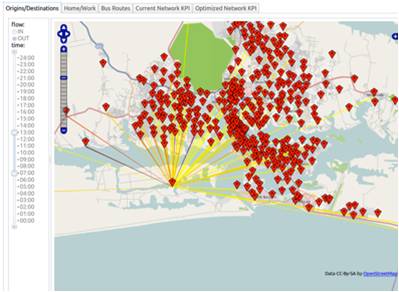
My colleagues in IBM Research have recently used anonymised data from GPS sensors in SmartPhones to analyse movement patterns in cities such as Abidjan and Istanbul on behalf of their governments and transport authorities; and to compare those movement patterns with public transport services such as bus routes. When such data is used to alter public transport services so that they better match the end-to-end journey requirements of citizens, an enormous range of individual, social, environmental and economic benefits are realised.

(The origins and destinations of end-to-end journeys made in Abidjan, identified from anonymised SmartPhone GPS data)

(The origins and destinations of end-to-end journeys made in Abidjan, identified from anonymised SmartPhone GPS data)

Finally, we considered data sources and aspects of quality of life relating to what Maslow called “self-actualisation”: the ability of people within the urban environment of our scenario to create lifestyles and careers that are individually fulfilling and that reward creative self-expression. Whilst not direct, measurements of the registration of patents, or of the formation and survival of businesses in sectors such as construction, technology, arts and artisan crafts, relate to those values in some way.

In summary, the exercise showed that a great variety of data is available that relates to the ability of an urban environment to provide Maslow’s hierarchy of needs to people within it. To gain a fuller picture, of course, we would need to repeat the exercise with many other urban contexts at every scale from a single building up to the national, international and geographic context within which the city exists. But this seems a positive start.

Recognising the challenge

Of course, it is far from straightforward to convert these basic ideas and observations into usable techniques for deriving insight and value concerning quality of life from urban data.

What about the things that are extremely hard to measure but which are often vital to quality of life – for example the cash economy? Physical cash is notoriously hard to trace and monitor; and arguably it is particularly important to the lives of many individuals and communities who have the most significant quality of life challenges; and to those who are responsible for some of the activities that detract from quality of life – burglary, mugging and the supply of narcotics, for example.

The Urban Systems Collaborative’s debate also touched briefly on the question of whether we can more directly measure the outcomes that people care about – happiness, prosperity, the ability to provide for our families, for example. Antti Poikola has written an article on his blog, “Vital signs for measuring the quality of life in cities“, based on the presentation on that topic by Samir Menon of Tata Consulting Services. Samir identified a number of “happiness indices” that have been proposed by the UK Prime Minister, David Cameron, the European Quality of Life Survey, the OECD’s Better Life Index, and the Social Progress Index created by economist Michael Porter. Those indices generally attempt to correlate a number of different quantitative indicators with qualitative information from surveys into an overall score. Their accuracy and usefulness is the subject of contentious debate.

As an alternative, Michael Mezey of the Royal Society for the Arts recently collected descriptions of attempts to measure happiness more directly by identifying the location of issues or events associated with positive or negative emotions – such as parks and pavements fouled by dog litter or displays of emotion in public. It’s fair to say that the results of these approaches are very subjective and selective so far, but it will be interesting to observe what progress is made.

There is also a need to balance our efforts between creating value from the data that is available to us – which is surely a resource that we should exploit – with making sure that we focus our efforts on addressing our most important challenges, whether or not data relevant to them is easily accessible.

And in practise, a great deal of the data that describes cities is still not very accessible or useful. Most of it exists within IT systems that were designed for a specific purpose – for example, to allow building owners to manage the maintenance of their property. Those systems may not be very good at providing data in a way that is useful for new purposes – for example, identifying whether a door is connected to a pavement by a ramp or by steps, and hence how easy it is for a wheelchair user to enter a building.

(Photo by Closed 24/7 of the Jaguar XF whose designers used “big data” analytics to optimise the emotional response of potential customers and drivers)

Generally speaking, transforming data that is useful for a specific purpose into data that is generally useful takes time, effort and expertise – and costs money. We may desire city data to be tidied up and made more readily accessible; just as we may desire a disused factory to be converted into useful premises for shops and small businesses. But securing the investment required to do so is often difficult – this is why open city data is a “brownfield regeneration” challenge for the information age.

We don’t yet have a general model for addressing that challenge, because the socio-economic model for urban data has not been defined. Who owns it? What does it cost to create? What uses of it are acceptable? When is it proper to profit from data?

Whilst in principle the data available to us, and our ability to derive insight and knowledge from it, will continue to grow, our ability to benefit from it in practise will be determined by these crucial ethical, legal and economic issues.

There are also more technical challenges. As any mathematician or scientist in a numerate discipline knows, data, information and analysis models have significant limitations.

Any measurement has an inherent uncertainty. Location information derived from Smartphones is usually accurate to within a few meters when GPS services are available, for example; but only to within a few hundred meters when derived by triangulation between mobile transmission masts. That level of inaccuracy is tolerable if you want to know which city you are in; but not if you need to know where the nearest defibrilator is.

These limitations arise both from the practical limitations of measurement technology; and from fundamental scientific principles that determine the performance of measurement techniques.

We live in a “warm” world – roughly 300 degrees Celsius above what scientists call “absolute zero“, the coldest temperature possible. Warmth is created by heat energy; that energy makes the atoms from which we and our world are made “jiggle about” – to move randomly. When we touch a hot object and feel pain it is because this movement is too violent to bear – it’s like being pricked by billions of tiny pins. This random movement creates “noise” in every physical system, like the static we hear in analogue radio stations or on poor quality telephone lines.

And if we attempt to measure the movements of the individual atoms that make up that noise, we enter the strange world of quantum mechanics in which Heisenberg’s Uncertainty Principle states that the act of measuring such small objects changes them in unpredictable ways. It’s hardly a precise analogy, but imagine trying to measure how hard the surface of a jelly is by hitting it with a hammer. You’d get an idea of the jelly’s hardness by doing so, but after the act of “measurement” you wouldn’t be left with the same jelly. And before the measurement you wouldn’t be able to predict the shape of the jelly afterwards.

(A graph from my PhD thesis showing experimental data plotted against the predictions of an analytic. Notice that whilst the theoretical prediction (the smooth line) is a good guide to the experimental data, that each actual data point lies above or below the line, not on it. In addition, each data point has a vertical bar expressing the level of uncertainty involved in its measurement. In most circumstances, data is uncertain and theory is only a rough guide to reality.)

Even if our measurements were perfect, our ability to understand what they are telling us is not. We draw insight into the behaviour of a real system by comparing measurements of it to a theoretical model of its behaviour. Weather forecasters predict the weather by comparing real data about temperature, air pressure, humidity and rainfall to sophisticated models of weather systems; but, as the famous British preoccupation with talking about the weather illustrates, their predictions are frequently inaccurate. Quite simply this is because the weather system of our world is more complicated than the models that weather forecasters are able to describe using mathematics; and process using today’s computers.

This may all seem very academic; and indeed it is – these are subjects that I studied for my PhD in Physics. But all scientists, mathematicians and engineers understand them; and whether our work involves city systems, motor cars, televisions, information technology, medicine or human behaviour, when we work with data, information and analysis technology we are very much aware and respectful of their limitations.

Most real systems are more complicated than the theoretical models that we are able to construct and analyse. That is especially true of any system that includes the behaviour of people – in other words, the vast majority of city systems. Despite the best efforts of psychology, social science and artificial intelligence we still do not have an analytic model of human behaviour.

For open data and Smarter Cities to succeed, we need to openly recognise these challenges. Data and technology can add immense value to city systems – for instance, IBM’s “Deep Thunder” technology creates impressively accurate short-term and short-range predictions of weather-related events such as flash-flooding that have the potential to save lives. But those predictions, and any other result of data-based analysis, have limitations; and are associated with caveats and constraints.

It is only by considering the capabilities and limitations of such techniques together that we can make good decisions about how to use them – for example, whether to trust our lives to the automated analytics and control systems involved in anti-lock braking systems, as the vast majority of us do every time we travel by road; or whether to use data and technology only to provide input into a human process of consideration and decision-making – as takes place in Rio when city agency staff consider Deep Thunder’s predictions alongside other data and use their own experience and that of their colleagues in determining how to respond.

In current discussions of the role of technology in the future of cities, we risk creating a divide between “soft” disciplines that deal with qualitative, subjective matters – social science and the arts for example; and “hard” disciplines that deal with data and technology – such as science, engineering, mathematics.

In the most polarised debates, opinion from “soft” disciplines is that “Smart cities” is a technology-driven approach that does not take human needs and nature into account, and does not recognise the variability and uncertainty inherent in city systems; and opinion from “hard” disciplines is that operational, design and policy decisions in cities are taken without due consideration of data that can be used to inform them and predict their outcomes. As Stephan Shakespeare wrote in the “Shakespeare Review of Public Sector Information“, “To paraphrase the great retailer Sir Terry Leahy, to run an enterprise without data is like driving by night with no headlights. And yet that is what government often does.”

There is no reason why these positions cannot be reconciled. In some domains “soft” and “hard” disciplines regularly collaborate. For example, the interior and auditory design of the Jaguar XF car, first manufactured in 2008, was designed by re-creating the driving experience in a simulator at the University of Warwick, and analysing the emotional response of test subjects using physiological sensors and data. Such techniques are now routinely used in product design. And many individuals have a breadth of knowledge that extends far beyond their core profession into a variety of areas of science and the arts.

But achieving reconciliation between all of the stakeholders involved in the vastly complex domain of cities – including the people who live in them, not just the academics, professionals and politicians who study, design, engineer and govern them – will not happen by default. It will only happen if we have an open and constructive debate about the capabilities and the limitations of data, information and technology; and if we are then able to communicate them in a way that expresses to everyone why Smarter City systems will improve their quality of life.

(“Which way to go?” by Peter Roome)

What’s next?
It’s astonishing and encouraging that we could use a model of individual consciousness to navigate the availability and value of data in the massively collective context of an urban scenario. To continue developing an understanding of the ability of information and technology to contribute to quality of life within cities, we need to expand that approach to explore the other dimensions we identified that affect perceptions of quality of life: culture, age and family status, for example; and within both larger and smaller scales of city context than the “district” scenario that we started with.

And we need to compare that approach to existing research work such as the Liveable Cities research collaboration between UK Universities that is establishing an evidence-based technique for assessing wellbeing; or the IBM Research initiative “SCRIBE” which seeks to define the meaning of and relationships between the many types of data that describe cities.

As a next step, the Urban Systems Collaborative attendees suggested that it would be useful to consider how people in different circumstances in cities use data, information and technology to take decisions:  for example, city leaders, businesspeople, parents, hostel residents, commuters, hospital patients and so forth across the incredible variety of roles that we play in cities. You can find out more about how the Collaborative is taking this agenda forward on their website.

But this is not a debate that belongs only within the academic community or with technologists and scientists. Information and technology are changing the cities, society and economy that we live in and depend on. But that information results from data that in large part is created by all of our actions and activities as individuals, as we carry out our lives in cities, interacting with systems that from a technology perspective are increasingly instrumented, interconnected and intelligent. We are the ultimate stakeholders in the information economy, and we should seek to establish an equitable consensus for how our data is used; and that consensus should include an understanding and acceptance between all parties of both the capabilities and limitations of information and technology.

I’ve written before about the importance of telling stories that illustrate ways in which technology and information can change lives and communities for the better. The Community Lovers’ Guide to Birmingham is a great example of doing this. As cities such as Birmingham, Dublin and Chicago demonstrate what can be achieved by following a Smarter City agenda, I’m hoping that those involved can tell stories that will help other cities across the world to pursue these ideas themselves.

(This article summarises a discussion I chaired this week to explore the relationship between urban data, technology and quality of life at the Urban Systems Collaborative’s London workshop, organised by my ex-colleague, Colin Harrison, previously an IBM Distinguished Engineer responsible for much of our Smarter Cities strategy; and my current colleague, Jurij Paraszczak, Director of Industry Solutions and Smarter Cities for IBM ResearchI’m grateful for the contributions of all of the attendees who took part. The article also appears on the Urban Systems Collaborative’s blog).

Seven steps to a Smarter City; and the imperative for taking them (updated 8th September 2013)

(Interior of the new Library of Birmingham, opened in September 2013. Photo by Andy Mabbett)

(Interior of the new Library of Birmingham, opened in September 2013. Photo by Andy Mabbett licensed under Creative Commons via Wikimedia Commons)

(This article originally appeared in September 2012 as “Five steps to a Smarter City: and the philosophical imperative for taking them“. Because it contains an overall framework for approaching Smart City transformations, I keep it updated to reflect the latest content on this blog; and ongoing developments in the industry. It can also be accessed through the page link “Seven steps to a Smarter City” in the navigation bar above).

As I’ve worked with cities over the past two years developing their “Smarter City” strategies and programmes  to deliver them, I’ve frequently written articles on this blog exploring the main challenges they’ve faced: establishing a cross-city consensus to act; securing funding; and finding the common ground between the institutional and organic natures of city ecosystems.

We’ve moved beyond exploration now. There are enough examples of cities making progress on the “Smart” agenda for us to identify  the common traits that lead to success. I first wrote “Five steps to a Smarter City: and the philosophical imperative for taking them” in September 2012 to capture what at the time seemed to be emerging practises with promising potential, and have updated it twice since then. A year later, it’s time for a third and more confident revision.

In the past few months it’s also become clear that an additional step is required to recognise the need for new policy frameworks to enable the emergence of Smarter City characteristics, to complement the direct actions and initiatives that can be taken by city institutions, businesses and communities.

The revised seven steps involved in creating and achieving a Smarter City vision are:

  1. Define what a “Smarter City” means to you (Updated)
  2. Convene a stakeholder group to co-create a specific Smarter City vision; and establish governance and a credible decision-making process (Updated)
  3. Structure your approach to a Smart City by drawing on the available resources and expertise (Updated)
  4. Establish the policy framework (New)
  5. Populate a roadmap that can deliver the vision (Updated)
  6. Put the financing in place (Updated)
  7. Enable communities and engage with informality: how to make “Smarter” a self-sustaining process (Updated)

I’ll close the article with a commentary on a new form of leadership that can be observed at the heart of many of the individual initiatives and city-wide programmes that are making the most progress. Described by Andrew Zolli in “Resilience: why things bounce back” as “translational leadership“, it is characterised by an ability to build unusually broad collaborative networks across the institutions and communities – both formal and informal – of a city.

But I’ll begin with what used to be the ending to this article: why Smarter Cities matter. Unless we’re agreed on the need for them, it’s unlikely we’ll take the steps required to achieve them.

The Smarter City imperative

(Why Smarter Cities matter: "Lives on the Line" by James Cheshire at UCL's Centre for Advanced Spatial Analysis, showing the variation in life expectancy and correlation to child poverty in London. From Cheshire, J. 2012. Lives on the Line: Mapping Life Expectancy Along the London Tube Network. Environment and Planning A. 44 (7). Doi: 10.1068/a45341)

(Why Smarter Cities matter: “Lives on the Line” by James Cheshire at UCL’s Centre for Advanced Spatial Analysis, showing the variation in life expectancy across London. From Cheshire, J. 2012. Lives on the Line: Mapping Life Expectancy Along the London Tube Network. Environment and Planning A. 44 (7). Doi: 10.1068/a45341)

I think it’s vitally important to take a pro-active approach to Smarter Cities.

According to the United Nations Department of Economic and Social Affairs’ 2011 revision to their “World Urbanisation Prospects” report, between now and 2050 the world’s population will rise by 2-3 billion. The greatest part of that rise will be accounted for by the growth of Asian, African and South American “megacities” with populations of between 1 and 35 million people.

As a crude generalisation, this unprecedented growth offers four challenges to cities in different circumstances:

  • For rapidly growing cities: we have never before engineered urban infrastructures to support such growth. Whenever we’ve tried to accommodate rapid urban growth before, we’ve failed to provide adequate infrastructure, resulting in slums. One theme within Smarter Cities is therefore the attempt to use technology to respond more successfully to this rapid urbanisation.
  • For cities in developed economies with slower growth: urbanisation in rapidly growing economies is creating an enormous rise in the size of the world’s middle-class, magnifying global growth in demand for resources such as energy, water, food and materials; and creating new competition for economic activity. So a second theme of Smarter Cities that applies in mature economies is to remain vibrant economically and socially in this context, and to improve the distribution of wealth and opportunity, against a background of modest economic growth, ageing populations with increasing service needs, legacy infrastructure and a complex model of governance and operation of city services.
  • For cities in countries that are still developing slowly: increasing levels of wealth and economic growth elsewhere  create an even tougher hurdle than before in creating opportunity and prosperity for the populations of those countries not yet on the path to growth. At the same time that economists and international development organisations attempt to ensure that these nations benefit from their natural resources as they are sought by growing economies elsewhere, a third strand of Smarter Cities is concerned with supporting wider growth in their economies despite a generally low level of infrastructure, including technology infrastructure.
(Photo of Masshouse Circus, Birmingham, a concrete urban expressway that strangled the citycentre before its redevelopment in 2003, by Birmingham City Council)

(Photo of Masshouse Circus, Birmingham, a concrete urban expressway that strangled the citycentre before its redevelopment in 2003, by Birmingham City Council)

We have only been partly successful in meeting these challenges in the past. As public and private sector institutions in Europe and the United States evolved through the previous period of urbanisation driven by the Industrial Revolution they achieved mixed results: standards of living rose dramatically; but so unequally that life expectancy between the richest and poorest areas of a single UK city often varies by 10 to 20 years.

In the sense that city services and businesses will always seek to exploit the technologies available to them, our cities will become smarter eventually as an inevitable consequence of the evolution of technology and growing competition for resources and economic activity.

But if those forces are allowed to drive the evolution of our cities, rather than supporting a direction of evolution that is proactively chosen by city stakeholders, then we will not solve many of the challenges that we care about most: improving the distribution of wealth and opportunity, and creating a better, sustainable quality of life for everyone. As I argued in “Smarter City myths and misconceptions“, “business as usual” will not deliver what we want and need – we need new approaches.

I do not pretend that it will be straightforward to apply our newest tool – digital technology – to achieve those objectives. In “Death, Life and Place in Great Digital Cities“, I explored the potential for unintended consequences when applying technology in cities, and compared them to the ongoing challenge of balancing the impacts and benefits of the previous generations of technology that shaped the cities we live in today – elevators, concrete and the internal combustion engine. Those technologies enabled the last century of growth; but in some cases have created brutal and inhumane urban environments which limit the quality of life that is possible within them.

But there are nevertheless many ways for cities in every circumstance imaginable to benefit from Smarter City ideas, as I described in my presentation earlier this year to the United Nations Commission on Science and Technology for Development, “Science, technology and innovation for sustainable cities and peri-urban communities“.

The first step in doing so is for each city and community to decide what “Smarter Cities “means to them.

Singapore Traffic Prediction

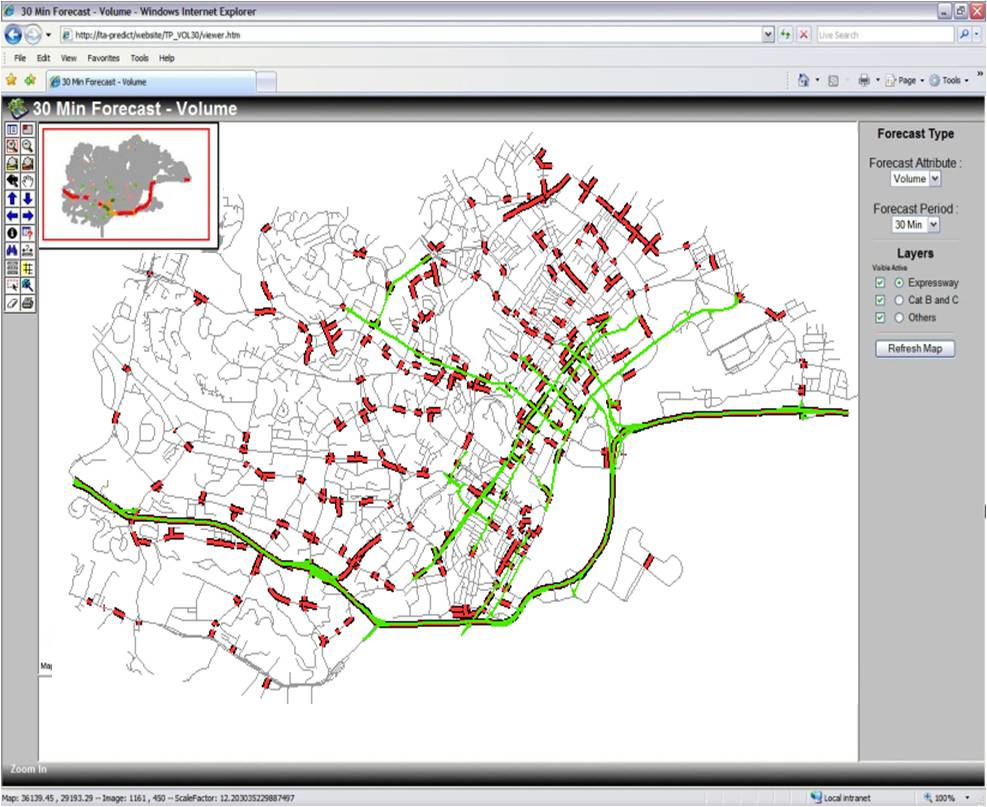
(A prediction of traffic speed and volume 30 minutes into the future in Singapore. In a city with a growing economy and a shortage of space, the use of technology to enable an efficient transportation system has long been a priority)

1. Define what a “Smarter City” means to you

Many urbanists and cities have grappled with how to define what a “Smart City”, a “Smarter City” or a “Future City” might be. It’s important for cities to agree to use an appropriate definition because it sets the scope and focus for what will be a complex collective journey of transformation.

In his article “The Top 10 Smart Cities On The Planet“, Boyd Cohen of Fast Company defined a Smart City as follows:

“Smart cities use information and communication technologies (ICT) to be more intelligent and efficient in the use of resources, resulting in cost and energy savings, improved service delivery and quality of life, and reduced environmental footprint–all supporting innovation and the low-carbon economy.”

IBM describes a Smarter City in similar terms, more specifically stating that the role of technology is to create systems that are “instrumented, interconnected and intelligent.”

Those definitions are useful; but they don’t reflect the different situations of cities everywhere, which are only very crudely described by the four contexts I identified above. We should not be critical of any of the general definitions of Smarter Cities; they are useful in identifying the nature and scope of powerful ideas that could have widespread benefits. But a broad definition will never provide a credible direction for any individual city given the complexities of its challenges, opportunities, context and capabilities.

Additionally, definitions of “Smarter Cities” that are based on relatively advanced technology concepts don’t reflect the origins of the term “Smart” as recognised by the social scientists I met with in July at a workshop at the University of Durham.  The “Smart” idea is more than a decade old, and emerged from the innovative use of relatively basic digital technologies to stimulate economic growth, community vitality and urban renewal.

As I unifying approach, I’ve therefore come recently to conceive of a Smarter City as follows:

A Smarter City systematically creates and encourages innovations in city systems that are enabled by technology; that change the relationships between the creation of economic and social value and the consumption of resources; and that contribute in a coordinated way to achieving a vision and clear objectives that are supported by a consensus amongst city stakeholders.

In co-creating a consensual approach to “Smarter Cities” in any particular place, it’s important to embrace the richness and variety of the field. Many people are very sceptical of the idea of Smarter Cities; often I find that their scepticism arises from the perception that proponents of Smarter Cities are intent on applying the same ideas everywhere, regardless of their suitability, as I described in Smarter City myths and misconceptions” in July.

For example, highly intelligent, multi-modal transport infrastructures are vital in cities such as Singapore, where a rapidly growing economy has created an increased demand for transport; but where there is no space to build new road capacity. But they are much less relevant – at least in the short term – for cities such as Sunderland where the priority is to provide better access to digital technology to encourage the formation and growth of new businesses in high-value sectors of the economy. Every city, individual or organisation that I know of that is successfully pursuing a Smarter City initiative or strategy recognises and engages with that diversity,

Creating a specific Smarter City vision is therefore a task for each city to undertake for itself, taking into account its unique character, strengths and priorities. This process usually entails a collaborative act of creativity by city stakeholders – I’ll explore how that takes place in the next section.

To conclude, it’s likely that the following generic objectives should be considered and adapted in that process:

  • A Smarter City is in a position to make a success of the present: for example, it is economically active in high-value industry sectors and able to provide the workforce and infrastructure that companies in those sectors need.
  • A Smarter City is on course for a successful future: with an education system that provides the skills that will be needed by future industries as technology evolves.
  • A Smarter City creates sustainable, equitably distributed growth: where education and employment opportunities are widely available to all citizens and communities, and with a focus on delivering social and environmental outcomes as well as economic growth.
  • A Smarter City operates as efficiently & intelligently as possible: so that resources such as energy, transportation systems and water are used optimally, providing a low-cost, low-carbon basis for economic and social growth, and an attractive, healthy environment in which to live and work.
  • A Smarter City enables citizens, communities, entrepreneurs & businesses to do their best; because making infrastructures Smarter is an engineering challenge; but making cities Smarter is a societal challenge; and those best placed to understand how societies can change are those who can innovate within them.
  • A Smarter City harnesses technology effectively and makes it accessible; because technology continues to define the new infrastructures that are required to achieve efficiencies in operation; and to enable economic and social growth.

2. Convene a stakeholder group to co-create a specific Smarter City vision

For a city to agree a shared “Smarter City” vision involves bringing an unusual set of stakeholders together in a single forum: political leaders, community leaders, major employers, transport and utility providers, entrepreneurs and SMEs, universities and faith groups, for example. The task for these stakeholders is to agree a vision that is compelling, inclusive; and specific enough to drive the creation of a roadmap of individual projects and initiatives to move the city forward.

It’s crucial that this vision is co-created by a group of stakeholders; as a city leader commented to me last year: “One party can’t bring the vision to the table and expect everyone else to buy into it”.

This is a process that I’m proud to be taking part in in Birmingham through the City’s Smart City Commission, whose vision for the city was published in December. I discussed how such processes can work, and some of the challenges and activities involved, in July 2012 in an article entitled “How Smarter Cities Get Started“.

To be sufficiently creative, empowered and inclusive, the group of stakeholders needs to encompass not only the leaders of key city institutions and representatives of its breadth of communities; it needs to contain original thinkers; social entrepreneurs and agents of change. As someone commented to me recently following a successful meeting of such a group: “this isn’t a ‘usual’ group of people”. In a similar meeting this week, a colleague likened the process of assembling such a group to that of building the Board of a new company.

To attract the various forms of investment that are required to support a programme of “Smart” initiatives, these stakeholder groups need to be decision-making entities, such as Manchester’s “New Economy” Commission, not discussion forums.  They need to take investment decisions together in the interest of shared objectives; and they need a mature understanding and agreement of how risk is shared and managed across those investments.

Whatever specific form a local partnership takes, it needs to demonstrate transparency and consistency in its decision-making and risk management, in order that its initiatives and proposals are attractive to investors. These characteristics are straightforward in themselves; but take time to establish amongst a new group of stakeholders taking a new, collaborative approach to the management of a programme of transformation.

Finally, to create and execute a vision that can succeed, the group needs to tell stories. A Smarter City encompasses all of a city’s systems, communities and businesses; the leaders in that ecosystem can only act with the support of their shareholders, voters, citizens, employees and neighbours. We will only appeal to such a broad constituency by telling simple stories that everyone can understand. I discussed some of the reasons that lead to this in “Better stories for Smarter Cities: three trends in urbanism that will reshape our world” in January and “Little/big; producer/consumer; and the story of the Smarter City” in March. Both articles cover similar ground; and were written as I prepared for my TEDxWarwick presentation, “Better Stories for Smarter Cities”, also in March.

The article “Smart ideas for everyday cities” from December 2012 discusses all of these challenges, and examples of groups that have addressed them, in more detail.

3. Structure your approach to a Smart City by drawing on the available resources and expertise

Any holistic approach to a Smarter City needs to recognise the immensely complex context that a city represents: a rich “system of systems” comprising the physical environment, economy, transport and utility systems, communities, education and many other services, systems and human activities.

(The components of a Smart City architecture I described in “The new architecture of Smart Cities“)

In “The new architecture of Smart Cities” in September 2012 I laid out a framework  for thinking about that context; in particular highlighting the need to focus on the “soft infrastructure” of conversations, trust, relationships and engagement between people, communities, enterprises and institutions that is fundamental to establishing a consensual view of the future of a city.

In that article  I also asserted that whilst in Smarter Cities we are often concerned with the application of technology to city systems, the context in which we do so – i.e. our understanding of the city as a whole – is the same context as that in which other urban professionals operate: architects, town planners and policy-makers, for example. An implication is that when looking for expertise to inform an approach to “Smarter Cities”, we should look broadly across the field of urbanism, and not restrict ourselves to that material which pertains specifically to the application of technology to cities.

Formal sources include:

  • UN-HABITAT, the United Nations agency for human settlements, which recently published its “State of the World’s Cities 2012/2013” report. UNHABITAT promote socially and environmentally sustainable towns and cities, and their reports and statistics on urbanisation are frequently cited as authoritative. Their 2012/2013 report includes extensive consultation with cities around the world, and proposes a number of new mechanisms intended to assist decision-makers.
  • The Academy of Urbanism, a UK-based not-for-profit association of several hundred urbanists including policy-makers, architects, planners and academics, publishes the “Friebrug Charter for Sustainable Urbanism” in collaboration with the city of Frieburg, Germany. Frieburg won the Academy’s European City of the Year award in 2010 but its history of recognition as a sustainable city goes back further. The charter contains a number of useful principles and ideas for achieving consensual sustainability that can be applied to Smarter Cities.
  • The UK Technology Strategy Board’s “Future Cities” programme (link requires registration) and the ongoing EU investments in Smart Cities are both investing in initiatives that transfer Smarter City ideas and technology from research into practise, and disseminating the knowledge created in doing so.

(Photo by lecercle of a girl in Mumbai doing her homework on whatever flat surface she could find. Her use of a stationary tool usually employed for physical mobility to enhance her own social mobility is an example of the very basic capacity we all have to use the resources available to us in innovative ways)

It is also important to consider how change is achieved in systems as complex as cities. In “Do we need a Pattern Language for Smarter Cities” I noted some of the challenges involve in driving top-down programmes of change; and contrasted them to what can happen when an environment is created that encourages innovation and attempts to influence it to achieve desired outcomes, rather than to adopt particular approaches to doing so. And in “Zen and the art of messy urbanism” I explored the importance of unplanned, informal and highly creative “grass-roots” activity in creating growth in cities, particularly where resources and finances are constrained.

Some very interesting such approaches have emerged from thinking in policy, economics, planning and architecture: the Collective Research Initiatives Trust‘s study of Mumbai, “Being Nicely Messy“; Colin Rowe and Fred Koetter’s “Collage City“; Manu Fernandez’s “Human Scale Cities” project; and the “Massive / Small” concept and associated “Urban Operating System” from Kelvin Campbell and Urban Initiatives, for example have all suggested an approach that involves a “toolkit” of ideas for individuals and organisations to apply in their local context.

The “tools” in such toolkits are similar to the “design patterns“ invented by the town planner Christopher Alexander in the 1970s as a tool for capturing re-usable experience in town planning, and later adopted by the Software industry. I believe they offer a useful way to organise our knowledge of successful approaches to “Smarter Cities”, and am slowly creating a catalogue of them, including the “City information partnership” and “City-centre enterprise incubation“.

A good balance between the top-down and bottom-up approaches can be found in the large number of “Smart Cities” and “Future Cities” communities on the web, such as UBM’s “Future Cities” site; Next City; the Sustainable Cities Collective; the World Cities Network; and Linked-In discussion Groups including “Smart Cities and City 2.0“, “Smarter Cities” and “Smart Urbanism“.

Finally, I published an extensive article on this blog in December 2012 which provided a framework for identifying the technology components required to support Smart City initiatives of different kinds – “Pens, paper and conversations. And the other technologies that will make cities smarter“.

4. Establish the policy framework

The influential urbanist Jane Jacobs wrote in her seminal 1961 work ”The Death and Life of Great American Cities“:

“Private investment shapes cities, but social ideas (and laws) shape private investment. First comes the image of what we want, then the machinery is adapted to turn out that image. The financial machinery has been adjusted to create anti-city images because, and only because, we as a society thought this would be good for us. If and when we think that lively, diversified city, capable of continual, close- grained improvement and change, is desirable, then we will adjust the financial machinery to get that.”

Jacobs’ was concerned with redressing the focus of urban design away from vehicle traffic and back to meeting the daily requirements of human lives; but today, it is similarly true that our planning and procurement practises do not recognise the value of the Smart City vision, and therefore are not shaping the financial instruments to deliver it. This is not because those practises are at fault; it is because technologists, urbanists, architects, procurement officers, policy-makers and planners need to work together to evolve those practises to take account of the new possibilities available to cities through technology.

It’s vitally important that we do this. As I described in November 2012 in “No-one is going to pay cities to become Smarter“, the sources of research and innovation funding that are supprting the first examples of Smarter City initiatives will not finance the widespread transformation of cities everywhere. But there’s no need for them to: the British Property Federation, for example, estimate that £14 billion is invested in the development of new space in the UK each year – that’s 500 times the annual value of the UK Government’s Urban Broadband Fund. If planning regulations and other policies can be adapted to promote investment in the technology infrastructures that support Smarter Cities, the effect could be enormous.

I ran a workshop titled “Can digital technology help us build better cities?” to explore these themes in May at the annual Congress of the Academy of Urbanism in Bradford; and have been exploring them with a number of city Councils and institutions such as the British Standards Institute throughout the year. In June I summarised the ideas that emerged from that work in the article “How to build a Smarter City: 23 design principles for digital urbanism“.

Two of the key issues to address are open data and digital privacy.

As I explored in “Open urbanism:  why the information economy will lead to sustainable cities” in December 2012, open data is a vital resource for creating successful, sustainable, equitable cities. But there are thousands of datasets relevant to any individual city; owned by a variety of public and private sector institutions; and held in an enormous number of fragmented IT systems of varying ages and designs. Creating high quality, consistent, reliable data in this context is a “Brownfield regeneration challenge for the information age”, as I described in October 2012. Planning and procurement regulations that require city information to be made openly available will be an important tool in creating the investment required to overcome that challenge.

(The image on the right was re-created from an MRI scan of the brain activity of a subject watching the film shown in the image on the left. By Shinji Nishimoto, Alex G. Huth, An Vu and Jack L. Gallant, UC Berkley, 2011)

(The image on the right was re-created from an MRI scan of the brain activity of a subject watching the film shown in the image on the left. By Shinji Nishimoto, Alex G. Huth, An Vu and Jack L. Gallant, UC Berkley, 2011)

Digital privacy matters to Smarter Cities in part because technology is becoming ever more fundamental to our lives as more and more of our business is transacted online through e-commerce and online banking. Additionally, the boundary between technology, information and the physical world is increasingly disappearing – as shown recently by the scientists who demonstrated that one person’s thoughts could control another’s actions, using technology, not magic or extrasensory phenomena. That means that our physical safety and digital privacy are increasingly linked – the emergence this year of working guns 3D-printed from digital designs is one of the most striking examples. 

Jane Jacobs defined cities by their ability to provide privacy and safety amongst their citizens; and her thinking is still regarded by many urbanists as the basis of our understanding of cities. As digital technology becomes more pervasive in city systems, it is vital that we evolve the policies that govern digital privacy to ensure that those systems continue to support our lives, communities and businesses successfully.

5. Populate a roadmap that can deliver the vision

In order to fulfill a vision for a Smarter City, a roadmap of specific projects and initiatives is needed, including both early “quick wins” and longer term strategic programmes.

Those projects and initiatives take many forms; and it can be worthwhile to concentrate initial effort on those that are simplest to execute because they are within the remit of a single organisation; or because they build on cross-organisational initiatives within cities that are already underway.

In my August 2012 article “Five roads to a Smarter City” I gave some ideas of what those initiatives might be, and the factors affecting their viability and timing, including:

  1. Top-down, strategic transformations across city systems;
  2. Optimisation of individual infrastructures such as energy, water and transportation;
  3. Applying “Smarter” approaches to “micro-city” environments such as industrial parks, transport hubs, university campuses or leisure complexes;
  4. Exploiting the technology platforms emerging from the cost-driven transformation to shared services in public sector;
  5. Supporting the “Open Data” movement.

In “Pens, paper and conversations. And the other technologies that will make cities smarter” in December 2012, I described a framework for identifying the technology components required to support Smart City initiatives of different kinds, such as:

  1. Re-engineering the physical components of city systems (to improve their efficiency)
  2. Using information  to optimise the operation of city systems
  3. Co-ordinating the behaviour of multiple systems to contribute to city-wide outcomes
  4. Creating new marketplaces to encourage sustainable choices, and attract investment

The Smarter City design patterns I described in the previous section also provide potential ideas, including City information partnerships and City-centre enterprise incubation; I’m hoping shortly to add new patterns such as Community Energy Initiatives, Social Enterprises, Local Currencies and Information-Enabled Resource Marketplaces.

It is also worthwhile to engage with service and technology providers in the Smart City space; they have knowledge of projects and initiatives with which they have been involved elsewhere. Many are also seeking suitable locations in which to invest in pilot schemes to develop or prove new offerings which, if successful, can generate follow-on sales elsewhere. The “First of a Kind” programme in IBM’s Research division is one example or a formal programme that is operated for this purpose.

A roadmap consisting of several such individual activities within the context of a set of cross-city goals, and co-ordinated by a forum of cross-city stakeholders, can form a powerful programme for making cities Smarter.

(Photo of the Brixton Pound by Charlie Waterhouse)

6. Put the financing in place

A crucial factor in assessing the viability of those activities, and then executing them, is putting in place the required financing. In many cases, that will involve cities approaching investors or funding agencies. In “Smart ideas for everyday cities” in December 2012 I described some of the organisations from whom funds could be secured; and some of the characteristics they are looking for when considering which cities and initiatives to invest in.

But for cities to seek direct funding for Smarter Cities is only one approach; I compared it to four other approaches in “Gain and responsibility: five business models for sustainable cities” in August:

  1. Cross-city Collaborations
  2. Scaling-up Social Enterprise
  3. Creativity in finance
  4. Making traditional business sustainable
  5. Encouraging entrepreneurs everywhere

The role of traditional business is of particular importance. Billions of us depend for our basic needs – not to mention our entertainment and leisure – on global supply chains operated on astounding scales by private sector businesses. Staples such as food, cosmetics and cleaning products consume a vast proportion of the world’s fresh water and agricultural capacity; and a surprisingly small number of organisations are responsible for a surprisingly large proportion of that consumption as they produce the products and services that many of us use. We will only achieve smarter, sustainable cities, and a smarter, sustainable world, in collaboration with them. The CEOs of  Unilever and Tesco have made statements of intent along these lines recently, and IBM and Hilton Hotels are two businesses that have described the progress they have already made.

There are very many individual ways in which funds can be secured for Smart City initiatives, of course; I described some more in “No-one is going to pay cities to become Smarter” in November 2012, and several others in two articles in September 2012:

In “Ten ways to pay for a Smarter City (part one)“:

And in “Ten ways to pay for a Smarter City (part two):

I’m a technologist, not a financier or economist; so those articles are not intended to be exhaustive or definitive. But they do suggest a number of practical options that can be explored.

(The discussion group at #SmartHack in Birmingham, described in “Tea, trust and hacking – how Birmingham is getting Smarter“, photographed by Sebastian Lenton)


7. Think beyond the future and engage with informality: how to make “Smarter” a self-sustaining process

Once a city has become “Smart”, is that the end of the story?

I don’t think so. The really Smart city is one that has put in place soft and hard infrastructures that can be used in a continuous process of reinvention and creativity.

In the same way that a well designed urban highway should connect rather than divide the city communities it passes through, the new technology platforms put in place to support Smarter City initiatives should be made open to communities and entrepreneurs to constantly innovate in their own local context. As I explored in “Smarter city myths and misconceptions” this idea should really be at the heart of our understanding of Smarter Cities.

I’ve explored those themes frequently in articles on this blog; including the two articles that led to my TEDxWarwick presentation, “Better stories for Smarter Cities: three trends in urbanism that will reshape our world” and “Little/big; producer/consumer; and the story of the Smarter City“. Both of them explored the importance of large city institutions engaging with and empowering the small-scale hyperlocal innovation that occurs in cities and communities everywhere; and that is often the most efficient way of creating social and economic value.

I described that process along with some examples of it in “The amazing heart of a Smarter City: the innovation boundary” in August 2012. In October 2012, I described some of the ways in which Birmingham’s communities are exploring that boundary in “Tea, trust and hacking: how Birmingham is getting smarter“; and in November I emphasised in “Zen and the art of messy urbanism” the importance of recognising the organic, informal nature of some of the innovation and activity within cities that creates value.

The Physicist Geoffrey West is one of many scientists who has explored the roles of technology and population growth in speeding up city systems; as our world changes more and more quickly, our cities will need to become more agile and adaptable – technologists, town planners and economists all seem to agree on this point. In “Refactoring, nucleation and incubation: three tools for digital urban adaptability” I explored how ideas from all of those professions can help them to do so.

Smarter, agile cities will enable the ongoing creation of new products, services or even marketplaces that enable city residents and visitors to make choices every day that reinforce local values and synergies. I described some of the ways in which technology could enable those markets to be designed to encourage transactions that support local outcomes in “Open urbanism: why the information economy will lead to sustainable cities” in October 2012 and “From Christmas lights to bio-energy: how technology will change our sense of place” in August 2012. The money-flows within those markets can be used as the basis of financing their infrastructure, as I discussed in “Digital Platforms for Smarter City Market-Making” in June 2012 and in several other articles described in “5. Put the financing in place” above.

Commentary: a new form of leadership

Andrew Zolli’s book “Resilience: why things bounce back” contains many examples of “smart” initiatives that have transformed systems such as emergency response, agriculture, fishing, finance and gang culture, most, but not all, of which are enabled by technology.

A common theme from all of them is productive co-operation and co-creation between large formal organisations (such as businesses and public sector institutions) and informal community groups or individuals (examples in Resilience include subsistence farmers, civic activitists and pacific island fishermen). Jared Diamond made similar observations about successful examples of socially and environmentally sustainable resource extraction businesses, such as Chevron’s sustainable operations in the Kutubu oilfield in Papua New Guinea, in his book “Collapse“.

Zolli identified a particular style of individual behaviour that was crucial in bringing about these collaborations that he called “translational leadership“: the ability to build new bridges; to bring together the resources of local communities and national and international institutions; to harness technology at appropriate cost for collective benefit; to step in and out of institutional and community behaviour and adapt to different cultures, conversations and approaches to business; and to create business models that balance financial health and sustainability with social and environmental outcomes.

That’s precisely the behaviour and leadership that I see in successful Smarter Cities initiatives. It’s sometimes shown by the leaders of public authorities, Universities or private businesses; but it’s equally often shown by community activists or entrepreneurs.

For me, this is one of the most exciting and optimistic insights about Smarter Cities: the leaders who catalyse their emergence can come from anywhere. And any one of us can choose to take a first step in the city where we live.

Gain and responsibility: five business models for sustainable cities

(Photo by Mark Vauxhall of public Peugeot Ions on Rue des Ponchettes, Nice, France)

It’s strange how you can find inspiration in the most surprising places; and the first time I came across the philosophy of sustainability at the heart of big business was certainly unexpected.

Five years ago I was creating a business model in a UK city for a car-sharing scheme using social media (which at the time was a new technology); the scheme was being put together by a collaboration of technology entrepreneurs, University researchers and local employers who wanted to offer the scheme to their employees as a benefit in kind. What we lacked was a business partner with expertise in offering transport services to consumers.

A colleague suggested we speak to an international car rental company for whom they’d recently run an innovation workshop. Initially, we were sceptical: why would a car rental company encourage people to share cars – in other words, to need to hire less of them?

Nevertheless, we called the global Vice President of Sales of the company concerned. This person was responsible for the sales performance of a company in an extremely competitive, commoditised market, so we were expecting the social and environmental philosophy behind our proposal to be given little consideration compared to its revenue-earning potential.

Instead, I remember feeling as if I was being blown away down the telephone line by  his enthusiasm for sustainable business. The reason he had spent his career making a car rental company as successful as possible was his belief that it was the most viable business model for sustainable transport of its time: hire cars are much more effective than public transport for some journeys; and because they are heavily used throughout their lives, the environmental cost of manufacturing and decommissioning them is much less per mile travelled than for privately owned vehicles.

The proposition that technology offers to the sustainability debate – whether in Smarter Cities, intelligent transport or supply-chain optimisation – is to enable business models that create better social and environmental outcomes. In some cases, those outcomes are the objectives of a business; but more often they are the side effects of business operations whose objectives are to create financial returns. So in order to justify investments in technologies or practises that promote sustainability, we need to do just what the car rental company’s Vice President had done early in his career: think creatively about how to balance social and environmental outcomes with the financial imperatives of our existing economic systems.

We’ll need to find that balance in order to develop realistic business models for Smarter Cities. It will not always be an easy balance to find; and finding it will sometimes be a controversial process. But five approaches can already be seen that show how it can be achieved in different ways.

1. Cross-city Collaborations

Many initiatives that contribute to city-wide outcomes require either co-ordinated action across city systems; or an investment in one system to achieve an outcome that is not a simple financial return within that system. For example, the ultimate objective of many changes to transportation systems is to improve economic growth and productivity, or to reduce environmental impact.

Such initiatives are often shaped and carried out by a group of collaborating stakeholders in a city – perhaps including the City Council, nearby Universities, local businesses and community groups, and private sector partners.

To attract the various forms of investment that are required to support a programme of “Smart” initiatives, these partnerships need to be decision-making entities, not discussion groups. Investors will look for a history of collective action to achieve clear, shared objectives; and for a mature approach to the mutual management of risk in delivering projects.

Such partnerships take time to form, and it is notable that in last year’s Technology Strategy Board Future Cities Demonstrator competition, most of the shortlisted entries had been prepared by collaborations in cities such as Glasgow and Peterborough that had existed for some time before the competition began. Other examples include the Dublinked information-sharing partnership in Dublin, Ireland, and the Sustainable Dubuque partnership in Dubuque, Iowa. I wrote about these examples and discussed how they form and operate successfully, in “Smart ideas for everyday cities” last December.

2. Scaling-up Social Enterprise

Social enterprise is a broad category of private businesses which in some way commit themselves to social and/or environmental objectives against which they audit themselves alongside their financial performance – a practise known as triple bottom-line accounting.

Given the similarities between triple-bottom-line accounting and the objectives of “Smarter” initiatives, it’s not surprising that social enterprises are carrying out a great deal of “Smart City” activity. They often use innovative, technology-enabled business models that combine elements of sectors such as food, energy and transport. A good example is “Casserole Club“, which uses social media as the basis of a peer-to-peer model which connects people who are unable to cook for themselves with people who are willing to cook for, and visit, others.

(Photo by Mermaid of the People’s Supermarket in Lamb’s Conduit Street, London, a social enterprise that aims to promote social cohesion by supporting local, independent food producers)

Social enterprises have a powerful potential to contribute to Smarter City objectives. They tend to create employment opportunities where they are most needed, for example – 39% of all social enterprises are working in the most deprived communities in the UK, in comparison to 13% of SMEs. And they are a significant contribution to the overall economy – in the UK,  a recent government report found that the sector employs more than 2 million people, is estimated to have total annual incomes of £163 billion and to contribute £55 billion Gross Value Added – about 14% of the national total. Social enterprise is 13% of Sweden’s GDP and 21% of Finland’s GDP; and 4 in 10 residents of the USA– the world’s flagship private enterprise economy – are members of a co-operative of some sort. Worldwide, social enterprises employ over 100 million people with a turnover of £1.1 trillion. That’s big business.

Many social enterprises are entirely independent ventures. There is great potential for cities to recognise the alignment between their philosophy and Smarter City objectives; and to support their role in achieving them. When the resources and assets of large, formal organisations are made available to local, social innovation, the results can be tremendously powerful.

In Resilience, Andrew Zolli gives the example of the Kilimo Salama scheme in Kenya which provides affordable insurance for subsistence farmers by using remote weather monitoring to trigger payouts via mobile phones, rather than undertaking expensive site visits to assess claims. This is a good example of large-scale infrastructures operated by formal institutions – mobile payments systems and remote weather monitoring technology – that have been adapated to the needs of a community which previously didn’t benefit from them – the farmers – by a creative, socially-minded organisation.

Awareness is growing of the importance of this sector; the alignment of its values with the objectives of Smarter Cities (as described by Knight Foundation Vice President Carol Coletta recently); and of the great potential of information economy technologies, especially social media, to empower it (see this article by ex-IBM Vice President Irving Wladawsky-Berger). It will be a major part of the economy and society of the sustainable cities of the future.

3. Creativity in finance

We don’t consider banks, insurers and other financial institutions enough in the world of Smarter Cities. Public sector and research grants will not finance the wholescale transformation of our cities; we will have to look to the broader financial markets for that support.

New forms of financial service are emerging from the online, collaborative economy such as crowdfunding and peer-to-peer lending. In the UK, the Trillion Fund, for example, offer a range of investment schemes in renewable energy to the retail investment market; and a variety of local and electronic currencies are emerging.

(Photo of a smart parking meter in San Francisco by Jun Seita)

More traditional financial institutions are also exploring the new products that they can create to support this market; and we are sure to need the depth of resources they can make available. Smarter city services create assets and offer services which people and businesses pay to use. With the appropriate banking, insurance and investment skills, those assets and services and the incomes they generate can be packaged as investable financial products. Citibank, IBM and Streetline partnered last year to offer a financing scheme for “Smart Parking” solutions, for example.

Citigroup were also amongst those who supported the recent “Innovation and the City” report by the Centre for an Urban Future and the Robert F. Wagner Graduate School of Public Service which recommended 15 policies for consideration by the next Mayor of New York, many of which are financial innovations intended to support Smarter City outcomes.

In recent years, the banking industry has not always been associated with social outcomes. But some financial institutions are very clearly social organisations – such as the credit unions to which 87 million US citizens belong; and many banks have social elements in their original charters – as Hancock Bank demonstrated when responding to Hurricane Katrina in 2005. They have the means, method and opportunity to contribute enormously to the development of Smarter, sustainable cities and we should encourage them to do so.

4. Making traditional business sustainable

A very many of our lives depend for our basic needs – not to mention our entertainment and leisure – on global supply chains operated on astounding scales by private sector businesses. Staples such as food, cosmetics and cleaning products consume a vast proportion of the world’s fresh water and agricultural capacity; and a surprisingly small number of organisations are responsible for a surprisingly large proportion of that consumption as they produce the products and services that many of us use.

The social and environmental impact of those supply chains is immense, and, of course, highly controversial. A notable recent development, though, is the number of statements made by the leaders of companies involved in them asserting the importance of evolving their businesses to adopt more sustainable practises. The CEOs of  Unilever and Tesco have made statements of intent along these lines recently, and IBM and Hilton Hotels have described the progress they have already made.

Any analysis of the motivations for such statements and the outlook for their impact also enters areas of great controversy, of course. But need there be any fundamental contradiction between profitable enterprise and sustainability?

Richard Powers’ 1998 novel “Gain” tells the story of “incorporation”, the creation of companies as entities with a legal and financial existence separate from that of the people who start, manage and work for them. It contrasts the story of three Irish brothers arriving in 19th Century New York who make a living manufacturing soap, and the subsequent growth of their business into a vast 20th Century multinational corporation; with that of a woman dying from a cancer likely to have been caused by exposure to the waste products of the industrial operations of that corporation. Its complex, nuanced story explores both the facility of private enterprise to create wealth for anybody; and its potential for ambivalence towards the fair distribution of that wealth, and towards its impact.

(An example from Indonesia of the deforestation that can be the result of palm oil production. Photo by the Rainforest Action Network)

Gain’s narrative makes clear that the model of private enterprise does not lead inevitably to any specific outcome. The success, sustainability and equitability of any enterprise, social or private, are ultimately the result of the actions and decisions of those involved in it – whether they run it; work for it; supply it or buy from it.

All of us can assert influence on the sustainability of business, through our buying decisions as consumers and by campaigning. Jared Diamond explored in depth how we can do so effectively in his book “Collapse“. But the role of the investment markets is also crucial.

In one sense, the markets are already playing a role: in a recent report, 53% of fund managers collectively responsible for $14 trillion of assets indicated that they had divested stocks, or chosen not to invest in stocks, due to concerns over the impact of climate change on the businesses concerned.

However, that is a negative, not a positive action. It is driven by the impact of climate change on business, not by the impact of business on climate change. To grossly generalise, whilst the CEOs of Tesco and Unilever, for example, are following Jared Diamond’s argument that sustainability is simply good, long-term business sense; by and large investors are largely ambivalent to this argument. They choose which companies to invest in based first and foremost on the prospect of their short-term financial returns.

So whatever motivations influence the CEOs of companies that manage the vast supply chains that play such a major role on our planet to adopt sustainability as a business objective, it is not to win short-term investment. It may be to appeal to consumer opinion; or it may be to attract investors who take a longer-view.

One thing is certain, though. Our world as a whole, and the cities in which life is concentrated, will not become socially and environmentally equitable and sustainable unless private businesses adopt sustainable strategies. So it is in all of our interests to encourage them to do so, whilst putting in place the governance to ensure that those strategies are carried out effectively.

5. Encouraging entrepreneurs everywhere

Smarter city services are innovations that change the relationships between the creation of social and financial value and the consumption of resources: they involve new ways of doing things; and they often depend on consumers choosing to buy different products or use different services than those that they are accustomed to.

Investing in a new product or service on the basis that consumers will change their behaviour in order to buy or use it is a risky business. Too risky, in many cases, for traditional institutions.

In the developed world, public sector finances are under extreme pressure. Economic growth is slow, so tax returns are stagnant. Populations are, on the whole, growing older, and requiring increased levels of healthcare. So public sector has little ability to make risky investments.

But the private sector is also under pressure. The same slow economic growth, coupled with competition from rapidly growing countries in emerging markets, means that money is short and the future is uncertain. Risky investments are unlikely here, too.

(The QR code that enabled Will Grant of Droplet to buy me a coffee at Innovation Birmingham using Droplet’s local smartphone payment solution, an example of a Smarter City service created by an entrepreneurial company.)

But some investors are seeking new investment opportunities, even risky ones – especially as the rate of return offered by many traditional forms of investment is so poor. One consequence is that many Smarter Cities services are delivered by entrepreneurial companies backed by venture capital. Examples include “Droplet“, a smartphone payment system operating in Birmingham and London; and Shutl, who provide a marketplace for home delivery services through a community of independent couriers in London.

However, many cities face a challenge in exploiting the ability of entrepreneurial businesses to deliver Smarter services.

Such businesses may be inherently risky; but those that succeed still do so by minimising risk wherever possible. One way to minimise the risk involved in any new business is to operate that business as closely as possible to its largest possible market. So entrepreneurial businesses that offer services to city ecosystems (as opposed to national or international customers) tend to start in and provide services to capital cities.

If cities that are not capitals wish to encourage this sort of entrepreneurial business, they will need to make themselves attractive in some other way: by offering tailored programmes of support (as IBM and Sunderland Software City are doing); by making available unique assets created by geography, culture or existing business clusters (such as the cluster of wireless technology companies in Cambridge); or by exploiting the strength of local teaching and research (as Birmingham are doing through institutions such as Birmingham Ormiston Academy and the Aston Engineering Academy; or as “Science Vale” has long done in Oxfordshire).

Entrepreneurial businesses can and will make a huge contribution to Smarter Cities; and those that succeed will eventually scale their businesses to cities across the world. But in order to benefit from their creativity early, cities that are not capitals will need to take action to attract and support them.

Evolution and revolution

As I remarked in my last article on this blog, “business as usual” will not deliver Smarter, sustainable cities. We would not be so collectively concerned with this subject otherwise. But while we will need new approaches, sometimes revolutionary ones; we are not entering wholly uncharted territory.

We will need new cross-city collaborations; but the idea of such collaborations is not new. The collaboration that submitted Peterborough’s short-listed proposal for the Technology Strategy Board’s Future Cities Demonstrator has its origins in the Greater Peterborough Partnership which was formed in 1994, for example.

Social enterprises and sustainable business models are hardly new, either – co-operative businesses have existing for centuries, and IBM, Sony and Cadbury are just three examples of private businesses started 50 to 100 years ago by Quakers with a strong sense of civic and community duty.

So whilst change is required, we are not entering the unknown. Our challenge is rather to realise that there is no single approach that can be adopted in all circumstances. All of the approaches I’ve described in this article – and doubtless others too – will be needed. But not all of them will be popular all of the time.

How to build a Smarter City: 23 design principles for digital urbanism

(Bradford’s City Park, winner of the Academy of Urbanism’s “Great Place” award for 2013. The park is a public space that has been reclaimed for city life from traffic, and which evolves from a daytime public square into an evening water-feature. The fountains and lighting can adapt to and follow individual or crowd movements. Photo by Chloe Blanchfield. )

At the same time that cities everywhere are seeking funds for Smarter City initiatives, and often relying on central government or research grants to do so, I know of literally billions of Pounds, Euros, and Dollars that are being spent on relatively conventional development and infrastructure projects that aren’t particularly “smart”.

Why is that?

One reason is that we have yet to turn our experience to date into prescriptive, re-usable guidance. Many examples of “Smarter City” projects have demonstrated that in principle technologies such as social media, information marketplaces and the “internet of things” can support city-level objectives such as wellbeing, social mobility, economic growth and infrastructure resilience. But these individual results do not yet constitute a normalised evidence base to indicate which approaches apply in which situations, and to predict in quantitative terms what the outcomes will be.

And whilst a handful of cities such as Portland and Dublin have implemented information platforms on which sophisticated research can be carried out to predict the effect that technology and other interventions will have on a specific city, elsewhere we are in the early stages of considering the strategic role that technology should play in the overall design, planning and governance of cities.

We have been in this position before. In her seminal 1961 work “The Death and Life of Great American Cities“, Jane Jacobs wrote of the extant planning regime that in her opinion was impeding, or even destroying, the growth of healthy, urban cities in favour of a misguided faith in the suburban “Garden City” vision and its derivatives:

“Private investment shapes cities, but social ideas (and laws) shape private investment. First comes the image of what we want, then the machinery is adapted to turn out that image. The financial machinery has been adjusted to create anti-city images because, and only because, we as a society thought this would be good for us. If and when we think that lively, diversified city, capable of continual, close- grained improvement and change, is desirable, then we will adjust the financial machinery to get that.”

(The White Horse Tavern in Greenwich Village, New York. The rich urban life of the area was described by one of the Taverns’ many famous patrons, the urbanist Jane Jacobs. Photo by Steve Minor).

Similarly, today’s planning and procurement practises do not explicitly recognise the value of the Smart City vision, and therefore are not shaping the financial instruments to deliver it.

This is not because those practises are at fault; it is because technologists, urbanists, architects, procurement officers, policy-makers and planners need to work together to evolve those practises to take account of the new possibilities available to cities through technology.

I was recently asked by a city that I work closely with to contribute suggestions for how their next planning strategy could reflect the impact of the technology agenda. Drawing on experiences and conversations with cities, Universities, government bodies and professional organisations over the last year, including the “Digital Urbanism” workshop help at the Academy of Urbanism Congress 2013 in Bradford, UK on 16th May, I put together a set of intentionally provocative candidate “design principles” for them to consider.

I’ve reproduced those principles in this article. They will not be universally accepted, and it is not possible yet to provide a mature body of evidence to support them. Whilst some will seem obvious, some may be controversial – or simply naive. Many will change or be discarded in time; some will be found to be misguided or unworkable. Because the outcomes we are seeking are often qualitative – “vibrant communities”, for example – and because research into city systems and the work of standards bodies is still ongoing, many of them are aspirational and subjective. But by presenting active principles rather than passive observations, my hope is to stimulate a useful debate.

A final caveat: my profession is technology, not the architecture of buildings and structures, urban design or town-planning. I therefore lack the depth of background in urban thinking that will be shared by many of those who I hope to engage in this debate; and as a consequence, some of this material may duplicate well-established thinking; be unsophisticated in content or expression; or just plain wrong. I hope that you will forgive and accept the attempts of a passionate newcomer to contribute thinking from a new domain into one that is well established; and help me to improve on this first attempt.

Candidate Design Principles for Digital Urbanism

(Tina Saaby, Copenhagen's City Architect, addressing the Academy of Urbanism Congress in Bradford)

(Tina Saaby, Copenhagen’s City Architect, addressing the Academy of Urbanism Congress in Bradford)

The importance of “place” in town planning and urban design has come to encapsulate experience from a variety of domains about what makes urban environments successful from the perspective of the people, businesses and communities who use them. It was summarised by Copenhagen’s City Architect, Tina Saaby, in her address to the Academy of Urbanism Congress 2013 as “Consider urban life before urban space; consider urban space before buildings”.

In identifying “urban life” as the starting point, I think Tina was reminding us to begin always by considering the needs and behaviour of individual people, and then their interactions with each other. This was the basis of Jane Jacobs’ understanding of cities and systems such as their economies and governments; and more recently it has been used by Professor Geoffrey West of the Sante Fe Institute to perform detailed, quantitative analyses of the performance of city systems.

It’s equally important to use urban life and “place” as our starting points when guiding the application of technology in city systems, and so by analogy, a candidate principle for the digital agenda in cities could be:

Principle 1: Consider urban life before urban place; consider urban place before technology.

Recent scientific work has shown that the rate of change is increasing in modern society – and specifically in cities as they grow. For example, Geoffrey West’s work shows that larger cities create more wealth, more efficiently, than smaller cities. In doing so, they attract residents, grow bigger still, and accelerate wealth creation further. This self-reinforcing process results in an ever-increasing demand for resources. It powered the growth of cities in the developed world through the Industrial Revolution; it is powering the growth of cities in emerging markets today; and it is driving the overall growth in global population. Professor Ian Robertson of Trinity College Dublin has even shown that as cities get bigger, people in them walk faster.

So in the many cities which are growing both organically and by continuing to attract immigration, two further candidate principles could be:

Principle 2: Demonstrate sustainability, scalability and resilience over an extended timeframe.

Principle 3: Demonstrate flexibility over an extended timeframe.

Physical Infrastructures and Construction

A difficulty in most existing buildings is to adapt them to support new technology infrastructures – to update wiring, or to add cabling for new network technologies, for example. Any specific prediction concerning our needs for such infrastructures in the future will likely be wrong; but it is certain that those needs will be different from today; and so:

Principle 4: New or renovated buildings should be built to contain sufficient space for current and anticipated future needs for technology infrastructure such as broadband cables; and of materials and structures that do not impede wireless networks. Spaces for the support of fixed cabling and other infrastructures should be easily accessible in order to facilitate future changes in use.

Furthermore, broader trends that are influenced by technology – such as mobile working, collaborative working spaces, pop-up shops and the demise of some traditional retail enterprises – are evidence that the rate of change in the uses to which we want to put buildings and urban spaces is increasing. This leads to another candidate principle:

Principle 5: New or renovated buildings should be constructed so as to be as functionally flexible as possible, especially in respect to their access, infrastructure and the configuration of interior space; in order to facilitate future changes in use.

Connectivity and Information Accessibility

Sources as respected as McKinsey and Imperial College have asserted that we are entering an age in which economic value will be created through the use of the digital information that is increasingly ubiquitous not just in our online activities but in the systems that operate physical services such as transport, utilities and buildings.

A fundamental requirement to participate in the information economy is to be connected to digital networks, leading to candidate design principle six:

Principle 6: Any development should ensure wired and wireless connectivity is available throughout it, to the highest standards of current bandwidth, and with the capacity to expand to any foreseeable growth in that standard.

(An analysis based on GPS data from mobile phones of end-to-end journeys undertaken by users of Abidjan’s bus services. By comparing existing bus routes to end-to-end journey requirements, the analysis identified four new bus routes and led to changes in many others. As a result, 22 routes now show increased ridership, and city-wide journey times have decreased by 10%.)

Organisations of all types and sizes are competing for the new markets and opportunities that digital information creates – that is simply the natural consequence of the emergence of a new resource in a competitive economy. Much of that information results from data created by the actions and activities of all of us as individuals; so we are the ultimate stakeholders in the information economy, and should seek to establish an equitable consensus for how our data is used.

However, in most cases converting the data that is created by our actions into useful information with a business value requires either a computing infrastructure to process the data or human expertise to assess it. Both of those have a cost associated with them that must be borne by some individual or organisation.

Those forces of the information economy may only ever be resolved in specific contexts rather than in universal principle. But any new development or supporting technology system that adds to the cost of allowing data associated with it to be openly exploited in principle adds a potential impediment to future economic and social productivity. So, even if the means to bear the costs associated with providing useful information are not agreed initially:

Principle 7: Any new development should demonstrate that all reasonable steps have been taken to ensure that information from its technology systems can be made openly available without additional expenditure. Whether or not information is actually available will be dependent on commercial and legal agreement, but it should not be additionally subject to unreasonable expenditure. And where there is no compelling commercial or legal reason to keep data closed, it should actually be made open.

A central tenet of the Smarter Cities movement is to create value by integrating systems. The integration of technology systems is made simpler and less expensive when those systems conform to standards for the format, meaning, encoding and interchange of data. However, standards for interoperability for Smarter City systems are in the early stages of development, including contributions from initiatives such as the British Standards Institute’s Smarter Cities Strategy, the City Protocol Society, and IBM’s SCRIBE Research project into city information models. Candidate principle eight therefore states that:

Principle 8: The information systems of any new development should conform to the best available current standards for interoperability between IT systems in general; and for interoperability in the built environment, physical infrastructures and Smarter Cities specifically.

There is much debate as to whether, beyond basic network connectivity, higher-level digital services should form part of a national or civic infrastructure to support businesses and communities in creating growth through digital technologies. The EU “Future Internet” project FI-WARE and Imperial College’s “Digital Cities Exchange” research programme are both investigating the specific digital services that could be provided as enabling infrastructure to support this growth; and the British Standards Institute is exploring related standards to encourage growth amongst SMEs.

A further candidate principle expresses the potential importance of this research to the economic competitiveness of cities in the information economy:

Principle 9: New developments should demonstrate that they have considered the commercial viability of providing the digital civic infrastructure services recommended by credible research sources.

Sustainable Consumerism

(Graphic of energy use in Amsterdam from "Smart City Amsterdam" by Daan Velthauzs)

(Graphic of energy use in Amsterdam from “Smart City Amsterdam” by Daan Velthauzs)

The price of energy is expected to rise in the long term until new energy sources are scalably commercialised; and the UK specifically is expected to experience power shortfalls by 2015. Many urban areas are already short of power, limited simply by the capacity of existing delivery subsystems.

Overall it is clear that it is economically and environmentally sensible to reduce our use of energy. One way to do so is to make better use of the information from city systems and buildings that describe energy usage. Property developers in Amsterdam used such information to lower the cost of energy infrastructure for new developments by collaborating to create an investment case for smart grid infrastructure.

Candidate principle ten is therefore:

Principle 10: Any data concerning a new development that could be used to reduce energy consumption within that development, or in related areas of a city, should be made open.

As consumer awareness of energy costs and sustainability has increased, developers of residential communities that have provided state-of-the-art technologies for sustainable living have reported strong demand, leading to a further candidate principle:

Principle 11: Property development proposals should indicate how they will attract business and residential tenants through providing up-to-date sustainable infrastructures for heat and power such as CHP, smart metering, local energy grids and solar energy.

Urban Communities

Developments carried out according to plans developed in collaboration with existing residents have provided some of the most interesting examples of successful placemaking. Social media, virtual reality and other digital technologies offer the opportunity to enable richer, more widespread consultations and explorations of planned developments by the communities that they will effect. Candidate principles twelve and thirteen express the possibility for these technologies to contribute to placemaking and successful urban developments:

Principle 12: Consultations on plans for new developments should fully exploit the capabilities of social media, virtual worlds and other technologies to ensure that communities affected by them are given the widest, most immersive opportunity possible to contribute to their design.

Principle 13: Management companies, local authorities and developers should have a genuinely engaging presence in social media so that they are approachable informally.

(Photograph by Meshed Media of Birmingham’s Social Media Cafe, where individuals from every part of the city who have connected online meet face-to-face to discuss their shared interest in social media.)

City communities are not passive observers to the Smarter City phenomenon. They may be crowd-sourcing mapping information for OpenStreetMap; running or participating in hacking events such as the Government Open Hackday in Birmingham last year; or they may be creating new social enterprises or regional technology startups, such as the many city currencies and trading schemes that are appearing.

But access to and familiarity with social media is far from ubiquitous; the potential for new communities to adopt and benefit from such technology is enormous, and need not be expensive. Informal programmes to spread awareness and provide education, such as the social media surgeries started by Podnosh in Birmingham, can have a powerful effect helping communities to exploit social technology to uncover hidden synergies and connections.

Principle 14: Local authorities should support awareness and enablement programmes for social media and related technologies, particularly “grass roots” initiatives within local communities.

Local food initiatives – in which local food processing is more important than local food growing in cities with limited open space but plentiful manufacturing space – have the potential to strengthen community ties; provide employment opportunities; promote healthier diets; and reduce the carbon impact of food supply systems. They can be supported by measures such as the provision of generous gardens, allotments or public space in the physical environment; and by the use of technology to enable online food markets or related distribution systems.

Such initiatives are generally operated by private sector organisations – often small-scale entrepreneurial or social enterprises; but their formation may be facilitated by local authorities or developers during the course of development or regeneration programmes. Candidate principle fifteen is therefore:

Principle 15: Urban development and regeneration programmes should support the formation, activity and success of local food initiatives by cooperating with local community and business support programmes to support the infrastructures they need to succeed and grow.

Demographic and economic trends indicate that we are living longer and needing to support ourselves later in life. A variety of technologies can provide or contribute to that support:

Principle 16: Residential accommodation should incorporate space for environmental monitoring, interactive portals, and connectivity to enable remote support, telehealth systems and homeworking.

Economic Development and Vitality

(The Custard Factory in Birmingham, at the heart of the city’s creative media sector)

In his address to the Academy of Urbanism Congress, economist Michael Ward, Chair of the Centre for Local Economic Strategies, asserted that:

“The key task facing civic leaders in the 21st Century is this: how, in a period of profound and continuing economic changes, will our citizens earn a living and prosper?”

For cities to provide jobs, they need successful businesses; and technology will have a dramatic effect on what it means to be a successful business in the 21st Century.

Over the last two decades, the internet, mobile phone and social media have redefined the boundaries of the communications, technology, media, publishing and technology industries. The companies that thrived through those changes were those who best understood how to use technology to merge capabilities from across those industries into new business models. In the coming decade as digitisation extends to industries such as manufacturing through technologies such as 3D printing and smart materials, more and more industry sectors will be redefined by similar levels of disruption and convergence.

So how are the economies of our cities placed to be successful in that world of change?

Many have the mix of technology, creative and industrial capabilities to be successful in future economies in principle; but in practise those capabilities are in separate geographical locations, between which it is difficult for serendipitous interactions to create new innovations – I discussed these issues in the context of Birmingham, my home city, in an article a few weeks ago.

Spatial modelling techniques can predict the impact of planned developments on these characteristics of the cities surrounding them – i.e. whether they will improve or worsen connectivity between value-creating districts in different economic sectors. Candidate principles seventeen and eighteen express how these techniques could be used:

Principle 17: New developments should demonstrate through the use of the latest urban modelling techniques that they will increase connectivity – particularly by walking and cycling – between important value-creating districts and economic priority zones that are adjacent or near to them.

Principle 18: Developments should offer the opportunity of serendipitous interaction and innovation between stakeholders from different occupations.

The nature of work, business and employment in many industries is changing, driven by technology. Whilst these changes may not take place at the same speed in all businesses, in all industries, in all places; it will become increasingly important over time that cities and districts provide the facilities that future enterprises will require:

Principle 19: Developments should provide, or should be adaptable to provide, facilities to enable the location and success of future ways of working including remote and mobile working, “fab labs” (3d printing facilities), “pop-up”  establishments and collaborative working spaces.

Governance

Most urban spaces and developments do not succeed immediately; time is required for them to attract and adapt to the uses that they will eventually successfully support. That condition of success will be more rapidly achieved or new developments, and will be sustained for longer, if it is possible to easily adapt them. Such adaptability is particularly important given the speed of change and innovation that digital technology can enable, leading to candidate principle twenty:

Principle 20: Planning, usage and other policies governing the use of urban space and structures should facilitate innovation and changes of use, including temporary changes of use.

Privacy and Public Safety

Privacy and security are perhaps the greatest current challenges of the digital age; but that is simply a reflection of their importance in all aspects of our lives. Jane Jacobs’ description of urban systems in terms of human and community behaviour was based on those concepts, and is still regarded as the basis of our understanding of cities.

But new technologies are changing the relationship between physical and digital environments with the consequence that a failure in privacy or security digital systems could affect community vitality or public safety in cities. So candidate principle twenty-one is:

Principle 21: Any information system in a city development should provide a clear policy for the use of personal information. Any use of that information should be with the consent of the individual.

Transport

(Packages from Amazon delivered to Google’s San Francisco office. Photo by moppet65535)

There is a truth about social media, information marketplaces and related “Smarter City” technologies that is far too rarely explored, but that has serious implications. It is that rather than removing the need to travel and transport things, these technologies can dramatically increase our requirements to do so. Candidate principle twenty-two expresses the need for transport plans to take account of this potential:

Principle 22: Transport plans supporting new developments should demonstrate that they have not only provided for traditional transport demand, but also that which might be created by online business models and other social technologies.

Extensions

This article is an early attempt to express candidate design principles for Smarter Cities; and I have not attempted to systematically address all of the potential domains of city systems where technology may have a role to play. Such an exercise would undoubtably yield further candidate principles. In addition, many other efforts are underway to encode emerging knowledge about the successful use of technology in city systems through organisations such as the City Protocol Society and the British Standards Institute or research programmes such as Imperial College’s Digital Cities Exchange. And so a final candidate principle encourages continuous awareness of the progress of such initiatives:

Principle 23: New developments should demonstrate that their design takes account of the latest best and emerging practises and patterns from Smarter Cities, smart urbanism, digital urbanism and placemaking.

Conclusion

When I first began to extract candidate design principles from my workshop and meeting notes, I doubted whether I would identify more than a handful; I was certainly not expecting to identify more than twenty. I think that it is encouraging to observe that there is so much that can be stated positively about the potential of technology to create value in cities.

My sense, though, is that an overarching set of five to ten principles would be much more useful in defining an approach to Smarter Cities that could be broadly adopted. In order to identify what those principles should be, I will need to more clearly define their audience and purpose. Such an exercise will probably form the basis of a subsequent article for this blog.

But in the meantime, I hope that I have offered food for thought; and I look forward to hearing your views.

My thanks to those who have commented on the principles I shared on twitter ahead of posting this: Leo HollisTony SmithWe Make GoodIan OwenOsvaldoFred Bartels and Frederico Muñoz.

An address to the United Nations: science, technology and innovation for sustainable cities and peri-urban communities

I was honoured this week to be asked to address the 16th session of the United Nations’ Commission on Science and Technology for Development in Geneva on the topic of Smarter Cities. I was invited to speak following the Commission’s interest in my article “Open urbanism: why the information economy will lead to sustainable cities“, which was referenced in their report “Science, technology and innovation for sustainable cities and peri-urban communities“. I’ll write an article soon to describe what I learned from the other speakers and discussions at the Commission; but in the meantime, this is a reasonable representation of my spoken remarks.

(Photo of a street market in Dhaka, Bangladesh by Joisey Showa)

In the Industrial Revolution European cities were built upwards around lifts powered by the steam engine invented by James Watt and commercialised by Matthew Boulton in Birmingham. Over the last century we have expanded them outwards around private automobiles and roads.

We believed we could afford to base our cities and their economies on that model because its social and environmental costs were not included in its price. As our cities have become polluted and congested; as the world’s urban population grows dramatically; and as energy costs rise; that illusion is failing.

Professors Geoffrey West and Louis Bettencourt of Los Alamos Laboratory and the Sante Fe Institute said in their 2010 paper in the peer-reviewed scientific journal Nature that “At the start of the twenty-first century, cities emerged as the source of the greatest challenges that the planet has faced since humans became social.”

Technology offers powerful opportunities to address those challenges, and to support the lives of populations inside and around cities in new and more efficient ways, in both developed and developing markets. But technology will only deliver those benefits if we adapt governance and financial models to achieve broader social, economic and environmental outcomes; and if we use technology in a way that serves the genuine needs of local people, communities and businesses. A city that succeeds in transforming itself in this way is one that we call a Smarter City.

Those technologies are developing at an incredible rate. Two years ago, IBM’s “Watson”computer competed successfully against human beings in the television quiz show “Jeopardy”. Scientists at the University of California at Berkley have used a Magnetic Resonance Imaging facility to capture images from the thoughts of a person watching a film. And anything from prosthetic limbs to artificial food can be “printed” from digital designs.

The boundary between information systems, the physical world, and human minds, bodies and understanding is disappearing, and the world will be utterly transformed as a result.

But for who?

As digital and related technologies develop ever more rapidly, they will continue to change the way that value is created in local and global economies. Existing challenges in the acquisition of skills, digital exclusion and social mobility mean that life expectancy varies by 20 years or more even between areas within single cities in developed economies, let alone between the developed and developing world.

The challenge of digital exclusion is well known, of course; but the rapidity of these developments and the profound nature of their potential impact on city systems and economies imply a new sense of urgency in addressing it.

When my son was two years old I showed him a cartoon on an internet video site using the touchscreen tablet I’d just bought. When it finished, he instinctively reached out to touch the thumbnail image of the cartoon he wanted to watch next. The children of my son’s generation who grow up with that innate expectation that information across the world is literally at their fingertips will have an enormous advantage.

One of the things that we are exploring through Smarter City initiatives is how to make some of the power of these technologies more widely available to cities and communities.

(The multi-agency control centre in Rio de Janeiro built by Mayor Eduardo Paes to enable the city's agencies to manage the city effectively during the 2014 World Cup and 2016 Olympic Games)

(The multi-agency control centre in Rio de Janeiro built by Mayor Eduardo Paes to enable the city’s agencies to manage the city effectively during the 2014 World Cup and 2016 Olympic Games)

The city of Rio de Janeiro offers one example of what is possible when we successfully apply technology in cities. Under the leadership of Mayor Eduardo Paes a single operations centre for the city now coordinates the actions of 30 City services to manage the city safely and efficiently. Information feeds from the city’s road systems, CCTV cameras, public safety services and from an advanced weather forecasting solution that can predict the likelihood of life-threatening landslides are delivered to the centre in realtime, and used to trigger multi-agency responses, as well as alerts to the civilian population through channels such as social media .

But Rio is a large city in a rapidly growing Country; and it is preparing for a Football World Cup and Olympic Games within 2 years of each other. How can cities who are not in this position emulate Rio’s approach? And how can the power of this technology be made more broadly available to city communities as well as the agencies and institutions that serve them?

In Dublin, Ireland, the “Dublinked” information sharing partnership between the City and surrounding County Councils, the National University of Ireland, businesses and entrepreneurs is now sharing three thousand city datasets; using increasingly sophisticated, realtime tools to draw value from them; identifying new ways for the city’s transport, energy and water systems to work; and enabling the formation of new,  information-based businesses. It is putting the power of technology and of city information not only at the disposal of the city authority and its agencies, but also into the hands of communities and innovators.

But Dublin is the capital city of a developed country, with an internationally-recognised university, and which hosts large development and research facilities for multi-national technology companies such as IBM. How can cities without those advantages emulate Dublin’s successes?

One way is to re-use the results of research and “first-of-a-kind” projects whose cost has been borne in the developed world or in rapidly growing economies to pilot solutions in the developing world.

For example, my colleagues recently used knowledge gained through research in Dublin to suggest improvements to public transport in Abidjan, Cote d’Ivoire.

The project analysed anonymised movement data from the GPS sensors in the mobile telephones of bus passengers in order to identify clusters of start, end and intermediate points in their end-to-end journeys. By comparing existing bus routes to those points, the project identified four new bus routes and led to changes in many others.

As a result, 22 routes now show increased ridership. And by providing bus routes that better match the journeys that people really want to undertake, the need for them to travel to and from bus stops – often using unregulated and relatively unsafe “informal” travel services – is reduced to the extent that citywide travel time has decreased by 10%.

But we are not just seeking to replicate what works in a handful of high-profile cities as if the same solutions apply everywhere. It’s not always the case that they do, especially without local adaptation. And it’s vital to also enable new initiatives that arise from specific local contexts in cities everywhere, whatever their resources.

Consequently, in Sunderland, we were asked by the City Council: how do you make Hendon Smarter?

Sunderland is typical of the many post-industrial cities in Europe that are rebuilding economies following the decline of industries such as coalmining, bulk manufacturing and shipbuilding in the late 20th Century. Hendon in Sunderland’s East End is one of the areas that suffered most from that decline, and it still has low levels of employment, skills and social mobility.

What we have learned in Sunderland and elsewhere is that it is often private sector entrepreneurs and community innovators who have the widest set of ideas about how technology can be used cleverly to achieve the outcomes that are important to their cities, particularly in an environment with limited access to finance, skills and technology resources.

The large institutions of a city can assist those innovators by acting as an aggregator for their common needs for such resources, making them easier to acquire and use. They can also introduce external partners with research and development capability to those aggregate needs, which for them can represent a new market opportunity worthy of investment.

It’s rare that these connections work directly: government bodies and their large-scale suppliers have very different business models and cultures to small-scale innovators; and often there is little history of interaction, cooperation and trust. The role of “bridging organisations” and networks between individuals is extremely important.

(The SES "Container City" incubation facility for social enterprise in Sunderland)

(The “Container City” incubation facility for social enterprises operated by Sustainable Enterprise Strategies in Sunderland)

In Sunderland, Sustainable Enterprise Strategies, who provide business support to small businesses and social enterprises in Hendon, provided the bridge between the City Council and IBM; and community innovators, such as Lydia’s House who train vulnerable adults in skills such as furniture-making, and Play Fitness, who engage children from deprived backgrounds in physical exercise and education by using digital technology to connect exercise equipment to computer games. Sunderland Software City, the city’s technology business incubator, plays a similar role within the local community of entrepreneurial technology businesses.

This approach is not specific to Sunderland, the UK or the developed world. Our work in Sunderland was inspired by a previous project in Wuxi, China; and in turn it has informed our approaches in cities as far afield as the United States, the Middle East, Africa and Asia.

In many countries in many geographies, new organisational models are emerging from these co-operative ecosystems. For example:

  • Community Interest Companies for managing shared assets such as land, natural resources, or locally-produced food or energy, such as the Eco-Island initiative on the Isle of Wight; or similar models internationally such as Waste Concern in Bangladesh.
  • Social Enterprises such as Lydia’s House and Play Fitness, which develop financially sustainable business models, but which are optimised to deliver social, environmental or long-term economic benefits, rather than the maximum short-term financial return.
  • New partnerships between public sector agencies; educational institutions; service and technology providers; communities; and individuals – such as the Dubuque 2.0 sustainability partnership in where the city authority, residents and utility providers have agreed to share in the cost of fixing leaks in water supply identified by smart meters.

Often such organisations create innovative business models in the form of marketplaces in industries in which money-flows already exist. The changes to those money-flows created by smarter systems form the basis of the potential for returns upon which a business case for investment can be made.

(The SMS for Life project uses the cheap and widely used SMS infrastructure to create a dynamic, collaborative supply chain for medicines between pharmacies in Africa. Photo by Novartis AG)

Arguably, the widespread use of mobile phone technology in the developing world, and in particular the ubiquity of mobile payments systems in Africa, is more advanced in its ability to create such marketplaces using very low cost infrastructure than in communities in the developed world . Both financial services institutions and technology entrepreneurs in the West are watching these innovations closely and learning from them.

Examples include SMS for Life, which uses a text messaging system to implement a dynamic, distributed supply chain for medicines between collaborating pharmacies in several African countries. And Kilimo Salama provides affordable insurance for small-scale farmers by using remote weather monitoring to trigger payouts via mobile phones, rather than undertaking expensive site visits to assess claims. This is a good example of a private-sector aggregator – in this case an insurer – investing in a technology – remote weather monitoring – to serve a large number of end-users – the farmers – who can’t afford it directly.

In cities, we are starting to see these ideas applied to the creation of food distribution schemes; sustainable transport systems that share the use of resources such as cars and vans and perform dynamic matching between networks of independent consumers and providers of transport services; and many other systems that reinforce local trading opportunities and create social and economic growth.

(A smartphone alert sent to a commuter in a San Francisco pilot project by IBM Research and Caltrans that provides personalised daily predictions of commuting journey times – and suggestions for alternative routes.)

But the role of technology in these markets is not just to introduce consumers and providers of services to each other; but to do so in a way that informs consumers about the impact of the choices they are about to make.

In Singapore, algorithms are used by the city’s traffic managers to predict traffic flow and congestion in the city up to one hour ahead with 85% accuracy. This allows them to take measures to prevent the predicted congestion occurring.

In a later project in California, those predictions made by those algorithms were provided to individual commuters in San Francisco’s Bay Area. Each commuter was told, in advance, the likely duration of their journey to the city each day, including the impact of any congestion that would develop whilst their journey was underway. This allowed them to make new choices: to travel at a different time; by a different route or mode of transport; or not to travel at all.

And we can appeal not only to individual motivations, but to our sense of community and place. In a smart water meter project in Dubuque, households were given information that told them whether their domestic appliances were being used efficiently, and alerted to any leaks in their supply of water. To a certain extent, households acted on this information to improve the efficiency of their water usage.

However a control group were also given a “green points” score telling them how their water conservation compared to that of their near neighbours. The households given that information were twice as likely to take action to improve their efficiency.

Maslow’s hierarchy of needs tells us that once the immediate physical needs and safety of ourselves and our family are secured, that our motivations are next dictated by our relationships with the people around us – our families, communities and peers. Our ability to relate information to community contexts allows information-based services to appeal to those values.

(The Dubuque water and energy portal, showing an individual household insight into it's conservation performance; but also a ranking comparing their performance to their near neighbours)

(The Dubuque water and energy portal, showing an individual household insight into it’s conservation performance; but also a ranking comparing their performance to their near neighbours)

A new style of personal leadership can be found in many of the situations in which these ideas are successfully applied: people from a variety of backgrounds who have the ability to build new bridges; to bring together the resources of local communities and national and international institutions; to harness technology at appropriate cost for collective benefit; to step in and out of institutional and community behaviour and adapt to different cultures, conversations and approaches to business; and to create business models that balance financial health and sustainability with social and environmental outcomes.

The more that national and local governments can collaborate with the private sector, bridging organisations and communities to encourage this style of leadership and support and reward these new models of business, the more successfully we’ll put the power of technology into the hands of the people, businesses and communities most able to design, use and operate the new services that will make their cities better.

Large organisations have resources; small organisations have the ability to create valuable innovations in true sympathy with the detail of their local context. Private sector has the expertise to invest in assets that create future value; public sector has the responsibility to govern for the good of all. It is only by working together across all of these boundaries at once that we will really succeed in making cities Smarter in a way that is sustainable and equitably distributed. And that must be the only definition of “Smarter” that makes sense.

Death, life and place in great digital cities

("Lives on the Line" by James Cheshire at UCL's Centre for Advanced Spatial Analysis, showing the variation in life expectancy and correlation to child poverty in London. From Cheshire, J. 2012. Lives on the Line: Mapping Life Expectancy Along the London Tube Network. Environment and Planning A. 44 (7). Doi: 10.1068/a45341)

(“Lives on the Line” by James Cheshire at UCL’s Centre for Advanced Spatial Analysis, showing the variation in life expectancy and correlation to child poverty in London. From Cheshire, J. 2012. Lives on the Line: Mapping Life Expectancy Along the London Tube Network. Environment and Planning A. 44 (7). Doi: 10.1068/a45341)

At the recent Base Birmingham Conference, Scott Cain of the UK Technology Strategy Board (TSB) explained some of the reasons why Glasgow was awarded the TSB’s £24m Future Cities Demonstrator project this year.

Among them all, including the arrival of the Commonwealth Games in 2014 and the strength of the proposed delivery partnership, one stood out for me: the challenge of addressing the difference in life expectancy of 28 years between the wealthiest and poorest areas of the city.

That’s a deeply serious problem, and it’s inarguably worth supporting the city’s attempts to tackle it. Glasgow’s demonstrator project includes a variety of proposals to tackle life expectancy and other issues correlated with it – such as fuel poverty, public safety and health – using technology- and information-enabled approaches.

But whilst Glasgow has the widest variation in life expectancy in the UK, it is far from alone in having a significant one. The variation in life expectancy in London is about 20 years, and has been mapped against its tube network. Life expectancy in Birmingham ranges from 75 to 84 and has similarly been mapped against the local rail network; and in Plymouth it varies by 12.6 years across the city. Life expectancy in many cities varies by as much as 10 years, and is widely viewed as an unacceptable inequality between the opportunities for life offered to children born in different places.

Glasgow, Plymouth, London and Birmingham are just a few examples of cities with active strategies to address this inequality; but all of them are crafting and executing those strategies in an incredibly tough environment.

Many nations in the developed world are facing times of budget cuts and austerity as they tackle high levels of public, commercial and domestic debt built up in the decades leading to the 2008 financial crisis. At the same time, growth in the population, economies and middle classes of the emerging world are creating new wealth, and new demand for resources, across the world. So the cities of the developed world are seeking to rebalance inequalities in their own communities at a time when the resources available to them to do so are shrinking as a consequence of a rebalancing of inequalities that is, to an extent, taking place on a global scale (and quite rightly).

(Photo of Geoffery West describing the scaling laws that determine animal characteristics by Steve Jurvetson. Note that whilst the chart focusses on mammals, the scaling laws are more broadly applicable.)

The physicist Geoffrey West has analysed in detail the performance of city systems, and one interpretation of his work is that it demonstrates that this challenge is inevitable. He showed that larger cities create more wealth, more efficiently, than smaller cities. In doing so, they attract residents, grow bigger still, and accelerate wealth creation further. This self-reinforcing process results in an ever-increasing demand for resources. It powered the growth of cities in the developed world through the Industrial Revolution; and it is powering the growth of cities in emerging markets today.

In an interview with the New York Times, West described two possible ends to this process: a catastrophe caused by a failure in the supply of resources; or an intervention to alter the relationship between value creation and resource consumption.

Many would argue that we are already experiencing failures in supply – for example, the frightening effects of recent grain shortages caused by droughts that are probably attributable to climate change; or predictions that the UK will face regular blackouts by about 2015 due to a shortfall in power generation.

At the heart of the Smarter Cities movement is the belief that the use of engineering and IT technologies, including social media and information marketplaces, can create more efficient and resilient city systems. Might that idea offer a way to address the challenges of supporting wealth creation in cities at a sustainable rate of resource usage; and of providing city services to enable wellbeing, social mobility and economic growth at a reduced level of cost?

Many examples demonstrate that – in principle – Smarter Cities concepts can do that. Analytics technologies have been used to speed up convergence and innovation across sectors in city economies; individuals, communities and utility providers have engaged in the collective, sustainable use of energy and water resources, as has happened in Dubuque; local trading and currency systems are being used to encourage the growth of economic activity with local social and environmental benefits; information technology enables more efficient transportation systems such as California’s Smarter Traveller scheme or the local transport marketplaces created by Shutl and Carbon Voyage; and business-to-business and business-to-consumer marketplaces such as Big Barn and Sustaination are supporting local food initiatives.

But there are two problems with broadly applying these approaches to improve cities everywhere.

(The Dubuque water and energy portal, showing an individual household insight into it's conservation performance; but also a ranking comparing their performance to their near neighbours)

(The Dubuque water and energy portal, showing an individual household insight into it’s conservation performance; but also a ranking comparing their performance to their near neighbours)

Firstly, they do not always translate in a straightforward way from one place and system to another. For example, a neighbourhood in Dubuque achieved an overall reduction in water and energy usage when each household was given information comparing their own resource consumption to an anonymised average for those around them. Households with higher-than-average resource use were motivated to become better neighbours.

But a recycling scheme in London that adopted a similar approach found instead that it lowered recycling rates across the community: households who learned that they were putting more effort into recycling than their neighbours asked themselves “if my neighbours aren’t contributing to this initiative, then why should I?”

These are good examples of “Smarter City” initiatives that are enabled by technology; but that are more importantly dependent on changes in the behaviour of individuals and communities. The reasons that those changes take place cannot always be copied from one context to another. They are a crucial part of a design process that should be carried out within individual communities in order to co-create useful solutions for them.

Secondly, there is a truth about social media, information marketplaces and related “Smarter City” technologies that is far too rarely explored, but that has serious implications. It is that:

Rather than removing the need to travel and transport things, these technologies can dramatically increase our requirements to do so.

For example, since I began writing this blog about 18 months ago, I have added several hundred connections to my social media network. That’s hundreds of new people who I now know it’s worth my while to travel to meet in person. And sure enough, as my network has grown in social media, so have the demands of my traveling schedule.

Similarly, e-Bay CEO John Donahoe recently described the environmental benefits created by the online second-hand marketplace extending the life of over $100 billion of goods since it began, representing a significant reduction in the impact of manufacturing and disposing of goods. But such benefits of online marketplaces are offset by the carbon impact of the need to transport goods between the buyers and sellers who use them; and by the social and economic impact in cities that are too often dominated by road traffic rather than human life.

Increasing the demand for transport in cities could be very damaging. Some urbanists such as the architect and town planner Tim Stonor and Enrique Peñalosa, former mayor of Bogotá, assert that the single biggest cause of poorly functioning city environments today is the technology around which most of them have been built for the last century: the automobile. And whilst recent trends have started to address those challenges – “human scale” approaches to town planning and architecture; the cycling and walkability movements; and, in some cases, improvements in public transport – most cities still have congested transport systems that make cities more dangerous and unpleasant than we would like.

(Photo of pedestrian barriers in Hackney, London by mpromber, showing how they impede the movement of people engaging in local transactions at the expense of road traffic passing through the area)

We are opening Pandora’s box. These tremendously powerful technologies could indeed create more efficient, resilient city systems. But unless they are applied with real care, they could exacerbate our challenges. If they act simply to speed up transactions and the consumption of resources in city systems, then they will add to the damage that has already been done to urban environments, and that is one of the causes of the social inequality and differences in life expectancy that cities are seeking to address.

And as serious as these issues are today, they will be even more important in the future:

At this week’s Academy of Urbanism Congress in Bradford, economist Michael Ward, Chair of the Centre for Local Economic Strategies, expressed most succinctly a point that many speakers touched on:

“The key task facing civic leaders in the 21st Century is this: how, in a period of profound and continuing economic changes, will our citizens earn a living and prosper?”

For cities to provide jobs, they need successful businesses; and technology will have a dramatic effect on what it means to be a successful business in the 21st Century.

Over the last two decades, the internet, mobile phone and social media have redefined the boundaries of the communications, technology, media, publishing and technology industries. The companies that thrived through those changes were those who best understood how to use technology to merge capabilities from across those industries into new business models. In the coming decade as digitisation extends to industries such as manufacturing through technologies such as 3D printing and smart materials, more and more industry sectors will be redefined by similar levels of disruption and convergence.

So how are the economies of our cities placed to be successful in that world of change?

My home city Birmingham has many of the economic capabilities required to exploit those imminent changes successfully. It has a manufacturing base that includes advanced digital capability; it has a growing technology industry and a strong creative sector. Professional services companies offer financial and legal support, and local Universities have world-class research capability in disciplines such as healthcare and medical technology.

But as in many cities, those capabilities are concentrated in separate areas of the city. The collage of photographs below depicts some of Birmingham’s value-creating districts, placed in relation to some of the spatial characteristics of the city that divide them.

(A collage of photographs of some of Birmingham's value-creating districts, placed in relation to some of the spatial characteristics of the city that divide them).

(A collage of photographs of some of Birmingham’s value-creating districts, placed in relation to some of the spatial characteristics of the city that divide them. See the end of this article for attributions).

In the top left of the collage, the Jewellery Quarter, a centre of advanced manufacturing to the North of the City Centre, is separated from the digital technology incubation capability of Innovation Birmingham on the Aston University Campus, and from financial and legal expertise in the Colmore Row business district, by the four-lane Great Charles Street Queensway, part of the city-centre ringroad.

The Aston Campus is separated from the Eastside learning quarter, home to Millennium Point and Birmingham City University, by the Jennens Road dual carriageway. Eastside itself is separated from the creative media cluster around the Custard Factory and Fazeley Studios in Digbeth in the South East by the East Coast mainline from Birmingham to London; and by the semi-dereliction of some parts of the Digbeth manufacturing district.

To the South West, the enormous medical research capability around the University Hospital of Birmingham and University of Birmingham and it’s Research Park are three miles from the City Centre. And whilst the retail core of the city was dramatically transformed by the Bullring redevelopment over a decade ago, it lacks the independent shops, cafe and culture that might naturally attract those who work in the surrounding creative districts to congregate together.

The city’s Big City Plan and independent initiatives such as Coffee Birmingham are doing much to address these issues – and in particular, the city centre now boasts a number of fine cafes and delicatessens such as the Urban Coffee Company and York’s Bakery Cafe. But nevertheless these examples illustrate challenges many cities face in adapting their spatial structure to the needs of the new economy to bring their collective capabilities together to create new ideas and innovations.

(Visitors to Birmingham's new Eastside city park which connects the city centre and train stations to the Eastside learning district)

(Visitors to Birmingham’s new Eastside city park which connects the city centre and train stations to the Eastside learning district)

I took my family to Birmingham’s new Eastside City Park recently; the park is intended to address some of the challenges I have just described by better connecting the learning quarter to the city centre and train stations by providing a walking and cycling route between them, as well as an open space with value in its own right.

By coincidence, I had just read the chapter in Jane Jacobs’ seminal “Death and Life of Great American Cities” which addresses the factors which determine whether city parks and spaces work or fail; and describes how difficult it can be to make them successful. I was therefore delighted to see the Eastside park full of people – families with children playing; couples relaxing in the sun; students and workers stopping for food and coffee. This vibrancy, created by the proximity of mixed business, learning and leisure facilities, did not happen by accident. It is a product both of the careful design of the park; and of the context of the park’s creation within a multi-decade strategy for regenerating the surrounding district, which incorporates the expansion and re-location of two colleges and two universities in the area.

Birmingham’s Eastside park – like Bradford’s new City Park, winner of the Academy of Urbanism’s “Great Place 2013″ award – is a great example of reclaiming for people an important area that had previously been shaped by the requirements of cars, trucks and lorries.

But as a new generation of technology, digital technology, starts to shape our cities, how can we direct the deployment of that technology to be sympathetic to the needs of people and communities, rather than hostile to them, as too much of our urban transport infrastructure has been?

This is an urgent and vital issue. For example, privacy and security are perhaps the greatest current challenges of the digital age – as epitomised by the challenge issued to Google this week by United States politicians concerning the privacy implications of their latest innovation, “Google Glass”. But these concerns are not limited to the online world. Jane Jacobs based her understanding of city systems on privacy and safety. Google Glass epitomises the way that innovations in consumer technology are changing the relationship between physical and digital environments; with the consequence that a failure in privacy or security digital systems could affect community vitality or public safety in cities.

A particularly stark example is the 3D-printed gun, which I first mentioned last August. A reliable process for producing these is now being disseminated by the pro-firearms movement in the United States. As half a century of widespread sharing of music demonstrates, we cannot rely on Digital Rights Management technology for gun control. Other developments that I think need a similar level of consideration are the ability to create artificial meat in laboratories, which has been suggested as one way to feed a growing world population; and the increasing ability of information systems to interact directly with our own minds and bodies. To my mind these technologies challenge our fundamental assumptions about what it means to be human, and our relationship with nature.

(Google’s wearable computer, Google Glass. Photograph by Apostolos)

So how are we to resolve the dilemma that emerging technologies offer both the best chance to address our challenges and great potential to exacerbate them?

The first step is for us to collectively recognise what is at stake: the safety and resilience of our communities; and the nature of our relationship with the environment. Digital technology is not just supporting our world, it is beginning to transform it.

The second step is for the designers of cities and city services – architects, town planners, transport officers, community groups and social innovators –  to take control of the technology agenda in their cities and communities, rather than allow technologists to define it by default.

My role as a technologist is to create visions for what is possible; and to communicate those visions clearly to stakeholders in cities. In doing so it is important to communicate the whole story – the risks and uncertainties inherent in it, not just the great gadgets that make it possible. If I do that, I’m enabling the potential consumers of technology to make informed choices – for example, choosing whether or not to use certain online services or digital devices based on an understanding of their approaches to the use of personal information.

The truth, though, is that we are in the very earliest stages of considering these technologies in that way in the overall design, planning and governance of cities. A huge number of the initiatives that are currently exploring their use are individual projects focussed on their own goals; they are not city-wide strategic initiatives. And whilst some are led by city authorities, many more are community initiatives, such as the Social Media Surgeries which began in Birmingham but which now run internationally; or are led by business – technology corporations like IBM and Google, the developers of buildings such as the Greenhouse in Leeds, or small start-ups like Shutl.

In contrast, it is the role of policy-makers, town planners, and architects to understand how technology can help cities achieve their overall objectives such as economic growth, improvements in social mobility and reductions in the disparity in life expectancy. It is also their role to put in place any necessary constraints and governance to manage the impact of those technologies – for example, policies that oblige the developers of new buildings to make data from those buildings openly available as part of an overall “open data” strategy for a city.

As well as technologists, three crucial groups of advisers to that process are social scientists, design thinkers and placemakers. They have the creativity and insight to understand how digital technologies can meet the needs of people and communities in a way that contributes to the creation of great places, and great cities – places like the Eastside city park that are full of life.

Tina Saaby, Copenhagen’s City Architect, expressed a beautiful principle of placemaking in her address to the Academy of Urbanism Congress:

“Consider urban life before urban space; consider urban space before buildings”

In my view, we should apply a similar principle to technology:

 “Consider urban life before urban place; consider urban place before technology

(Tina Saaby, Copenhagen's City Architect, addressing the Academy of Urbanism Congress in Bradford)

(Tina Saaby, Copenhagen’s City Architect, addressing the Academy of Urbanism Congress in Bradford)

Without this perspective, I don’t personally believe that we’ll create the great digital places that we need.

That’s why I spent last week exploring this topic with placemakers, town planners and policy-makers in a “digital urbanism” workshop at the Academy of Urbanism Congress; and it’s why I’ll be exploring it in June with social scientists and researchers of city systems at the University of Durham. I’ll be writing again soon on this blog about what I’m learning from those meetings.

Not everything promised by technology will transpire or succeed, and it is often right to be sceptical of individual ideas until they’re proven. But there should be no question of the magnitude and impact of the changes that technology will create in the near future. And it’s down to us to take charge of those changes for our benefit as individuals and communities.

(The photographic collage of Birmingham involves some of my own photographs, but also the following images:

Privacy in digital cities: Google Glass, the right to choose, and the enduring legacy of Jane Jacobs

(The White Horse Tavern in Greenwich Village, New York, one of the city’s oldest taverns. The rich urban life of the Village was described by one of the Taverns’ many famous patrons, the urbanist Jane Jacobs. Photo by Steve Minor).

I’ve spent a lot of time over the past few years discussing the evolution of cities, and the role of technology in that evolution, with architects, social scientists, politicians and academics. In the course of those discussions, every few weeks someone has suggested that Jane Jacobs laid the basic groundwork for understanding that evolution in her 1961 book “The Death and Life of Great Amercian Cities“.

That book is more than half a century old now, and clearly it was written in the context of the technologies of the time. And those technologies are a background presence in it, not it’s focus. But in the sense that construction technologies, transport technologies and digital technologies are only effective in cities when they are subservient to the needs of the everyday lives of people and communities, then Jacobs’ discourse on the proper understanding of those lives remains highly relevant; and should be inspirational to us in understanding how today’s technologies can serve them.

In particular, it is relevant to one of the great societal, ethical, political, legal and technical challenges of our time: privacy in a world of digital information.

The concept of privacy was central to Jacobs’ analysis of the functioning of cities. Her defining characteristic of cities is that the great size of their populations means that most people in them are strangers to each other; and that creating safety and security in that context is very different to creating it a town or village where a higher proportion of people are known to each other.

Her assertion was that cities are safe places for strangers to inhabit or visit when public and private life are clearly separated. When public life is lived on streets with a mixture of residential, retail, work and leisure activities, then those streets are busy at most times of day and night. They are therefore full of observers who inhibit anti-social behaviour, and can intervene to prevent it if necessary. In contrast, private life is safe when it is lived securely and separate from those public spaces, so that strangers cannot intrude.

Places that blur these distinctions can be dangerous. Parks in sparsely populated and entirely residential suburbs, for example, are short of observers; so that if the play of children, or the behaviour of others towards them, becomes threatening, there is less likelihood of a preventive intervention.

This thinking was brought to mind this week by Jan Chipchase’s discussion of the implications of Google Glass. Glass is a “wearable computer” mounted on false spectacles that displays information to overlay what we see. It can make video and audio recordings of the world we are experiencing, and can distribute those recordings through wireless connectivity to the internet. It responds to a voice-control interface and  by recognising manual gestures.

Chipchase compared the implications of these capabilities to our assumptions of what constitutes reasonable public behaviour. Is it acceptable that strangers in the same place should record each other’s behaviour and distribute those recordings with no indication that they are doing so? Chipchase suggested that to do so would create distrust and uneasiness in public situations.

Such unsignalled recording and distribution of public behaviour blurs boundaries between new forms of public and private context. In a physically public context, an individual is privately choosing to distribute detailed information concerning other individuals in that context to a much broader audience who are unknown to the subjects of the recording.

These public and private contexts are related to and extend those that Jacobs discussed; does blurring the boundaries between them undermine safety between strangers in an analogous way?

I think it does.

(Google’s wearable computer, Google Glass. Photograph by Apostolos)

Suppose I have a conversation with a friend in a cafe about a birthday gift for my wife. If, unknown to us, that conversation is recorded and uploaded to the internet, what is the risk that my wife might discover the nature of what is intended to be a surprise gift?

If the recording is uploaded to Youtube and identified only with a time and a place, my wife is unlikely to stumble across it. But if it is uploaded to a Facebook group concerned with our local highstreet; and if it is tagged with the names of people, places and things extracted by speech-recognition technology from it’s audio content; and if it is recorded by a person who is related by friend-of-a-friend relationship to either me or my wife; then the chance of her encountering it through her own interactions with social media increases.

This is a fairly innocuous example – life is more pleasant when birthday presents are surprises, but it is hardly life-threatening when they are not. But there are many scenarios in which failures of privacy are harmful; and sometimes extremely so.

Chipchase suggested principles of behaviour for avoiding such failures – for example, ways in which Glass users could make it visibly clear to others in their vicinity that they are making a recording. Indeed, many photographers already make a point of establishing the consent of the people they are photographing; the failure of some “Paparazzi” to do so is what leads to the controversies concerning their behaviour.

This discussion is not intended as a criticism of Google Glass. On the contrary, I’m tremendously excited by it’s potential – I’ve written frequently on this blog about the astonishing possibilities that such technologies will create as they remove the boundary between human behaviour and information systems. But we do need take their implications seriously.

And while Glass is still a relatively narrowly distributed prototype, the humble smartphone and related technologies raise similar challenges. They have already fundamentally changed the relationships between our communications with other people, and our proximity to them.

(Our gestures when using smartphones may be directed towards the phones, or the people we are communicating with through them; but how are they interpreted by the people around us? “Oh, yeah? Well, if you point your smartphone at me, I’m gonna point my smartphone at you!” by Ed Yourdon)

If we use a relatively inconspicuous Bluetooth headset to make a call through a mobile phone hidden in a pocket; and if we gesture with our arms emphatically whilst speaking on that call; how should the people around us, who might be completely unaware that the call is taking place, interpret our actions? And what happens if they perceive those gestures to be rude or threatening?

Our use of such devices already creates a mass of data that diffuses into the world around us. Sometimes this is as a result of deliberate actions:  when we share geo-tagged photos through social media, for example.

In other cases, it is incidental. The location and movement of GPS sensors in our smartphones is anonymised by our network providers and aggregated with that of others nearby who are moving similarly. It is then sold to traffic information services, so that they can sell it back to us through the satellite navigation systems in our cars to help us to avoid traffic congestion.

As a result, two of the most frequent questions I am asked in panel debates or media interviews are: who owns all this data? And are big corporations using it and controlling it for their own purposes?

The answers to those questions are not simple, but they are important. Just as Jane Jacobs argued that the provision of privacy in urban environments is fundamental to their ability to successfully support all of their inhabitants; so privacy in digital environments is fundamental to the ability of all of us to benefit fairly from the information economy.

It is certainly true that organisations of all types and sizes are competing for the new markets and opportunities of the information economy that are created, in part, by the increased availability of personal information. That is simply the natural consequence of the emergence of a new resource in a competitive economy. But it is also true that as the originators of much of that information, and as the ultimate stakeholders in that economy, we should seek to establish an equitable consensus between us for how our information is used.

Max Barry’s novel “Jennifer Government” describes a world in which personal information is dominated by loyalty-card programmes that define not just the retail economy, but society as a whole – to the extent to which surnames have been replaced with institutional affiliations (hence the book is populated by characters such as Jennifer “Government”, John “Nike” and Violet “ExxonMobil”). It is simultaneously funny and scary because it is recognisable as one possible extrapolation from the world we live in today (though not, I hope, the most likely; and I should state that Nike and ExxonMobil feature in it in entirely fictitious roles).

A real information-based enterprise working to a different set of principles is MyDex, a Community Interest Company (CIC) who have created a platform for securely storing and sharing personal information. Incorporation as a CIC  allows MyDex:

“… to be sustainable and requires it be run for community benefit. Crucially, the CIC assets and the majority of any profits must be used for the community purposes for which Mydex is established. Its assets cannot be acquired by another party to which such restrictions do not apply.”

(From the MyDex website, http://mydex.org/about/ensuring-trust/).

As a result of both the security of their technology solution and the clarity with which personal and community interests are reflected in their business model, MyDex’s platform is now being used by a variety of public sector and community organisations to offer a personal data store to the people they support.

Mydex’s business structure reflects principles which occur elsewhere in examples of commercial organisations whose operations are consistent with long-term community value.

(Hancock Bank’s vault, damaged by Hurricane Katrina. Photo by Social Stratification)

In Resilience, Andrew Zolli gives another example, that of Hancock Bank’s response to hurricane katrina. Hancock are a local institution in New Orleans, and their branch network was 90% destroyed by the hurricane. Whilst they recovered their central systems relatively quickly, without a branch network there was no way to interact with their customers – the citizens of a devastated city with a desperate need for cash to purchase food and basic supplies.

Hancock’s staff were able to set up temporary facilities to meet customers, but without any connection from those facilities to their central systems, how could they know who their customers were, let alone how much money each had in their current account?

Hancock answered this challenge by referring to it’s original charter, which described the bank as an institution that supported the city’s community – not as one which existed to make profits. On that basis they decided to lend $200 to anyone who would write their name and social security number on a piece of paper and sign it.

This astonishing action put desperately needed cash into the community. And the community remembered. After three years all but $250,000 of the $42,000,000 the bank lent in this way had been repaid; and the bank had 13,000 new customer accounts and a $1.5billion increase in deposits. Ultimately, their actions made very good business sense.

So how can we influence institutions to create strategies to deal with our personal information that are similarly consistent with long-term mutual benefit?

In Collapse, Jared Diamond explores at length the role of corporations, consumers, communities, campaigners and political institutions in influencing whether businesses such as fishing and resource extraction are operated in the long term interests of the ecosystem containing them – including their communities, environment and ecology – or whether they are being optimised only for short term financial gain and potentially creating damaging impacts as a consequence.

Diamond asserted that in principle a constructive,  sustainable relationship between such businesses and their ecosystems is perfectly compatible with business interest; and in fact is vital to sustaining long-term, profitable business operations. He described at length Chevron’s operations in the Kutubu oilfield in Papua New Guinea,  working in partnership with local communities to achieve social, environmental and business sustainability. The World Resources Institute’s recent report, “Aligning profit and environmental sustainability: stories from industry” contains many other examples.

But these examples are driven by what are now very visible and acknowledged challenges that directly affect business: climate change, water shortages and the increasing impact and severity of extreme weather events. How can we bring the same approach to the design of business models that deal with personal information?

(Photo by Stefan of Himeji, Japan, showing the forest that covers much of Japan’s landmass enclosing – and enclosed by – the city. In the 17th and 19th Centuries, Japan successfully slowed population growth and reversed a trend of of deforestation which threatened it’s society and economy, as described in Jared Diamond’s book “Collapse“.)

Collapse was written 8 years ago now; and it’s messages on how to influence the sustainability agenda of businesses in the last decade may provide insight into how we should influence the privacy agenda today. In Diamond’s view, the key was to understand where we as consumers can bring the most pressure to bear in the supply chains and markets which depend ultimately on the resources we care about. In Diamond’s words:

“… the most effective pressure on mining companies to change their practises has come not from individual consumers picketing mine sites, but from big companies that buy metals … and that sell to individual consumers”.

– Jared Diamond, Collapse, 2005, p 477

As well as applying pressure to those elements in the supply chain where consumers have purchasing power, some means are needed to monitor the behaviour of businesses and certify their performance. Schemes offering such certifications include those operated by the Forestry Stewardship Council for sustainable forestry; BREEAM for sustainable buildings and Fairtrade for socially sustainable food.

There are, of course, significant challenges with this approach: who defines how the impact of resource usage should be measured? Who performs the measurement? Are systems in place across supply chains to track the movement of resources through them such that accurate, end-to-end measurements can be made?

Whilst some of these challenges can be addressed with technology solutions – such as the tracking of food through the supply chain using RFID tags – some of them will only be addressed by informed consumers. Standards for measuring impact, for example, are often defined by non-governmental organisations; and their stakeholders usually include communities, consumers and businesses with an interest in the systems being measured. Typically, several such standards compete in any industry, offering different approaches to measurement. To understand what those standards are telling us; and to use them to choose products and services that promote the outcomes that matter to us, we need to be informed, not casual, consumers.

The lesson for privacy is that all of us need to be sophisticated guardians of our own security – just as we have become more sophisticated purchasers of food and users of technology. We need to exercise that sophistication in choosing to engage with organisations whose approaches to the security and privacy of our data is respectful and transparent, and which build a relationship or transaction of mutual value.

Conversely, we need to help organisations – public or private – that use personal data to understand what for us constitutes the mistreatment of data; especially through actions that are a side effect of our direct transactions with them, akin to the environmental impact of resource industries. And where there is no choice, or no transparency to enable choice, we need to lobby politicians to make clear that we care about these issues, and that we will vote for those who address them.

Of course the security agenda in a digital age is not a new one; but as technology spreads further and deeper into city systems, and into our interactions in city environments, it is useful to bear in mind the enduring legacy of Jane Jacob’s work, and be reminded that security is at the heart of cities, not just technology.

Can digital technology help us build better cities? A workshop at the Academy of Urbanism Annual Congress, Bradford, Thursday 16th May

(Protesters at Occupy Wallstreet using digital technology to coordinate their demonstration. Photo by David Shankbone)

Over the course of the last two decades, digital technologies such as the Internet, mobile telephone and touchscreen have transformed the way we communicate, work and live; and in so doing have caused industries such as publishing and music to change out of all recognition.

These developments clearly change the way that we behave in cities – the way we travel; and where and when we work, shop and communicate.

And they lead to new demands on the urban environment from residents, visitors, businesses and communities: the availability of mobile and broadband connectivity; open data portals; and transient working environments such as the Hub Westminster collaborative workspace – or simply cafes with wi-fi and power outlets.

Should these technologies change the way we design and build cities, and if so, how? Do technologies offer solutions to difficult problems such as offering more flexible, coordinated transport services? Or are they a distraction on focussing on what really matters – the physical, social and economic needs of people and their communities? And how do they compare to long-standing debates within the more traditional domains of urbanism about how good cities are created, regardless of technology?

(The collaborative working space of Hub Westminster which is constantly refactored to support new uses, exploiting furniture and spatial technology laser-cut from digital designs)

The Academy of Urbanism, a body of several hundred professionals, researchers and policy-makers involved in the design and operation of cities from perspectives as diverse as town planning, social science and technology is holding a workshop at it’s Annual Congress in Bradford this year to explore these issues.

The workshop will feature opening contributions from speakers from a variety of backgrounds, and with differing opinions on the value and relevance of digital technology to good urbanism. Our intention is to stimulate an informed and frank debate to follow;  from which we hope that useful, practical insights will emerge on whether and how the technology agenda is relevant to cities.

Some of the questions we’d like to consider in the debate are:

  • Do emerging uses of technology in cities have implications for spatial or master-planning – for example, the provision of physical space for cabling, or the specification of policies or standards for information from city infrastructures to be made openly available?
  • What implications do technology trends such as online commerce and virtual working have for requirements for physical space and transport in cities?
  • If cities need the flexibility in their physical infrastructure implied by such approaches as “Smart Urbanism“, then can technology enable that flexibility? And what are the design principles for technology that should be applied in order to do so?
  • If technology professionals and urban designers are applying their skills in the same context domain (city systems) can we use tools common to both professions, such as design patterns, to combine and share our expertise?
  • What are the new investment and management models for funding, delivering and governing “smart” systems? How do they reflect the achievement of long term social, economic and environment objectives? How can the achievements of entrepreneurial and social enterprises be replicated at city-scale?

Our plans are still forming; so I’d value your thoughts on the theme and scope of the workshop; the structure of the debate; questions that will stimulate a constructive and worthwhile discussion … and any speakers on this topic – whether they are proponents or sceptics of technology in cities – who you think would be particularly interesting. (I’ll update this blog soon with our initial speakers once I’ve confirmed them).

And of course, I’d love you to simply attend the conference and the workshop and join the debate! I hope to see some of you there.