Are Smarter Cities the Key to Social Mobility?

(Photo of Santa Cruz by Cortto)

An interview with Chris Cooper, IBM UK Architect for Smarter Cities

My colleague Chris Cooper was recently appointed as IBM UK’s Architect for Smarter Cities. For many years Chris has helped IBM’s customers and partners in the transport industry build smarter systems with positive social and environmental impact; so he came to his new role with a wealth of experience.

Chris wrote a great paper a couple of weeks ago on the important connections between transport, open data and social mobility (it’s available here, though you need a subscription to access the full article). This week we explored those themes further in a discussion that I thought was worth sharing.

[Rick]: You’ve spoken and written about “Social Mobility” in the context of Smarter Transport and Smarter Cities; can you summarise what you mean by the concept?

[Chris]: Social mobility in the context of Smarter Transport systems is the ability to move people and resources in an informed way that achieves positive social outcomes. It relies on the use of information and communication technologies to facilitate the organisation and optimisation of connections between goods, services and human capital. In short, it can enable communities to work together to achieve their goals.

The real challenge for such systems is how to measure the value of their social, environmental and economic impact. Today, we measure value in monetary terms. But that’s very much a point-in-time measure; and there’s an argument that the full cost of goods and services are not identified and included in their financial price – particularly the social and environmental costs. It’s possible that such costs could be quantified by measures such as standard of living or the “happiness index” that has been suggested by the UK Prime Minister, David Cameron, amongst others.

I recently read a speech by Christine Lagard, Managing Director of the International Monetary Fund, ahead of the Rio+20 Summit. She called for a sustainable and equitably distributed recovery to economic growth; and stated that a barrier to achieving that was that the social and environmental costs you’ve referred to are not included in the prices we pay for goods and services. You’ve described “Social Mobility” as a vision for transport that addresses those challenges and empowers communities.

Yes, absolutely. But one of the challenges we will face is that the companies who operate our transport services are expected to peform against traditional financial measures – and they are audited in the same way. Those measures do not take account of social and environmental impact. If those measures were to be augmented by a “sustainability index” that assessed longer term contributions to society and the environment, then we might look back on current assessments of company performance and view them rather differently.

So if in the future mechanisms such as Carbon Taxes were introduced and became accepted components of financial performance, would we look back at the assessments we’re making today and consider them incomplete?

(Photo of carbon dioxide scrubber from Steve Simpson)

That’s very possible. Our current systems measure short term performance and don’t provide an incentive to plan for the future. It’s becoming more important to correct this as competition for our finite resources intensifies. To do so we need to introduce mechanisms to adjust the cost of resources to recognise their scarcity and the impact of consuming them.

A good precedent can be seen in the way we have combated acid rain. Social and political pressure resulted in the application of financial penalties to the use of the chemicals that contributed to acid rain. Over time those financial penalties made the causative chemicals prohibitively expensive to use; or made it cost-effective to install equipment to prevent their emission, such as the the carbon dioxide scrubbers that are now commonplace in power stations.

No-one argues with the logic of doing that anymore; and we no longer suffer from acid rain. Of course, in today’s globalised economy its important that such measures are applied universally so that they don’t create imbalances in competition, and that’s by no means a simple challenge to resolve.

At the Base Cities London conference we both attended recently, the Deputy Mayor for Environment for Los Angeles told us that in contrast to the relatively weak agreement between national leaders at Rio 20+, city leaders had returned from their own conference in Rio determined to implement the changes required to achieve sustainable economic growth. How do you see the ideas we’ve discussed working in city economies?

If companies published the “sustainability index” I’ve described, consumers could consider it when choosing which companies they should buy goods and services from. That could be a very powerful tool for influencing the impact of the millions of buying decisions made every day by individuals in local markets.

Rather than acting as an overhead or a barrier to innovation, such an index could enable companies to improve their performance. In order to transform operations to more measurably sustainable models, companies will need to invest in  understanding their supply chains, operations and markets in more depth. Doing so will undoubtedly provide opportunities for optimisation.

More generally, localism is going to be an increasingly important concept as we realise that it’s more realistic and effective to affect the communities around us rather than the world at large.

We haven’t spoken much about transport; I’ve seen some interesting studies recently that have highlighted the challenges some communities in cities have in accessing effective transport. To what extent is the concept of social mobility concerned with enabling city communities to travel to where they need to to live, shop and work?

That’s a really important point. The urban spaces we inhabit – including the surrounding rural spaces which supply them – need to be designed in harmony with the transport systems that move people and goods around them.

Whether that’s best accomplished by a “grid” system or through networks of urban villages; and how those ideas apply to new-build cities in emerging economies or the transformation of existing cities in developed economies are subjects that are hotly debated.

I personally think that mixed developments that concentrate a critical mass of people, goods and services within walking distance are the key to enabling the transactions through which cities create value and wealth to take place more frequently and at lower financial, social and environmental cost. Travel doesn’t just consume resources; it’s often an unproductive use of time.

So is it more important to focus on enabling travel within cities than between them in national systems?

Research has shown that cities are the most efficient systems for generating social and economic value; but it’s well known that some cities are losing population, or are losing key skills from their population to their suburbs and commuter belts. The reasons for that include the desire for more space; to live in more attractive environments; or to have better access to quality education for children. All of those challenges could be addressed by more holistic thinking, planning and investment in city systems, including their transport. And they would bring people with important skills and experience back into the diverse, creative environments of our cities.

One possible approach would be to allow cities to expand into the greenbelts surrounding them. By allowing cities and their transport systems to expand as little as one mile (1.5 kilometres) into their surrounding greenbelts – which are an artificial creation – we could significantly increase their size in a way that exploits their existing infrastructure.

Has the privatisation of transport in the UK over the past few decades resulted in a system that is cost-effective to provide – on a strictly financial basis – rather than one that is optimally beneficial to city communities and economies?

That’s certainly a concern, though key organisations in transport are starting to look ahead to new strategies for the future. Rather than focus on what we can’t predict – whether high-speed rail or hovercars will be our transport of choice, for example – I think we should focus on what we want our transport systems to achieve for us – such as universal access to local and national travel – and how we make progress towards such goals over the next few years.

So to summarise our discussion, would you agree that the challenge for cities is to evolve in ways that encourage the development of spaces, communities and transport systems in harmony so that they enable local transactions and interactions as a more sustainable form of growth?

(IBM’s Smarter City Technology Centre in Dublin)

Yes. It’s important for local communities, cities, regions and even nations to become conscious of their unique strengths; to exploit local transactions to reinforce them; and to trade them with regional and national partners.

Cities are increasingly looking for these differentiators; and multi-national companies such as IBM are looking to build relationships based on them. Such relationships – in Moscow, Dublin and Dubuque, for example – connect the ideas, experience and economies of scale that accrue from global operations to the intricacies and unique expertise of local markets. And they do it with the passion that comes from local engagement.

Chris, thankyou, that’s been a really interesting discussion. As individuals we all care about the places and communities in which we live; the ideas we’ve discussed today give us the reason and opportunity to contribute to those communities through our work as well as in our private lives in very important and exciting ways. 

Could the future of money be city currencies?

(Photo of a halfpenny minted by Matthew Boulton in Birmingham; from Smabs Sputzer)

It’s just possible that this week marks a tipping point in the events that have engulfed the UK banking industry since the economic crisis that began in 2008.

Around that time, I questioned whether there was a need to think differently about how we measure the exchange of value, and cited a special edition of the New Scientist magazine as supporting evidence. My last couple of blog posts have raised similar questions supported first by a publication from the UK Royal Society, then by a speech by Christine Lagarde, Managing Director of the International Monetary Fund.

This week the sources calling for change became much harder to ignore, because – in the context of UK banking – they came much closer to home.

An editorial of the London Financial Times stated that the evidence of a culture of corruption in banking was now so clear that there was no alternative but to properly separate investment banks who take speculative risks to generate profit from retail banks who look after our personal financial livelihoods and nurture the growth of small businesses (read the article here, it requires free registration).

Simon Walker, the Head of the UK’s Institute of Directors, made a blunt call for a clear-out of senior figures in the industry, as reported by the Guardian newspaper; and Mervyn King, Governor of the Bank of England, was similarly uncompromising, eventually leading to the resignation of Barclays’ CEO, Bob Diamond.

These people and organisations are at the heart of the UK’s business and financial community; Barclay’s CEO could not ignore them. Their combined weight might just mark an overall tipping point and lead to serious reform of the industry.

But why should I be concerned with this in a blog that focuses on the exploitation of emerging technology in city ecosystems?

To answer that, I need to look back to the 1780’s and the birth of the Industrial Revolution. At the time, the UK’s Royal Mint was using hand-powered presses to make coins; and they were struggling badly to keep pace with the demand for coinage caused by a growing economy. The country was experiencing a “coin famine”.

(Photo of machines from the industrial revolution in Birmingham’s Science Museum by Chris Moore)

Enter Matthew Boulton and James Watt. James Watt invented the world’s most efficient steam engine; and Boulton commercialised it to power the Industrial Revolution. In particular, Boulton realised that by combining steam power with intricate machinery, it was possible to mass-manufacture sophisticated, designed objects such as enamelled badges, engraved brooches and complex metal fastenings. This innovation marked the fist appearance of mid-market “designed goods” in the space between functional commodities and one-off pieces of art. Some of the original machines that produced these goods can still be seen in Birmingham’s Science Museum and they make Heath Robinson’s imaginary contraptions look like penny toys.

Boulton realised that using such machines, he could literally print money, and produce coins faster and at much lower cost than the Royal Mint. He never formally won the right to do that from the national Government, but he did print coinage and “trade tokens” for employers in cities all over the country who quite simply needed something to pay their workers with. In many of those cities, Boulton’s coins replaced the national currency for a considerable time until the Royal Mint transformed its operations and provided sufficient national coinage again. Some of this history can be found on wikipedia, but for the full story Jenny Uglow’s wonderful book “The Lunar Men” can’t be beaten.

If the steam engine was the disruptive technology of the Industrial Revolution, I’m increasingly convinced that the digital marketplace platform is the equivalent for city systems today.

(Photo of the Brixton Pound by Matt Brown)

Marketplaces need currencies, of course; and sure enough, new currencies are starting to emerge. The Brixton Pound was set up by a social enterprise in 2009; and the scheme was adopted in Bristol this year. Startups such as Workstars are developing innovative new models for hyperlocal reward schemes involving employers and retailers that are an uncanny modern echo of Boulton’s 18th century trade tokens. And entrepreneurs in Birmingham have launched the local smartphone payment app “Droplet”.

The interesting thing about these schemes is that they have a more localised sense of value than the global monetary system; and they can reinforce the local economic synergies that are the key to sustainable growth in cities and regions.

In this context, it’s interesting to note the remarks of Romeo Pascual, Los Angeles Deputy Mayor of the Environment, at the Base Cities London conference recently. Deputy Mayor Pascual had just returned from the Rio+C40 Cities meeting. In contrast to what many believe to be the relatively weak agreement signed by national leaders at the Rio+20 meeting, he said that he and his colleagues had been united in their resolve to take strong action to lead cities towards sustainable growth.

Technology can now offer cities very interesting possibilities for creating local systems of exchange, whether we call them local currencies, reward schemes or virtual money. There’s no reason why they should behave in the same way as the currencies we know well today; and every reason to be optimistic that new types of organisation such as social enterprises will find ways to use them to create social and environmental, as well as financial, value.

Of course these innovations are on a relatively small scale for now. But they are emerging at the same time that city leaders are determined to make changes; and at a time that – in the UK at least – traditional systems of banking are under serious scrutiny. The future of money could hold some very interesting – and important – surprises for us.

Digital Platforms for Smarter City Market-Making

Local delicacies for sale in Phnom Penh’s central market

There’s been a distinct change recently in how we describe what a “Smarter City” is. Whereas in the past we’ve focused on the capabilities of technology to make city systems more intelligent, we’re now looking to marketplace economics to describe the defining characteristics of Smarter City behaviour.

The link between the two views is the ability of emerging technology platforms to enable the formation of new marketplaces which make possible new exchanges of resources, information and value. Historically, growth in Internet coverage and bandwidth led to the disintermediation of value chains in industries such as retail, publishing and music. Soon we will see technologies that connect information with the physical world in more intimate ways cause disruptions in industries such as food supply, manufacturing and healthcare.

There are two reasons we’ve switched focus from a technology to an economic perspective of Smarter Cities. The first is that these new marketplaces are the way to make both public service delivery and economic growth within cities sustainable. The second is that it’s only by examining the money flows within them that we can identify the revenue streams that will fund the construction and operation of their supporting technology platforms.

The importance of driving sustainable, equitably distributed recovery to economic growth from the current financial crisis was championed by Christine Lagarde, the Managing Director of the International Monetary Fund, in her speech ahead of the Rio +20 Summit. She emphasised the role of stability in enabling such a recovery. Instability is change, and managing change consumes resources. So stable systems – or stable cities – consume less resources than unstable ones. And they’re much more comfortable places to live.

(Photo of a Portuguese call centre by Vitor Lima)

This concept explains a shift in the economic strategy of some cities and nations. In recent decades cities have used Foreign Direct Investment (FDI) tools such as tax breaks to incent existing businesses to relocate to their economies. When cities such as Sunderland and Birmingham lost 10%-25% of their jobs in less than two decades in the 1980’s and 1990’s, FDI provided the emergency fix that brought in new jobs in call centres, financial services and manufacturing.

But businesses that find it possible and cost-effective to relocate for these reasons can and do relocate again when more attractive incentives are offered elsewhere. So they tend to integrate relatively shallowly in local economies – retaining their existing globalised supply chains, for example. When they move on, they cause expensive, socially damaging instabilities in the cities they leave behind.

(Photo of the Clock Tower in Birmingham’s Jewellery Quarter by Roland Turner)

The new focus is on sustainable, organic economic growth driven by SMEs in locally re-inforcing clusters. By building clusters of companies providing related products and services with strong input/output linkages, cities can create economies that are more deeply rooted in their locality. Examples include the cluster of wireless technology companies in Cambridge with strong ties to the local university; or Birmingham’s Jewellery Quarter, an incredibly dense cluster of designers, manufacturers and retailers who work with Birmingham City University’s School of Jewellery and Horology and their Jewellery Innovation Centre. Many cities I work with are focussing their economic development resources on clusters in the specific industry sectors where they can demonstrate unique strength.

In order to succeed, such clusters need access to transactional marketplaces for trading with each other; and for winning business in local, national and international markets. The disruptive, disintermediating capabilities of Smarter City technologies could help such marketplaces to work more quickly, at lower cost; to extend the market reach of their members; to find new innovations through discovering synergies across traditional industry sectors; or to support the formation of innovative business models that recognise and capitalise social and environmental value. These marketplaces are also exactly what’s needed to support the transformation to open public services.

(Photo of cattle market in Kashgar, China by By Ben Paarmann)


Marketplaces need infrastructure. In traditional terms, that infrastructure might have consisted – in the case of my local cattle market in Kidderminster say – of a physical building; a hinterland connected by transport routes; a governing authority; a system of payments; and a means of determining the quality and value of goods and services to be exchanged. Smarter City markets are no different. They may be based on technology platforms rather than in buildings; but they need governance, identity and reputation management, payment systems and other supporting services. The implementation and operation of those infrastructure capabilities has a significant cost.

This is where large and small organisations need to partner to deliver meaningful innovation in Smarter Cities. The resources of larger organisations – whether they are national governments, local councils, transport providers, employers or technology vendors – are required to underwrite infrastructure investments on the basis of future financial returns in the form of commercial revenues or tax receipts. But innovations in the delivery of value to local communities are likely to be created by small, agile organisations deeply embedded in those communities. An example where this is already happening is in Dublin, where entrepreneurial organisations are using the city’s open data portal to develop new business models that are winning venture capital backing.

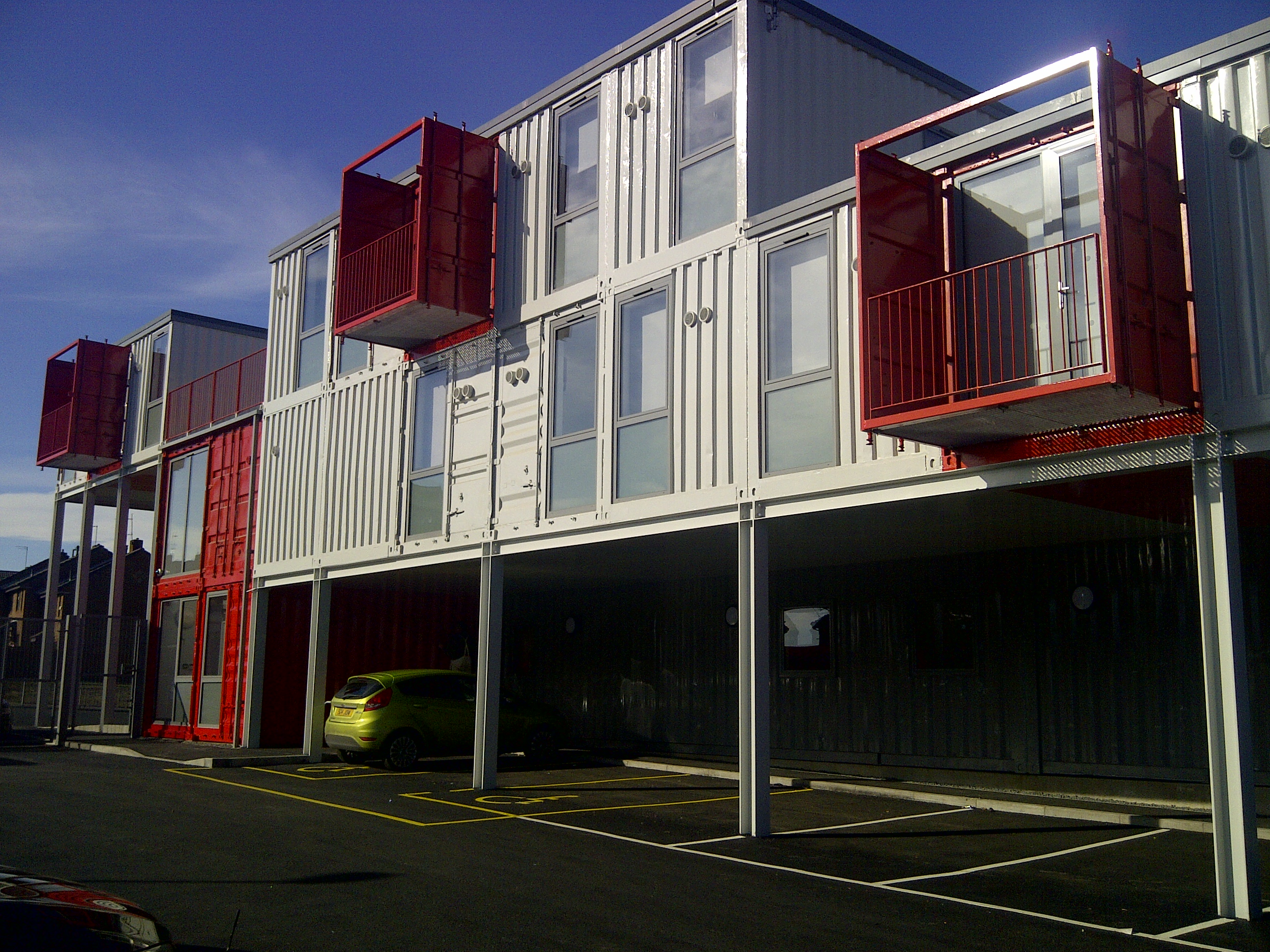
(Photo of the “Container City” incubation hub for social enterprises operated by Sustainable Enterprise Strategies in Sunderland)


In order to replicate at scale what’s happening in Dublin and Sunderland, we need to define the open standards through which agile “Apps” developed by local innovators can access the capabilities of new marketplace infrastructures. Those standards need to be associated with financial models that balance affordability for citizens, communities and entrepreneurial businesses with the cost of operating resilient infrastructures.

If we can get that balance right, then stakeholders across city systems everywhere could work more effectively together to deliver Smarter City solutions that really address the big survival challenges facing us: reliable systems that everyone can use across the rich diversity of our cities, communities and citizens.

Virtualisation is bringing us back together

20120605-012840.jpg

(Image by Chris Drumm)

Back in 1953, Isaac Asimov’s “The Caves of Steel” was published, depicting a world of avatars, virtual collaboration and video-conferencing. It took the real world half a century to catch up with him. Asimov was a smart guy.

But he got one thing wrong. Asimov predicted that reliance on these forms of communication would make us terrified of meeting each other in person. Instead, research has shown that social media is often used to identify new and interesting people to meet in real life (see this article from the American Public Broadcasting Service, for example). In fact, this is exactly how I met my wife. More recently, I’ve enjoyed meeting @Sanfire_IA and @NewOptimists, amongst others, firstly on Twitter (go look them up), and then in real life. (In coffee shops, to be precise).

Tim Stonor and Dan Holowack have both written very interesting blog posts recently about the important role cities play in bringing people together, face-to-face, to create and share ideas. It’s the very lifeblood of the economy. (Edward Glaeser’s “Triumph of the City” discusses this topic in great and fascinating length).

The technologies that connect us virtually have a very important role to play in that aspects of our cities. I’ve met recently with people in cities including Birmingham, London and Sunderland who are involved in stimulating innovation and entrepreneurial activity in city economies. They are all passionate about the value that is created when creative people with disparate skills are brought together.

But they were also unanimous in voicing a concern that it’s tremendously difficult to persuade such people to take time away from the businesses they’re spending 60, 80 or 100 hours a week starting and running to meet people they don’t know; on the off-chance that a valuable new business idea will somehow spring into existence.

All of us face that challenge to some degree today. With the explosive growth in the flow of information we’ve experienced over the last 20 years or so, competition for our time and attention is intense. Social media is a significant part of that explosion of course; but it’s also a significant part of the answer.

Within a few minutes, on Freecycle I can find people near me who need what I no longer want; on LandShare I can find people whose untended land can be used to grow food, and on StumbleUpon I can find moments of genius in every domain from places I’d never in a million years have thought to look, but which StumbleUpon’s fuzzy search engine has ensured are nevertheless relevant to me. And then I can get in touch, arrange to meet, and find out more.

(I have deliberately chosen some of these examples, by the way, for their relevance to the efficiency with which natural resources are used to support economic activity. The recent “People and the Planet” report written by an incredible array of international experts on behalf of the Royal Society should leave us in no doubt at all of the importance of that topic).

This morning, I’ll be attending Birmingham’s Social Media cafe following a discussion about innovation in Birmingham in a Linked-In group, to discuss ideas for social business with people who I haven’t met before, but who I will probably soon be following on Twitter. That’s a great example of the interplay between virtual and physical interactions that’s speeding up the process of collaborative innovation and value-creation in cities today.

But it doesn’t stop there. Digitisation and mass customisation are long-standing trends in manufacturing, but technologies such as 3D printing are going to transform custom-manufacturing in the same way that global-sourcing and production line automation relatively recently transformed commodity manufacturing. And as this brilliant article in The Economist argues, the result will probably be to bring manufacturing activity back to be more local to the consumers of the goods being manufactured.

I turned 40 recently; traditionally a landmark that brings a certain degree of questioning of one’s direction in life. I have no such questions. The family that I now have after meeting my wife through social media is the most important part of that; and the privilege of living through these incredibly exciting and transformational times is the icing on the cake. I can’t wait to see where we’ll go next.

Localism and economic regeneration in cities

(Photo by Jorene Rene)

Through the course of this year, I’ve spoken with stakeholders from a lot of cities in the UK about their goals for economic stimulus and regeneration. Often, those discussions start around how cities can use technology to boost economic growth, particularly for small and medium enterprise – in Sunderland, for example.

In very many cases, cities today have a focus on the “digital economy” as a source of economic growth. That’s not at all surprising given the digital economy is a significant and growing part of the UK’s GDP.

However, the digital economy is a very transferable economy; in his frankly titled 2007 paper “How Many U.S. Jobs might Be Offshorable?“, Alan Blinder of Princeton University concluded that “computer programming” was the easiest form of work to transfer from one physical location to another. So if cities want to build sustainable economic growth in the digital economy, we clearly need to think carefully about exactly what forms of “digital” activity that entails.

There are a number of ways to do that; for instance I  met a very interesting company recently, Lamasatech, who provide multi-touch screen solutions. Their technology is slick, exciting and leading edge. And whilst they do provide software, they also provide unique hardware technology. Their multi-touch surface is much more flexible and portable than other solutions I’ve seen. Access to science and leading edge manufacturing and materials are important elements of a successful digital economy.

In a similar vein, there’s a very interesting cluster of wireless technology expertise in Cambridge, epitomised by the Cambridge Wireless Network, and that encompasses science, design, engineering and technology. Some of the developments they’re working on in low-power, long-range wireless communication technologies such as the proposed “Weightless” standard could have a dramatic effect on the cost and feasibility of Smarter City and Smarter Planet solutions.

What’s particularly interesting about the Cambridge example is that it represents a self-reinforcing regional cluster; the critical mass of expertise in the region leads to innovative interactions which continually generate new value. Any other region attempting to stimulate economic growth in the same area of technology would have a significant challenge in developing to the point where it could compete against the Cambridge cluster.

Jay Bal from Warwick University wrote a very interesting paper in 2007 describing his work building online marketplaces to stimulate the formation and growth of such clusters. His West Midlands Collaborative Commerce Marketplace now drives contracts worth billions of pounds sterling every year into a cluster of small and medium enterprises in the West Midlands.

What’s key in Cambridge and in the West Midlands example is that one way or another the specific capabilities available in a particular region are being brought together in ways that create synergies. By design or by history, such regional clusters also have synergy with their physical environments, nearby academic institutions, the skills base created by the local education system, and other factors to do with “place”. In Sunderland, for example, there’s a long cultural tradition of social enterprise which will probably influence the future economic development of the city.

An interesting organisation seeking to exploit and enable these local synergies is Addiply. Addiply offer online advertising content – but they do it by enabling local businesses to sell online advertising space to other local businesses with whom they share complimentary markets and customer bases. By using advertising to create those local linkages, Addiply’s approach is one way to stimulate synergistic growth in local economies. Addiply’s CEO, Rick Waghorn, recently blogged about how he came up with the Addiply model, and how he thinks Addiply can compete against the big players such as Google Adwords by offering a more focussed value proposition.

As we go into 2012 with no let-up in sight from the tough and competitive economic environment we’ve been in for some time, I think these ideas will be crucial in shaping successful economic strategies in our cities and regions. It will be important to all of us that the cities that we live and work in use them well.