Can cities break Geoffrey West’s laws of urban scaling?

(Photo of Kowloon by Frank Müller)

As I mentioned a couple of weeks ago, I recently read Geoffrey West’s fascinating paper on urban scaling laws, “Growth, innovation, scaling and the pace of life in cities“.

The paper applies to cities techniques that I recall from my Doctoral studies in the Physics and Engineering of Superconducting Devices for studying the emergent properties of self-organising complex systems.

Cities, being composed of 100,000s or millions of human beings with free-will who interact with each other, are clearly examples of such complex systems; and their emergent properties of interest include economic output, levels of crime, and expenditure on maintaining and expanding physical infrastructures.

It’s a less intimidating read than it might sound, and draws fascinating conclusions about the relationship between the size of city populations; their ability to create wealth through innovation; sustainability; and what many of us experience as the increasing speed of modern life.

I’m going to summarise the conclusions the paper draws about the characteristics and behaviour of cities; and then I’d like to challenge us to change them.

Professor West’s paper (which is also summarised in his excellent TED talk) uses empirical techniques to present fascinating insights into how cities have performed in our experience so far; but as I’ve argued before, such conclusions drawn from historic data do not rule out the possibility of cities achieving different levels of performance in the future by undertaking transformations.

That potential to transform city performance is vitally important in the light of West’s most fundamental finding: that the largest, densest cities currently create the most wealth most efficiently. History shows that the most successful models spread, and in this case that could lead us towards the higher end of predictions for the future growth of world population in a society dominated by larger and larger megacities supported by the systems I’ve described in the past as “extreme urbanism“.

I personally don’t find that an appealing vision for our future so I’m keen to pursue alternatives. (Note that Professor West is not advocating limitless city growth either; he’s simply analysing and reporting insights from the available data about cities, and doing it in an innovative and important way. I am absolutely not criticising his work; quite the oppostite – I’m inspired by it).

So here’s an unfairly brief summary of his findings:

  • Quantitative measures of the creative performance of cities (such as wealth creation or the number of patents and inventions generated by city populations) – grow faster and faster the more that city size increases.
  • Quantitative measures of the cost of city infrastructures grow more slowly as city size increases, because bigger cities can exploit economies of scale to grow more cheaply than smaller cities.

West found that these trends were incredibly consistent across cities of very different sizes. To explain the consistency, he drew an analogy with biology: for almost all animals, characteristics such as metabolic rate and life expectancy vary in a very predictable way according to the size of the animal.

(Photo of Geoffery West describing the scaling laws that determine animal characteristics by Steve Jurvetson). Note that whilst the chart focusses on mammals, the scaling laws are more broadly applicable.

The reason for this is that the performance of the thermodynamic, cardio-vascular and metabolic systems that support most animals in the same way are affected by size. For example, geometry determines that the surface area of small animals is larger compared to their body mass than that of large animals. So smaller animals lose heat through their skin more rapidly than larger animals. They therefore need faster metabolic systems that convert food to replacement heat more rapidly to keep them warm. This puts more pressure on their cardio-vascular systems and in particular their heart muscles, which beat more quickly and wear out sooner. So mice don’t live as long as elephants.

Further, more complex mechanisms are also involved, but they don’t contradict the idea that the emergent properties of biological systems are determined by the relationship between the scale of those systems and the performance of the processes that support them.

Professor West hypothesised that city systems such as transportation and utilities, as well as characteristics of the way that humans interact with each other, would similarly provide the underlying reasons for the urban scaling laws he observed.

Those systems are exactly what we need to affect if we are to change the relationship between city size and performance in the future. Whilst the cardio-vascular systems of animals are not something that animals can change, we absolutely can change the way that city systems behave – in the same way that as human beings we’ve extended our life expectancy through ingenuity in medicine and improvements in standards of living. This is precisely the idea behind Smarter cities.

(A graph from my own PhD thesis showing real experimental data plotted against a theoretical prediction similar to a scaling law. Notice that whilst the theoretical prediction (the smooth line) is a good guide to the experimental data, that each actual data point lies above or below the line, not on it. In most circumstances, theory is only a rough guide to reality.)

The potential to do this is already apparent in West’s paper. In the graphs it presents that plot the performance of individual cities against the predictions of urban scaling laws, the performance of every city varies slightly from the law. Some cities outperform, and some underperform. That’s exactly what we should expect when comparing real data to an analysis of this sort. Whilst the importance of these variations in the context of West’s work is hotly contested, both in biology and in cities, personally I think they are crucial.

In my view, such variations suggest that the best way to interpret the urban scaling laws that Professor West discovered is as a challenge: they set the bar that cities should try to beat.

Cities everywhere are already exploring innovative, sustainable ways to create improvements in the performance of their social, economic and environmental systems. Examples include:

(Photograph by Meshed Media of Birmingham’s Social Media Cafe, where individuals from every part of the city who have connected online meet face-to-face to discuss their shared interest in social media.)

In all of those cases, cities have used technology effectively to disrupt and transform the behaviour of urban systems. They have all lifted at least some elements of performance above the bar set by urban scaling laws. There are many more examples in cities across the world. In fact, this process has been taking place continuously for as long as cities have existed – see, for example, the recent Centre for Cities report on the development and performance of cities in the UK throughout the 20th Century.

That report contains a specific challenge for Birmingham, my home city. It shows that in the first part of the 20th Century, Birmingham outperformed many UK cities and became prosperous and successful because of the diversity of its industries – famously expressed as the “city of a thousand trades”. In the latter part of the Century, however, as Birmingham became more dependent on an automotive industry that subsequently declined, the city lost a lot of ground. Birmingham is undertaking some exciting regenerative initiatives at present – such as the City Deal that increases it’s financial independence from Central Government; the launch of a Green Commission; and investments in ultra-fast broadband infrastructure. They are vitally important in order for the city to re-create a more vibrant, diverse, innovative and successful economy.

As cities everywhere emulate successful innovations, though, they will of course reset the bar of expected performance. Cities that wish to consistently outperform others will need to constantly generate new innovations.

This is where I’ll bring in another idea from physics – the concept of a phase change. A phase change occurs when a system passes a tipping point and suddenly switches from one type of behaviour to another. This is what happens when the temperature of water in a kettle rises from 98 to 99 to 100 degrees Centigrade and water – which is heavy and stays in the bottom of the kettle – changes to steam – which is light and rises out of the kettle’s spout. The “phase change” in this example is the transformation of a volume of water from a liquid to a gas through the process of boiling.

So the big question is: as we change the way that city systems behave, will we eventually encounter a phase change that breaks West’s fundamental finding that the largest cities create the most value most efficiently? For example, will we find new technologies for communication and collaboration that enable networks of people spread across thousands of miles of countryside or ocean to be as efficiently creative as the dense networks of people living in megacities?

I certainly hope so; because unless we can break the link between the size and the success of cities, I worry that the trend towards larger and larger cities and increasing global population will continue and eventually reach levels that will be difficult or impossible to maintain. West apparently agrees; in an interview with the New York Times, which provides an excellent review of his work, he stated that “The only thing that stops the superlinear equations is when we run out of something we need. And so the growth slows down. If nothing else changes, the system will eventually start to collapse.”

But I’m an optimist; so I look forward to the amazing innovations we’re all going to create that will break the laws of urban scaling and offer us a more attractive and sustainable future. It’s incredibly important that we find them.

(I’d like to think Dr. Pam Waddell, the Director of Birmingham Science City, for her helpful comments during my preparation of this post).

Are Smarter Cities the Key to Social Mobility?

(Photo of Santa Cruz by Cortto)

An interview with Chris Cooper, IBM UK Architect for Smarter Cities

My colleague Chris Cooper was recently appointed as IBM UK’s Architect for Smarter Cities. For many years Chris has helped IBM’s customers and partners in the transport industry build smarter systems with positive social and environmental impact; so he came to his new role with a wealth of experience.

Chris wrote a great paper a couple of weeks ago on the important connections between transport, open data and social mobility (it’s available here, though you need a subscription to access the full article). This week we explored those themes further in a discussion that I thought was worth sharing.

[Rick]: You’ve spoken and written about “Social Mobility” in the context of Smarter Transport and Smarter Cities; can you summarise what you mean by the concept?

[Chris]: Social mobility in the context of Smarter Transport systems is the ability to move people and resources in an informed way that achieves positive social outcomes. It relies on the use of information and communication technologies to facilitate the organisation and optimisation of connections between goods, services and human capital. In short, it can enable communities to work together to achieve their goals.

The real challenge for such systems is how to measure the value of their social, environmental and economic impact. Today, we measure value in monetary terms. But that’s very much a point-in-time measure; and there’s an argument that the full cost of goods and services are not identified and included in their financial price – particularly the social and environmental costs. It’s possible that such costs could be quantified by measures such as standard of living or the “happiness index” that has been suggested by the UK Prime Minister, David Cameron, amongst others.

I recently read a speech by Christine Lagard, Managing Director of the International Monetary Fund, ahead of the Rio+20 Summit. She called for a sustainable and equitably distributed recovery to economic growth; and stated that a barrier to achieving that was that the social and environmental costs you’ve referred to are not included in the prices we pay for goods and services. You’ve described “Social Mobility” as a vision for transport that addresses those challenges and empowers communities.

Yes, absolutely. But one of the challenges we will face is that the companies who operate our transport services are expected to peform against traditional financial measures – and they are audited in the same way. Those measures do not take account of social and environmental impact. If those measures were to be augmented by a “sustainability index” that assessed longer term contributions to society and the environment, then we might look back on current assessments of company performance and view them rather differently.

So if in the future mechanisms such as Carbon Taxes were introduced and became accepted components of financial performance, would we look back at the assessments we’re making today and consider them incomplete?

(Photo of carbon dioxide scrubber from Steve Simpson)

That’s very possible. Our current systems measure short term performance and don’t provide an incentive to plan for the future. It’s becoming more important to correct this as competition for our finite resources intensifies. To do so we need to introduce mechanisms to adjust the cost of resources to recognise their scarcity and the impact of consuming them.

A good precedent can be seen in the way we have combated acid rain. Social and political pressure resulted in the application of financial penalties to the use of the chemicals that contributed to acid rain. Over time those financial penalties made the causative chemicals prohibitively expensive to use; or made it cost-effective to install equipment to prevent their emission, such as the the carbon dioxide scrubbers that are now commonplace in power stations.

No-one argues with the logic of doing that anymore; and we no longer suffer from acid rain. Of course, in today’s globalised economy its important that such measures are applied universally so that they don’t create imbalances in competition, and that’s by no means a simple challenge to resolve.

At the Base Cities London conference we both attended recently, the Deputy Mayor for Environment for Los Angeles told us that in contrast to the relatively weak agreement between national leaders at Rio 20+, city leaders had returned from their own conference in Rio determined to implement the changes required to achieve sustainable economic growth. How do you see the ideas we’ve discussed working in city economies?

If companies published the “sustainability index” I’ve described, consumers could consider it when choosing which companies they should buy goods and services from. That could be a very powerful tool for influencing the impact of the millions of buying decisions made every day by individuals in local markets.

Rather than acting as an overhead or a barrier to innovation, such an index could enable companies to improve their performance. In order to transform operations to more measurably sustainable models, companies will need to invest in  understanding their supply chains, operations and markets in more depth. Doing so will undoubtedly provide opportunities for optimisation.

More generally, localism is going to be an increasingly important concept as we realise that it’s more realistic and effective to affect the communities around us rather than the world at large.

We haven’t spoken much about transport; I’ve seen some interesting studies recently that have highlighted the challenges some communities in cities have in accessing effective transport. To what extent is the concept of social mobility concerned with enabling city communities to travel to where they need to to live, shop and work?

That’s a really important point. The urban spaces we inhabit – including the surrounding rural spaces which supply them – need to be designed in harmony with the transport systems that move people and goods around them.

Whether that’s best accomplished by a “grid” system or through networks of urban villages; and how those ideas apply to new-build cities in emerging economies or the transformation of existing cities in developed economies are subjects that are hotly debated.

I personally think that mixed developments that concentrate a critical mass of people, goods and services within walking distance are the key to enabling the transactions through which cities create value and wealth to take place more frequently and at lower financial, social and environmental cost. Travel doesn’t just consume resources; it’s often an unproductive use of time.

So is it more important to focus on enabling travel within cities than between them in national systems?

Research has shown that cities are the most efficient systems for generating social and economic value; but it’s well known that some cities are losing population, or are losing key skills from their population to their suburbs and commuter belts. The reasons for that include the desire for more space; to live in more attractive environments; or to have better access to quality education for children. All of those challenges could be addressed by more holistic thinking, planning and investment in city systems, including their transport. And they would bring people with important skills and experience back into the diverse, creative environments of our cities.

One possible approach would be to allow cities to expand into the greenbelts surrounding them. By allowing cities and their transport systems to expand as little as one mile (1.5 kilometres) into their surrounding greenbelts – which are an artificial creation – we could significantly increase their size in a way that exploits their existing infrastructure.

Has the privatisation of transport in the UK over the past few decades resulted in a system that is cost-effective to provide – on a strictly financial basis – rather than one that is optimally beneficial to city communities and economies?

That’s certainly a concern, though key organisations in transport are starting to look ahead to new strategies for the future. Rather than focus on what we can’t predict – whether high-speed rail or hovercars will be our transport of choice, for example – I think we should focus on what we want our transport systems to achieve for us – such as universal access to local and national travel – and how we make progress towards such goals over the next few years.

So to summarise our discussion, would you agree that the challenge for cities is to evolve in ways that encourage the development of spaces, communities and transport systems in harmony so that they enable local transactions and interactions as a more sustainable form of growth?

(IBM’s Smarter City Technology Centre in Dublin)

Yes. It’s important for local communities, cities, regions and even nations to become conscious of their unique strengths; to exploit local transactions to reinforce them; and to trade them with regional and national partners.

Cities are increasingly looking for these differentiators; and multi-national companies such as IBM are looking to build relationships based on them. Such relationships – in Moscow, Dublin and Dubuque, for example – connect the ideas, experience and economies of scale that accrue from global operations to the intricacies and unique expertise of local markets. And they do it with the passion that comes from local engagement.

Chris, thankyou, that’s been a really interesting discussion. As individuals we all care about the places and communities in which we live; the ideas we’ve discussed today give us the reason and opportunity to contribute to those communities through our work as well as in our private lives in very important and exciting ways. 

Digital Platforms for Smarter City Market-Making

Local delicacies for sale in Phnom Penh’s central market

There’s been a distinct change recently in how we describe what a “Smarter City” is. Whereas in the past we’ve focused on the capabilities of technology to make city systems more intelligent, we’re now looking to marketplace economics to describe the defining characteristics of Smarter City behaviour.

The link between the two views is the ability of emerging technology platforms to enable the formation of new marketplaces which make possible new exchanges of resources, information and value. Historically, growth in Internet coverage and bandwidth led to the disintermediation of value chains in industries such as retail, publishing and music. Soon we will see technologies that connect information with the physical world in more intimate ways cause disruptions in industries such as food supply, manufacturing and healthcare.

There are two reasons we’ve switched focus from a technology to an economic perspective of Smarter Cities. The first is that these new marketplaces are the way to make both public service delivery and economic growth within cities sustainable. The second is that it’s only by examining the money flows within them that we can identify the revenue streams that will fund the construction and operation of their supporting technology platforms.

The importance of driving sustainable, equitably distributed recovery to economic growth from the current financial crisis was championed by Christine Lagarde, the Managing Director of the International Monetary Fund, in her speech ahead of the Rio +20 Summit. She emphasised the role of stability in enabling such a recovery. Instability is change, and managing change consumes resources. So stable systems – or stable cities – consume less resources than unstable ones. And they’re much more comfortable places to live.

(Photo of a Portuguese call centre by Vitor Lima)

This concept explains a shift in the economic strategy of some cities and nations. In recent decades cities have used Foreign Direct Investment (FDI) tools such as tax breaks to incent existing businesses to relocate to their economies. When cities such as Sunderland and Birmingham lost 10%-25% of their jobs in less than two decades in the 1980’s and 1990’s, FDI provided the emergency fix that brought in new jobs in call centres, financial services and manufacturing.

But businesses that find it possible and cost-effective to relocate for these reasons can and do relocate again when more attractive incentives are offered elsewhere. So they tend to integrate relatively shallowly in local economies – retaining their existing globalised supply chains, for example. When they move on, they cause expensive, socially damaging instabilities in the cities they leave behind.

(Photo of the Clock Tower in Birmingham’s Jewellery Quarter by Roland Turner)

The new focus is on sustainable, organic economic growth driven by SMEs in locally re-inforcing clusters. By building clusters of companies providing related products and services with strong input/output linkages, cities can create economies that are more deeply rooted in their locality. Examples include the cluster of wireless technology companies in Cambridge with strong ties to the local university; or Birmingham’s Jewellery Quarter, an incredibly dense cluster of designers, manufacturers and retailers who work with Birmingham City University’s School of Jewellery and Horology and their Jewellery Innovation Centre. Many cities I work with are focussing their economic development resources on clusters in the specific industry sectors where they can demonstrate unique strength.

In order to succeed, such clusters need access to transactional marketplaces for trading with each other; and for winning business in local, national and international markets. The disruptive, disintermediating capabilities of Smarter City technologies could help such marketplaces to work more quickly, at lower cost; to extend the market reach of their members; to find new innovations through discovering synergies across traditional industry sectors; or to support the formation of innovative business models that recognise and capitalise social and environmental value. These marketplaces are also exactly what’s needed to support the transformation to open public services.

(Photo of cattle market in Kashgar, China by By Ben Paarmann)


Marketplaces need infrastructure. In traditional terms, that infrastructure might have consisted – in the case of my local cattle market in Kidderminster say – of a physical building; a hinterland connected by transport routes; a governing authority; a system of payments; and a means of determining the quality and value of goods and services to be exchanged. Smarter City markets are no different. They may be based on technology platforms rather than in buildings; but they need governance, identity and reputation management, payment systems and other supporting services. The implementation and operation of those infrastructure capabilities has a significant cost.

This is where large and small organisations need to partner to deliver meaningful innovation in Smarter Cities. The resources of larger organisations – whether they are national governments, local councils, transport providers, employers or technology vendors – are required to underwrite infrastructure investments on the basis of future financial returns in the form of commercial revenues or tax receipts. But innovations in the delivery of value to local communities are likely to be created by small, agile organisations deeply embedded in those communities. An example where this is already happening is in Dublin, where entrepreneurial organisations are using the city’s open data portal to develop new business models that are winning venture capital backing.

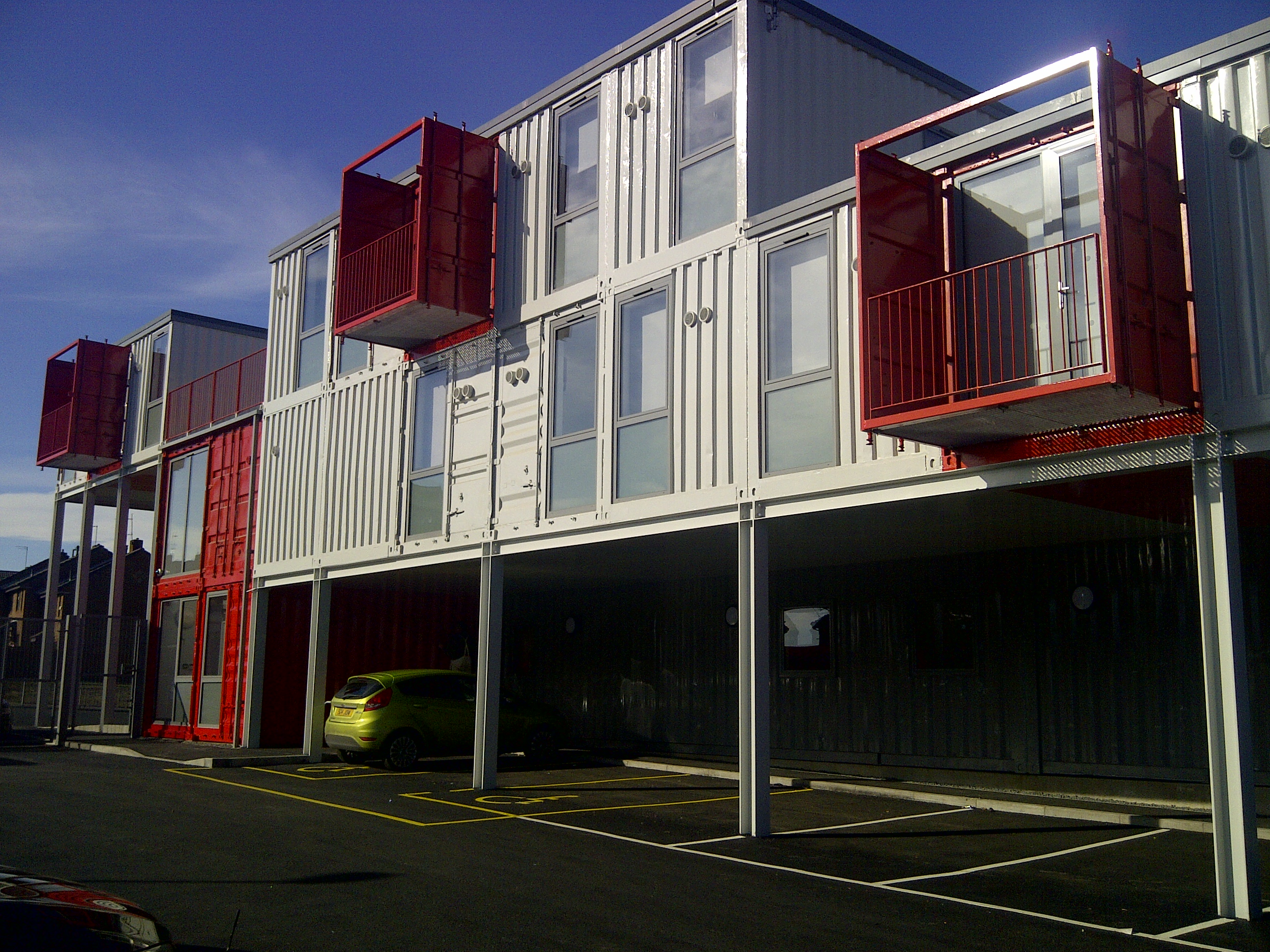
(Photo of the “Container City” incubation hub for social enterprises operated by Sustainable Enterprise Strategies in Sunderland)


In order to replicate at scale what’s happening in Dublin and Sunderland, we need to define the open standards through which agile “Apps” developed by local innovators can access the capabilities of new marketplace infrastructures. Those standards need to be associated with financial models that balance affordability for citizens, communities and entrepreneurial businesses with the cost of operating resilient infrastructures.

If we can get that balance right, then stakeholders across city systems everywhere could work more effectively together to deliver Smarter City solutions that really address the big survival challenges facing us: reliable systems that everyone can use across the rich diversity of our cities, communities and citizens.

Open Data isn’t free data

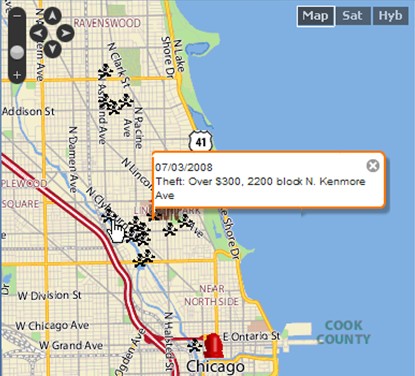
An early mashup using open data from Chicago’s police force

I support the principle of Open Data; and I’ve been creating commercial value from it since at least 2007, when as part of IBM’s Emerging Technologies team I developed scenarios to show how our customers could exploit it using early implementations of “Mashup” technology.

Here’s an example of what we were up to in those days, using alpha code for IBM Mashup Centre to integrate open data from Chicago’s public services with business data from insurance applications running in CICS. CICS is a transaction engine that’s now 43 years old and is used by 90% of Fortune 500 companies. When you take money out of a cashpoint, book an airline seat or renew your home insurance, there’s a decent chance CICS is involved somewhere. So there was (and is) vast economic potential in what we were doing.

But it’s not always straightforward to realise that value. It’s no accident we based our demonstration scenario in Chicago, which has long been at the leading edge of cities promoting Open Data. (It’s well worth catching up with how Chicago’s new CTO John Tolva is driving this agenda forwards, by the way). At the time, many other cities published similar data; but it wasn’t usable in the same way that Chicago’s was. It had been published in the form that was possible, cheaply, rather than in a form that was useful.

My point is: Open Data won’t deliver the value we all want it to unless we answer some hard questions. Such as:

Who will use Open Data, and why?

There are too many Open Data sites that don’t attract users and activity; so the investment in operating them doesn’t result in the creation of new value. That’s a shame; and we should try to understand why it happens. Often, I think it’s because they focus on making as much data as possible available in whatever form it’s in.

The Knight Commission report “The Information Needs of Communities” emphasised instead the need to consult with communities to find out what they need, rather than to publish data in anticipation of innovation. They are now publishing further guidance on implementing their ideas to promote open government.

Obviously, the problem with the extreme of this position is that if we restrict our Open Data efforts to providing only that data which is proven to be required through extensive consultation, we will limit the opportunity for spontaneous innovation. So a balance needs to be found.

How much does open data cost?

My experience building Open Data scenarios for our early Mashup technology taught me that high quality open data in a useable form was very rare. That’s because it’s expensive.

If producing highly usable information from the applications that manage the world’s information was easy or cheap, a good part of the IT industry would disappear overnight (whether you think that would be good or bad: it hasn’t happened). If we want usable data, we’re going to have to find ways and reasons to pay for it.

The cost to public sector organisations of processing Freedom of Information requests will sometimes provide the business case for spending money to open up data, but not always. Recent Government initiatives to make Open Data a criteria of future procurements will bake the cost of it into vendor proposals; but that won’t address the cost of opening up data from existing systems.

Finally, there will be many cases where clear value can be derived from open data; but not by the organisation that bears to cost of creating or distributing it. In order to balance the need for open innovation with the need to flow cost and revenue between organisations in a reasonable way, commercial models such as “freemium” will need to be explored. The “Dublinked” Open Data portal is doing that, for example.

How do we access and use Open Data?

As William Perrin argued recently, we need to think about how Open Data will be used beyond the community of technologists. I’ve blogged before about the need for technology and information to be accessible; and the need for our education system to provide us with the skills to use technology to manipulate and understand information. Those are both big challenges that we won’t overcome any time soon.

Where do we go next?

The potential value of Open Data is too great for us to afford to be negative, cynical or apathetic. Software automation and information technology are changing the way that value is created in the economy (see work on this from Imperial College and McKinsey), and the concept of Open Data is crucial to providing access to that potential across all sectors of society. But we will only realise that value if we find ways to addressing the cost of providing usable information; and to invest in making it accessible.

Acknowledgement: I’d like to thank Simon Whitehouse for discussions leading to this post, and for the link to William Perrin’s article.

The need for technology and mathematical skills in a Smarter Planet with Open Data

In amongst all the great discussions of Smarter Water, Smarter Transportation, Open Data and other themes at this week’s Science of Smarter Cities Colloquium in IBM’s new Research Lab in Dublin, an interesting theme has emerged that’s been on my mind for some time.

Many discussions have focussed on the huge importance of processing, analysis and acting on data and information in the Smarter Planet that’s gradually emerging around us as more and more of the physical world is instrumented, interconnected and automated. Imperial College’s work on disruptive business platforms includes the new commercial opportunities – some of them highly disruptive – that this information is making possible. And McKinsey recently wrote a fascinating paper on a similar subject – the emerging “Information Economy”.

A vital consequence of this is renewed – or even wholly new – demand for the skills required to manipulate and understand information. I’m talking about mathematics, statistics and computer programming here, amongst others. Unless it’s prepared by a numerate communication expert, data is often very difficult to understand and interpret. And communication experts may also have their own agenda in determining how they prepare data. And quite simply, we need more people able to undertake that sort of work – people with mathematical and technical skills. Some of the speakers from transport organisations at the colloquium this week have spoken directly of needing more of those skills.

The problem is that in the UK, we’re not producing enough of them. Google’s Chairman Eric Schmidt recently lambasted the British Education system for not producing enough computer programmers to feed demand in the creative industries vital for economic growth; and the recent Nesta report on the UK’s computer gaming industry cited the same issue as a reason for that industry’s recent decline in the global market.

City leaders understand this; Hanna Zdanowska, the Mayor of Lodz in Poland, spoke this morning of the importance of young skilled people to city economies, particularly as european populations age. (Lodz have amazing plans for regenerating their physical infrastructure and optimising their city systems, by the way, it was a great talk).

So what can we do about this? In yesterday’s Open Data discussion, Christopher Gutteridge, who’s behind Southampton University’s Open Data programme, said that we needed to encourage more “playful coding”. I think that phrase hit the nail on the head.

Our world is at the stage where technologies that can be manipulated by any human being who learns the basics of computing programming are becoming terrifically powerful. At the same time, the information that those technologies control is the lifeblood of our economy and society. For us to educate people without giving them the ability to participate in that system is surely a terrible folly for our children and our economy.

A fellow visiting academic at the University of Warwick, Jonnie Turpie who’s the Digital Media Director of Maverick TV, introduced me recently to the Birmingham Ormiston Academy. BOA is a new school that’s intended to teach creative and digital arts by exposing young people directly to small enterprises in that industry. I think it’s a great idea, and an example of the sort of way we could teach young people the skills to exploit information and technology in a way that’s exciting, challenging – and directly builds the skills we will need for the future.