Could the future of money be city currencies?

(Photo of a halfpenny minted by Matthew Boulton in Birmingham; from Smabs Sputzer)

It’s just possible that this week marks a tipping point in the events that have engulfed the UK banking industry since the economic crisis that began in 2008.

Around that time, I questioned whether there was a need to think differently about how we measure the exchange of value, and cited a special edition of the New Scientist magazine as supporting evidence. My last couple of blog posts have raised similar questions supported first by a publication from the UK Royal Society, then by a speech by Christine Lagarde, Managing Director of the International Monetary Fund.

This week the sources calling for change became much harder to ignore, because – in the context of UK banking – they came much closer to home.

An editorial of the London Financial Times stated that the evidence of a culture of corruption in banking was now so clear that there was no alternative but to properly separate investment banks who take speculative risks to generate profit from retail banks who look after our personal financial livelihoods and nurture the growth of small businesses (read the article here, it requires free registration).

Simon Walker, the Head of the UK’s Institute of Directors, made a blunt call for a clear-out of senior figures in the industry, as reported by the Guardian newspaper; and Mervyn King, Governor of the Bank of England, was similarly uncompromising, eventually leading to the resignation of Barclays’ CEO, Bob Diamond.

These people and organisations are at the heart of the UK’s business and financial community; Barclay’s CEO could not ignore them. Their combined weight might just mark an overall tipping point and lead to serious reform of the industry.

But why should I be concerned with this in a blog that focuses on the exploitation of emerging technology in city ecosystems?

To answer that, I need to look back to the 1780’s and the birth of the Industrial Revolution. At the time, the UK’s Royal Mint was using hand-powered presses to make coins; and they were struggling badly to keep pace with the demand for coinage caused by a growing economy. The country was experiencing a “coin famine”.

(Photo of machines from the industrial revolution in Birmingham’s Science Museum by Chris Moore)

Enter Matthew Boulton and James Watt. James Watt invented the world’s most efficient steam engine; and Boulton commercialised it to power the Industrial Revolution. In particular, Boulton realised that by combining steam power with intricate machinery, it was possible to mass-manufacture sophisticated, designed objects such as enamelled badges, engraved brooches and complex metal fastenings. This innovation marked the fist appearance of mid-market “designed goods” in the space between functional commodities and one-off pieces of art. Some of the original machines that produced these goods can still be seen in Birmingham’s Science Museum and they make Heath Robinson’s imaginary contraptions look like penny toys.

Boulton realised that using such machines, he could literally print money, and produce coins faster and at much lower cost than the Royal Mint. He never formally won the right to do that from the national Government, but he did print coinage and “trade tokens” for employers in cities all over the country who quite simply needed something to pay their workers with. In many of those cities, Boulton’s coins replaced the national currency for a considerable time until the Royal Mint transformed its operations and provided sufficient national coinage again. Some of this history can be found on wikipedia, but for the full story Jenny Uglow’s wonderful book “The Lunar Men” can’t be beaten.

If the steam engine was the disruptive technology of the Industrial Revolution, I’m increasingly convinced that the digital marketplace platform is the equivalent for city systems today.

(Photo of the Brixton Pound by Matt Brown)

Marketplaces need currencies, of course; and sure enough, new currencies are starting to emerge. The Brixton Pound was set up by a social enterprise in 2009; and the scheme was adopted in Bristol this year. Startups such as Workstars are developing innovative new models for hyperlocal reward schemes involving employers and retailers that are an uncanny modern echo of Boulton’s 18th century trade tokens. And entrepreneurs in Birmingham have launched the local smartphone payment app “Droplet”.

The interesting thing about these schemes is that they have a more localised sense of value than the global monetary system; and they can reinforce the local economic synergies that are the key to sustainable growth in cities and regions.

In this context, it’s interesting to note the remarks of Romeo Pascual, Los Angeles Deputy Mayor of the Environment, at the Base Cities London conference recently. Deputy Mayor Pascual had just returned from the Rio+C40 Cities meeting. In contrast to what many believe to be the relatively weak agreement signed by national leaders at the Rio+20 meeting, he said that he and his colleagues had been united in their resolve to take strong action to lead cities towards sustainable growth.

Technology can now offer cities very interesting possibilities for creating local systems of exchange, whether we call them local currencies, reward schemes or virtual money. There’s no reason why they should behave in the same way as the currencies we know well today; and every reason to be optimistic that new types of organisation such as social enterprises will find ways to use them to create social and environmental, as well as financial, value.

Of course these innovations are on a relatively small scale for now. But they are emerging at the same time that city leaders are determined to make changes; and at a time that – in the UK at least – traditional systems of banking are under serious scrutiny. The future of money could hold some very interesting – and important – surprises for us.

Digital Platforms for Smarter City Market-Making

Local delicacies for sale in Phnom Penh’s central market

There’s been a distinct change recently in how we describe what a “Smarter City” is. Whereas in the past we’ve focused on the capabilities of technology to make city systems more intelligent, we’re now looking to marketplace economics to describe the defining characteristics of Smarter City behaviour.

The link between the two views is the ability of emerging technology platforms to enable the formation of new marketplaces which make possible new exchanges of resources, information and value. Historically, growth in Internet coverage and bandwidth led to the disintermediation of value chains in industries such as retail, publishing and music. Soon we will see technologies that connect information with the physical world in more intimate ways cause disruptions in industries such as food supply, manufacturing and healthcare.

There are two reasons we’ve switched focus from a technology to an economic perspective of Smarter Cities. The first is that these new marketplaces are the way to make both public service delivery and economic growth within cities sustainable. The second is that it’s only by examining the money flows within them that we can identify the revenue streams that will fund the construction and operation of their supporting technology platforms.

The importance of driving sustainable, equitably distributed recovery to economic growth from the current financial crisis was championed by Christine Lagarde, the Managing Director of the International Monetary Fund, in her speech ahead of the Rio +20 Summit. She emphasised the role of stability in enabling such a recovery. Instability is change, and managing change consumes resources. So stable systems – or stable cities – consume less resources than unstable ones. And they’re much more comfortable places to live.

(Photo of a Portuguese call centre by Vitor Lima)

This concept explains a shift in the economic strategy of some cities and nations. In recent decades cities have used Foreign Direct Investment (FDI) tools such as tax breaks to incent existing businesses to relocate to their economies. When cities such as Sunderland and Birmingham lost 10%-25% of their jobs in less than two decades in the 1980’s and 1990’s, FDI provided the emergency fix that brought in new jobs in call centres, financial services and manufacturing.

But businesses that find it possible and cost-effective to relocate for these reasons can and do relocate again when more attractive incentives are offered elsewhere. So they tend to integrate relatively shallowly in local economies – retaining their existing globalised supply chains, for example. When they move on, they cause expensive, socially damaging instabilities in the cities they leave behind.

(Photo of the Clock Tower in Birmingham’s Jewellery Quarter by Roland Turner)

The new focus is on sustainable, organic economic growth driven by SMEs in locally re-inforcing clusters. By building clusters of companies providing related products and services with strong input/output linkages, cities can create economies that are more deeply rooted in their locality. Examples include the cluster of wireless technology companies in Cambridge with strong ties to the local university; or Birmingham’s Jewellery Quarter, an incredibly dense cluster of designers, manufacturers and retailers who work with Birmingham City University’s School of Jewellery and Horology and their Jewellery Innovation Centre. Many cities I work with are focussing their economic development resources on clusters in the specific industry sectors where they can demonstrate unique strength.

In order to succeed, such clusters need access to transactional marketplaces for trading with each other; and for winning business in local, national and international markets. The disruptive, disintermediating capabilities of Smarter City technologies could help such marketplaces to work more quickly, at lower cost; to extend the market reach of their members; to find new innovations through discovering synergies across traditional industry sectors; or to support the formation of innovative business models that recognise and capitalise social and environmental value. These marketplaces are also exactly what’s needed to support the transformation to open public services.

(Photo of cattle market in Kashgar, China by By Ben Paarmann)


Marketplaces need infrastructure. In traditional terms, that infrastructure might have consisted – in the case of my local cattle market in Kidderminster say – of a physical building; a hinterland connected by transport routes; a governing authority; a system of payments; and a means of determining the quality and value of goods and services to be exchanged. Smarter City markets are no different. They may be based on technology platforms rather than in buildings; but they need governance, identity and reputation management, payment systems and other supporting services. The implementation and operation of those infrastructure capabilities has a significant cost.

This is where large and small organisations need to partner to deliver meaningful innovation in Smarter Cities. The resources of larger organisations – whether they are national governments, local councils, transport providers, employers or technology vendors – are required to underwrite infrastructure investments on the basis of future financial returns in the form of commercial revenues or tax receipts. But innovations in the delivery of value to local communities are likely to be created by small, agile organisations deeply embedded in those communities. An example where this is already happening is in Dublin, where entrepreneurial organisations are using the city’s open data portal to develop new business models that are winning venture capital backing.

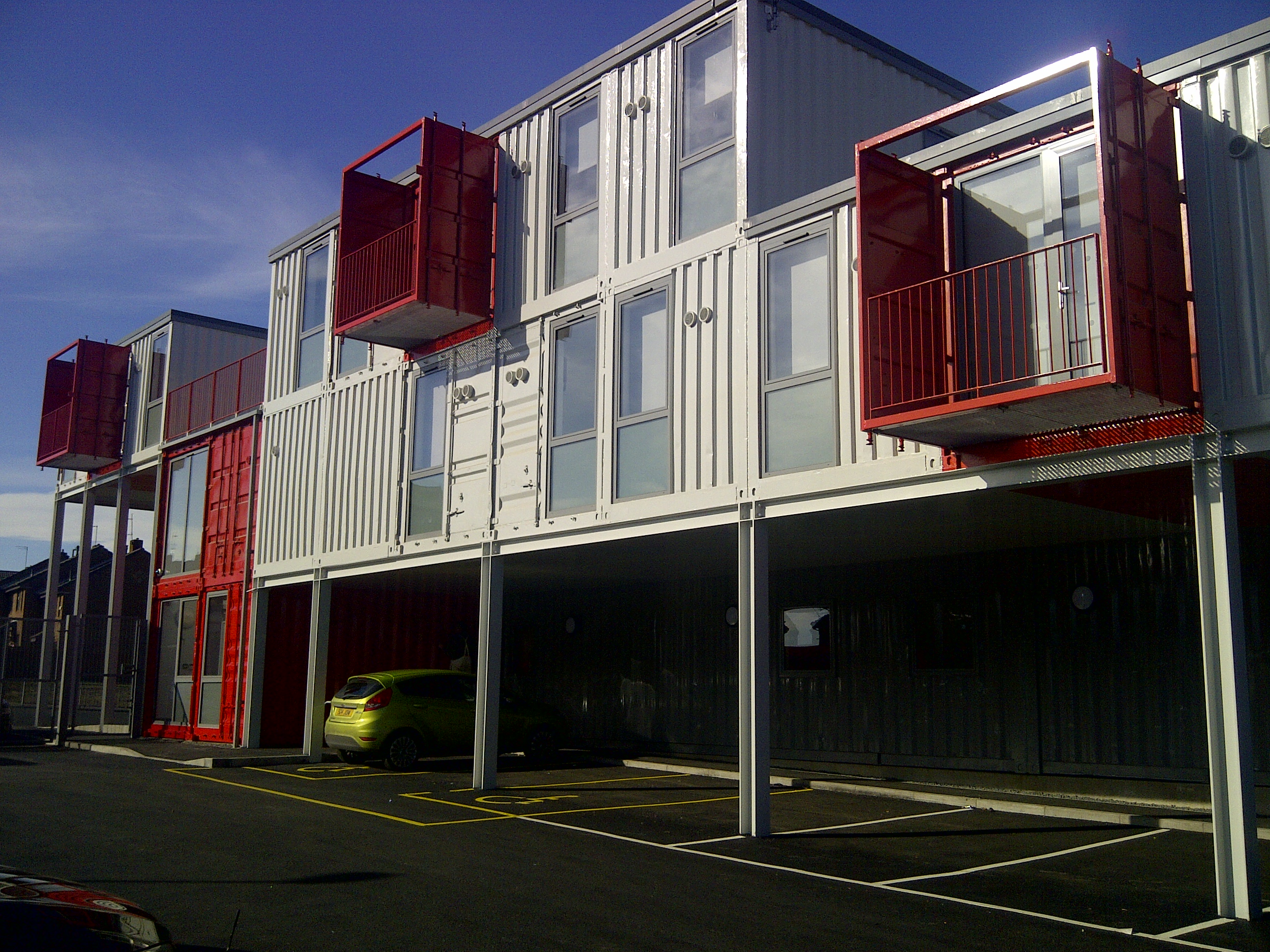
(Photo of the “Container City” incubation hub for social enterprises operated by Sustainable Enterprise Strategies in Sunderland)


In order to replicate at scale what’s happening in Dublin and Sunderland, we need to define the open standards through which agile “Apps” developed by local innovators can access the capabilities of new marketplace infrastructures. Those standards need to be associated with financial models that balance affordability for citizens, communities and entrepreneurial businesses with the cost of operating resilient infrastructures.

If we can get that balance right, then stakeholders across city systems everywhere could work more effectively together to deliver Smarter City solutions that really address the big survival challenges facing us: reliable systems that everyone can use across the rich diversity of our cities, communities and citizens.

Will we reach our food future through evolution or catastrophe?

(Photo of Oregon Chai Tea and a vitamin pill by Sam Reckweg)

The food that we eat in 2050 will be dramatically different to what’s on our plates today; and it will reach our tables through an unrecognisable supply chain. We have some big choices to take – or more accurately a lot of small ones – in determining what that food future will look like; and whether we reach it through a deliberately chosen process of change, or by allowing a catastrophe to overtake us.

If that sounds alarmist, consider the level of civic unrest associated with the Eurozone crisis in Greece and Spain; or that in the 2000 strike by the drivers who deliver fuel to petrol stations in the UK some city supermarkets came within hours of running out of food completely. Or simply look to the frightening effects of last year’s grain shortage.

The economic and social systems under pressure today are connected globally, and connected to food supply; and whilst the current crises were precipitated by short term circumstances, their severity is determined by longer term forces that are here to stay.

Three such forces are at work. The first and fundamental force is the expected growth in the world’s population towards 10 billion in 2070. Second is our expectation that we can continue to enjoy the resource-intensive lifestyles of today’s developed economies, and specifically to continue to eat a lot of cheap meat. This expectation will become unsustainable as growth in developing economies rightly corrects inbalances in the distribution of wealth and provides a better quality of life globally. Finally as global economic growth increases the demand for energy, and as fossil fuels become scarcer and harder to extract, the cost of the energy required to grow and transport food will increase (this article in The Economist magazine describes the complex issues around future energy availability).

Ahead of the the Rio+20 Sustainable Development Summit, Christine Lagarde, Managing Director of the International Monetary Fund, has described in a stark but very grounded way the threats to life, wellbeing and the economy that these forces are already creating, particularly in some of the poorest regions on the planet. Her speech is a call to action to world leaders to drive a sustainable and fairly distributed economic recovery from today’s situation. The evidence and expert testimony asserting the critical importance of choosing to do that now is growing – see for example these publications from the Royal Society in the UK and the prestigious scientific journal, Nature.

Part of that journey has to be a more sustainable approach to food production, distribution and consumption. Some amazing new technology-enabled businesses are making it easier to buy locally produced, seasonal food, for instance. Sustaination and Big Barn connect local food producers and consumers directly, using social media to disintermediate the traditional supply chain; whilst Growing Birmingham and Landshare encourage the use of more urban land and private gardens to grow food.

However, cities – the environments in which more than 90% of the UK’s population, and more than 50% of the world’s population live – will never feed themselves through these means alone. One hectare of highly fertile, intensively farmed land can feed 10 people. Birmingham, my home city, has an area of 60,000 hectares of relatively infertile land, most of which is not available for farming at all; and a population of around 1 million. Those numbers don’t add up to food self-sufficiency. Unless we accept food sources from “Extreme Urbanism” such as vertical farming or lab-grown artificial meat, cities will always import the majority of their food.

(An example of local food processing: my own homemade chorizo.)

Many of the good reasons to choose local food, though, are really to do with reducing the industrialisation of food production. The simple act of transporting food from one place to another isn’t necessarily bad, within reason; and only constitutes 4% of its environmental footprint, even in today’s supply chain. The other 96% is simply the energy required to grow and process food; and that’s what we need to reduce.

One of our main opportunities to do that is to choose to eat different food. As Wendy Coch at Business Insider says, “It typically takes a long time and lots of grain to raise cattle. That’s why red meat has 18 times the carbon footprint as an equal amount of pasta.”

The other opportunity is to reduce food wastage. We produce more food, and catch more fish, than we need; and we throw too much of it away because it doesn’t meet quota restrictions, or because of inefficiencies in distribution. Those are big political challenges that world governments are wrestling with in the lead-up to the Rio summit. Whilst many are pessimistic that they will find and agree solutions, there was good news on this front from the European Union today with an agreement to ban fishing ships from throwing away their excess catch.

(Photo by Nick Saltmarsh)

But we as consumers are responsible for food waste too. Just one UK supplier of readymade sandwiches throws away 13,000 slices of bread every day because we don’t want to eat sandwiches made with crusts. We plan our meals and food-buying so poorly that much of the food we buy goes rotten before we use it. And few of us are familiar with the recipes and food processing techniques that make use of leftover food, or the tougher cuts of meat such as chuck steak and pork shoulder – homemade jams, soups, stews, sausages and pâtés, for example.

So at one level, the solution to our food challenge is simple. As a delegate at the New Optimists Food Forum (part of the EU Smart Agri Food programme) told me this week, if we choose to eat meat 2-3 times a week rather than 2-3 times a day, we would go a long way towards a sustainable food system. Choosing to be more organised in our domestic lives and learning some new kitchen skills would help too.

Of course the real challenge is persuading billions of human beings to make such new choices about buying, preparing and eating food every day. So whilst the ability of technology to continue to disintermediate new industries such as food is a marvellous adventure for our times; perhaps its real role in this context is much simpler: to spread awareness of the impact of our food consumption; to popularise meat-free dishes as a choice for all of us, not just for vegetarians; and to re-educate us about traditional techniques and recipes for using leftover food.

In summary: to promote and enable informed, responsible decisions about food. I hope I’ve done just a little bit of that today.

How cities can exploit the Information Revolution

(This post was first published as part of the “Growth Factory” report from the thinktank TLG Lab).

(Graphic of New York’s ethnic diversity from Eric Fischer)

Cities and regions in the UK face ever-increasing economic, social and environmental challenges. They compete for investment in what is now a single global economy. Demographics are changing with more than 90% of the population now living in urban areas, and where the number of people aged over 65 will double to 19 million by 2050. The resources we consume are becoming more expensive, with cities especially vulnerable to disruptions in supply.

The concept of “Smarter systems” has captured the imagination of experts as an approach to turn these challenges into opportunities for more sustainable economic and social growth; particularly in cities, where most of us live and work. Smarter systems – in cities, transportation, government and industry –can analyse the vast amounts of data being generated around us to help make more informed decisions, operate more efficiently or even predict the future.

These systems enable city planners around the world to design urban environments that promote safety, community vitality and economic growth. They can bring real-time information together from city transportation, social media, emergency services and leisure facilities to better enable cities, such as Rio de Janeiro, to manage major public events. They can enable transport systems to better manage traffic flow and reduce congestion, as in Singapore. They can stimulate economic growth by enabling small businesses to better compete for business in collaboration with regional trading partners, in systems such as that operated by the University of Warwick.

Government policies such as Open Data, personal care budgets and open public services will dramatically increase the information available to citizens to help them take well-informed decisions. This information will be rich, complex and associated with caveats and conditions. Making it usable by the broad population is an immense challenge which will not be addressed by technology alone. Data needs not only to be made available, but understandable so that it can inform better decision-making.

Where does Smarter city data come from?

Raw data for Smarter systems is derived from three sources: the city’s inhabitants, existing IT systems and readings from the physical environment.

Information from people has become more accessible with the continued spread of connected mobile devices, such as smartphones. Open Street Map, for example, provides a global mapping information service sourced from the activities of volunteers with portable satellite navigation devices. However, the quality and availability of crowd-sourced information depends on the availability and resources of volunteers, who cannot be held accountable for whether information is accurate, complete or up-to-date.

It is also important to understand data ownership and the associated privacy concerns. There is a difference between data freely and knowingly contributed by an individual for a specific purpose and information created as a side-effect of their activity – for example, the record of a person’s movements created by the GPS sensor in their smartphone.

The Open Data movement, supported by central government, will dramatically increase the availability of data from public systems. For example, efforts are underway to make NHS healthcare data available, with appropriate security measures, to Life Sciences organisations to reinforce the UK’s pre-eminent position in drug discovery research. However, the infrastructure required to make large volumes of data widely and rapidly available in a usable form will not be created for free. Until their cost is included in future government procurements – or until commercial systems of funding are created – then much data will likely only be made open on a more limited “best efforts” basis.

Furthermore, not all city data is held by public bodies. Many transportation and utility systems are owned and operated by the private sector, and it is not generally established what information they should make available, and how. Many Smarter city systems that use data from such sources are private partnerships rather than open systems.

Meanwhile, certain kinds of data are becoming far more accessible through the advancing ability of computer systems to understand human language. IBM’s Watson computer demonstrated this recently by competing and winning against world champions in the American television quiz show, Jeopardy! Wellpoint is using this kind of technology to draw insight from medical information held in similar forms. Its aim is to better tackle diseases such as cancer by empowering physicians to rapidly evaluate potential diagnoses and explore the latest supporting medical evidence. Similar technology can draw insight from case notes in social care systems, as Medway Youth Trust is doing, or from the reports of engineers maintaining roads, sewers, and other city systems.

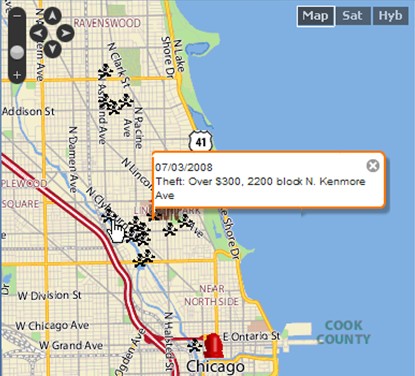
An early “mashup” application using open data from Chicago’s police force

Information is also becoming more readily available from the physical environment. In Galway Bay, a network of underwater microphones is connected to a system that can identify and locate the sounds of dolphins and porpoises. Their location provides a dynamic indication of which parts of the Bay have the cleanest water. That information is made available to companies in the Bay to allow them to control their discharges of water; and to the fishing and leisure industries who are dependent on marine life. This Open Data approach is being used by cities across the world such as Dublin, Chicago and London as a resource for citizens and businesses.

Whilst advances in technology have lowered the cost of generating information from physical environments, challenges remain. From the perspective of a mobile telephone user, much of the UK has signal coverage. However, telephones are used one metre or more above ground level; at ground level, where many parts of our transport and utility infrastructures are located, coverage is much poorer. Additionally, mobile transmitters and receivers are relatively expensive and power-hungry. Cheaper, lower power technologies are needed to improve coverage, such as the “Weightless” standard being developed to use transmission bandwidth no-longer needed by analogue television.

Using and combining data appropriately

In order to make information from multiple sources available appropriately and usefully, several issues need to be tackled.

When computer systems are used to analyse information and take decisions, then the data formats and protocols used by those systems need to be matched. Information as simple as locations and dates may need to be converted between formats. At an engineering level, the protocols used to transmit data across cities using wired or wireless communications behave differently and require systems that integrate them.

The meaning of information from related sources also needs to be understood and adapted to context. Citizens who go shopping in wheelchairs need to know how to get between car-parks and shops with lifts, accessible public toilets and cash points. However, the computer systems of the organisations who own those facilities will encode the information separately, in ways that support their efficient management, not that support journey-planning between them.

The City of Portland in Oregon has gone further in a project to understand how information from systems across the city is related. They are now able to better predict the impact that key decisions will have on the entire city, years in advance.

Privacy and ownership of data may affect its subsequent use, often with terms and conditions in place for governing its access. Furthermore, safeguards are required to ensure that sensitive information cannot be inferred from a combination of sources. For example the location of a safe house or shelter being identified from building usage, building ownership and /or information concerning taxi journeys by the employees of particular council agencies.

The human dimension

Smarter systems will only succeed in improving cities if there is wide consumer engagement. To be of value, information will likely need to be timely and presented in a manner appropriate to consumer context. Individual behaviour will only change where personal value is derived as a result of new information being presented – a saving in time or money, or access to something of value to their family.

(Photo of traffic in Dhaka, Bangladesh, from Joisey Showa)

Many cities are experimenting with technologies that predict the future build up of traffic, by comparing real-time measurements to databases of past patterns of traffic flow. In Stockholm, this information is used by a road-use charging system that supports variable pricing. In California, commuters in a pilot project were given personalised predictions of their commuting time each day. Both systems encourage individuals to make choices based on new information.

Utility providers are exploring how information from smart meters can encourage water and energy users to change behaviour. A recent study in Dubuque, Iowa, showed that when householders were shown how their water usage compared to the average for their neighbours, they became better at conserving water – by fixing leaks, or using domestic appliances more efficiently. Skills across artistic and engineering disciplines are helping us understand how this type of information can be communicated more effectively. Many people will not want to study figures and charts on a smart meter or website; instead “ambient” information sources may be more effective – such as a glow-globe that changes colour from green to orange to red depending on household electricity use.

Systems that improve the sustainability of cities could also affect economic development. Lowering congestion through Smarter transportation schemes can improve productivity by reducing time lost by workers delayed by traffic. By making information and educational resources widely available, Smarter systems could improve access to opportunity across city communities. A city with vibrant communities of well-informed citizens may appear a more forward-looking and attractive place to live for educated professionals and, in turn, for businesses considering relocation. New York has improved its attractiveness since the 1970s by lowering the fear of crime. One of its tools is a “real-time crime centre” that brings information together from across the city in order to better react to crime and public order incidents. The system can even help to prevent crime by intelligently deploying police resources to the areas most likely to experience incidents based on past patterns of activity – on days with similar weather, transportation conditions or public events.

Success in delivering against these broader objectives is much more likely to be achieved where the cities themselves are more clearly accountable for them.

So where do we start?

Investments in Smarter systems often cut across organisations and budgets and many have objectives that are macro-economic, social and environmental, as well as financial. As such, they challenge existing accounting mechanisms. Whilst central government and the financial markets offer new investment solutions such as ethical funds, social impact bonds and city deals, so far these have not been used to fund the majority of Smarter solutions – many of which are supported by research programmes. The Technology Strategy Board’s investment in areas such as “Future Cities” and the “Connected Digital Economy” will provide a tremendous boost, but there is much to be done to assist cities in using new investment sources to fund Smarter initiatives – or to develop sustainable commercial or social-enterprise business models to deliver them.

Although progress can be driven by strong leadership, the issues of governance and fragmented budgets will need to be overcome if we are to take full advantage of the benefits technology can bring.

We live in an era of major global challenges – well described in the recent “People and the Planet” report by the Royal Society. At the same time, we have access to powerful new technologies and ideas to address them, such as those proposed by the 100 Academics who contributed essays to the book “The New Optimists”. When we focus those resources on cities, we focus on the structures in which we can have the greatest impact on the most people.

Already many forward-looking cities in the UK such as Sunderland and Birmingham are joining others around the world by investing in Smarter systems. If we can meet the technical, organisational and investment challenges, we will not only provide citizens, businesses and agencies with new choices and exciting opportunities; we’ll also position the UK economy to succeed as the Information Revolution gathers pace.

Will the city of the future be a hyperlocal manufacturing cluster?

20120605-005134.jpg

(Image by Rob Boudon)

I’ve become really excited recently about the ability of three trends to transform city economies: improving bandwidth and connectivity; the increasingly intimate way that information technology can be connected to the physical environment; and the relationship between industry convergence, localism and the creation of economic value.

Together, they lead me to the question in the title of this post: will the city of the future be a hyperlocal manufacturing cluster?

(They also lead me to a serious challenge. But I’ll return to that at the end).

Let’s take each theme in turn:

How increasing bandwidth improves the quality of user experience to the point of industry disruption

As the bandwith available for communications has increased over time, the quality of user experience we are able to provide online in advertising, shopping, music, telephony and video has in turn lead to disruptions that disintermediate traditional industry structures – epitomised by Craig’s List, Amazon, iTunes, Skype and YouTube. Business and technology innnovators are constantly looking for new opportunities to cause disruptions and take controlling stakes in the new markets they create.

How the digitisation of materials and physical processes will transform manufacturing

Digitisation and mass customisation are now sweeping through manufacturing. Intelligent materials and components capable of storing information will communicate instructions to the production machines processing them to indicate what product they should be fashioned into. New “apps” will be downloaded to those machines to change their function. Small versions of such “Smart machines” – the evolution of today’s 3D printers – will be distributed throughout cities, and even in our homes, along with a stock of raw smart materials. This wave of change is already known as “Industry 4.0” and is emerging as a strong theme of Germany’s economic strategy, as described by Professor Wolfgang Wahlster of the German Research Centre for Artificial Intelligence.

As these incredible advances in the ability of information technology to control physical materials take place, for some products it is becoming more important to be able to manufacture customised items locally in immediate response to individual demand – i.e. to perform in-market innovation – than it is to globally source the lowest cost manufacturer for large numbers of identical items.

How convergence between industries creates economic value

All of the examples above represent convergence between related industries such as technology, communications, publishing and consumer electronics. The theory of economic clusters states that such convergence is necessary to maintain profit margins, because over time those margins otherwise diminish through competition and innovation in supply. To maintain profit margins, products and services need to be adapted by adding additional features, often produced by capabilities associated with related industry sectors.

Convergence is usually caused by the exploitation of newly availabe – or newly cost-effective – technology in response to, or in order to create, market demand. Amazon’s appropriation of consumer device technology in the form of the Kindle is an example. This convergence at the level of individual capabilities takes place constantly, in addition to the industry disruptions in my original examples. From time to time, a combination of the two effects creates entirely new markets such as search, which was captured very effectively by Google following the initial successes of AltaVista and Yahoo.

Why the Smarter City of the future will be a low carbon hyperlocal manufacturing cluster

The near-future ideas of Industry 4.0 represent a convergence between the technology, communications and manufacturing industries. To an extent they’ve been here for some time in the form of highly configurable car factories such as the Nissan plant in Sunderland, where up to 6 models have been produced from just two production lines over the past 2 years. It is the most productive car plant in Europe.

The spread of Industry 4.0 to localised application in city environments and even homes will be transformative. The carbon footprint created by transportation in the supply chain will be reduced; and new careers (such as some of those suggested by Google’s Futurist Thomas Frey) will be created to exploit the capabilities of these new manufacturing platforms.

The use of social media to turn product design into a collaborative process (as Zuda did for Comics and Threadless did for T-shirts) could be applied in the home to more physically complicated goods such as confectionary (for example using 3D printers for chocolate).

I was lucky enough this week to speak at the 3rd European Summit on the Future Internet at the University of Aalto in Espoo, Finland. Speakers such as Wolfgang Wahlster, Jean-Luc Beylat (President of Alcatel-Lucent Bell Labs in France), and Ilkka Lakaniemi (Director of Business Environment Strategy for Nokia) all spoke on themes related to the ideas in this post.

The challenge for society in the Industry 4.0 era

To temper the excitement associated with these profound changes, considerable concern was also expressed at the summit for the effects on mass employment. Whilst the “re-shoring” of manufacturing is already bringing some manufacturing employment back to developed economies as global wage differentials reduce, there’s no doubt that less people, and with considerably different skills, will be employed in the process of making things as Industry 4.0 gathers pace.

Our challenge as a society and individuals is to continue to create new exchanges of value between each other, in new forms. My observation in the UK is that hand-made products and locally sourced food are in increasing demand, for instance. And there’s no doubt that the quality of our lives would in many cases be improved if more effort were expended maintaining and improving the physical environment around us.

Indeed, there’s some evidence to suggest that growth in the so-called “DIY economy” of freelance employment across trade and professions is accelerating following the recession, supported in some cases by technology platforms for “micro-entrepreneurialism” (such as Etsy‘s online market for handmade goods). These can also be seen as examples of convergence and disintermediation.

I hope we turn out to be as innovative and determined in addressing this social challenge as we are in exploiting the advances of technology for economic reasons.

Extreme urbanism: live here at your peril

20120605-011210.jpg

(Photo by O Palsson)

In “The Triumph of the City“‘ Edward Glaeser argues that efficient cities should be built up around elevators, rather than built out around cars. As a resident of Birmingham, the city where Matthew Boulton and James Watt came together to commercialise the steam engine that powered the first of those elevators (see here and here), I’m predisposed to agree.

Glaeser, along with Richard Florida, Tim Stonor and others argue that cities are vital to our society and economy as they are the places where people congregate to generate and share ideas, and enact Matt Ridley’s memorable idea that value is created when “ideas have sex“. Glaeser even argues that cities emphasise our basic humanity because the defining characteristic of that humanity is our ability and desire to learn from each other.

It’s also clear that our cities need to improve in efficiency. As more and more people live on the planet and as more and more of us live in cities, political, charitable and scientific organisations have pointed out that each of us simply must consume less resources. For examples refer to the United Nations “7 Billion Actions” programme; the lobbying organisation Population Matters; and the recent report published by the UK’s Royal Academy, “People and the Planet“.

But how far do we want to go in using the modern technologies that have succeeded lifts and cars to enable us to live in ever greater numbers at ever greater density?

Some imaginative but frankly scary forms of extreme urbanism are emerging as technologists invent concepts for ever larger and more densely populated cities, and for systems to supply the resources that enable the people who live in them to live and work. I’m saying that as a technologist myself; and as someone who’s passionate about the possibilities technology offers to improve wealth and wellbeing in urban environments – I gave some examples in a previous blog post.

But I don’t personally find it attractive, for example, to consider that the only way we can feed city populations is by growing artificial meat in laboratories, as Dutch and Canadian scientists have suggested. Or that we should farm vertically in skyscrapers, at the same time as building homes and offices for people underground in “earthscrapers“.

To me those ideas are extreme urbanism; and they don’t represent the sort of city I’d like to live in. (I do live in a city, by the way; and whilst I live in a relatively spacious suburb, I nevertheless find it easy to use efficient public transport to get around far more than I use my own car).

There are alternatives to extreme urbanism. One of them is adopting a sensible approach to population growth, as promoted by Population Matters amongst others. Our challenges would be less severe if there were less of us; and many of the most disadvantaged communities and individuals across the world would be better off if they were more able to choose the size of their families and provide equal opportunities to all of their children of either sex.

And there are healthier ideas for applying technology to make cities more efficient. Rather than growing meat in laboratories, why not provide the know-how to encourage people to grow vegetables and keep small animals in city gardens, as Landshare and Growing Birmingham do? And why not use social media intelligently to connect food consumers with local food producers as Big Barn do, making it as easy to buy sustainable, locally produced food as it is to buy globally sourced food from supermarkets?

There are tremendous efficiencies that can be realised in city systems by such “hyperlocal” thinking; and the same ideas could make city life more attractive and nuanced, rather than clinical and engineered.

For a couple of years now I’ve been producing my own air-dried and smoked meats such as salami, bresaola, and chorizo at home in Birmingham. Of course they do not taste the same as the Mediterranean originals; but they taste vastly superior to anything I’ve bought in a supermarket. Rather than think of them as poor alternatives to Spanish and Italian produce, why not consider them regional variations to be explored and valued?

The aforementioned Royal Academy report asserts that as a species inhabiting a planet we find ourselves at a crucial juncture for determining what the size of our population should be, and how we should collaborate to use resources to sustain ourselves. I would argue that our response should be a balanced assessment of the opportunity for technology to enable efficient city ecosystems, in combination with moderation of population growth.

If we get that right, we can all enjoy a more interesting, healthy and efficient life. I would much prefer that outcome to the possibility of descending by default into the extreme dystopias described in novels such as “We” by Yevgeny Zamyatin or films such as Logan’s Run. They describe worlds that are fascinating to experience as works of art; but I’d hate to live in them.

Virtualisation is bringing us back together

20120605-012840.jpg

(Image by Chris Drumm)

Back in 1953, Isaac Asimov’s “The Caves of Steel” was published, depicting a world of avatars, virtual collaboration and video-conferencing. It took the real world half a century to catch up with him. Asimov was a smart guy.

But he got one thing wrong. Asimov predicted that reliance on these forms of communication would make us terrified of meeting each other in person. Instead, research has shown that social media is often used to identify new and interesting people to meet in real life (see this article from the American Public Broadcasting Service, for example). In fact, this is exactly how I met my wife. More recently, I’ve enjoyed meeting @Sanfire_IA and @NewOptimists, amongst others, firstly on Twitter (go look them up), and then in real life. (In coffee shops, to be precise).

Tim Stonor and Dan Holowack have both written very interesting blog posts recently about the important role cities play in bringing people together, face-to-face, to create and share ideas. It’s the very lifeblood of the economy. (Edward Glaeser’s “Triumph of the City” discusses this topic in great and fascinating length).

The technologies that connect us virtually have a very important role to play in that aspects of our cities. I’ve met recently with people in cities including Birmingham, London and Sunderland who are involved in stimulating innovation and entrepreneurial activity in city economies. They are all passionate about the value that is created when creative people with disparate skills are brought together.

But they were also unanimous in voicing a concern that it’s tremendously difficult to persuade such people to take time away from the businesses they’re spending 60, 80 or 100 hours a week starting and running to meet people they don’t know; on the off-chance that a valuable new business idea will somehow spring into existence.

All of us face that challenge to some degree today. With the explosive growth in the flow of information we’ve experienced over the last 20 years or so, competition for our time and attention is intense. Social media is a significant part of that explosion of course; but it’s also a significant part of the answer.

Within a few minutes, on Freecycle I can find people near me who need what I no longer want; on LandShare I can find people whose untended land can be used to grow food, and on StumbleUpon I can find moments of genius in every domain from places I’d never in a million years have thought to look, but which StumbleUpon’s fuzzy search engine has ensured are nevertheless relevant to me. And then I can get in touch, arrange to meet, and find out more.

(I have deliberately chosen some of these examples, by the way, for their relevance to the efficiency with which natural resources are used to support economic activity. The recent “People and the Planet” report written by an incredible array of international experts on behalf of the Royal Society should leave us in no doubt at all of the importance of that topic).

This morning, I’ll be attending Birmingham’s Social Media cafe following a discussion about innovation in Birmingham in a Linked-In group, to discuss ideas for social business with people who I haven’t met before, but who I will probably soon be following on Twitter. That’s a great example of the interplay between virtual and physical interactions that’s speeding up the process of collaborative innovation and value-creation in cities today.

But it doesn’t stop there. Digitisation and mass customisation are long-standing trends in manufacturing, but technologies such as 3D printing are going to transform custom-manufacturing in the same way that global-sourcing and production line automation relatively recently transformed commodity manufacturing. And as this brilliant article in The Economist argues, the result will probably be to bring manufacturing activity back to be more local to the consumers of the goods being manufactured.

I turned 40 recently; traditionally a landmark that brings a certain degree of questioning of one’s direction in life. I have no such questions. The family that I now have after meeting my wife through social media is the most important part of that; and the privilege of living through these incredibly exciting and transformational times is the icing on the cake. I can’t wait to see where we’ll go next.

The world is at our childrens’ fingertips; and they will change it

(Image by TurkleTom)

Several of my recent posts to this blog have been concerned with two sides of the same coin: the importance of science and technology skills to our societies and economies; and the importance of making technology and information consumable and accessible.

But this is the first time I’m putting those concerns to the test in the very act of writing my blog – which I’m doing using the iPad that arrived 3 days ago.

My last purchase from Apple – a company whose controlling approach to technology and media ecosystems I don’t admire – was a 3rd generation iPod; it’s now so unusually old that I’m often asked if it’s some strange *new* gadget. I was very unimpressed by the speed with which that iPod’s battery deteriorated, and by the impossibility of replacing it. So I needed some considerable persuasion to shell out several hundred pounds on an iPad.

That persuasion came from my 3 year old son. On the (very rare, if you’re my boss reading this) occasions that I work from home, I sometimes share my laptop screen with him. My side has my e-mail on it; his side has Thomas the Tank Engine on YouTube (he gets the better deal). Often when I launch a new window, it pops up on his side of the screen, obscuring whatever’s going on on Sodor. His immediate and instinctive reaction is to touch the screen and try to drag the obstruction out of the way.

(I heard an amazing corollary to this from a contact at Birmingham City Council yesterday – she’s seen her toddler drag her fingers apart on the surface of a paper magazine in an attempt to “zoom” the pictures in it!)

I’ve just written an article that repeats an often quoted though hard to source statistic that 90% of the information that exists in the world today was created (or more accurately recorded) in the last 5 years.

That made me think that: every fact in the world is literally at the fingertips of our children.

You can argue whether that’s literally true; and whether it’s equally true for all the children in the world (it’s clearly not); but there’s a deep and fundamental truth to the insight that suggests: however much we think the technologies we use today have already changed the world, it’s absolutely nothing compared to the utter transformation that will be created by the real “information natives” that our very young children will become.

That’s why I shelled out for an iPad this week. Love Apple or loathe them, they are creating technologies that offer us – if we explore and engage with them – a window into an important part of the future. And if we want to help our children, our schools, our businesses and our cities prepare for that future, then we had better do our best to get to grips with them ourselves.

How will the UK create the skills that the economy of 2020 will need?

(Photo by Orange Tuesday)

I’ve been reading Edward Glaeser’s book “The Triumph of the City” recently. One of his arguments is that the basis of sustainable city economies is the presence of clusters of small, entrepreneurial businesses that constantly co-create new commercial value from technological innovations.

Alan Penn, the Dean of the Bartlett Institute for the Built Environment, made similar comments to me recently. Interestingly, both Alan and Edward Glaesar identified Birmingham, my hometown, as an example of a city with such an innovative, marketplace economy, along with London. They also both identified Manchester as a counter-example of a city overly dependent on commoditised industries and external investment.

Cities are fundamentally important to the UK economy; more than 90% of the UK population lives in urban areas. But many – or perhaps most – UK cities are not well placed to support innovative, marketplace-based, high-technology economies (see my recent post on this topic). For example, e-Skills UK report that less than 20% of people hired into information technology positions in the UK acquired their skills in the education system; and I agree strongly with Seth Godin’s views as expressed by the “Stop Stealing Dreams” manifesto that we need to question and change the fundamental objectives around which our education system is designed.

To create and / or sustain economies capable of organic innovation and growth, cities need a particular mixture of skills: entrepreneurial skills; commercial skills; operational skills; technology skills; and creative skills. The blunt truth is that our education system isn’t structured to deliver those skills to city economies with this objective.

Whilst the opinions I’ve expressed here are personal, I’ll shortly be launching a project at work for my employer IBM to look at the challenges in this space. IBM’s business interest is our need to continue hiring smart, skilled people in the UK; the interest of IBM’s technical community as individuals to commit their time to the project additionally involves personal passion for technology and education.

I’m enormously aware that I’m not the first person to whom these thoughts have occurred; and I know that I and my colleagues in IBM don’t have all the answers.

So if this topic interests you and you’d like to share your insight with the project I’m going to run this year, please let me know. I’d very much appreciate hearing from you.

Open Data isn’t free data

An early mashup using open data from Chicago’s police force

I support the principle of Open Data; and I’ve been creating commercial value from it since at least 2007, when as part of IBM’s Emerging Technologies team I developed scenarios to show how our customers could exploit it using early implementations of “Mashup” technology.

Here’s an example of what we were up to in those days, using alpha code for IBM Mashup Centre to integrate open data from Chicago’s public services with business data from insurance applications running in CICS. CICS is a transaction engine that’s now 43 years old and is used by 90% of Fortune 500 companies. When you take money out of a cashpoint, book an airline seat or renew your home insurance, there’s a decent chance CICS is involved somewhere. So there was (and is) vast economic potential in what we were doing.

But it’s not always straightforward to realise that value. It’s no accident we based our demonstration scenario in Chicago, which has long been at the leading edge of cities promoting Open Data. (It’s well worth catching up with how Chicago’s new CTO John Tolva is driving this agenda forwards, by the way). At the time, many other cities published similar data; but it wasn’t usable in the same way that Chicago’s was. It had been published in the form that was possible, cheaply, rather than in a form that was useful.

My point is: Open Data won’t deliver the value we all want it to unless we answer some hard questions. Such as:

Who will use Open Data, and why?

There are too many Open Data sites that don’t attract users and activity; so the investment in operating them doesn’t result in the creation of new value. That’s a shame; and we should try to understand why it happens. Often, I think it’s because they focus on making as much data as possible available in whatever form it’s in.

The Knight Commission report “The Information Needs of Communities” emphasised instead the need to consult with communities to find out what they need, rather than to publish data in anticipation of innovation. They are now publishing further guidance on implementing their ideas to promote open government.

Obviously, the problem with the extreme of this position is that if we restrict our Open Data efforts to providing only that data which is proven to be required through extensive consultation, we will limit the opportunity for spontaneous innovation. So a balance needs to be found.

How much does open data cost?

My experience building Open Data scenarios for our early Mashup technology taught me that high quality open data in a useable form was very rare. That’s because it’s expensive.

If producing highly usable information from the applications that manage the world’s information was easy or cheap, a good part of the IT industry would disappear overnight (whether you think that would be good or bad: it hasn’t happened). If we want usable data, we’re going to have to find ways and reasons to pay for it.

The cost to public sector organisations of processing Freedom of Information requests will sometimes provide the business case for spending money to open up data, but not always. Recent Government initiatives to make Open Data a criteria of future procurements will bake the cost of it into vendor proposals; but that won’t address the cost of opening up data from existing systems.

Finally, there will be many cases where clear value can be derived from open data; but not by the organisation that bears to cost of creating or distributing it. In order to balance the need for open innovation with the need to flow cost and revenue between organisations in a reasonable way, commercial models such as “freemium” will need to be explored. The “Dublinked” Open Data portal is doing that, for example.

How do we access and use Open Data?

As William Perrin argued recently, we need to think about how Open Data will be used beyond the community of technologists. I’ve blogged before about the need for technology and information to be accessible; and the need for our education system to provide us with the skills to use technology to manipulate and understand information. Those are both big challenges that we won’t overcome any time soon.

Where do we go next?

The potential value of Open Data is too great for us to afford to be negative, cynical or apathetic. Software automation and information technology are changing the way that value is created in the economy (see work on this from Imperial College and McKinsey), and the concept of Open Data is crucial to providing access to that potential across all sectors of society. But we will only realise that value if we find ways to addressing the cost of providing usable information; and to invest in making it accessible.

Acknowledgement: I’d like to thank Simon Whitehouse for discussions leading to this post, and for the link to William Perrin’s article.