(The Empire State Building as seen from Greenwich Village, New Year’s Eve 2006)
As 2012 draws to a close, I’d like to look back briefly at the first year of “The Urban Technologist”.
Whilst I first opened this WordPress account in 2008, I used it rather sporadically as a personal blog, with a loose focus on emerging technology.
But 12 months ago I decide to write in a more regular and focused way about my work in Smarter Cities. My motivation was to share that experience and to start new conversations that I could learn from.
I have spent 15 years as a technologist, identifying new trends, and delivering projects to exploit them. That has never been simple; often exciting; and always full of challenges. But in cities I have experienced over the last few years by far the most complex, subtle, beautiful, challenging and meaningful contexts for that work in my career.
It is always useful to understand one’s own strengths and limitations; and early on I realised that my amateur enthusiasm was not a sufficient basis from which to build a real understanding of cities. So I have consciously built new relationships with planners, architects, policy-makers, social enterprises, businesses and many of the other stakeholders who understand cities professionally; or who play a role in them. In the process, I have met an astonishing variety of people, all of whom taught me something; often through conversations in which they disagreed with me – or at least expanded my thinking – in interesting ways.
Social media, and in particular this blog, have given me the most incredible opportunity to extend those discussions: through comments posted on the blog itself; through discussions in the Linked-In groups I belong to; and through the wonderful conversations I have in person whenever I meet someone who’s read something I have written.
I’ve commented in many articles on this blog that new conversations between the stakeholders and communities in a city ecosystem are the key to creating the common interest and understanding needed to drive a city forward. That same principle applies to the creation of knowledge within the wider community of Smart Cities and future urbanism. I hope that by writing this blog, and by basing it on the insights discovered through the conversations I take part in, I have contributed in a small way to that community.
(The thoughtful statue floating in Barcelona’s docks that I use as the header image for this blog)
I’ll be taking a couple of weeks off over Christmas; but I will use the break to update the “Six steps to a Smarter City” article that I maintain as a structured guide to the content on this blog.
In the meantime, though, I’d like to say Happy Christmas; and also thankyou to everyone who has read this blog or commented on it; and to everyone who’s thinking has informed and inspired me. I look forward to continuing our conversation in 2013.
(Artist’s impression of the new Birmingham City University campus, currently under construction alongside Millennium Point and the new Eastside City Park. Image by Birmingham City University.)
The outcomes that matter to cities and to the people who live and work in them, such as wellbeing, job creation, economic growth, and social mobility, are complex, compound results of the behaviour of a combination of city systems such as education, public safety, transport and the economy.
Because those systems are operated by separate organisations – if they are even “operated” as systems at all – many “Smarter City” discussions are concerned with “breaking down silos” in order to integrate them.
As Fast Company’s 2010 survey of the “Top 20 Smartest Cities on the Planet“, illustrates, many of the earliest and highest profile examples of cities pursuing “Smart” agendas were governed by hierarchical, integrated systems of authority which helped them to address this challenge – often because they were new or expanding cities in rapidly growing economies.
Elsewhere, governance is more complex. Particularly in the UK, services such as utilities and transport are operated by private sector providers contracted to deliver performance and financial measures that cannot easily be changed. It is hard enough to agree common objectives across a city; it can be even harder to agree how to make investments to achieve them by transforming city systems that are subcontracted in this way.
But that is what cities must somehow do. And in recent weeks I have valued some open and frank discussions between city leaders, financiers and developers, policy makers, academics, architects, planners – and even some technologists – that have revealed some simple ideas that are common to those cities that have demonstrated how it can be done.
Start new partnerships
Most initiatives that contribute to city-wide outcomes require either co-ordinated action across city systems; or an investment in one system to achieve an outcome that is not a simple financial return within that system. For example, the ultimate objective of many changes to transportation systems is to improve economic growth and productivity, or to reduce environmental impact.
New partnerships between these organisations are needed to agree city-wide objectives, and to co-ordinate their activities and investments to achieve them. Depending on local challenges, opportunities, and relationships those partnerships might include:
Local Authorities and other public sector agencies co-operating to operate shared services;
Central government bodies involved in negotiations of policy, responsibility and financing such as “City Deals“;
Leaders from cities’ business, entrepreneurial and SME communities;
Local Universities who may have domain expertise in city systems; and who provide skills into the local economy;
Neighbourhood, faith and community associations;
Representatives of the third sector – charities, voluntary associations, social enterprises and co-operatives;
Industry sector and cultural organisations;
Service and technology providers who form partnerships with cities; for example, Amey have a 25-year PFI partnership with Birmingham; IBM operate joint research programmes with cities such as Dublin and Moscow; and Cisco have partnerships with cities such as Songdo in South Korea;
Financiers, for example local venture capitalists such as MidVen in the West Midlands, or banks and financial services companies with a strong local presence;
… and there are many other possibilities.
To attract the various forms of investment that are required to support a programme of “Smart” initiatives, these partnerships need to be decision-making entities, such as Manchester’s “New Economy” Commission, not discussion groups. They need to take investment decisions together in the interest of their shared objectives; and they need a mature understanding and agreement of how risk is shared and managed across those investments.
Such partnerships do not start by adopting the approach of any single member; they start with a genuine discussion to build understanding and consensus.
For example, public and private sector organisations both tend to assume that the other is better placed to accept risk. Private sector organisations make profits and invest them in new products and markets, so surely they can take on risk? Public sector organisations are funded to predictable levels through taxation, so surely they can take on risk?
In reality, the private sector has lost jobs, faced falling profits, and seen many businesses fail in recent years. Meanwhile, public sector is burdened with unprecedented budget cuts and in many cases significant deficits that are threatening their ability to deliver frontline services. Both are therefore risk averse.
A working partnership will only form if such issues are discussed openly so that an equitable consensus is achieved.
Manchester’s New Economy Commission have taken a particular approach that is commensurate to the size of the Greater Manchester area and economy, coordinated by the Association of Greater Manchester Authorities (AGMA). But their approach is not the only one.
“Size” in these terms can mean geographic area; population; economic value or market potential. It is interpreted differently by international investment funds; or by local interests such as property and business owners. And it is balanced against complexity: one reason that some more modestly sized cities such as Sunderland and Peterborough have made so much early progress is their relative political and economic simplicity.
Vision, Transparency and Consistency
Whatever specific form a local partnership takes, it needs to demonstrate certain behaviours and characteristics in order that its initiatives and proposals are attractive to investors. They are straightforward in themselves; but take time to establish amongst a new group of stakeholders:
A clear, agreed and consistent set of goals;
A mutual understanding of risk; how it is shared; and how it is managed;
An ability to express investment opportunities, including the risks associated with them, to potential investors;
A track record of taking transparent, consistent decisions to coordinate projects and investments against their objectives.
This is the model that in many cases will deliver Smarter City projects and programmes in everyday cities: a model of several organisations coordinating multiple investments, rather than individual organisations managing their own budgets.
(Philippe Petit’s remarkable tightrope walk between the towers of the World Trade Centre in 1974 at a height of 417 metres. Image from Carolina Pastrana)
Match risks to the right investors
There are many sources of funding for Smart City initiatives; each has different requirements and capabilities, and is attracted by specific risks and rewards. And with traditional markets such as property stagnant in developed economies, new opportunities for investment are being sought.
However, with a high degree of uncertainty in the prospects for future economic growth, it is harder than ever to assess the likely returns from investment opportunities. And when those opportunities are presented as new forms of partnership, special purpose vehicles or social enterprises, or by public sector authorities adopting revenue-generating models to compensate for dramatic cuts in their traditional funding, that assessment becomes even harder.
There is no simple answer to this challenge; but once again progress to resolving it will begin with conversations that build understanding. Ultimately, investors will be attracted to proposals with well defined and managed risks from organisations exhibiting good governance; and that can demonstrate a track record of making clear decisions to achieve their goals.
Of course, some Smart City projects are highly innovative, and may be too risky for investors accustomed to supporting infrastructure projects such as transportation and property development. This is particularly the case for schemes that require a change in consumer behaviour – for example, switching from private car ownership to the use of “car clubs” or car-sharing schemes.
These sorts of project may be more suited to technology or service providers who might invest in pilot schemes in order to develop or prove new offerings which, if successful, can generate follow-on sales elsewhere. The “First of a Kind” programme in IBM’s Research division is one example or a formal programme that is operated for this purpose.
Similarly, Venture Capital will make investments in new businesses with higher risk profiles – demanding, of course, a commensurately higher level of return. And government backed innovation funds such as the European Union FP7 programme or the UK’s Technology Strategy Board are also available.
All of these organisations, of course, are looking to invest in projects which are initially small scale; but that will eventual develop into a widespread market opportunity. They will therefore be drawn to projects that take place in a stable, supported context from which that opportunity can be developed – in other words, the same level of partnership working, governance, transparency and consistency.
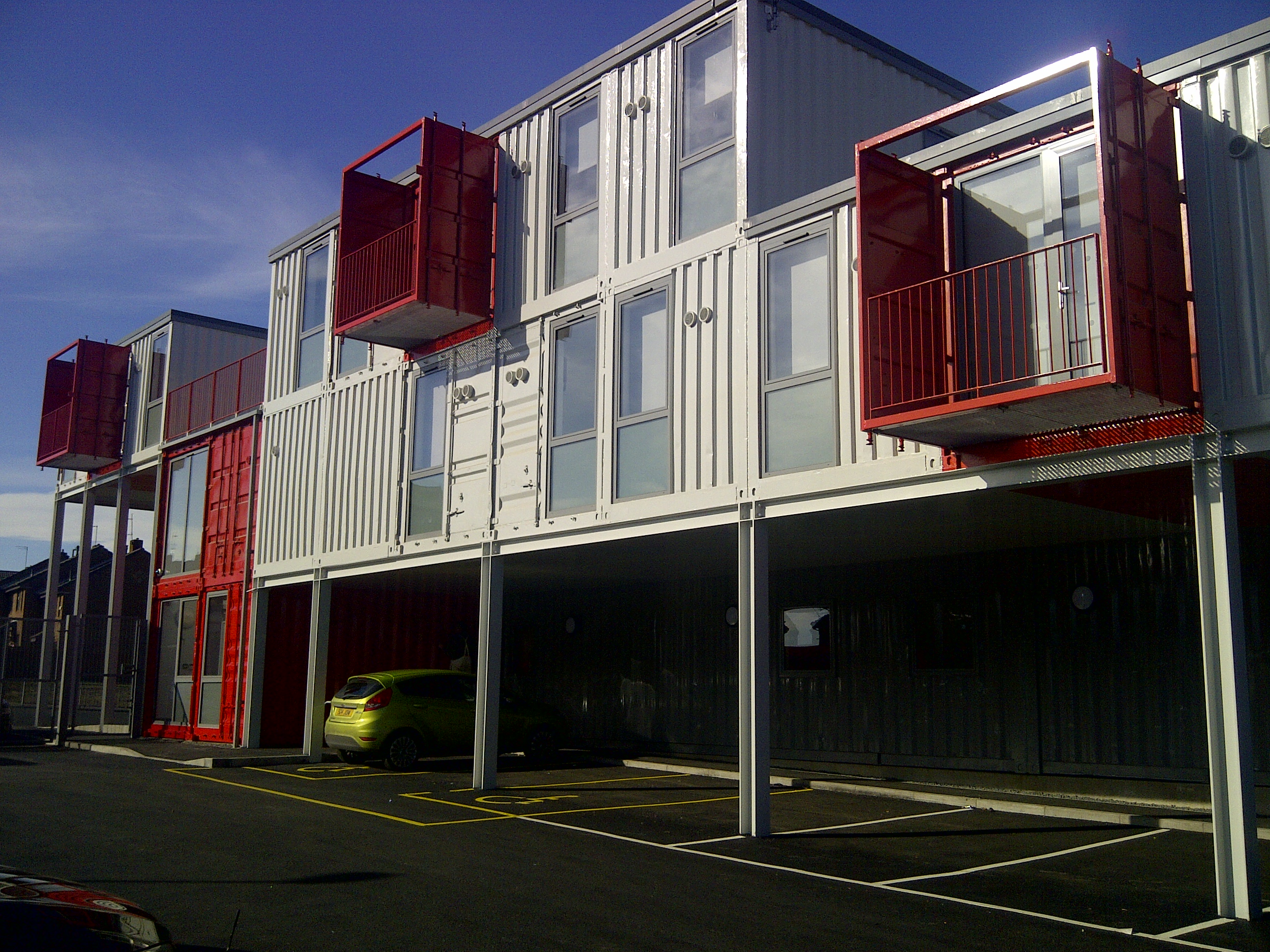
(A successful urban intervention: the “Container City” incubation hub for social enterprises operated by Sustainable Enterprise Strategies (SES) in Sunderland. SES support hundreds of new businesses and social enterprises in Sunderland every year, with a combined turnover of around £25m, and employing thousands of people from the city’s most challenged communities. 82% of the people they help to start a business or a social enterprise were previously unemployed, and after 2 years nearly three quarters are still in business.)
Exploit success to build momentum
Most cities need to stimulate economic growth, and to revitalise economically and socially deprived neighbourhoods.
It may be more effective to achieve those goals through a series of related steps, than through a single initiative, however:
1. Invest to reinforce growth that is already taking place – it may be more straightforward in the first place to use mechanisms such as tax increment financing or private investment to accelerate growth that is already taking place; such as last week’s announcement by David Cameron of additional government and corporate investment in London’s “Tech City” cluster.
2. Retain the financial benefits resulting from growth – Manchester’s New Economy Commission is able to retain the benefits of the growth the stimulate in the form of increased tax returns, in order to reinvest in subsequent initiatives. Their early successes built confidence amongst investors in the viability of their ongoing programme.
3. Recycle funds to stimulate new growth – having built an initial level of confidence, returns from early projects can be reinvested in areas with more significant challenges; where new infrastructures such as broadband connectivity or support services are required to attract new business activity.
Everywhere is different
Whilst the ideas I’ve described in this article do seem to be emerging as common characteristics of successful Smarter City programmes; we are still at a relatively early stage.
In particular, not enough examples exist for us to reliably separate generally viable elements of these approaches from those aspects that are strongly tied to specific local contexts.
Every city of course is different; and in this context has different access to transport systems, and to national and international supply chains and markets; has different demographics and social character; and different economic capacity. Even within a country, the governance of cities and regions varies – in the UK, for example, the relationships between Central, County, District, City and Borough Councils are subtly different everywhere. So each city still needs to find its own path.
But the first step is simple. There is nothing stopping cities from having the conversations that will get them started. And those that have done so are proving that it works.
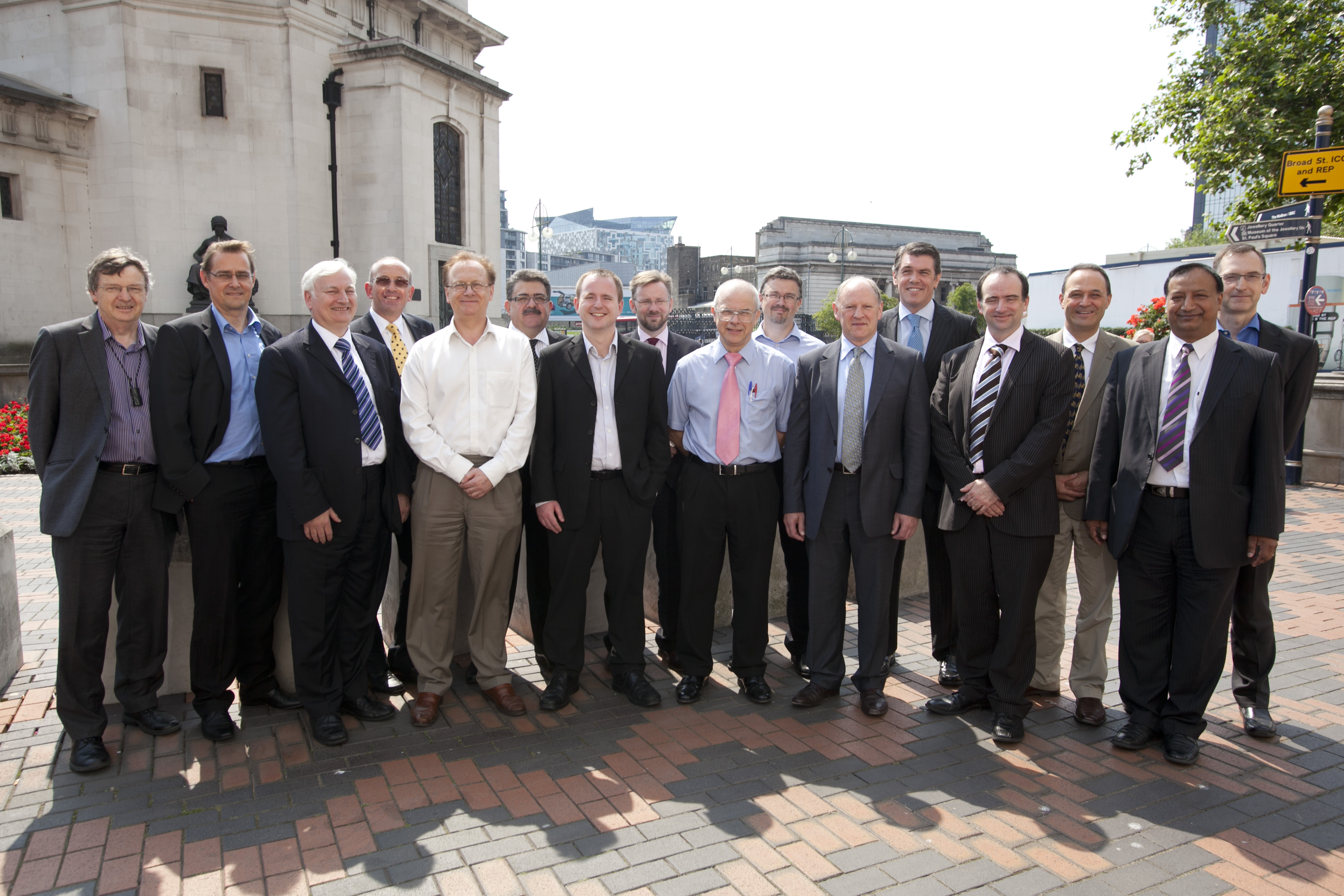
I’d like to thank the delegates and attendees at many workshops and meetings I’ve attended in recent weeks; the discussions I’ve been lucky enough to participate in as a result have contributed significantly to the views expressed in this article. They include:
(Akihabara Street in Tokyo, a centre of high technology, photographed by Trey Ratcliff)
A great many factors will determine the future of our cities – for example, human behaviour, demographics, economics, and evolving thinking in urban planning and architecture.
The specific terms “Smart Cities” and “Smarter Cities”, though, are commonly applied to the concept that cities can exploit technology to find new ways to face their challenges. Boyd Cohen of Fast Company offered a useful definition in his article “The Top 10 Smart Cities On The Planet“:
“Smart cities use information and communication technologies (ICT) to be more intelligent and efficient in the use of resources, resulting in cost and energy savings, improved service delivery and quality of life, and reduced environmental footprint–all supporting innovation and the low-carbon economy.”
So what are the technologies that will make cities Smart?
To answer that question, we need to examine the convergence of two domains of staggering complexity, and of which the outcomes are hard to predict.
The first is the domain of cities: vast, overlapping systems of systems. Their behaviour is the aggregated behaviour of their hundreds of thousands or millions of citizens. Whilst early work is starting to understand the relationship between those systems in a quantitative and deterministic way, such as the City Protocol initiative, we are just at the start of that journey.
(An early example of the emerging technologies that are blurring the boundary between the physical world and information: Professor Kevin Warwick, who in 2002 embedded a silicon chip with 100 spiked electrodes directly into his nervous system. Photo by M1K3Y)
If we define a “new form of communication” as a means of enabling new patterns of exchange of information between individuals, rather than as a new underlying infrastructure, then we are inventing them – such as foursquare, StumbleUpon, and Pinterest – at a faster rate than at any previous time in history.
My own profession is information technology; and I spend much of my time focussed on the latest developments in that field. But in the context of cities, it is a relatively narrow domain. More broadly, developments in many disciplines of science, engineering and technology offer new possibilities for cities of the future.
I find the following framework useful in understanding the various engineering, information and communication technologies that can support Smart City projects. As with the other articles I post to this blog, this is not intended to be comprehensive or definitive – it’s far too early in the field for that; but I hope it is nevertheless a useful contribution.
And I will also find a place in it for one of the oldest and most important technologies that our species has invented: language; and it’s exploitation in “Smart” systems such as pens, paper and conversations.
1. Re-engineering the physical components of city systems
(Kohei Hayamizu’s first attempt to capture energy from pedestrian footfall in Shibuya, Tokyo)
The machinery that supports city systems generally converts raw materials and energy into some useful output. The efficiency of that machinery is limited by theory and engineering. The theoretical limit is created by the fact that machinery operates by transforming energy from one form – such as electricity – into another form – such as movement or heat. Physical laws, such as the Laws of Thermodynamics, limit the efficiency of those processes.
For example, the efficiency of a refrigerator is limited by the fact that it will always use some energy to create a temperature gradient in order that heat can be removed from the contents of the fridge; it then requires additional energy to actually perform that heat removal. Engineering challenges then further reduce efficiency – in the example of the fridge, because its moving components create heat and noise.
One way to improve the efficiency of city systems is to improve the efficiency of the machinery that supports them; either by adopting new approaches (for example, switching from petrol-fuelled to hydrogen-fuelled vehicles), or by increasing the engineering efficiency of existing approaches (for example, using turbo-chargers to increase the efficiency of petrol and diesel engines).
Using more efficient energy generation or exchange technologies – such as re-using the heat from computers to heat offices, or using renewable bio-, wind-, or solar energy sources;
Using new transport technologies for people, resources or goods that changes the economics of the size and frequency of transport; or of the endpoints and routes – such as underground recycling networks;
Replacing transport with other technologies – such as online collaboration;
Reducing wastage and inefficiencies in operation,such as the creation of heat and noise – for example, by switching to lighting technologies such as LED that create less heat.
2. Using information to optimise the operation of city systems
In principle, we can instrument and collect data from any aspect of the systems that support cities; use that data to draw insight into their performance; and use that insight to improve their performance and efficiency in realtime. The ability to do this in practical and affordable ways is relatively new; and offers us the possibility to support larger populations at a higher standard of living whilst using resources more efficiently.
There are challenges, of course. The availability of communication networks to transmit data from where it can be measured to where it can be analysed cannot be assumed. 3G and Wi-Fi coverage is much less complete at ground level, where many city infrastructure components are located, than at head height where humans use mobile phones. And these technologies require expensive, power-hungry transmitters and receivers. New initiatives and startups such as Weightless and SigFox are exploring the creation of communication technologies that promise widespread connectivity at low cost and with low power usage, but they are not yet proven or established.
Despite those challenges, a variety of successful examples exist. Shutl and Carbon Voyage, for example, both use recently emerged technologies to match capacity and demand across networks of transport suppliers; thereby increasing the overall efficiency of the transport systems in the cities where they operate. The Eco-Island Community Interest Company on the Isle of Wight are applying similar concepts to the supply and demand of renwable energy.
Some of the common technologies that enable these solutions at appropriate levels of cost and complexity, are:
Tools for modelling complex systems and providing decision-support.
Asset management and workflow management tools for managing and monitoring the components of city systems and the people who maintain them.
3. Co-ordinating the behaviour of multiple systems to contribute to city-wide outcomes
Many city systems are “silos” that have developed around engineering infrastructures or business and operational models that have evolved since city infrastructures were first laid down. In developed markets, those infrastructures may be more than a century old – London’s underground railway was constructed in the mid 19th Century, for example.
But the “outcomes” sought by cities, neighbourhoods and communities – such as social mobility, economic growth, wellbeing and happiness, safety and sustainability – are usually a consequence of a complex mix of effects of the behaviour of many of those systems – energy, economy, transport, healthcare, retail, education, policing and so on.
As information about the operation and performance of those systems becomes increasingly available; and as our ability to make sense of and exploit that information increases; we can start to analyse, model and predict how the behaviour of city systems affects each other, and how those interactions contribute to the overall outcomes of cities, and of the people and communities in them.
IBM’s recent “Smarter Cities Challenge” in my home city of Birmingham studied detailed maps of the systems in the city and their inputs and outputs, and helped Birmingham City Council understand how to developed those maps into a tool to predict the outcomes of proposed policy changes. In the city of Portland, Oregon, a similar interactive tool has already been produced. And Amsterdam and Dublin have both formed regional partnerships to share and exploit city information and co-ordinate portfolios of projects across city systems and agencies driven by common, city-wide objectives.
We are in the very early stages of developing our ability to quantitatively understand the interrelationships between city systems in this way; but it is already possible to identify some of the technologies that will assist us in that process – in addition to those I mentioned in the previous section:
Cloud computing platforms, which enable data from multiple city systems to be co-located on a single infrastructure; and that can provide the “capacity on demand” to apply analytics and visualisation to that data when required.
Service brokerage capabilities to co-ordinate the behaviour of the IT systems that monitor and control city systems; and the service and data catalogues that make those systems and their information available to those brokers.
Dashboards and other user interface technologies which can present information and services from multiple sources to humans in an understandable and meaningful way.
4. Creating new marketplaces to encourage sustainable choices, and attract investment
The examples in transport innovation that I mentioned earlier in this article, Shutl and Carbon Voyage, can both be thought of as business that exploit information to operate new marketplaces for transport capacity. Eco-island have applied the same concept in energy; Streetline in car-parking; and Big Barn and Sustaination in business-to-consumer and business-to-business models for food distribution.
In addition to those I’ve previously described, systems that operate as transactional marketplaces often involve the following technologies:
The articles I write on this blog cover many aspects of technology, future cities, and urbanism. In several recent articles, including this one, I have focussed in particular on issues concerning the application of technology to city systems.
I believe these issues are important. It is inarguable that technology has been changing our world since human beings first used tools; and overall the rate of change has been accelerating ever since. That acceleration has been particularly rapid in the past few decades. The fact that this blog, which costs me nothing to write other than my own time, has been read by people from 117 countries this year – including you – is just one very mundane example of something that would have been completely unthinkable when I started my University education.
But I absolutely do not want to give the impression that technology is the most important element of the future of cities; or that every “Smarter City” project requires all – or even any – of the technologies that I’ve described in this article.
Smarter Cities start with conversations between people; conversations build trust and understanding, and lead to the creation of new ideas. Many of those ideas are first shaped on pen and paper – often still the least invasive technology for co-creating and recording information that we have. Some of those ideas will be realised through the application of more recent technologies – and in fact will only be possible at all because of them. That is the real value that new technology brings to the future of cities.
But it’s important to get the order right, or we will not achieve the outcomes that we need. Conversations, paper, technology – that might just be the real roadmap for Smarter Cities.
The rapid evolution of sensors, analytics, and automation technologies and their application to city systems such as transport, energy, and utilities offer a glimpse of the future.
These systems will support city populations more efficiently and sustainably. In South Bend, Ind., for example, an analytic system helps to predict and prevent wastewater overflows, avoiding the need to invest in hundreds of millions of dollars for upgrades for the system’s physical capacity.
However, the real power of these intelligent infrastructures is in their ability to influence our choices.
Stockholm’s road-use charging system, for example, influences the behaviour of travelers considering driving into the city and has reduced congestion and improved environmental quality.
At the World Bank’s “Rethinking Cities” Symposium in Barcelona in October, I took part in a panel discussion on whether this approach of including “externalities” (such as social and environmental costs) in prices would encourage widespread adoption of sustainable behaviours. The panel concluded that, whilst pricing is a useful tool, it’s not the only one and not sufficient on its own.
(The remainder of this article, which explores the opportunity for technology to encourage sustainable choices, can be found on UBM’s Future Cities site, as “The Future of Open Urbanism“).
I’m the Director of Smart Places for Jacobs, the global engineering company. Previously, I was the UK, Middle East and Africa leader of the Digital Cities and Property business for Arup, Director of Technology for Amey, one of the UK’s largest engineering and infrastructure services companies and part of the international Ferrovial Group, and before that IBM UK’s Executive Architect for Smarter Cities.
You can connect to me on Twitter as @dr_rick; or contact me through Linked-In where I’ll respond to connection requests from people I know, or that are accompanied by a message that starts a meaningful discussion.
The opinions on this site are my own.
Creative Commons
Content on this blog can be shared under the terms of the Creative Commons Attribution-ShareAlike License: you are free to share and re-use it providing you attribute this blog as the source of the material, and license any resulting work on similar terms. Please refer to the full license terms, or contact me with any requests to re-use material on a different basis.






 The Urban Technologist